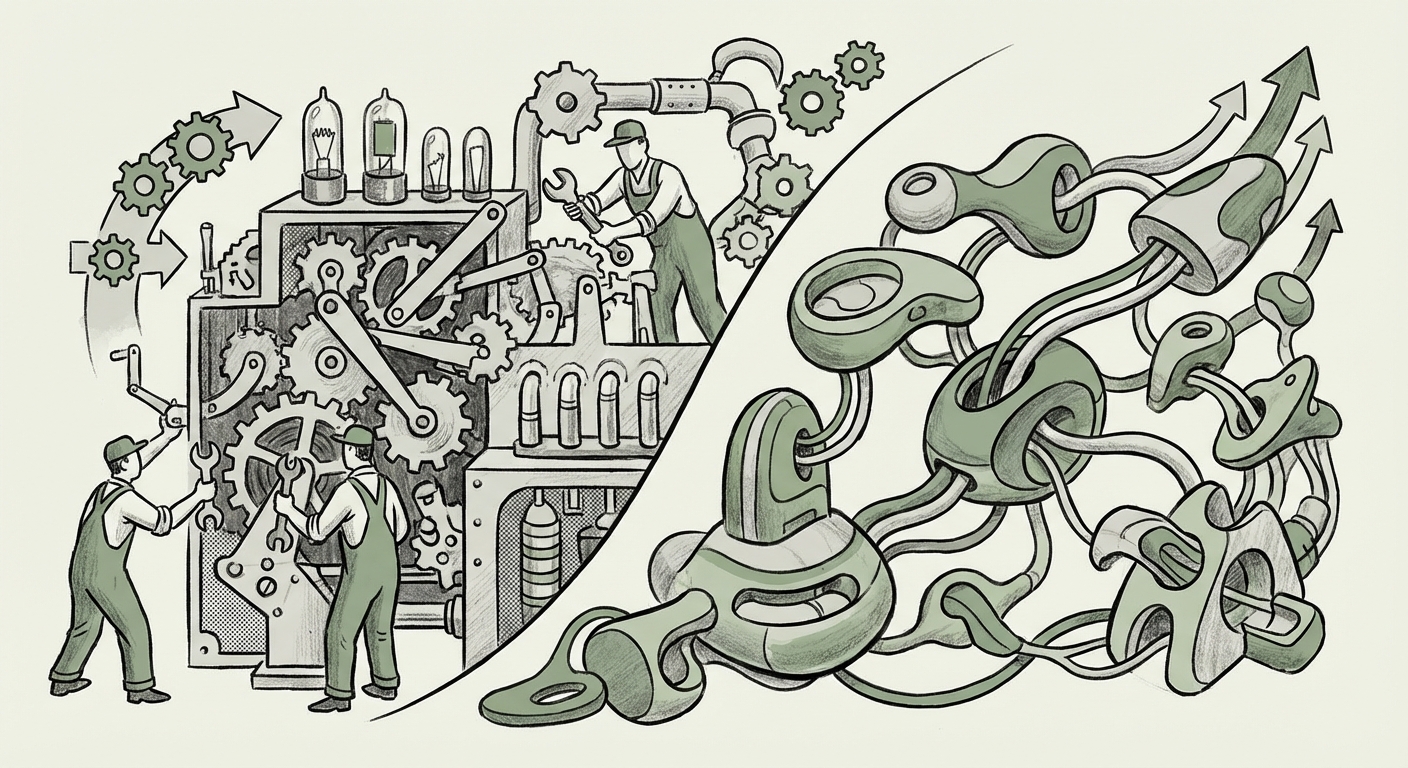
The Agent-Native Rewrite: How AI Agents Are Forcing Us to Reimagine Software
Artificial intelligence (AI) is rapidly changing the world, and one of the most exciting developments is the rise of AI agents. These aren't your typical software programs; they're designed to be autonomous, proactive, and capable of learning and adapting. Because of this, the emergence of AI agents means that much of our existing software infrastructure will need to be rethought from the ground up.
What are AI Agents?
Think of AI agents as digital assistants that can perform complex tasks on your behalf. They can automate processes, make decisions, and even learn from their experiences. Unlike traditional software, which follows pre-defined rules, AI agents can handle uncertainty and adapt to changing circumstances. This capability stems from their use of machine learning models, which allow them to analyze data, identify patterns, and make predictions.
The Agent-Native Rewrite: A Paradigm Shift
The shift towards AI agents necessitates what's being called the "agent-native rewrite." This means that instead of simply adding AI features to existing software, we need to rebuild our software infrastructure from the ground up, with AI agents at its core. This is because traditional software is not designed to handle the dynamic and unpredictable nature of AI agents. Traditional systems are often rigid, relying on predefined workflows and data structures. AI agents, on the other hand, require a more flexible and adaptable environment.
Why is this Rewrite Necessary?
Several factors drive the need for an agent-native rewrite:
- Autonomy: AI agents are designed to operate autonomously, making decisions without human intervention. This requires software infrastructure that can support independent operation, handle exceptions, and ensure security.
- Learning: AI agents learn from data and experience, constantly improving their performance. The underlying infrastructure must provide the data pipelines, storage, and processing power necessary for continuous learning.
- Adaptability: AI agents need to adapt to changing environments and user needs. This requires flexible software architectures that can be easily modified and extended.
- Complexity: AI agent systems often involve multiple agents interacting with each other and with external systems. The infrastructure must manage this complexity, ensuring coordination and communication between agents.
Implications for the Future of AI
The agent-native rewrite has profound implications for the future of AI. By building software infrastructure specifically designed for AI agents, we can unlock their full potential and create new possibilities. Here are a few key areas where this rewrite will have a major impact:
- Automation: AI agents will automate complex tasks across various industries, from manufacturing and logistics to finance and healthcare.
- Personalization: AI agents will personalize experiences for users, tailoring products, services, and information to their individual needs and preferences.
- Innovation: AI agents will drive innovation by enabling new forms of human-computer interaction and creating new business models.
- Problem Solving: AI agents will help us solve some of the world's most pressing problems, from climate change to disease outbreaks, by analyzing data, identifying patterns, and developing solutions.
Practical Implications for Businesses
For businesses, the agent-native rewrite represents both a challenge and an opportunity. Companies that embrace this shift and invest in AI-native software infrastructure will be well-positioned to gain a competitive advantage. Here are some practical implications for businesses:
- Re-evaluate Software Architecture: Businesses need to re-evaluate their existing software architecture and identify areas where AI agents can be integrated. This may involve migrating to new platforms, adopting new development methodologies, and retraining staff.
- Invest in AI Talent: Building and deploying AI agents requires specialized skills in areas such as machine learning, data science, and software engineering. Businesses need to invest in attracting and retaining AI talent.
- Focus on Data: AI agents learn from data, so businesses need to focus on collecting, cleaning, and preparing data for AI applications. This may involve investing in new data infrastructure and developing data governance policies.
- Embrace Experimentation: The field of AI is rapidly evolving, so businesses need to embrace experimentation and be willing to try new approaches. This may involve setting up AI labs, running pilot projects, and partnering with AI startups.
Societal Implications
The rise of AI agents also has significant societal implications. As AI agents become more powerful and autonomous, it's crucial to address ethical considerations and ensure that they are used responsibly. Here are some key societal implications:
- Job Displacement: AI agents may automate tasks currently performed by humans, leading to job displacement in some industries. It's important to invest in retraining and education programs to help workers adapt to the changing job market.
- Bias and Fairness: AI agents can perpetuate biases present in the data they are trained on, leading to unfair or discriminatory outcomes. It's crucial to develop techniques for mitigating bias in AI systems and ensuring fairness.
- Privacy and Security: AI agents collect and process vast amounts of data, raising concerns about privacy and security. It's important to develop robust security measures to protect data from unauthorized access and ensure that AI agents comply with privacy regulations.
- Transparency and Accountability: It's important to understand how AI agents make decisions and to hold them accountable for their actions. This requires developing transparent AI systems that can explain their reasoning and provide mechanisms for redress.
Actionable Insights
So, what can you do to prepare for the agent-native rewrite? Here are some actionable insights:
- Start Learning: Educate yourself about AI agents, machine learning, and related technologies. There are many online courses, books, and articles available.
- Experiment with AI Tools: Try out AI tools and platforms to get a feel for how they work. Many cloud providers offer free trials or low-cost options.
- Identify Use Cases: Look for opportunities to apply AI agents in your business or personal life. Start with small, manageable projects and gradually scale up.
- Join the Community: Connect with other AI enthusiasts and experts. Attend conferences, join online forums, and participate in open-source projects.