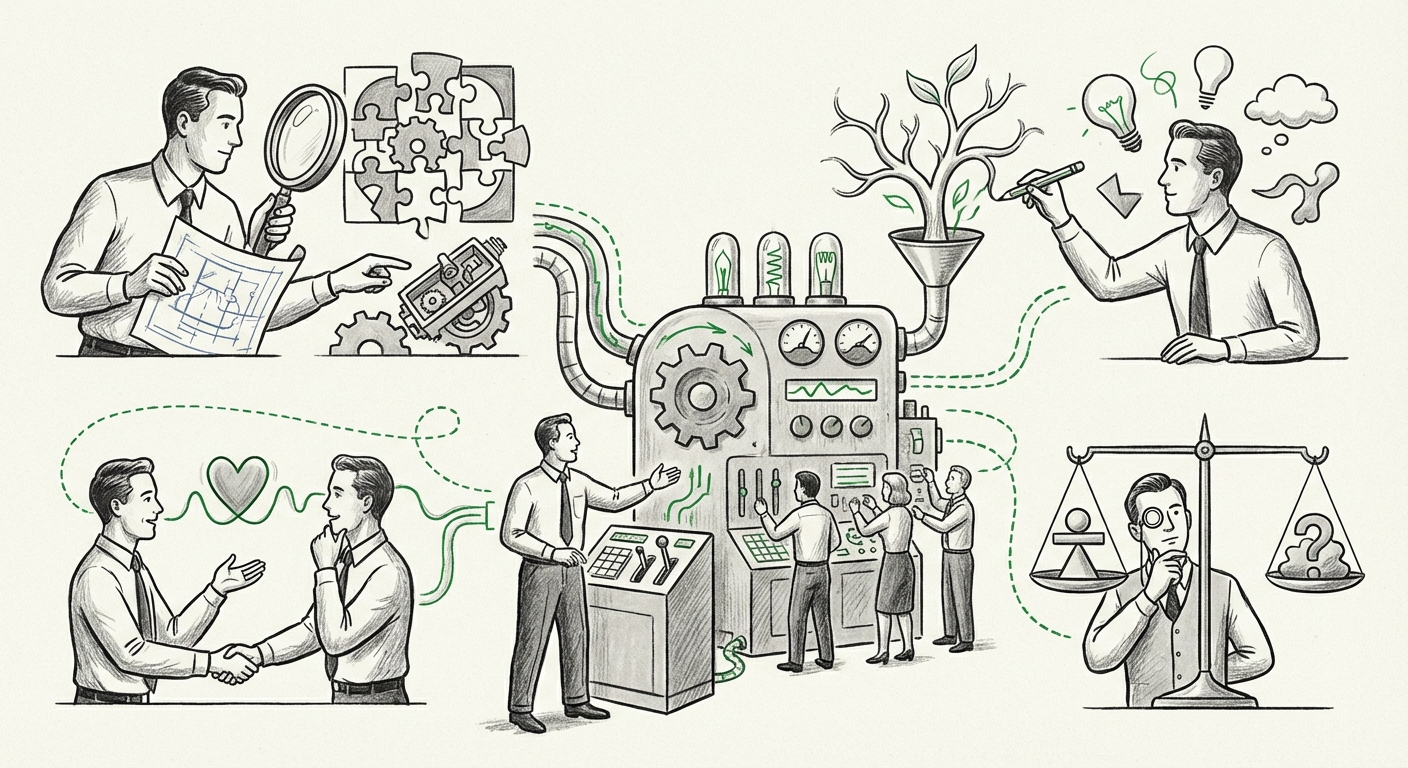
Skills That Remain Valuable Even as AI Advances
Artificial Intelligence (AI) is changing the world, and it's changing fast! By 2026, AI is already a big part of our lives, helping us with everything from simple tasks to complex problem-solving. But with AI doing more and more, what skills will *you* need to stay relevant and successful in your career? This article explores the skills that will remain valuable, even as AI gets smarter and more capable.
Why Focus on Skills That Last?
Think of AI as a super-smart tool. Like any tool, it's powerful, but it needs someone to guide it. The skills that will matter most are the ones that allow you to work *with* AI, not compete against it. These are the skills that AI can't easily replicate: things like thinking creatively, solving tough problems, understanding people, and leading teams.
The Core Skills for an AI-Powered World
Here are some of the most important skills to develop to thrive in a world increasingly shaped by AI:
1. Complex Problem-Solving
AI can handle routine problems, but it struggles with anything that requires original thought or creative solutions. That's where you come in! Complex problem-solving involves:
- Analyzing situations: Breaking down big problems into smaller, manageable parts.
- Thinking critically: Evaluating information and ideas carefully.
- Finding creative solutions: Coming up with new and innovative ways to solve problems.
This skill will be crucial for using AI effectively. You'll need to identify the right problems for AI to solve and then interpret the results to make informed decisions.
2. Creativity and Innovation
AI can generate ideas and patterns based on existing data, but it can't truly *create* something new. Creativity is about:
- Thinking outside the box: Coming up with original and unusual ideas.
- Experimenting: Trying new things and seeing what works.
- Imagination: Envisioning new possibilities and turning them into reality.
As AI handles more of the routine tasks, your ability to innovate and create will become even more valuable. This might involve designing new products, developing new marketing strategies, or finding new ways to use AI itself.
3. Emotional Intelligence
AI is getting better at understanding human emotions, but it can't truly *feel* them. Emotional intelligence (EQ) is about:
- Understanding your own emotions: Recognizing how you feel and why.
- Understanding the emotions of others: Empathizing with people and seeing things from their perspective.
- Managing emotions: Controlling your own emotions and responding appropriately to the emotions of others.
EQ is essential for building strong relationships, leading teams, and providing excellent customer service – all things that AI can't easily do. It allows you to connect with people on a deeper level, build trust, and resolve conflicts effectively.
4. Critical Thinking
In a world filled with information, much of which may be AI-generated, critical thinking is more important than ever. It involves:
- Analyzing information: Evaluating the accuracy and reliability of sources.
- Identifying biases: Recognizing when information is presented in a way that favors a particular point of view.
- Forming your own opinions: Drawing conclusions based on evidence and reason.
Critical thinking will help you separate fact from fiction, identify misinformation, and make sound judgments in an AI-driven world. You'll need to be able to question the outputs of AI, assess their validity, and understand their limitations.
5. Leadership and Management Skills
While AI can automate many tasks, it can't replace human leadership. Leadership and management skills involve:
- Motivating and inspiring others: Getting people excited about working together to achieve a common goal.
- Delegating tasks: Assigning responsibilities to team members based on their strengths.
- Providing feedback and support: Helping team members grow and develop their skills.
As AI takes over more routine management tasks, human leaders will need to focus on the bigger picture: setting strategy, building culture, and inspiring their teams to achieve ambitious goals. You'll be responsible for guiding teams that include both humans and AI, ensuring that everyone works together effectively.
Practical Implications for Businesses and Society
These skills aren't just important for individuals; they're also crucial for businesses and society as a whole.
- Businesses: Companies that invest in developing these skills in their employees will be better able to adapt to the changing landscape and leverage AI effectively. This means providing training opportunities, creating a culture of innovation, and empowering employees to take risks.
- Society: As AI becomes more prevalent, it's important to ensure that everyone has the opportunity to develop these essential skills. This means investing in education, providing access to training programs, and creating a society that values creativity, critical thinking, and emotional intelligence.
Actionable Insights: How to Develop These Skills
So, how can you develop these skills and prepare for the future of work?
- Seek out challenging projects: Look for opportunities to tackle complex problems and find creative solutions.
- Embrace lifelong learning: Stay curious and continue to learn new things throughout your career.
- Practice active listening: Pay attention to what others are saying and try to understand their perspective.
- Get involved in your community: Volunteer your time and skills to help others.
- Don't be afraid to fail: Experiment, take risks, and learn from your mistakes.
By focusing on these essential skills, you can future-proof your career and thrive in the age of AI. Remember, AI is a tool, and the skills that will matter most are the ones that allow you to use that tool effectively and creatively.