When Does AI Teamwork Actually Work? Stanford Study Reveals the Truth
Artificial intelligence (AI) is rapidly changing the world, and one of the most exciting areas of development is the use of multiple AI agents working together as a team. But does teaming up AI agents always lead to better results? A new study from Stanford University, published on April 9, 2026, is providing some much-needed clarity on this question, revealing when AI teamwork is truly beneficial and when it's just a waste of valuable computing resources.
The Promise of AI Teams
The idea behind AI teams is simple: just like in human teams, multiple AI agents can bring different skills and perspectives to the table, leading to more creative and effective solutions. Imagine a team of AI agents working together to design a new product, diagnose a medical condition, or manage a complex supply chain. The possibilities seem endless.
However, simply throwing more AI agents at a problem doesn't guarantee success. The Stanford study digs into the critical factors that determine whether AI teamwork actually pays off.
Key Findings from the Stanford Study
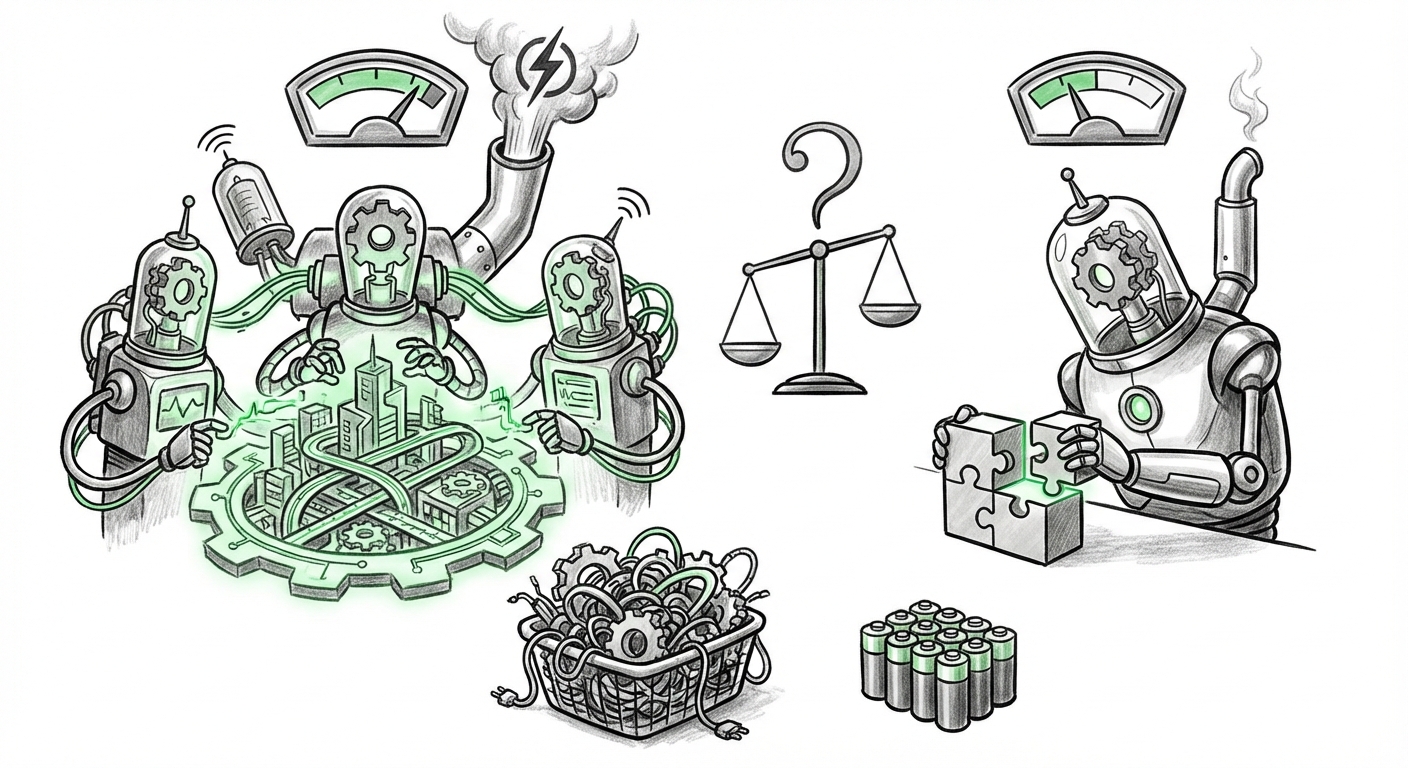
The Stanford study tackles a fundamental question: Under what circumstances is it more efficient to use a single, powerful AI agent versus a team of multiple, potentially less powerful, AI agents? The researchers focused on understanding the trade-offs between the computational cost of running multiple agents and the potential performance gains from their collaboration.
Here's what the study revealed:
- Task Complexity Matters: AI teams tend to outperform single agents on complex tasks that require a diverse set of skills or knowledge. When a task can be easily handled by a single AI, adding more agents may only increase computational costs without providing significant benefits.
- Communication is Key: The effectiveness of an AI team heavily relies on how well the agents can communicate and coordinate their actions. If agents struggle to share information or resolve conflicts, the team's performance can suffer.
- Diversity of Skills is Crucial: A team of AI agents is most effective when its members possess a diverse range of skills and expertise. A team of similar agents may not offer any advantages over a single, well-rounded agent.
- Computational Cost: The study emphasizes the importance of considering the computational cost of running multiple AI agents. In some cases, the performance gains from AI teamwork may not justify the added expense of increased computing power.
What This Means for the Future of AI
The Stanford study has significant implications for the future of AI development and deployment. It highlights the need for a more nuanced approach to AI teamwork, one that carefully considers the specific characteristics of the task at hand, the communication capabilities of the agents, and the overall computational cost.
Here's how these findings could shape the future of AI:
- Smarter AI Design: AI systems will be designed with a better understanding of when to leverage teamwork and when to rely on individual agents. This will lead to more efficient and cost-effective AI solutions.
- Improved Communication Protocols: Researchers will focus on developing more robust and efficient communication protocols for AI agents. This will enable teams of AI agents to collaborate more effectively.
- Specialized AI Agents: We'll see a rise in specialized AI agents that are designed to excel in specific tasks. These agents can then be combined into teams to tackle complex problems that require a diverse set of skills.
- Resource-Aware AI: Future AI systems will be more aware of their computational resource consumption and will be able to dynamically adjust their behavior to optimize performance and efficiency.
Practical Implications for Businesses and Society
The insights from the Stanford study have important practical implications for businesses and society as a whole.
For Businesses:
- Strategic AI Investment: Businesses can make more informed decisions about their AI investments, focusing on areas where AI teamwork is most likely to deliver a significant return on investment.
- Optimized AI Deployment: Businesses can optimize the deployment of AI systems by carefully considering the task requirements and the capabilities of the available AI agents.
- Enhanced Productivity: By leveraging AI teams effectively, businesses can automate complex tasks, improve decision-making, and enhance overall productivity.
For Society:
- Improved Healthcare: AI teams can be used to diagnose diseases more accurately, develop personalized treatment plans, and accelerate drug discovery.
- Safer Transportation: AI-powered autonomous vehicles can work together to improve traffic flow, reduce accidents, and enhance overall safety.
- More Efficient Infrastructure: AI teams can be used to optimize energy consumption, manage water resources, and improve the resilience of critical infrastructure.
Actionable Insights
So, what can you do with this information right now?
- Assess Your Needs: Carefully evaluate the tasks you want to automate or improve with AI. Determine whether these tasks require a diverse set of skills or can be handled by a single, well-rounded AI.
- Experiment with AI Teams: Explore the potential of AI teamwork in your organization. Start with small-scale experiments to test the effectiveness of different AI team configurations.
- Invest in AI Training: Train your employees to work alongside AI agents. This will help them understand the capabilities and limitations of AI teams and enable them to collaborate more effectively.
- Monitor Performance: Continuously monitor the performance of your AI systems. Track key metrics such as accuracy, efficiency, and cost to ensure that your AI investments are delivering the desired results.
Conclusion
The Stanford study provides valuable insights into the effectiveness of AI teamwork. By understanding the factors that determine whether AI teams are truly beneficial, we can pave the way for more efficient, cost-effective, and impactful AI solutions. The future of AI is not just about building more powerful AI agents, but also about creating intelligent teams that can work together to solve the world's most pressing challenges.