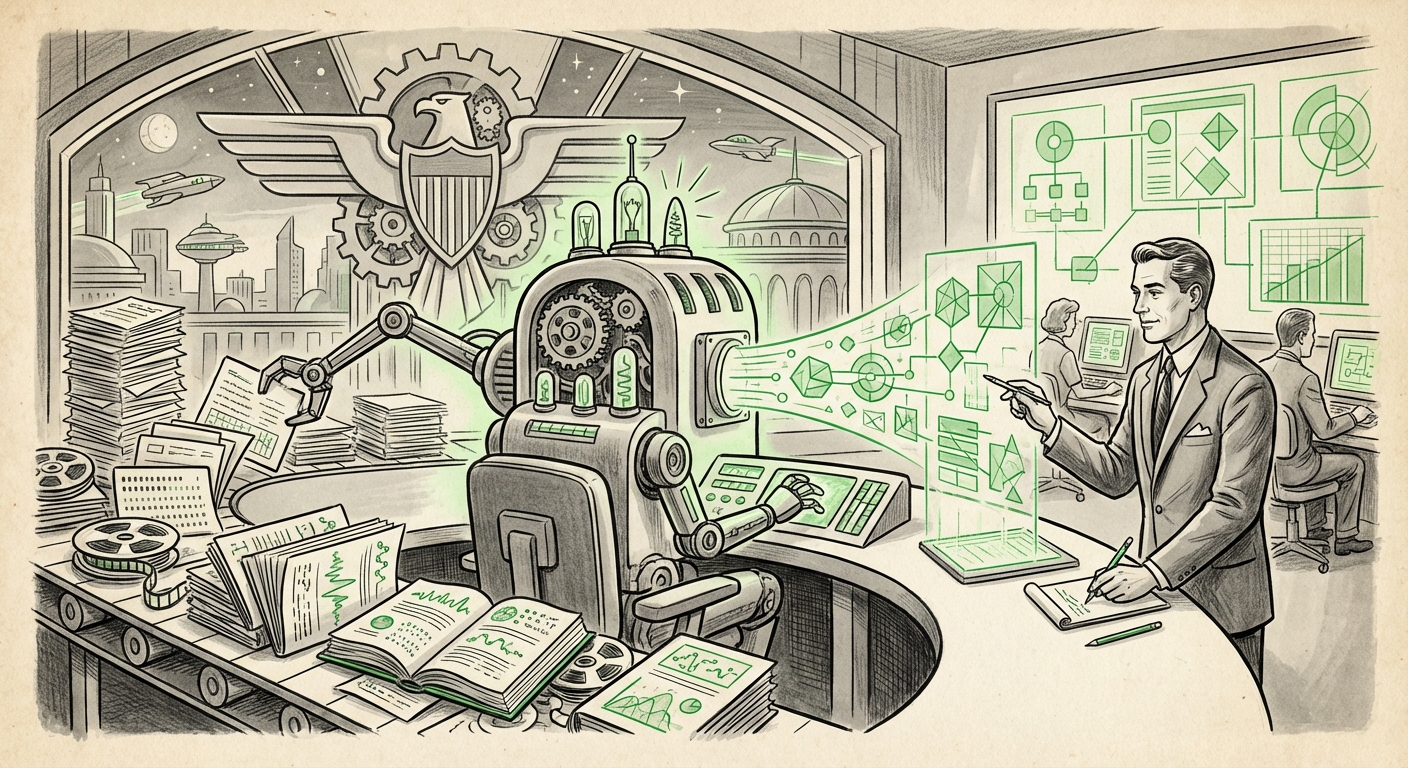
CIA to Integrate AI Assistants: Transforming Intelligence Analysis Forever
Imagine a world where intelligence analysts have super-smart AI helpers to sift through mountains of data, spot hidden patterns, and make quicker, more accurate decisions. That future is closer than you think! The CIA announced in April 2026 that they plan to integrate AI assistants into *all* of their analysis platforms. This is a big deal, not just for national security, but for how AI will be used in all sorts of fields.
What's Happening?
The Central Intelligence Agency (CIA) is responsible for gathering and analyzing information to protect national security. This means they deal with a massive amount of data every day – reports, documents, communications, and more. To make sense of it all, the CIA is turning to AI. By integrating AI assistants directly into their analysis platforms, the CIA aims to:
- Speed up analysis: AI can quickly scan and process information much faster than humans.
- Improve accuracy: AI can identify patterns and connections that humans might miss, leading to more accurate insights.
- Free up analysts: By handling routine tasks, AI allows analysts to focus on more complex and strategic work.
Why Is This Important for the Future of AI?
The CIA's move to embrace AI assistants highlights several important trends and implications for the future of artificial intelligence:
1. AI is Becoming Essential for Handling Big Data
We live in an age of information overload. Every day, we create and collect more data than ever before. For organizations like the CIA, this presents a huge challenge. How do you sift through all that noise to find the signal? AI offers a powerful solution by automating the process of data analysis and pattern recognition.
2. AI is Evolving Beyond Simple Automation
In the past, AI was often used for simple tasks, like data entry or basic calculations. But today's AI is much more sophisticated. It can understand natural language, identify images, and even make predictions. The CIA's AI assistants will likely be capable of performing a wide range of tasks, from summarizing documents to identifying potential threats.
3. AI is Transforming the Nature of Work
As AI takes on more routine tasks, human workers will need to focus on higher-level skills, such as critical thinking, problem-solving, and creativity. The CIA's analysts will be able to use AI to augment their own abilities, allowing them to be more effective and strategic in their work.
4. Security and Ethical Considerations are Paramount
Using AI in sensitive areas like intelligence analysis raises important questions about security and ethics. How do we ensure that AI systems are not vulnerable to hacking or manipulation? How do we prevent AI from being used to discriminate against certain groups of people? These are issues that the CIA – and all organizations using AI – will need to address carefully.
Practical Implications for Businesses and Society
The CIA's adoption of AI assistants has implications that extend far beyond the world of intelligence. Here are a few examples:
1. Businesses Can Use AI to Improve Decision-Making
Just like the CIA, businesses can use AI to analyze data, identify trends, and make better decisions. For example, a marketing team could use AI to understand customer behavior and optimize advertising campaigns. A financial firm could use AI to detect fraud and manage risk. The possibilities are endless.
2. AI Can Help Solve Some of the World's Biggest Problems
AI has the potential to help us address some of the most pressing challenges facing society, such as climate change, poverty, and disease. For example, AI could be used to develop new energy sources, optimize food production, or accelerate drug discovery.
3. Education and Training Will Be Crucial
To take advantage of the opportunities presented by AI, we need to invest in education and training. Workers will need to learn new skills to work alongside AI systems. Students will need to develop a strong foundation in math, science, and computer science. By preparing for the future, we can ensure that AI benefits everyone.
Actionable Insights
So, what can you do to prepare for the age of AI?
- Stay informed: Keep up with the latest developments in AI. Read articles, attend conferences, and follow experts in the field.
- Experiment with AI tools: There are many AI tools available online, some of which are free. Try them out and see how they can help you in your work or personal life.
- Develop your skills: Focus on developing skills that will be valuable in the age of AI, such as critical thinking, problem-solving, and creativity.
- Think about the ethical implications: Consider the ethical implications of AI and how it might impact society.
Conclusion
The CIA's plan to integrate AI assistants into all of its analysis platforms is a sign of things to come. AI is transforming the way we work, the way we live, and the way we understand the world. By embracing AI and preparing for its implications, we can unlock its full potential and create a better future for all.