The Rise of Robot Soldiers: How AI is Changing Warfare Forever
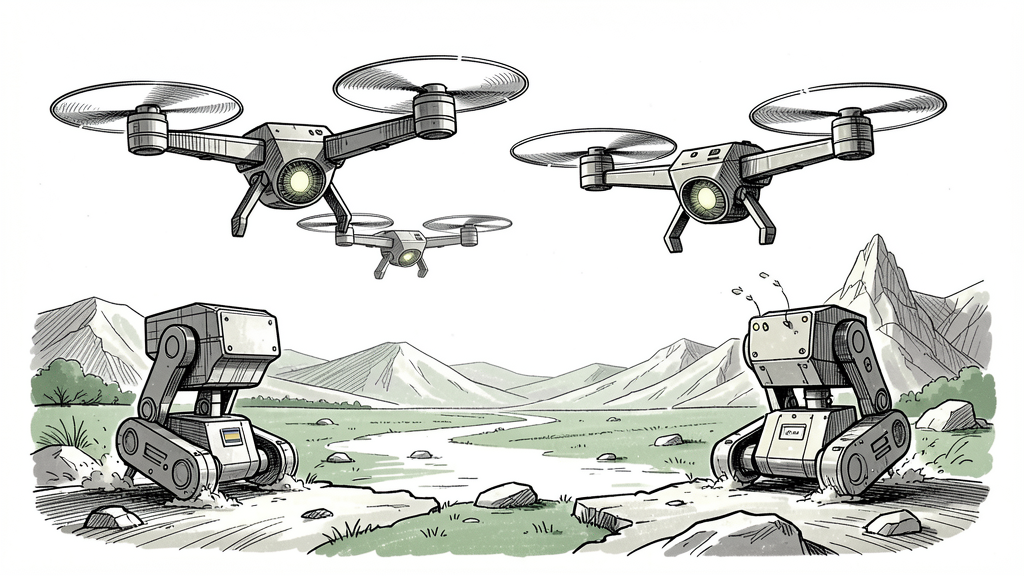
Imagine a world where wars are fought not by soldiers on the ground, but by robots and drones controlled by artificial intelligence (AI). This might sound like science fiction, but it's quickly becoming a reality. According to a recent report on the-decoder.com, Ukraine successfully captured a Russian position in 2026 using only drones and ground robots. This marks a significant turning point in military strategy and the role of AI in warfare.
What Happened in Ukraine?
The article on the-decoder.com details a fascinating event: Ukrainian forces managed to seize a Russian-held location without sending any human soldiers into direct combat. Instead, they relied entirely on unmanned aerial vehicles (UAVs), also known as drones, and unmanned ground vehicles (UGVs), or ground robots. This coordinated attack demonstrates the increasing sophistication and effectiveness of AI-powered military technology.
Why is This Important for the Future of AI?
This event highlights several key trends in the development and application of AI:
- Increased Autonomy: The drones and robots likely operated with a high degree of autonomy, meaning they could make decisions on their own based on pre-programmed instructions and real-time data from sensors. This shows advancements in AI's ability to handle complex situations without constant human intervention.
- Improved Coordination: Successfully capturing a position requires seamless coordination between different units. The fact that drones and robots could work together so effectively indicates significant progress in multi-agent AI systems.
- Enhanced Perception: For the drones and robots to navigate the battlefield and identify targets, they needed advanced perception capabilities, including computer vision and sensor fusion. This demonstrates the ongoing development of AI's ability to "see" and understand the world.
- Reduced Human Risk: Perhaps the most significant implication is the reduction of risk to human soldiers. By using robots and drones, military forces can achieve their objectives while minimizing casualties.
Practical Implications for Businesses and Society
While the use of AI in warfare raises ethical concerns, the underlying technologies have numerous potential applications in other areas:
Businesses
- Logistics and Delivery: The same technology used to coordinate drones on the battlefield could be used to optimize delivery routes and manage warehouse operations. Imagine a fleet of delivery drones that can automatically adjust their routes based on traffic and weather conditions.
- Manufacturing: Robots with advanced perception and manipulation capabilities can automate complex manufacturing tasks, improving efficiency and reducing costs. These robots could also be used to perform dangerous or repetitive tasks, protecting human workers.
- Security: Autonomous robots can patrol facilities, detect intruders, and respond to emergencies, providing enhanced security and reducing the need for human guards.
- Agriculture: Drones can monitor crops, identify pests and diseases, and apply pesticides or fertilizers with pinpoint accuracy, improving yields and reducing environmental impact.
Society
- Search and Rescue: Drones and robots can be deployed to search for survivors in disaster areas, providing valuable information and assistance to rescue teams.
- Infrastructure Inspection: Robots can inspect bridges, pipelines, and other critical infrastructure, detecting damage and preventing accidents.
- Environmental Monitoring: Drones can monitor air and water quality, track wildlife populations, and assess the impact of climate change.
- Healthcare: Robots can assist surgeons, deliver medication, and provide companionship to elderly or disabled individuals.
Actionable Insights
So, what can businesses and individuals learn from this development in AI-driven warfare? Here are some actionable insights:
- Invest in AI Education and Training: As AI becomes more prevalent, it's crucial to invest in education and training programs to prepare the workforce for the jobs of the future. This includes developing skills in areas such as data science, machine learning, and robotics.
- Explore AI Applications in Your Industry: Identify opportunities to apply AI to improve efficiency, reduce costs, and create new products and services in your industry. Consider conducting pilot projects to test the feasibility and effectiveness of AI solutions.
- Address Ethical Concerns: As AI becomes more powerful, it's important to address the ethical concerns surrounding its use. This includes developing guidelines and regulations to ensure that AI is used responsibly and ethically.
- Collaborate and Share Knowledge: AI is a rapidly evolving field, so it's important to collaborate with other organizations and share knowledge to accelerate innovation. This includes participating in industry consortia, attending conferences, and publishing research papers.
- Stay Informed: Keep up-to-date on the latest developments in AI by reading industry publications, attending webinars, and following leading AI researchers and companies.
The Future is Now
The use of drones and robots in Ukraine is a clear indication that AI is transforming warfare. But the implications of this technology extend far beyond the battlefield. AI has the potential to revolutionize many aspects of our lives, from the way we work to the way we live. By understanding the potential of AI and addressing the ethical concerns surrounding its use, we can harness its power to create a better future for all.