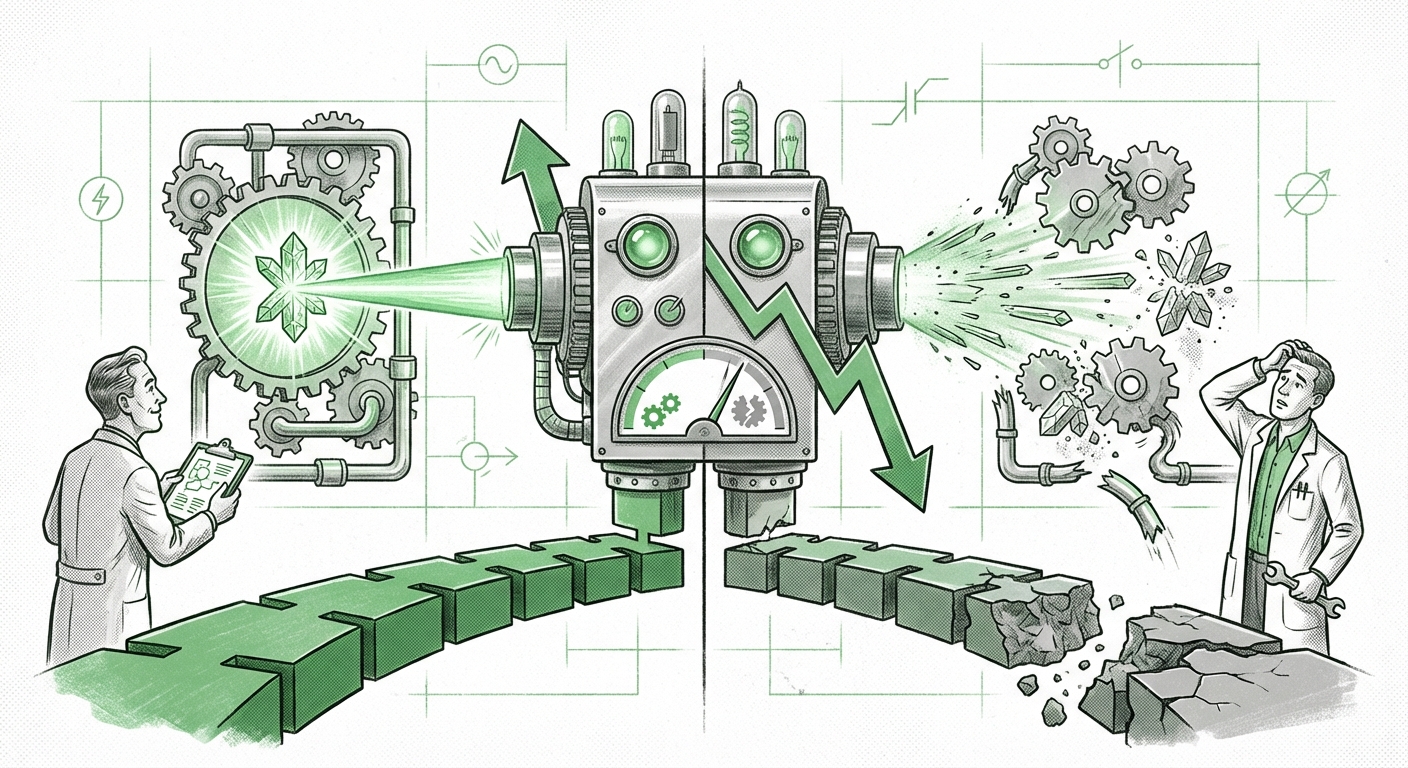
Your AI Agents Will Run Everywhere. Is Your Architecture Ready For That?
In the rapidly evolving world of artificial intelligence, a groundbreaking shift is upon us. An article published by DataRobot on April 21, 2026, poses a crucial question that every business leader and technology architect must consider: "Your AI agents will run everywhere. Is your architecture ready for that?" This statement isn't just a prediction; it's a declaration of the next frontier in AI, pointing to a future where intelligent agents are not confined to isolated systems but are woven into the very fabric of our digital and physical environments. This comprehensive analysis delves into what "AI agents running everywhere" truly means, its profound implications for the future of AI, and the practical steps businesses and society must take to prepare for this pervasive intelligence.
The Dawn of Ubiquitous AI Agents
For years, AI has been a powerful tool, often working behind the scenes in specific applications – recommending products, detecting fraud, or optimizing logistics. However, the vision of AI agents running everywhere signals a new era. This isn't just about more AI; it's about a different kind of AI: one that is active, distributed, and pervasive. Imagine intelligent programs that act on their own or on our behalf, seamlessly integrated into every device, every cloud service, and every interaction point. They will learn, adapt, and proactively complete tasks across a vast network, making decisions and executing actions without constant human oversight.
The phrase "run everywhere" implies an unprecedented level of integration and accessibility for AI. It means these agents won't just reside in large, centralized data centers. Instead, they will operate at the 'edge' – on our smartphones, smart home devices, factory floors, and in autonomous vehicles. They will exist in cloud environments, local servers, and even within the very applications we use daily. This ubiquity transforms AI from a specialized tool into a constant, ambient presence, ready to assist, automate, and innovate at every turn. It marks a fundamental shift from AI that reacts to AI that actively engages with the world around it.
The Seismic Shift: From Passive AI to Proactive Intelligence
The traditional view of AI often involves systems that wait for a command or data input before performing a task. This is passive AI. The emergence of AI agents, particularly those destined to "run everywhere," signifies a move towards proactive intelligence. These agents are designed to understand context, anticipate needs, and initiate actions. They will operate with a degree of autonomy, making them incredibly powerful, but also demanding a new level of architectural foresight.
This shift from passive to proactive will unlock new capabilities across every industry. In healthcare, an AI agent might proactively monitor a patient's vital signs and alert specialists to potential issues before they become critical. In manufacturing, agents could oversee supply chains, anticipating disruptions and rerouting materials autonomously. For individual users, agents could manage schedules, filter information, and optimize daily tasks across various devices without explicit prompting. This is not just automation; it's intelligent, context-aware automation that learns and improves over time.
Why Architectural Readiness is Non-Negotiable
The core of DataRobot's question – "Is your architecture ready for that?" – highlights the most critical challenge facing enterprises. Deploying AI agents that "run everywhere" demands a complete re-evaluation and modernization of existing technology architectures. Current systems, often built for centralized data processing and traditional software deployments, simply won't suffice for a world of distributed, autonomous AI.
Key architectural considerations become paramount:
- Scalability and Elasticity: An architecture must be able to handle an explosion of AI agents, each potentially performing multiple tasks simultaneously. It needs to scale up and down dynamically, allocating resources efficiently to meet fluctuating demands across diverse environments, from powerful cloud servers to energy-constrained edge devices.
- Distributed Computing and Edge Integration: Pervasive AI means agents operating outside traditional data centers. Architectures must support seamless deployment, management, and communication for agents running on edge devices, where latency is critical and connectivity can be intermittent.
- Robust Security and Privacy: With agents everywhere, the attack surface expands dramatically. Security must be built-in from the ground up, protecting data, communications, and agent behaviors across a vast, decentralized network. Privacy concerns become more complex as AI agents process sensitive information in varied locations.
- Interoperability and Standardization: For agents to "run everywhere" and be truly effective, they must be able to communicate and collaborate with each other, as well as with existing legacy systems and human users. This requires common protocols, data formats, and shared understanding, which means the underlying architecture needs to support a high degree of interoperability.
- Observability and Governance: Managing thousands, or even millions, of distributed AI agents requires robust tools for monitoring their performance, understanding their decisions, and ensuring they comply with ethical guidelines and business rules. Knowing what each agent is doing, where, and why, will be crucial for trust and control.
- Flexibility and Adaptability: The AI landscape evolves rapidly. Architectures must be designed for change, allowing for easy updates, modifications, and the introduction of new agent capabilities without disrupting the entire ecosystem.
What This Means for the Future of AI and How It Will Be Used
The future envisioned by DataRobot is one where AI is no longer a niche technology but a fundamental layer of our operational reality. AI agents "running everywhere" will transform how AI is perceived and utilized. Instead of being viewed as separate applications, AI will become an ambient intelligence, enriching every digital interaction and physical space.
This future implies:
- Hyper-Personalized Experiences: Agents will learn individual preferences and adapt services, products, and information flows to an unprecedented degree, making every interaction feel uniquely tailored.
- Proactive Automation: Routine tasks, complex decision chains, and even creative processes will be increasingly handled by autonomous agents, freeing human talent for more strategic and innovative endeavors.
- Intelligent Ecosystems: Instead of siloed systems, we will see interconnected networks of agents collaborating to achieve complex goals, from managing smart cities to optimizing global logistics.
- Continuous Learning and Adaptation: Agents running everywhere will generate vast amounts of real-time data, constantly feeding back into their learning models, leading to increasingly intelligent and adaptive behaviors.
- A New Relationship with Technology: Humans will interact with AI not just through screens and commands, but through seamless, intelligent assistance embedded in their daily lives, blurring the lines between digital and physical.
Practical Implications for Businesses
For businesses, the arrival of ubiquitous AI agents represents both an immense opportunity and a significant challenge. Those who are prepared will gain a profound competitive advantage; those who are not risk being left behind.
Opportunities:
- Unprecedented Efficiency: Automating complex processes and making real-time, data-driven decisions will drastically improve operational efficiency and reduce costs.
- New Business Models and Services: Pervasive agents enable entirely new ways to deliver value, creating innovative products and services that were previously impossible.
- Enhanced Customer and Employee Experiences: Personalized services for customers and intelligent assistance for employees will lead to higher satisfaction and productivity.
- Superior Decision-Making: Real-time data collection and analysis by distributed agents will provide deeper insights, allowing for more agile and effective strategic decisions.
- Global Reach with Local Relevance: Agents can operate globally while adapting to local contexts and regulations, offering tailored solutions at scale.
Challenges:
- Significant Investment: Modernizing architecture, developing new agentic AI capabilities, and ensuring robust security will require substantial financial and resource investment.
- Talent Gap: There will be an urgent need for professionals skilled in designing, deploying, and managing distributed AI systems, as well as in AI ethics and governance.
- Managing Complexity: The sheer number and distribution of agents will create unprecedented complexity in management, monitoring, and troubleshooting.
- Ethical and Governance Issues: Ensuring agents act ethically, fairly, and within legal boundaries, especially when autonomous, will require robust governance frameworks.
- Data Management: Collecting, processing, and securing data from millions of distributed sources will be a monumental task.
Societal Impact of Pervasive AI Agents
Beyond the enterprise, the proliferation of AI agents will have transformative effects on society as a whole. While promising immense benefits, it also introduces new complexities and ethical considerations.
Benefits:
- Smarter Infrastructure: AI agents can optimize everything from traffic flow and energy grids to waste management, leading to more efficient and sustainable cities.
- Personalized Public Services: From education to healthcare, services can be tailored to individual needs, improving accessibility and effectiveness.
- Enhanced Safety and Security: Agents can monitor environments for threats, assist in disaster response, and enhance public safety.
- Increased Accessibility: AI agents can bridge gaps for individuals with disabilities, providing assistance and enabling greater independence.
Concerns:
- Privacy Erosion: The constant collection and processing of data by pervasive agents raise significant concerns about individual privacy and data misuse.
- Algorithmic Bias: If not carefully designed and monitored, agents can perpetuate and amplify existing biases, leading to unfair outcomes.
- Job Displacement: While new jobs will emerge, widespread automation by agents may displace certain types of labor, requiring societal adaptation and new skill development.
- Control and Autonomy: Questions will arise regarding who controls these autonomous agents, how their actions are governed, and what happens when their decisions conflict with human intent or values.
- Digital Divide: Unequal access to pervasive AI technologies could exacerbate existing societal inequalities.
Actionable Insights: How to Prepare Your Enterprise Today
The clock is ticking. As DataRobot pointed out in 2026, the future of ubiquitous AI agents is not a distant dream but a rapidly approaching reality. Businesses must act now to ensure their architecture is ready.
Here are actionable steps to consider:
- Develop a Holistic AI Strategy: Don't just dabble in AI; create a comprehensive strategy that envisions where and how AI agents will operate across your entire organization, aligning with long-term business goals.
- Modernize Your Infrastructure: Invest in cloud-native architectures, edge computing capabilities, and robust, secure networking solutions that can support distributed workloads and real-time data processing.
- Prioritize Data Governance and Quality: Pervasive AI relies on high-quality, accessible, and ethically managed data. Establish strong data governance frameworks, ensure data cleanliness, and develop strategies for handling data across distributed environments.
- Embrace a Security-First Mindset: Integrate security considerations into every stage of architectural design and agent development. Implement zero-trust principles, strong encryption, and continuous monitoring for threats.
- Invest in Talent and Culture: Upskill your workforce in AI development, MLOps, cybersecurity, and ethical AI. Foster a culture of innovation, experimentation, and continuous learning to adapt to new technologies.
- Start Small, Learn, and Scale: Begin with pilot projects that demonstrate the value of AI agents in specific, controlled environments. Learn from these deployments and incrementally scale your capabilities.
- Establish Ethical AI Guidelines: Proactively develop internal policies and frameworks for responsible AI development and deployment, addressing issues like bias, transparency, and accountability.
Conclusion
The question posed by DataRobot in 2026 – "Your AI agents will run everywhere. Is your architecture ready for that?" – serves as a powerful call to action. The advent of ubiquitous AI agents marks a transformative moment, promising a future of unprecedented efficiency, innovation, and intelligent interaction. This future is not a choice but an inevitable progression in the evolution of AI. For businesses and society alike, the journey ahead will be complex, filled with challenges ranging from architectural overhaul to ethical dilemmas. However, by proactively planning, investing in robust infrastructure, prioritizing security and governance, and fostering a culture of innovation, we can not only prepare for this pervasive intelligence but also harness its immense potential to build a more efficient, intelligent, and prosperous future for everyone.