Unlocking AI's Creative Potential: How Google's DESIGN.md is Reshaping Brand-Consistent Design
In the rapidly evolving landscape of artificial intelligence, a significant development emerged on April 23, 2026, that promises to redefine how AI interacts with the creative and branding worlds. Google unveiled its open-source initiative, DESIGN.md, a groundbreaking move that gives AI agents a "prompt-ready blueprint for brand-consistent design." This isn't just another incremental update; it's a fundamental shift, moving AI from mere content generation to intelligent, brand-aware creation. This article will delve into what DESIGN.md means for the future of AI, its practical implications for businesses and society, and provide actionable insights for navigating this new era.
The Genesis of Brand Consistency: Understanding DESIGN.md
Before DESIGN.md, AI models could generate stunning visuals, compelling text, or intricate layouts. However, a persistent challenge remained: ensuring these AI-generated outputs consistently adhered to specific brand guidelines—the unique colors, fonts, logos, tone of voice, and overall aesthetic that define a brand. Human designers and marketers often spent countless hours tweaking AI outputs to align with brand identity, or even opted to do manual work to ensure fidelity.
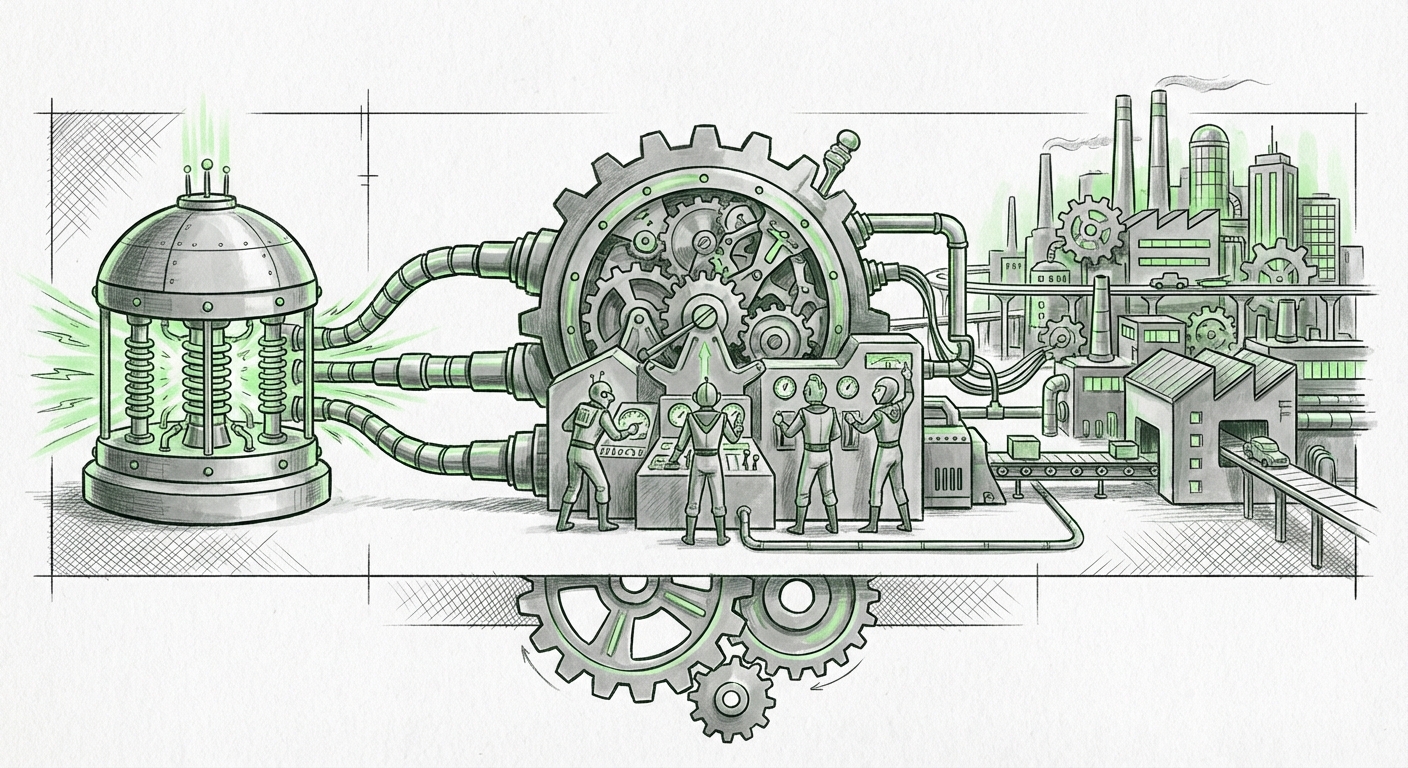
Google's open-source DESIGN.md changes this paradigm entirely. It acts as a comprehensive, structured framework, essentially a digital instruction manual, that can be seamlessly integrated into AI agent prompts. Think of it as a universal language for brand guidelines that AI can natively understand and apply. By providing a "prompt-ready blueprint," DESIGN.md allows developers and creators to feed an AI agent not just a request for a design, but also an explicit, detailed set of rules on how that design should look, feel, and function within a brand's established identity.
This initiative underscores a critical trend: the shift from generic, "out-of-the-box" AI outputs to highly customized, context-aware, and brand-aligned creations. It empowers AI to become a true extension of a brand's creative team, capable of upholding consistency at scale—something previously unimaginable without extensive human oversight.
Key Trends and Developments Sparked by DESIGN.md
The introduction of DESIGN.md catalyzes several crucial trends in the AI landscape:
- AI as a Brand Guardian: For the first time, AI agents can be inherently equipped to act as guardians of brand identity. Instead of merely generating, they can now filter, adapt, and create within predefined brand parameters, significantly reducing the risk of off-brand content.
- Standardization of Creative Prompts: DESIGN.md offers a standardized, open-source method for encoding brand guidelines. This could lead to a common framework for how we communicate complex design requirements to AI, making prompt engineering more precise and effective across different AI platforms.
- Democratization of Sophisticated Design: By making brand-consistent design more accessible through AI, smaller businesses, startups, and even individual creators can produce high-quality, professional-looking branded content without needing large design teams or extensive design expertise.
- Acceleration of AI Adoption in Creative Fields: The ability to maintain brand consistency removes a major hurdle for widespread AI adoption in marketing, advertising, and product design. Businesses can now trust AI to deliver not just quantity, but also quality and adherence to established standards.
- Emphasis on Structured Data for AI: DESIGN.md highlights the growing importance of structured, machine-readable data for AI to perform complex, nuanced tasks. It demonstrates that well-defined inputs lead to significantly more useful and targeted AI outputs.
What This Means for the Future of AI: Intelligent, Context-Aware Creation
The implications of DESIGN.md for the future of AI are profound, signaling a move towards more intelligent, context-aware, and purpose-driven AI agents:
Autonomous Design Agents Evolve
The "prompt-ready blueprint" means AI agents will become far more autonomous in design tasks. Imagine an AI agent not just generating a website layout, but one that inherently understands and applies your company's specific color palette, typography, spacing rules, and brand imagery from the get-go. These agents could autonomously iterate on designs, create variations for A/B testing, and even adapt layouts for different platforms (web, mobile, print) all while strictly adhering to brand guidelines. This capability elevates AI from a tool that assists with tasks to a partner that understands and enforces strategic objectives.
Enhanced Creative Workflows and Human-AI Collaboration
AI will increasingly act as a highly intelligent assistant for human designers and marketers. Instead of replacing creative roles, AI will augment them by taking over repetitive, rule-based tasks related to brand enforcement. Designers can focus on higher-level creative strategy, conceptualization, and innovation, knowing that the AI handles the meticulous application of brand standards. This collaboration will lead to faster iteration cycles, greater creative freedom for humans, and a significant boost in overall productivity.
AI as a Standard for Digital Asset Creation
As DESIGN.md or similar frameworks become widespread, the expectation for AI-generated content will shift. It won't be enough for AI to simply create; it will need to create on-brand. This sets a new benchmark for AI systems involved in any form of content generation, from marketing copy to video assets to user interface elements. AI will be expected to produce ready-to-use, brand-compliant assets, minimizing the need for extensive post-generation human editing.
The Evolution of Prompt Engineering
DESIGN.md signifies a more sophisticated era of prompt engineering. Instead of crafting verbose and sometimes ambiguous text prompts, users will interact with AI by feeding it structured data (like DESIGN.md) alongside their creative requests. This combination of creative intent and codified brand rules will lead to more predictable, higher-quality, and more relevant AI outputs. Prompt engineers will evolve into "AI Architects," skilled in structuring both creative briefs and technical guidelines for optimal AI performance.
AI's Role in Scaling Personalization
The ability of AI to maintain brand consistency while generating diverse content unlocks unprecedented levels of personalized marketing and communication. Brands can leverage AI to create hyper-targeted campaigns that resonate with individual customers, delivering messages and visuals tailored to their preferences, all while ensuring every touchpoint unmistakably reinforces the core brand identity. This will enable truly personalized customer experiences at a scale previously unattainable.
Practical Implications for Businesses and Society
The ripple effects of DESIGN.md will be felt across industries and societal structures.
For Businesses: Efficiency, Consistency, and Innovation
- Marketing & Branding: Marketers can generate campaigns at lightning speed, ensuring every ad, social media post, and email aligns perfectly with brand guidelines. This reduces approval cycles and allows for more agile responses to market trends. Expect a surge in automated, on-brand content creation.
- Design & Development: Design teams will see vast improvements in efficiency. AI can automatically generate UI components, iconography, or marketing collateral that adhere to a specific design system, freeing up human designers to focus on strategic thinking and complex problem-solving. It also ensures consistency across large product portfolios.
- Operational Cost Savings: By automating the application of brand guidelines, companies can significantly reduce the time and resources spent on design revisions and quality control. This leads to substantial cost savings in creative departments.
- Brand Governance: For large enterprises, maintaining consistent branding across numerous departments, regions, and external agencies is a monumental task. AI agents leveraging DESIGN.md can act as an automated, always-on brand police, ensuring every piece of content, internal or external, meets brand standards.
- Competitive Advantage: Early adopters of AI solutions integrated with DESIGN.md-like frameworks will gain a significant competitive edge in speed to market, brand coherence, and the ability to scale personalized communications.
For Society: Workforce Evolution and Creative Accessibility
- Workforce Transformation: The roles of graphic designers, brand managers, and content creators will evolve. The emphasis will shift from execution and adherence to guidelines towards strategic direction, creative oversight, and managing AI tools. New roles, such as "AI Brand Strategists" or "Prompt Architects for Design," may emerge. Professionals in these fields will need to adapt by learning how to effectively collaborate with and guide AI.
- Empowering Non-Designers: Entrepreneurs, small business owners, and non-profits often struggle with professional design due to budget constraints or lack of expertise. DESIGN.md can empower them to create high-quality, branded marketing materials and digital assets with ease, leveling the playing field in visual communication.
- Ethical Considerations: While offering immense benefits, the pervasive consistency enabled by AI also raises questions. Will over-reliance on AI for brand consistency stifle true human creativity or lead to a homogenized visual landscape? The balance between algorithmic efficiency and human innovation will be a crucial societal debate.
Actionable Insights for Navigating the AI Design Revolution
To thrive in this new era shaped by DESIGN.md, businesses and professionals must take proactive steps:
- For Businesses: Invest in Clear Brand Guidelines: The effectiveness of AI agents hinges on the clarity and completeness of the brand guidelines provided. Now is the time to audit, refine, and digitize your brand identity into a comprehensive, structured format that can serve as a "prompt-ready blueprint" for AI.
- For Businesses: Explore AI-Powered Design Tools: Begin experimenting with AI platforms and tools that are integrating or can integrate structured design guidelines. Look for solutions that promise not just generation, but *brand-compliant* generation.
- For Designers and Marketers: Upskill in AI Literacy: Learn the principles of prompt engineering, understand how AI agents interpret design instructions, and become proficient in integrating brand guidelines into AI workflows. Your role will shift towards strategic guidance and AI management.
- For Developers: Engage with Open-Source: For those in tech, engaging with open-source initiatives like DESIGN.md is crucial. Contribute to its evolution or use it as a foundation to build custom AI tools and integrations tailored to specific industry needs.
- For Everyone: Embrace Experimentation: The landscape is changing rapidly. Be open to experimenting with new tools, workflows, and collaboration models that integrate AI into the creative process. Learn by doing and adapt quickly.
Conclusion: The Dawn of Intelligent Brand Identity
Google's open-source DESIGN.md, released on 2026-04-23, marks a pivotal moment in the evolution of artificial intelligence. By providing AI agents with a "prompt-ready blueprint for brand-consistent design," it transforms AI from a powerful but often unguided creative engine into a sophisticated partner capable of understanding, internalizing, and upholding brand identity at scale. This development will not only streamline creative workflows and empower businesses with unprecedented efficiency and consistency but also fundamentally reshape how we interact with AI, pushing us towards an era of truly intelligent, context-aware, and purpose-driven AI creation. The future of brand identity is now inextricably linked with the capabilities of AI, demanding a new level of collaboration between human creativity and artificial intelligence.