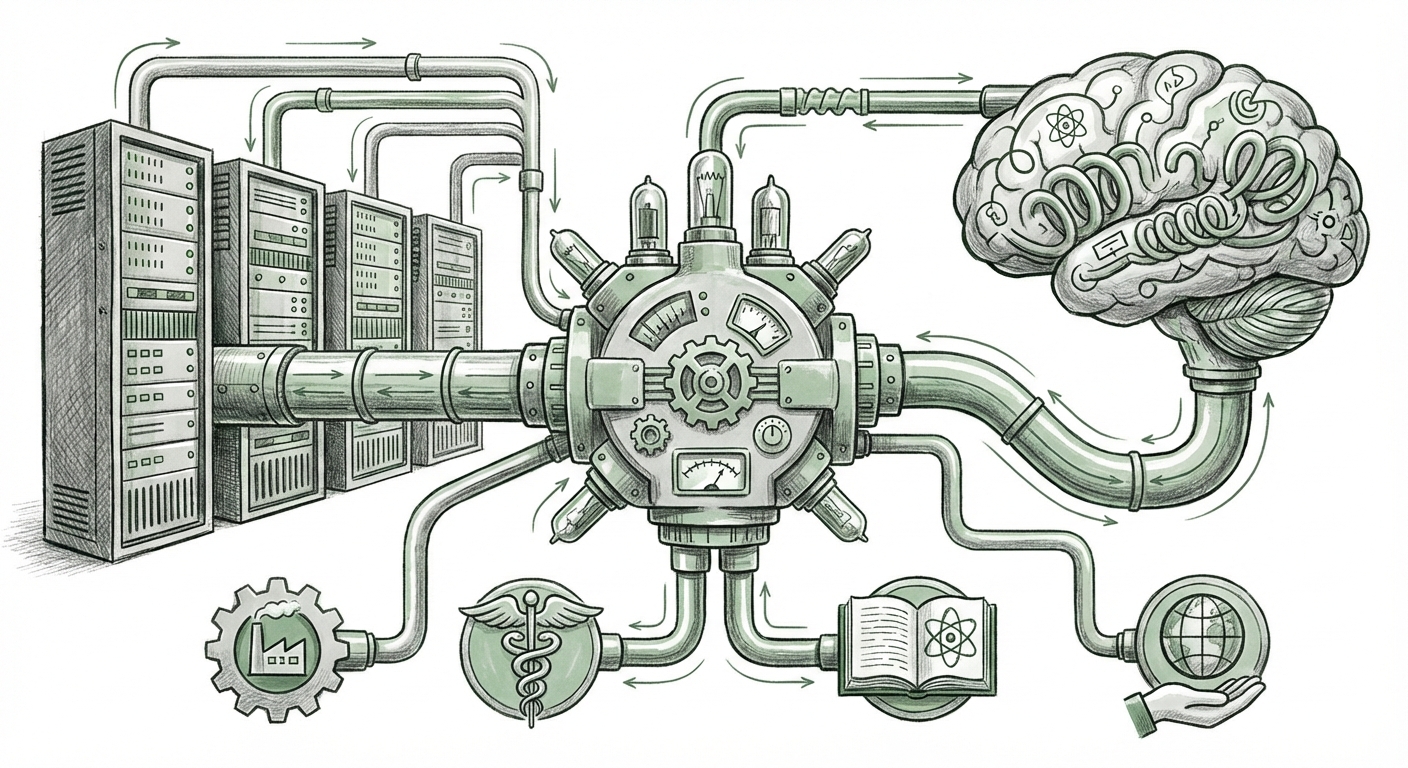
OpenAI's Codex: The AI That Watches Your Screen – A New Era of Contextual Intelligence and Its Profound Impact
The landscape of Artificial Intelligence is continuously evolving, pushing the boundaries of what machines can perceive, understand, and assist with. A pivotal development, reported on 2026-04-20 by the-decoder.com, signals a profound shift in this trajectory: OpenAI's Codex now watches your screen to remember what you're working on. This seemingly simple feature introduces a level of persistent contextual awareness that moves AI from being a reactive tool to a truly proactive and deeply integrated partner in our daily work. This article will delve into the transformative implications of this advancement for the future of AI, its practical applications for businesses and society, and the critical considerations it brings to the forefront.
The Dawn of Truly Context-Aware AI: What "Watching Your Screen" Really Means
For years, AI models have relied on explicit prompts or limited input windows to understand user intent. The moment OpenAI's Codex begins to "watch your screen to remember what you're working on," this paradigm fundamentally shifts. It signifies the emergence of an AI that possesses continuous, visual, and dynamic awareness of your environment and ongoing tasks. This isn't just about reading text; it's about interpreting layouts, recognizing patterns, understanding interactions, and synthesizing an ongoing narrative of your work session. This capability has several profound implications for AI development:
- Persistent Contextual Understanding: Instead of starting from scratch with every query, Codex builds a rich, evolving understanding of the user's project, current task, and even their coding style or preferences. This allows for more accurate, relevant, and personalized assistance. The AI no longer needs to be repeatedly reminded of the larger goal or the specific codebase it's operating within.
- Proactive Assistance: With this deep context, AI can move beyond merely responding to explicit commands. It can anticipate needs, suggest improvements before being asked, highlight potential errors, or even automatically complete routine tasks. Imagine an AI suggesting the next logical code block based on your current function, without you having to type a single character of the suggestion.
- Reduced Cognitive Load: For developers, constantly holding a large mental model of a complex project, its dependencies, and ongoing changes is demanding. A screen-watching AI offloads some of this burden, acting as an external, highly intelligent memory aid that keeps track of the minutiae, allowing the human to focus on higher-level problem-solving and creative tasks.
- Multi-Modal Integration: While the source specifies "watches your screen," this implies a powerful visual understanding capability. Codex isn't just processing text; it's interpreting the visual cues of an IDE, debugging console, or even documentation open in a browser. This blend of visual and textual input marks a significant step towards truly multi-modal AI that understands the world more like humans do.
- Seamless Integration into Workflow: This feature enables AI to blend into the natural flow of work. It observes, learns, and assists without requiring the user to break their concentration to formulate a prompt or switch applications. This creates a much more intuitive and less disruptive human-AI collaboration.
Transforming Software Development: The Immediate Impact on Codex's Domain
As OpenAI's Codex is primarily known for its prowess in code generation and understanding, the immediate and most tangible impact of its screen-watching capability will be felt within the software development community. This feature is poised to revolutionize how developers work, enhancing productivity, reducing errors, and accelerating innovation:
- Accelerated Onboarding and Project Handoffs: New developers joining a project can benefit immensely. Codex, having "watched" the screen and thus understood the project's evolving context, can quickly bring newcomers up to speed, explain complex code sections, and guide them through the codebase with unprecedented efficiency. Similarly, project handoffs become smoother as the AI retains institutional knowledge.
- Smarter Code Generation and Refactoring: With a complete view of the current file, related files, open issues, and even documentation, Codex can generate code snippets that are not just syntactically correct but also contextually appropriate and aligned with project standards. Refactoring becomes less risky and more automated, as the AI understands the ripple effects of changes across the entire system.
- Intelligent Debugging and Error Prevention: By continuously monitoring the screen, Codex can potentially identify common anti-patterns, logical flaws, or potential bugs even before the code is executed or compiled. During debugging, it can analyze the debugger's state, logs, and open files to offer targeted solutions, drastically cutting down debugging time.
- Enhanced Code Review and Documentation: Codex could assist in code reviews by highlighting inconsistencies or deviations from best practices, taking into account the project's specific context. It could also automatically generate or update documentation based on code changes and the observed development process, ensuring documentation remains current.
- Personalized Developer Experience: Over time, the AI could learn a developer's individual preferences, common pitfalls, and coding style, tailoring its suggestions and assistance to be maximally effective for that specific user. This moves beyond generic AI assistance to a truly personalized co-pilot.
Broader Business Implications Beyond Code: A Glimpse into the Future of Work
While Codex’s immediate application is in coding, the underlying capability of screen-watching AI that "remembers what you're working on" hints at a much broader transformation across various industries and job functions. This is not merely a tool for programmers; it represents a blueprint for how AI will integrate into all forms of knowledge work:
- General Knowledge Work Augmentation: Imagine an AI watching your screen as you draft a business proposal, analyze financial data, or design a marketing campaign. It could automatically fetch relevant data, suggest phrasing, identify inconsistencies, or even generate entire sections based on the context of your open documents and applications. This translates to higher quality output and significantly reduced time-to-completion across a multitude of tasks.
- Enhanced Decision Making: By providing real-time, context-aware information and analysis, such AI can empower business leaders and employees to make faster, more informed decisions. It can flag critical data points, identify trends in complex dashboards, or summarize lengthy reports relevant to the current screen context.
- Redefining Training and Onboarding: Similar to its impact on developer onboarding, screen-watching AI can personalize training for new employees across any role. By observing their tasks, it can offer just-in-time guidance, correct mistakes proactively, and accelerate skill acquisition, leading to faster productivity and greater employee satisfaction.
- Competitive Advantage: Businesses that embrace and effectively integrate such context-aware AI will gain a significant competitive edge. Their teams will be more efficient, innovative, and adaptive, leading to faster product cycles, better customer experiences, and optimized operational costs. Early adopters will be able to refine their workflows and data governance strategies ahead of the curve.
- Data Strategy and Governance: The introduction of screen-watching AI necessitates robust data strategies. Organizations will need to define what data is collected, how it's stored, who has access, and for what purpose. This also opens new avenues for collecting granular, real-time insights into how work is actually performed, which can inform process optimization and resource allocation.
Societal Shifts: Navigating Privacy, Ethics, and Trust
The introduction of AI that watches our screens undeniably raises a host of critical societal questions, particularly concerning privacy, ethics, and the evolving nature of trust between humans and machines. These are not minor considerations but foundational pillars that will shape public acceptance and regulatory frameworks:
- Privacy Concerns: The most immediate concern is privacy. If an AI is continuously "watching your screen," what data is truly being captured, stored, and analyzed? This includes not only work-related content but potentially personal messages, sensitive financial information, or proprietary data that might inadvertently appear on screen. Users and organizations will demand crystal-clear policies on data collection, anonymization, and deletion.
- Data Security: The repository of contextual data collected by such AI becomes a highly attractive target for cyber threats. Robust security protocols, including encryption, access controls, and regular audits, will be paramount to prevent breaches and misuse of potentially sensitive information.
- Ethical Implications of Constant Monitoring: The idea of being constantly "watched" by an AI, even if benignly intended for assistance, can evoke feelings of surveillance. This raises questions about digital well-being, the psychological impact of always-on assistance, and the potential for such systems to be repurposed for employee monitoring rather than assistance.
- Transparency and User Control: For trust to flourish, users must have a clear understanding of what the AI is observing, why, and how they can control or limit its access. Opt-in/opt-out mechanisms, granular permission settings, and clear visual indicators of when the AI is active will be crucial for user acceptance.
- The Evolving Human-AI Relationship: As AI becomes more deeply integrated and proactive, the line between human and machine contribution may blur. This requires a re-evaluation of accountability, authorship, and the skills humans need to cultivate in an environment where an AI partner is always present and often leading with suggestions.
- Regulatory Frameworks: Governments and international bodies will need to rapidly develop new regulations and guidelines specific to context-aware AI. Existing privacy laws (like GDPR or CCPA) may need updates to address the nuances of screen-watching AI, focusing on informed consent, data minimization, purpose limitation, and the right to explainability for AI-driven actions.
Navigating the Future: Actionable Insights for a Context-Aware World
To thrive in this new era of AI, individuals, businesses, and policymakers must adopt forward-thinking strategies. The proactive and persistent nature of AI like OpenAI's Codex demands a thoughtful and strategic approach.
For Businesses:
- Develop a Comprehensive AI Strategy: Don't just react to new AI tools. Proactively assess how context-aware AI can integrate with your strategic goals, optimize workflows, and drive innovation. Identify pilot projects where the impact can be measured.
- Prioritize Data Governance and Security: Establish clear policies for data collection, storage, usage, and access related to screen-watching AI. Invest in top-tier cybersecurity measures to protect sensitive contextual data.
- Invest in Training and Upskilling: Prepare your workforce for collaboration with highly intelligent AI. Training should cover not only the technical aspects of using the tools but also the ethical considerations and best practices for leveraging AI assistance effectively.
- Foster a Culture of Trust and Transparency: Communicate openly with employees about how AI systems are used, what data they access, and the benefits they provide. Ensure employees have control over their AI assistants where appropriate.
- Monitor and Adapt: The AI landscape is fast-moving. Continuously monitor new developments, evaluate the performance of your AI integrations, and be prepared to adapt your strategies and technologies.
For Developers and Individual Users:
- Embrace New Skill Sets: Learn to effectively collaborate with context-aware AI. This includes understanding how to guide the AI, validate its suggestions, and leverage its capabilities to augment your own skills rather than replace them.
- Be Mindful of Privacy Settings: Understand the privacy implications of any AI tool you use. Actively manage permissions and settings to control what data is shared and how it's used.
- Focus on Higher-Order Thinking: As AI handles more routine and contextual tasks, shift your focus to creative problem-solving, strategic thinking, and complex decision-making—areas where human ingenuity remains irreplaceable.
For Policymakers and Regulators:
- Initiate Dialogue on AI Ethics and Governance: Engage with AI developers, ethicists, legal experts, and the public to shape responsible AI policies. Focus on data privacy, algorithmic transparency, and accountability.
- Develop Flexible Regulatory Frameworks: Create regulations that are robust enough to protect citizens but flexible enough to adapt to rapid technological advancements without stifling innovation.
- Promote AI Literacy: Invest in public education initiatives to increase understanding of AI capabilities, benefits, and potential risks, fostering informed public discourse.
Conclusion: The Intelligent Co-Pilot of Tomorrow, Today
OpenAI's Codex, with its new ability to "watch your screen to remember what you're working on," marks a monumental leap in the evolution of artificial intelligence. Published on 2026-04-20, this capability transforms AI from a mere tool into an intelligent co-pilot, deeply embedded in our workflow and possessing a persistent, evolving understanding of our professional context. This will not only redefine productivity and innovation in software development but also set a precedent for how AI will augment knowledge work across every sector. While the promise of unprecedented efficiency and creativity is immense, the challenges around privacy, ethics, and trust are equally significant. As we step into this new era, careful consideration, proactive policy-making, and a commitment to responsible innovation will be crucial to harnessing the full potential of these context-aware AI systems for the betterment of businesses and society alike. The future of AI is not just about intelligence; it's about intelligent, empathetic, and trustworthy partnership.