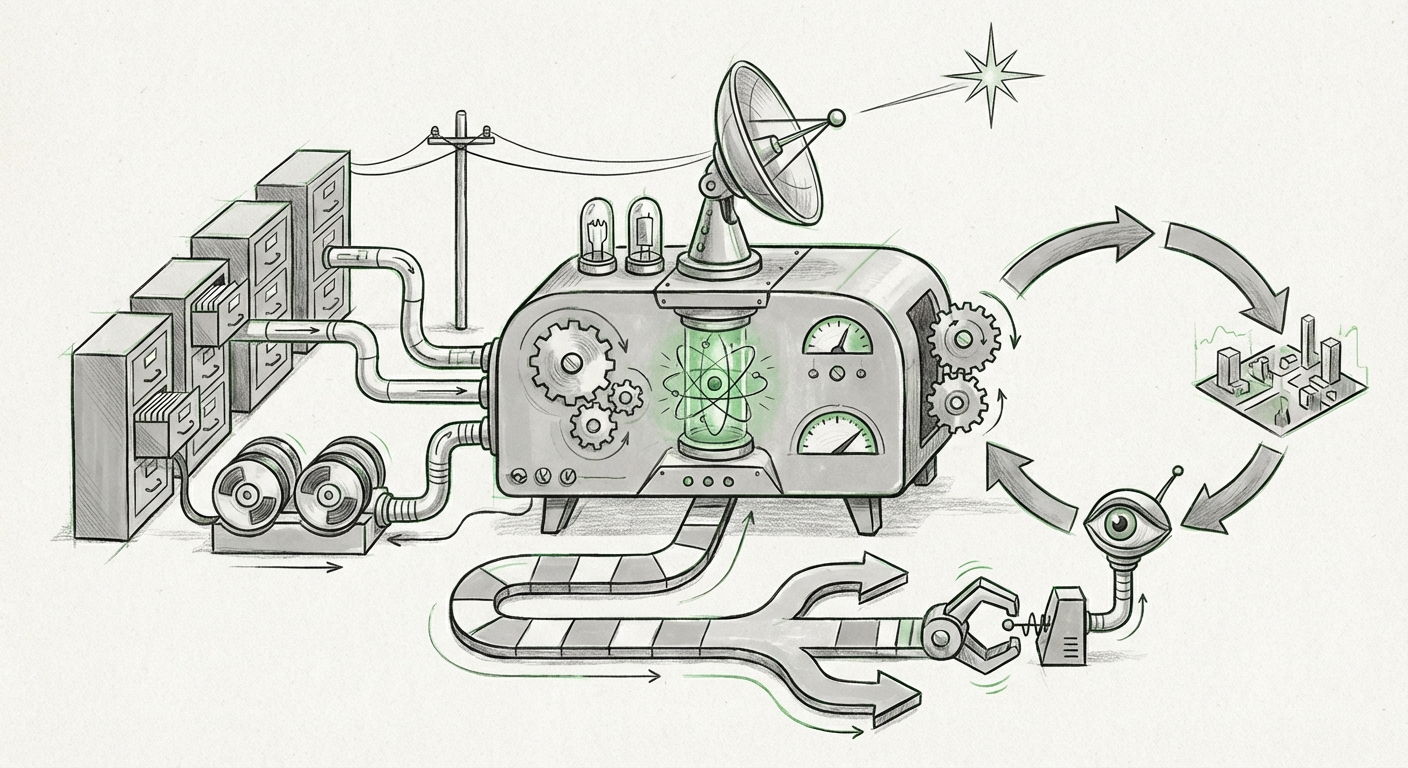
OpenAI's GPT-Image 2: Decoding the Future of Hyper-Realistic AI Imagery and Its Impact
On 2026-04-21, a significant revelation from OpenAI sent ripples through the technology world: the first tease of GPT-Image 2. The announcement, highlighted by an AI-generated screenshot described as looking "completely real" by the-decoder.com, signals a profound leap in artificial intelligence's capability to create visual content. This isn't just an incremental update; it's a potential paradigm shift, blurring the lines between what is observed and what is synthesized, with far-reaching implications for creativity, commerce, and the very fabric of digital truth.
The phrase "completely real" is potent. It implies a level of fidelity where human observers can no longer reliably distinguish between an image captured by a camera in the physical world and one conjured by algorithms. This achievement moves beyond merely generating plausible or convincing images; it suggests a mastery of intricate details, lighting, textures, shadows, and contextual consistency that has long been the elusive holy grail of generative AI. To understand the gravity of this development, we must analyze its immediate technological significance and then project its cascading effects across industries and society.
The Technological Leap: What "Completely Real" Truly Means
For years, AI-generated images have been remarkable, often stunning, but frequently betrayed by subtle artifacts. These imperfections – an extra finger on a hand, distorted text, illogical reflections, or strange anatomical quirks – served as tell-tale signs of their artificial origin. The promise of GPT-Image 2, as evidenced by a single "completely real" screenshot, suggests these hurdles have been largely overcome. This means a sophisticated understanding of the physical world, object relationships, and the nuances of light and shadow have been deeply embedded into the model.
- Unprecedented Fidelity: The ability to generate visuals indistinguishable from reality speaks to a monumental improvement in pixel-level accuracy and semantic understanding. This isn't just about high resolution; it's about the correct representation of physics and natural imperfections.
- Contextual Coherence: "Completely real" implies not just realistic individual objects, but also their harmonious interaction within a scene. Lighting is consistent, shadows fall correctly, and materials react as they would in the real world. This is a complex problem that earlier models struggled with.
- Elimination of AI Artifacts: The critical factor is the absence of those tell-tale glitches. This suggests robust error correction and a deeper generative process that minimizes common failure modes seen in previous iterations of image generation technology.
This development points to more sophisticated neural network architectures, vast and diverse training datasets, and refined training methodologies. OpenAI’s achievement with GPT-Image 2, even in its teased form, marks a new benchmark for generative adversarial networks (GANs) or diffusion models, pushing the boundaries of what is computationally possible in visual synthesis.
Future of AI: Redefining Creativity and Content Production
The implications of GPT-Image 2 for the future of AI and its application are immense, particularly in areas concerning creativity, content generation, and human-computer interaction. AI is no longer just a tool for processing existing data; it is now a potent engine for creating entirely new realities.
AI as the Ultimate Creative Partner
Imagine a world where ideas can be instantly visualized with photographic realism. Designers, artists, architects, and filmmakers will find AI to be an indispensable creative partner. Instead of spending hours on concept art, rendering, or prototyping, they can generate multiple high-fidelity options in moments. This speeds up the creative process exponentially, allowing more time for ideation and refinement rather than execution.
- Democratization of Visual Content: Professional-grade visual content, once requiring expensive equipment and specialized skills, could become accessible to anyone with an idea. Small businesses, independent creators, and even individuals could produce stunning visuals for their projects.
- Hyper-Personalized Experiences: Imagine dynamically generated images for every user, tailored to their preferences, cultural context, or even current mood. Advertising, e-commerce, and entertainment could offer deeply personalized visual experiences that feel truly bespoke.
- New Forms of Art and Expression: Artists will explore new mediums, using AI to manifest visions previously confined to imagination. The interplay between human direction and AI generation could lead to entirely new aesthetic movements and artistic disciplines.
Augmented Realities and Virtual Worlds
The ability to create "completely real" images has profound consequences for the development of augmented reality (AR) and virtual reality (VR). Realistic AI-generated visuals can populate virtual worlds with lifelike environments, characters, and objects, making immersive experiences virtually indistinguishable from physical reality. This could accelerate the development of the metaverse, offering hyper-realistic digital spaces for work, social interaction, and entertainment.
Practical Implications for Businesses and Society
The impact of GPT-Image 2 will reverberate across nearly every sector, presenting both unprecedented opportunities and significant challenges.
Business Transformation: Opportunities Await
Businesses that embrace this technology early will gain a significant competitive edge.
- Marketing and Advertising: Campaigns can be generated faster, cheaper, and with infinite variations. A/B testing can move from comparing two images to comparing hundreds, optimizing for maximum engagement with photorealistic accuracy. Personalized ads can feature specific products in settings relevant to individual consumers.
- E-commerce and Product Visualization: Retailers can showcase products in endless virtual environments without physical photo shoots. Customers could see clothing on models that match their own body type or furniture rendered in their own living room, all generated on the fly.
- Gaming and Entertainment: Game developers can create vast, detailed open worlds with incredible speed. Film studios can generate realistic background elements, special effects, and even entire virtual sets, reducing production costs and timelines significantly. Character design and animation could also be revolutionized.
- Architecture and Design: Architects can visualize complex designs in photorealistic detail, allowing clients to experience spaces before they are built. Interior designers can quickly iterate on concepts, showcasing various furniture arrangements, lighting schemes, and material palettes.
- Training and Simulation: Industries like aviation, healthcare, and manufacturing rely on realistic simulations for training. GPT-Image 2 can create highly detailed and dynamic environments, enhancing the realism and effectiveness of these training programs.
The potential for cost reduction, acceleration of workflows, and personalization across these sectors is staggering. Businesses must start investing in AI literacy and infrastructure to leverage these tools effectively.
Societal Challenges: Navigating the Era of Synthetic Reality
With great power comes great responsibility. The ability to generate "completely real" images brings forth critical ethical and societal challenges that demand proactive solutions.
- The Rise of Deepfakes and Misinformation: The most immediate concern is the proliferation of hyper-realistic deepfakes. Images, videos, and even entire narratives that are completely fabricated could become indistinguishable from genuine content. This poses severe risks for trust in media, political discourse, legal systems, and personal reputations.
- Questioning Authenticity: If any image can be perfectly synthesized, how do we verify what is real? The concept of photographic evidence could be fundamentally undermined. Society will need new methods and technologies for content provenance and authentication.
- Intellectual Property and Copyright: The creation of new images from existing data raises complex questions about intellectual property. Who owns the output? What are the ethical implications of AI models trained on vast quantities of copyrighted material?
- Impact on Human Creativity and Employment: While AI can augment creativity, it also poses questions about the future of certain creative professions. As AI takes on more of the execution, human roles might shift dramatically, requiring new skill sets and adaptability.
- Algorithmic Bias: If the training data contains biases (e.g., underrepresentation of certain groups), the AI-generated images could perpetuate or even amplify these biases, leading to problematic or stereotypical representations.
Addressing these challenges will require a multi-faceted approach involving technological safeguards (e.g., watermarking, detection tools), robust ethical guidelines, public education, and potentially new legislative frameworks.
Actionable Insights: Preparing for the GPT-Image 2 Era
For individuals and organizations alike, preparing for a world shaped by hyper-realistic AI imagery is crucial. This isn't a distant future; OpenAI's tease on 2026-04-21 indicates it's already here.
For Businesses:
- Experiment and Innovate: Don't wait. Start exploring how AI image generation can enhance your marketing, product development, design, and customer experiences. Pilot projects can reveal invaluable insights.
- Invest in AI Talent and Training: Cultivate a workforce that understands AI capabilities, ethical considerations, and how to effectively prompt and utilize these powerful tools.
- Develop Internal Policies: Establish clear guidelines for the use of AI-generated content, focusing on transparency, attribution, and ethical implications, especially regarding potential misuse.
- Prioritize Authenticity Tools: Look into solutions for content provenance, digital watermarking, and AI detection. Being able to verify the authenticity of your own content, and potentially detect fabricated content, will become increasingly important.
- Foster Human-AI Collaboration: Emphasize AI as a co-pilot, not a replacement. Focus on how AI can free up human creatives to focus on higher-level strategy, emotion, and unique artistic vision.
For Individuals:
- Cultivate Critical Media Literacy: Develop a keen eye for discerning genuine from synthetic content. Be skeptical, question sources, and understand that "seeing is believing" is no longer a reliable standard.
- Learn to Prompt: Understanding how to effectively communicate with generative AI models (prompt engineering) will be a highly valuable skill across many industries.
- Explore Creative Applications: Experiment with existing AI image tools to understand their capabilities and limitations. This firsthand experience will better prepare you for the next generation of tools like GPT-Image 2.
- Advocate for Ethical AI: Engage in discussions about AI ethics, privacy, and the responsible deployment of powerful generative models. Your voice matters in shaping the future of these technologies.
Conclusion: A New Chapter in Visual Storytelling
OpenAI's tease of GPT-Image 2, with its promise of "completely real" AI-generated screenshots, marks a watershed moment in the evolution of artificial intelligence. Published on 2026-04-21, this announcement isn't just about a new piece of software; it's about the ushering in of an era where visual reality can be seamlessly synthesized at will. For businesses, this opens up a world of unparalleled creative freedom, efficiency, and personalization. For society, it presents profound challenges related to trust, authenticity, and the very nature of truth in a digital age.
The future of AI, as illuminated by GPT-Image 2, is one where the boundaries of imagination are increasingly unconstrained by the limitations of traditional content creation. As we navigate this new landscape, the emphasis must be on responsible innovation, ethical deployment, and a collective commitment to maintaining a clear understanding of what is real and what is rendered. The journey has just begun, and the visual world as we know it is poised for a magnificent, yet complex, transformation.