SpaceX's $60 Billion Bet on Cursor: Reshaping AI Development and the Future of Coding
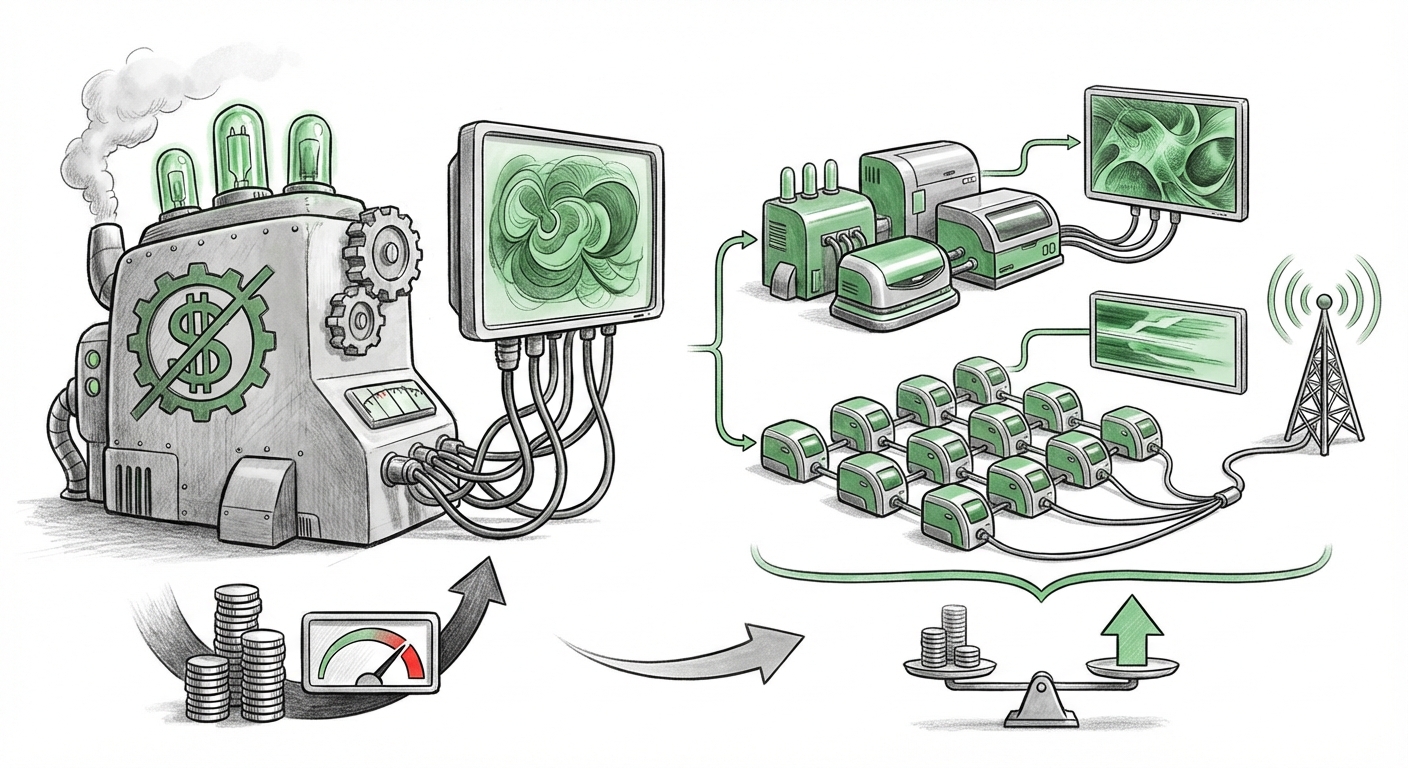
In a move that has sent ripples across the technology world, SpaceX, a company known for its ambitious aerospace ventures, has made a monumental investment of $60 billion in an AI coding solution called Cursor. This staggering sum, reported on 2026-04-22, is aimed at addressing a crucial "coding gap" within xAI, another of Elon Musk’s ambitious undertakings focused on artificial intelligence. This single piece of news from the-decoder.com isn't just about money; it's a powerful statement about the future of AI, the evolving role of software development, and how major players are strategizing to accelerate technological progress.
This immense investment by SpaceX in Cursor for xAI’s coding needs signals a critical inflection point. It tells us that even the most innovative and resource-rich AI companies face bottlenecks in traditional coding methods, and they are looking to advanced AI tools to solve them. It suggests a future where AI isn't just a product, but a fundamental tool in its own creation, drastically changing how we build, debug, and maintain complex software systems.
The $60 Billion Catalyst: A New Era for AI-Powered Coding
When a company like SpaceX commits $60 billion, it's not a casual decision. This isn't just an investment; it's a strategic declaration. The sheer magnitude of this bet on Cursor highlights a profound belief in the transformative power of AI to enhance, and perhaps revolutionize, software development. For context, such an investment could fund entire national R&D programs for years, yet it's being directed towards a specific AI coding tool to address a perceived "coding gap" at xAI.
What does this signal? First, it confirms that AI-powered code generation and assistance tools are no longer niche curiosities but strategic imperatives for leading technology firms. The ability to write, analyze, and optimize code quickly and efficiently is becoming as critical as computational power itself. Second, SpaceX’s involvement, a company synonymous with engineering marvels and pushing boundaries, underscores the idea that even the most complex, safety-critical software for rockets and spacecraft could benefit from advanced AI coding assistance – or at the very least, that the principles of efficiency from such tools are highly valued across its portfolio, including xAI.
This massive outlay implies that the benefits derived from Cursor's capabilities are expected to be equally immense. Faster development cycles, fewer bugs, more efficient code, and the ability to tackle projects of unprecedented complexity could be among the anticipated returns. It’s a clear indication that the future of cutting-edge technology, particularly in AI, is deeply intertwined with the evolution of how software is engineered, and that AI itself is the key.
Decoding the "Coding Gap": Why xAI Needs Cursor
The term "coding gap" from the source material is intriguing. While the source doesn't detail the specifics of xAI's challenges, we can infer its meaning within the context of developing advanced AI models. Building sophisticated AI, especially those pushing the frontiers of general artificial intelligence or large language models, involves:
- Immense Code Complexity: AI systems are built on vast, intricate codebases involving various programming languages, frameworks, and algorithms. Managing and extending this complexity is a monumental task.
- Rapid Iteration and Experimentation: AI research moves incredibly fast. Developers need to quickly prototype, test, and refine models. Traditional coding methods can be a bottleneck.
- Specialized Expertise: Developing advanced AI often requires a rare combination of deep mathematical understanding, machine learning expertise, and software engineering prowess. Finding and scaling this talent is challenging.
- Debugging and Optimization: Identifying and fixing errors in complex AI models, or optimizing them for performance on specialized hardware, can be time-consuming and difficult.
A "coding gap" could therefore mean a bottleneck in any or all of these areas: a lack of sufficient skilled developers to keep pace with innovation, an inability to generate high-quality code fast enough, or struggles in debugging and maintaining the intricate systems. By investing in Cursor, SpaceX and xAI are essentially betting that an AI-powered coding tool can bridge this gap, allowing xAI's brilliant minds to focus more on groundbreaking research and less on the repetitive or arduous aspects of code implementation.
Cursor's Role: The Engine Behind AI Innovation
Though specific features of Cursor are not detailed in the source, the investment suggests it offers significant capabilities to overcome xAI's coding hurdles. Generally, advanced AI coding tools like Cursor are designed to:
- Automate Code Generation: Producing boilerplate code, functions, or even entire modules based on natural language prompts or existing code context. This frees developers from tedious tasks.
- Intelligent Debugging and Error Detection: Identifying potential bugs, suggesting fixes, and explaining complex errors in real-time, significantly speeding up the debugging process.
- Code Refactoring and Optimization: Suggesting ways to improve code readability, efficiency, and performance, ensuring that AI models run optimally.
- Code Comprehension: Helping developers understand large, unfamiliar codebases by summarizing functions, explaining complex logic, and identifying dependencies. This is crucial in collaborative environments or when onboarding new team members.
- Customization and Specialization: Potentially, Cursor could be tailored to the unique coding styles, libraries, and frameworks specific to xAI’s advanced AI research, making it an indispensable, highly specialized assistant.
In essence, Cursor isn't just an auto-complete tool; it’s envisioned as a sophisticated partner that augments human intelligence, allowing developers to operate at a much higher level of abstraction and productivity. It transforms the act of programming from purely manual transcription into a more strategic, high-level interaction with an intelligent assistant. This signifies a monumental shift: AI is now building AI, and this self-referential cycle is poised to dramatically accelerate the pace of innovation.
Implications for Businesses: Beyond Tech Giants
The implications of this $60 billion investment extend far beyond SpaceX and xAI. This trend will inevitably impact businesses across every sector:
- Increased Developer Productivity: Companies that adopt AI coding tools can expect their development teams to write code faster, with fewer errors. This means more features delivered, quicker bug fixes, and ultimately, a more competitive product or service.
- Faster Time-to-Market: Reduced development cycles mean products and updates can reach customers much sooner. For businesses in fast-paced markets, this is a critical advantage.
- Optimized Resource Allocation: With AI handling more routine coding tasks, highly skilled developers can shift their focus to architectural design, complex problem-solving, innovation, and strategic thinking. This maximizes the return on investment in talent.
- Lower Barriers to Entry for Software Development: As AI tools become more sophisticated, they could make software development more accessible to a broader range of individuals, potentially democratizing technology creation. Non-coders might be able to generate functional applications with advanced prompts.
- Evolution of Talent and Skills: Businesses will need to adapt their hiring strategies. While coding skills remain important, a new emphasis will be placed on prompt engineering, AI tool proficiency, critical evaluation of AI-generated code, and understanding complex system architectures. Training programs will need to evolve.
- Competitive Advantage: Early adopters of these advanced AI coding tools will likely gain a significant competitive edge, allowing them to innovate faster and more efficiently than their rivals. Businesses that lag behind risk being outpaced.
Every business that relies on software, from finance to healthcare, manufacturing to entertainment, should be paying close attention. The question is no longer *if* AI will impact their software development, but *how deeply* and *how quickly*.
Societal Shifts and the Future of Work
The broad adoption of AI coding tools, spurred by investments like SpaceX's, will have profound societal impacts:
- The Evolving Role of the Developer: The romanticized image of a lone coder typing furiously might shift. Future developers could spend more time refining AI prompts, reviewing AI-generated code, orchestrating complex systems, and acting as "AI conductors." The focus will move from syntax mastery to system design and strategic problem-solving.
- Educational System Adaptations: Computer science curricula will need to incorporate AI coding tools, prompt engineering, and the ethical considerations of AI-generated code. Future programmers will learn to collaborate with AI from day one.
- New Ethical and Security Considerations: As AI generates more code, questions arise about potential biases embedded in the training data, security vulnerabilities introduced by AI-generated solutions, and intellectual property ownership of AI-assisted creations. Robust auditing and ethical guidelines will become crucial.
- Accessibility and Innovation: By lowering the technical barrier to creating software, AI coding tools could unlock a wave of innovation from individuals and small teams who previously lacked the resources or expertise to build their ideas. This could lead to a more diverse and inclusive tech landscape.
- Economic Restructuring: While some fear job displacement, the more likely scenario is job transformation. New roles will emerge, focusing on managing, training, and overseeing AI systems. The demand for creative problem-solvers who can leverage AI effectively will soar.
The future isn't about humans vs. AI in coding; it's about humans *with* AI, creating a synergy that pushes the boundaries of what's possible.
Actionable Insights for Today
Given the trajectory set by investments like SpaceX's, here are actionable steps for businesses, developers, and leaders:
- For Businesses:
- Pilot AI Coding Tools: Start experimenting with existing AI code assistants to understand their capabilities and limitations in your specific context.
- Invest in Training: Prepare your development teams for the shift. Provide training in prompt engineering, AI code review, and integrating AI tools into workflows.
- Rethink Development Lifecycles: Evaluate how AI can be integrated into your software development lifecycle to improve efficiency, from requirements gathering to deployment and maintenance.
- Establish AI Governance: Develop internal policies for the ethical use of AI in coding, including security checks, bias detection, and intellectual property guidelines.
- For Developers:
- Embrace AI as a Partner: View AI coding tools not as a threat, but as an opportunity to enhance your productivity and focus on more challenging, creative aspects of your work.
- Master Prompt Engineering: Learn how to effectively communicate with AI models to get the best possible code generation and assistance.
- Cultivate Critical Review Skills: Develop the ability to critically evaluate AI-generated code for correctness, efficiency, security, and adherence to best practices.
- Focus on High-Level Design: Shift your expertise towards system architecture, complex problem-solving, and understanding the "why" behind the code.
- For Leaders and Policymakers:
- Foster Innovation Ecosystems: Support research and development in AI tools, recognizing their potential to accelerate progress across all industries.
- Address Ethical and Regulatory Gaps: Work towards establishing clear guidelines and regulations for the responsible development and deployment of AI-generated software.
- Invest in Workforce Reskilling: Prepare the workforce for evolving job roles by investing in education and training programs that align with AI-driven transformations.
Conclusion
SpaceX's colossal $60 billion investment in Cursor to resolve xAI's coding gap is more than just a headline; it's a bellwether for the future of artificial intelligence and software development. Published in 2026, this move underscores the strategic imperative of leveraging AI to build AI, accelerating innovation at an unprecedented pace. It signals a future where human ingenuity, augmented by powerful AI coding assistants, can tackle engineering challenges of unimaginable scale and complexity.
The era of AI-powered software development is not just coming; it is here, and it’s being fueled by colossal investments from industry titans. This shift promises to redefine productivity, reshape job roles, and democratize access to technology creation. Businesses and individuals alike must now adapt, learn, and innovate to harness the full potential of this transformative trend, ensuring they are not just spectators but active participants in shaping the future where AI empowers us to build a better tomorrow, one line of AI-assisted code at a time.