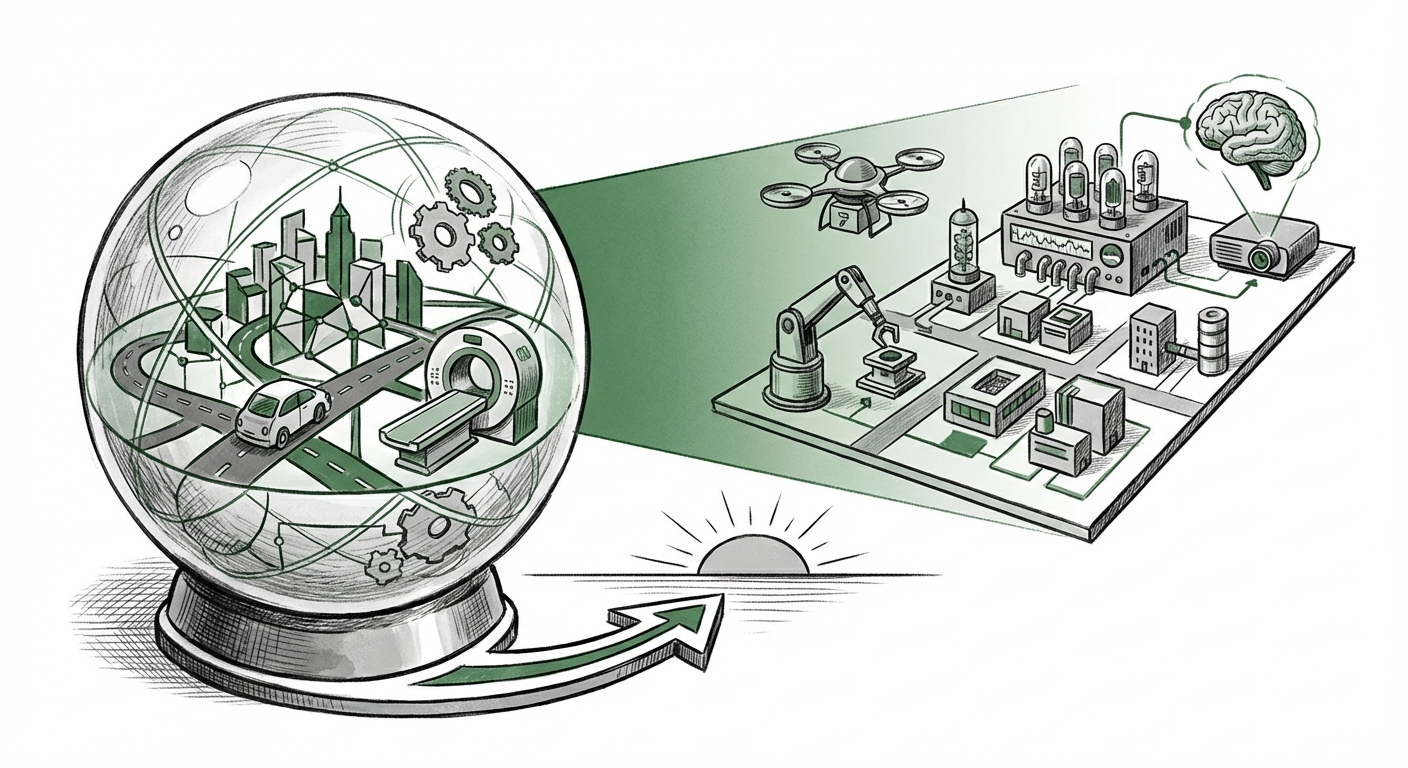
Beyond Code: How AI Agents Are Expanding Software Engineering, Not Replacing It
The conversation around Artificial Intelligence (AI) frequently sparks both excitement and apprehension, particularly concerning its impact on professional roles. For software engineering, a field traditionally defined by the meticulous craft of writing code, the rise of sophisticated AI agents has fueled intense speculation about job displacement. However, as published on the-decoder.com on 2026-04-26, researchers present a compelling counter-argument: AI agents are not replacing software engineering but are, in fact, expanding it far beyond code. This perspective fundamentally shifts how we view the future of AI in development, turning a potential threat into an unprecedented opportunity for growth and innovation.
This comprehensive analysis will delve into this critical trend, exploring what "expanding far beyond code" truly entails, the profound implications for businesses and society, and the actionable insights for navigating this evolving landscape. The future of AI is not merely about automation; it's about a symbiotic relationship where AI agents unlock new dimensions of creativity, problem-solving, and system design within software engineering.
The Paradigm Shift: From Code Generation to System Orchestration
For many, the initial fear surrounding AI agents in software engineering stemmed from the immediate capability of these tools to generate code snippets, debug errors, and even complete entire functions. This led to a simplistic assumption that if AI can write code, human coders would become obsolete. However, the core argument from the researchers is that this view misses the bigger picture. While AI agents indeed excel at automating repetitive or predictable coding tasks, their ultimate value lies in their ability to elevate the entire software development lifecycle, pushing human engineers into roles that demand higher-order thinking and strategic oversight.
The term "expanding far beyond code" suggests a move away from the keyboard-centric definition of a software engineer. Instead, it envisages a future where engineers primarily focus on designing complex systems, defining ambitious problems, validating AI-generated solutions, and orchestrating interactions between various intelligent agents and human teams. This represents a significant evolution, transforming the engineer from a primary coder into an architect, strategist, and validator of sophisticated AI-driven systems.
What "Far Beyond Code" Truly Means in Practice
To fully grasp this expansion, it's essential to understand the new dimensions of work that AI agents introduce or amplify:
- Problem Formulation and Refinement: Before any code is written, a problem must be clearly defined. AI agents can assist in analyzing requirements, identifying ambiguities, and even suggesting alternative approaches to problem-solving. The engineer's role here evolves from simply understanding requirements to expertly communicating complex, often abstract, challenges to AI agents in a way that yields optimal outcomes. This involves a deep understanding of the problem domain and the capabilities and limitations of AI.
- System Architecture and Design: With AI agents handling much of the low-level coding, human engineers can dedicate more time and cognitive energy to high-level system architecture. This includes designing scalable, robust, and secure systems, integrating diverse components (including multiple AI agents), and ensuring interoperability. The ability to envision an entire system, rather than just its individual parts, becomes paramount.
- Prompt Engineering and AI Orchestration: A new, crucial skill emerging is prompt engineering – the art and science of crafting effective instructions for AI models. Beyond single prompts, engineers will orchestrate chains of AI agents, each specializing in different tasks, to achieve complex goals. This requires a deep understanding of how different AI models interact, their respective strengths, and how to guide them effectively through a series of steps to build a coherent software solution.
- Validation, Verification, and Testing: As AI agents generate more code and system components, the need for rigorous validation and verification becomes even more critical. Engineers will be responsible for defining comprehensive test strategies, evaluating the quality, correctness, and security of AI-generated outputs, and ensuring that the overall system meets its specifications. This moves beyond unit testing to systemic validation, often involving advanced tools and methodologies.
- Human-AI Collaboration and Workflow Integration: The future of software engineering is inherently collaborative – not just among human teams, but between humans and AI agents. Engineers will design workflows where AI seamlessly assists, suggesting improvements, catching errors, and automating mundane tasks, allowing humans to focus on creative and strategic challenges. This involves understanding how to effectively manage and integrate AI into existing development pipelines and team dynamics.
- Ethical Oversight and Governance: As AI agents take on more responsibility, the ethical implications of the software they produce become more pronounced. Engineers will increasingly be responsible for ensuring fairness, transparency, and accountability in AI-driven development, guarding against biases, and adhering to regulatory standards. This expands the engineering role into areas of socio-technical responsibility.
Implications for the Future of AI and Its Utilization
This expansion of software engineering has profound implications for the future development and utilization of AI itself. The argument that AI agents are expanding the field, rather than replacing it, suggests a future where AI becomes an even more integral and sophisticated component of technological advancement.
Firstly, it implies that the capabilities of AI agents will continue to grow, moving beyond mere code generation to more advanced forms of reasoning, planning, and interaction. As engineers learn to better instruct and orchestrate these agents, the agents themselves will be pushed to perform more complex, multi-step tasks. This feedback loop will drive innovation in AI research, focusing on agents that can understand higher-level directives, adapt to new contexts, and collaborate more intelligently.
Secondly, the reliance on AI for system design and orchestration will lead to the development of more complex and robust AI systems. These will be systems designed not just by humans, but with significant input and implementation by other AI agents. This self-referential development could accelerate the pace of innovation, leading to a new generation of software that is inherently more intelligent and adaptive. The future of AI will involve AI building AI, under human supervision.
Thirdly, the shift in engineering focus means AI will be used to tackle problems of greater scale and complexity. When engineers are freed from the minutiae of coding, they can apply their intellect to grander challenges, leveraging AI agents as powerful assistants. This could lead to breakthroughs in areas currently considered too complex or resource-intensive to tackle with traditional methods, from highly personalized healthcare applications to advanced climate modeling and smart infrastructure.
Practical Implications for Businesses and Society
The expansion of software engineering through AI agents presents both challenges and unparalleled opportunities for businesses and society at large.
For Businesses: Re-skilling, Efficiency, and Innovation
Businesses must recognize that the future workforce needs different skills. The demand for traditional coders may stabilize or even shift, while the need for experts in prompt engineering, AI system architecture, AI validation, and human-AI collaboration will skyrocket. Companies should invest heavily in re-skilling their existing engineering teams and adapting their hiring strategies to attract talent with these emerging competencies. This proactive approach ensures that they can effectively leverage AI agents to enhance productivity and innovation.
The immediate benefit for businesses is likely a significant increase in efficiency and acceleration of development cycles. Routine coding tasks, testing, and even some aspects of debugging can be offloaded to AI agents, allowing human teams to focus on strategic initiatives, complex problem-solving, and creative design. This translates to faster time-to-market for new products and features, and a reduction in development costs for certain project phases.
Furthermore, this shift enables businesses to explore new frontiers of innovation. With AI agents as powerful accelerators, companies can tackle more ambitious projects, develop more sophisticated software solutions, and create products and services that were previously infeasible. This could democratize access to advanced software development, allowing smaller teams or even individual entrepreneurs to create complex applications with the aid of AI agents.
For Society: Job Evolution, Education, and Ethical Frameworks
Societally, this trend necessitates a re-evaluation of educational paradigms. Universities and vocational training programs must adapt their curricula to teach the new skills required for AI-augmented software engineering. The focus should shift from solely teaching programming languages to fostering critical thinking, system design principles, ethical AI considerations, and the effective use of AI tools. Preparing the next generation for roles that interact with, rather than compete against, AI agents is crucial.
The job market will undergo a significant evolution. While some coding jobs might be augmented or transformed, the overall number of software engineering roles may not decline but rather diversify and expand into new specializations. This evolution will create new high-value jobs focused on AI supervision, ethical AI deployment, and complex system integration. However, it also means that individuals who do not adapt their skill sets risk being left behind, underscoring the importance of lifelong learning and continuous professional development.
Ethical frameworks will also need to evolve rapidly. As AI agents become more intertwined with software development, questions of accountability, bias propagation, security vulnerabilities in AI-generated code, and the responsible use of AI in decision-making processes become paramount. Society must establish clear guidelines and regulations to ensure that this expansion of AI in software engineering is conducted in a manner that benefits all and mitigates potential harms.
Actionable Insights for Navigating the AI-Driven Future
To thrive in this evolving landscape, individuals, businesses, and educational institutions must take proactive steps:
For Software Engineers and Developers:
- Embrace Prompt Engineering: Master the art of communicating effectively with AI models. Learn how to craft clear, precise, and iterative prompts to guide AI agents toward desired outcomes. This is a foundational skill for the expanded role.
- Focus on System Design and Architecture: Elevate your skills from coding specific components to designing entire systems. Understand how different modules, services, and AI agents integrate and interact.
- Become an AI Validator and Integrator: Develop strong skills in verifying, testing, and integrating AI-generated code and system components. Learn to identify potential flaws, security risks, and biases in AI outputs.
- Cultivate Domain Expertise: Deep understanding of specific industry domains (e.g., healthcare, finance, logistics) will become even more valuable. This expertise allows you to effectively frame problems for AI agents and validate their solutions against real-world requirements.
- Prioritize Ethical AI: Develop an understanding of AI ethics, fairness, and transparency. This will be critical for responsible development and deployment of AI-augmented software.
For Businesses and Leaders:
- Invest in Continuous Learning: Implement comprehensive training programs to upskill your engineering teams in AI agent interaction, prompt engineering, and AI system oversight.
- Rethink Team Structures: Move towards multidisciplinary teams where human engineers collaborate seamlessly with AI agents, focusing on strategic roles rather than just individual coding tasks.
- Pilot AI Agent Integration: Start experimenting with AI agents in specific, non-critical areas to understand their capabilities, limitations, and how best to integrate them into existing workflows.
- Establish AI Governance: Develop internal policies and ethical guidelines for the use of AI agents in development, ensuring accountability and mitigating risks.
- Foster a Culture of Innovation: Encourage experimentation and a mindset that views AI not as a replacement but as a powerful partner in driving innovation and efficiency.
For Educators and Policy Makers:
- Revise Curricula: Update computer science and engineering programs to include modules on AI agent interaction, prompt engineering, AI ethics, and advanced system design.
- Promote Lifelong Learning: Support initiatives that provide opportunities for professionals to re-skill and adapt to the evolving demands of the AI-driven job market.
- Develop Regulatory Frameworks: Work towards establishing clear, adaptive regulatory frameworks for AI in software development that balance innovation with ethical considerations and societal well-being.
Conclusion: The Dawn of an Expanded Engineering Era
The assertion by researchers, as reported on the-decoder.com on 2026-04-26, that AI agents are not replacing software engineering but expanding it far beyond code, paints a vibrant picture of the future. It challenges the conventional understanding of what it means to be a software engineer, shifting the focus from manual coding to higher-level intellectual pursuits. This isn't an end to software engineering; it's a magnificent new beginning, where human ingenuity, augmented by sophisticated AI agents, can tackle problems of unprecedented complexity and create solutions with unparalleled efficiency and innovation.
The future of AI in software development is one of profound collaboration, where intelligent agents empower human engineers to become architects, strategists, and orchestrators of vast, interconnected digital ecosystems. Embracing this expansion, rather than fearing replacement, is the key to unlocking the full potential of AI for businesses, society, and the evolution of technology itself. The era of the expanded engineer is here, and it promises to be one of the most exciting and transformative periods in the history of computing.