OpenAI's GPT-5.5 Move: Is This the End of Specialized AI Models as We Know Them?
The artificial intelligence landscape is in constant flux, marked by rapid innovation and strategic shifts from its leading players. A significant development emerged on 2026-04-26, as reported by the-decoder.com: OpenAI has once again decided to retire its dedicated coding model, Codex, integrating its capabilities directly into the more comprehensive GPT-5.5. This isn't just a product update; it's a profound signal about the direction of AI development, with far-reaching implications for how we interact with and utilize artificial intelligence in the years to come.
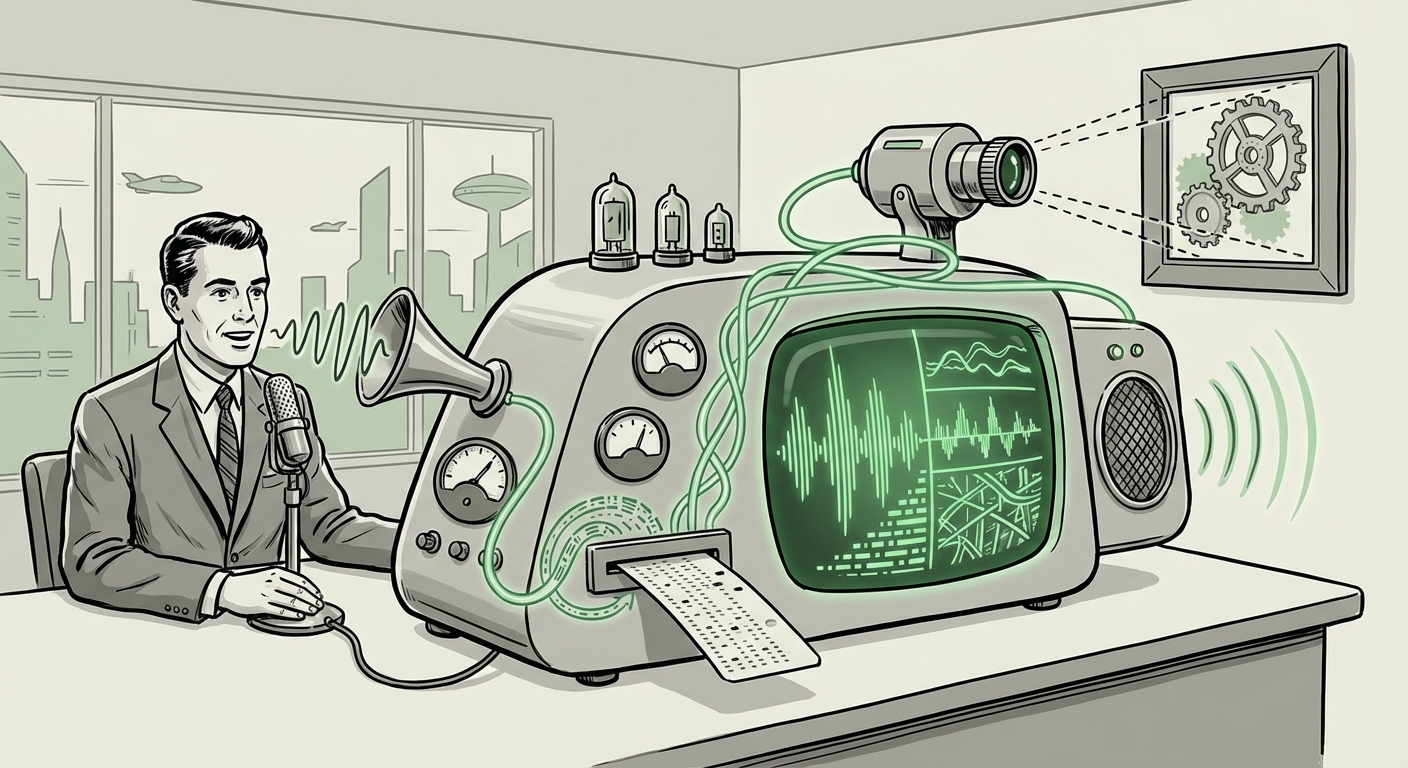
The news that OpenAI is "killing its dedicated coding model Codex again, folding it into GPT-5.5" speaks volumes. It underscores a powerful trend toward consolidation and the pursuit of increasingly versatile, multimodal foundational models. This strategic pivot by one of the most influential AI research organizations suggests that the future of AI may lie not in a myriad of narrowly focused tools, but in a smaller number of incredibly powerful, adaptable, and general-purpose systems.
The Consolidation Imperative: Why General AI is Winning
For years, the development of AI has seen a dual approach: creating highly specialized models designed for specific tasks (like Codex for code generation) and building more general-purpose models capable of handling a broader range of applications. OpenAI's move clearly indicates a lean towards the latter. The integration of Codex into GPT-5.5 is not merely about combining features; it represents a philosophical shift away from a fragmented ecosystem of AI tools towards a unified, holistic intelligence.
This trend towards consolidation is driven by several factors. First, managing and maintaining numerous specialized models can be resource-intensive. Each model requires its own training data, fine-tuning, infrastructure, and ongoing development. By folding capabilities like coding into a larger, more general model like GPT-5.5, OpenAI can streamline its development efforts, optimize resource allocation, and accelerate the pace of overall innovation. This allows for a more efficient feedback loop where improvements in the core GPT-5.5 model automatically benefit all integrated functionalities, including coding.
Second, the user experience benefits significantly from this approach. Imagine having a single, powerful AI interface that can understand and execute complex requests across different domains – from writing an email to debugging code, composing a poem, or generating marketing copy. This unified interface reduces cognitive load for users and developers alike, simplifying the adoption and application of AI in various contexts. Instead of switching between different APIs or platforms for different tasks, users can rely on one comprehensive system.
Third, a more general model often boasts superior contextual understanding. When a dedicated coding model operates in isolation, it might excel at syntax but struggle with the broader context of a project or the nuanced intent behind a request. By integrating coding capabilities into a model like GPT-5.5, which likely possesses a broader understanding of language, logic, and general knowledge, the AI can potentially generate more contextually appropriate, coherent, and effective code. This means code that not only works but also aligns better with the overall design and purpose of an application.
What This Means for the Future of AI Development
The implications for the future of AI development are profound. This strategic decision from OpenAI signals a potential shift in how AI research and product development will be approached globally. We might see:
- A Greater Focus on Foundational Models: Investment and research will likely concentrate on building increasingly powerful and versatile foundational models, rather than creating new specialized models from scratch. The race will be to develop the "brain" that can learn and adapt to any task.
- Reduced Need for Specialized Training: As general models become more capable, the barrier to entry for developing AI applications could lower. Developers might spend less time fine-tuning niche models and more time focusing on creative applications that leverage the immense power of these foundational systems.
- Enhanced Multimodality: The integration of coding capabilities into a language model like GPT-5.5 hints at a future where AI seamlessly handles various data types and tasks – text, code, images, audio, and more – within a single framework. This moves us closer to truly intelligent agents that can perceive and interact with the world in a human-like manner.
- Accelerated Innovation Cycles: With a consolidated approach, improvements in the core model can propagate across all its functionalities much faster. This could lead to an accelerated pace of innovation, as breakthroughs in one area of AI instantly enhance others.
This evolution suggests a future where AI is not a collection of fragmented tools but a cohesive, adaptable intelligence. The challenge will then shift from building individual AI tools to intelligently integrating and orchestrating these powerful, generalized AI capabilities into existing workflows and new applications.
Practical Implications for Businesses and Society
The move to consolidate AI capabilities has significant practical implications for businesses across various sectors and for society as a whole.
For Businesses: Streamlined Operations, New Opportunities
Businesses stand to gain significantly from this shift towards general-purpose AI. The ability to perform complex coding tasks, alongside creative content generation, data analysis, and customer service, all from a single AI interface, offers unprecedented efficiency. Imagine a marketing team using the same AI to generate ad copy, optimize campaign code, and analyze customer feedback – all within a unified workflow.
- Simplified Integration: Instead of integrating and managing multiple AI APIs, businesses can focus on deeply integrating one powerful model like GPT-5.5, simplifying their tech stack and reducing operational overhead.
- Cost Efficiency: Consolidating AI resources can lead to cost savings in terms of API subscriptions, infrastructure management, and developer time.
- Accelerated Product Development: Developers within companies can leverage a more capable, all-in-one AI assistant, speeding up prototyping, debugging, and the development lifecycle of new software and services.
- Democratization of Advanced Capabilities: More sophisticated AI capabilities, previously accessible only through specialized models, will become more broadly available through general-purpose platforms, leveling the playing field for smaller businesses and startups.
- Strategic Planning for AI Adoption: Businesses need to adapt their AI strategies to account for these powerful, consolidated models. This means focusing on how to best integrate a single, versatile AI into existing processes rather than piecemeal adoption of specialized tools.
For Developers: A Shift in Skillset and Focus
Developers, particularly those involved in coding, will experience a notable shift. While the core skills of programming remain vital, the role of AI as a coding assistant will become more integrated and powerful. Developers may move from writing boilerplate code to more high-level architectural design, complex problem-solving, and AI-driven code refinement.
- Enhanced Productivity: Developers can offload repetitive coding tasks, debugging, and even complex algorithm generation to AI, freeing them to focus on innovation and higher-value work.
- New Skill Requirements: Proficiency in "prompt engineering" and understanding how to effectively guide powerful general AI models will become crucial. Developers will need to learn how to articulate their needs to AI in a way that yields optimal results.
- Collaboration with AI: The future of software development will likely involve a much closer collaboration between human developers and AI systems, where AI acts as an intelligent co-pilot, not just a tool.
For Society: Ethical Considerations and Accessibility
While the consolidation of AI offers immense benefits, it also brings important societal considerations. Centralizing powerful capabilities into a few foundational models means greater responsibility for the developers of these systems. Issues of bias, fairness, transparency, and control become even more critical when a single AI can influence multiple aspects of our digital lives.
- Increased Accessibility: General-purpose models can make advanced AI capabilities more accessible to a wider audience, including those without specialized technical knowledge, fostering greater innovation across society.
- Ethical Governance: The concentration of power in a few general models necessitates robust ethical guidelines and regulatory frameworks to prevent misuse and ensure equitable access and impact.
- Dependence and Resilience: Society's increasing reliance on these powerful, centralized AI systems raises questions about single points of failure and the need for resilient, distributed AI architectures.
Actionable Insights for the AI-Driven Future
Given OpenAI's strategic move, how can individuals and organizations best prepare for and leverage this evolving AI landscape?
- Embrace General-Purpose AI: For businesses, start evaluating how a single, powerful AI platform could replace or augment multiple specialized tools. Focus on integrating these comprehensive models into your core workflows.
- Invest in AI Literacy and Prompt Engineering: For individuals and teams, understanding how to effectively communicate with and guide advanced AI models will be a critical skill. Training in prompt engineering and AI interaction will yield significant dividends.
- Develop Hybrid Workflows: Recognize that the future is likely a synergy between human intelligence and AI. Design workflows that intelligently combine AI's speed and scale with human creativity, critical thinking, and oversight.
- Prioritize Ethical AI Deployment: As AI capabilities consolidate and become more powerful, prioritize ethical considerations, bias mitigation, and robust testing frameworks. Ensure your AI applications are fair, transparent, and accountable.
- Stay Agile and Adaptive: The AI landscape is dynamic. Continuously monitor trends, experiment with new models and integrations, and be prepared to adapt your strategies as foundational models evolve.
- Focus on Problem-Solving, Not Just Tools: With AI handling more of the 'how', focus your human talent on the 'what' and 'why'. Identify complex problems and innovative solutions that AI can help unlock.
Conclusion: A New Era of Consolidated Intelligence
OpenAI's decision to fold Codex into GPT-5.5, as reported on 2026-04-26 by the-decoder.com, marks a pivotal moment in the evolution of artificial intelligence. It signals a strong endorsement of the general-purpose, multimodal AI paradigm, moving away from a fragmented ecosystem of specialized tools. This shift promises enhanced efficiency, simplified integration, and more profound capabilities for AI users, from individual developers to global enterprises.
The future of AI appears to be less about a collection of isolated smart tools and more about a few incredibly intelligent, adaptable systems capable of learning and performing a vast array of tasks. This consolidation will undoubtedly reshape software development, business operations, and our daily interactions with technology. As we step into this new era, the focus will increasingly be on how to harness the immense power of these consolidated intelligences effectively, ethically, and creatively, driving innovation and solving complex challenges on a scale previously unimaginable.