Mistral AI's Workflows: Orchestrating the Future of Enterprise AI
On , a significant announcement from Mistral AI, as reported by the-decoder.com, marked a pivotal shift in the artificial intelligence landscape. Mistral AI, a company recognized for its foundational models, has ventured beyond its core offering with the introduction of Workflows. This new offering signals a strategic move to tackle the complexities of enterprise AI orchestration, promising to redefine how businesses integrate and manage artificial intelligence within their operations. This development is not merely about a new product; it's a window into the evolving future of AI adoption, its practical application, and the broader implications for both businesses and society.
For years, the focus in AI has often been on developing more powerful models, capable of understanding language, generating content, or recognizing patterns with ever-increasing sophistication. However, the true challenge for enterprises has always been less about the raw power of individual models and more about how to effectively deploy, manage, and scale these intelligent capabilities across diverse and complex business processes. Mistral AI's Workflows directly addresses this critical need, pushing the conversation from model development to practical, integrated AI solutions.
What Exactly is Enterprise AI Orchestration?
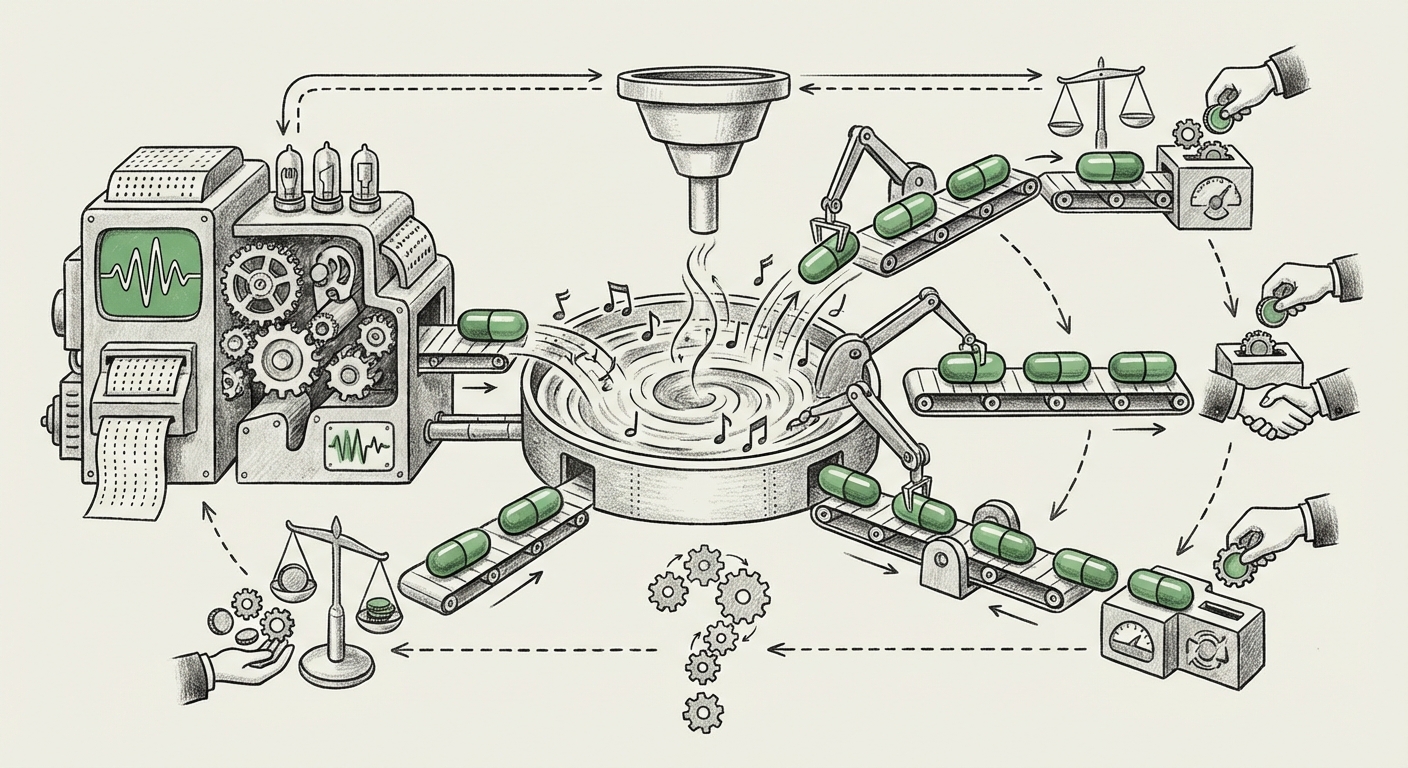
To fully grasp the impact of Mistral AI's Workflows, it's essential to understand what enterprise AI orchestration truly entails. In simple terms, it's the art and science of coordinating various AI models, data sources, human interventions, and existing business systems to achieve a specific business outcome. Think of it like a conductor leading an orchestra: each musician (AI model, data pipeline, human expert) plays their part, but it's the conductor (the orchestration layer) that ensures they all play in harmony, at the right time, and to produce a coherent, beautiful symphony (the desired business process).
Without proper orchestration, AI deployments can quickly become chaotic. Businesses might find themselves with a powerful language model here, a specialized vision model there, and a predictive analytics tool elsewhere. Each operates in its own silo, requiring manual handoffs, custom integrations, and constant oversight. This fragmentation leads to inefficiencies, increased costs, higher error rates, and a significant barrier to scaling AI's benefits across an organization. Enterprise AI orchestration tools, like Workflows, aim to solve these problems by providing a unified framework for:
- Sequencing AI Tasks: Defining the order in which different AI models or steps need to execute.
- Data Management: Ensuring data flows seamlessly between AI components, legacy systems, and external sources, often requiring transformation and validation.
- Conditional Logic: Implementing rules that determine which AI path to take based on outcomes or specific conditions (e.g., if a chatbot can't answer, escalate to a human).
- Human-in-the-Loop: Integrating human oversight and intervention at critical junctures to review, approve, or refine AI outputs.
- Error Handling and Monitoring: Automatically detecting failures, retrying tasks, and providing dashboards to observe the performance and health of AI processes.
- Scalability and Governance: Ensuring that AI applications can grow with demand while adhering to security, compliance, and ethical guidelines.
In essence, Workflows positions itself as the glue that binds disparate AI capabilities into coherent, automated, and manageable business processes, making AI not just a technology but a reliable and integrated part of daily operations.
The Broader Implications for the Future of AI
Mistral AI's move into enterprise AI orchestration with Workflows signifies a profound evolution in the AI industry, extending far beyond the immediate utility for businesses. It heralds a future where AI is less about isolated marvels and more about ubiquitous, interconnected intelligence. This trend will shape the future of AI in several critical ways:
1. From Models to Systems: The Maturation of AI Deployment
The early phases of modern AI were characterized by a race to build bigger, better foundational models. While this innovation continues, the introduction of products like Workflows indicates a maturation. The industry is moving from an obsession with individual model performance to the efficacy of entire AI systems. The focus is shifting towards how these powerful models can be effectively deployed, managed, and integrated into complex, real-world business environments. This means future AI development will increasingly consider deployment and orchestration challenges from the outset, leading to models designed for easier integration.
2. Democratization of Advanced AI
By simplifying the integration and management of AI components, orchestration platforms can significantly lower the barrier to entry for businesses looking to leverage advanced AI. Small and medium-sized enterprises (SMEs) that previously lacked the internal expertise or resources to build complex AI pipelines can now potentially access sophisticated AI capabilities through user-friendly orchestration tools. This democratization will accelerate AI adoption across industries, not just within tech giants, leading to a broader societal impact as more sectors benefit from AI-driven efficiencies.
3. The Rise of AI Service Providers Beyond Foundational Models
Mistral AI's Workflows demonstrates a strategic diversification for AI companies. While foundational model development remains crucial, the real value unlock for enterprises lies in applying these models effectively. This will spur a new wave of AI service providers and platforms specializing in integration, fine-tuning, orchestration, and lifecycle management for AI. Companies like Mistral AI are not just selling access to powerful models; they are selling the ecosystem required to make those models truly useful, indicating a more comprehensive approach to AI product development in the future.
4. Enhanced Focus on AI Governance and Ethics
As AI becomes deeply embedded in core business processes through orchestration, the importance of governance, transparency, and ethical considerations will only grow. Workflows, by providing a centralized view and control over AI processes, can become instrumental in implementing and enforcing organizational policies around data privacy, bias detection, and compliance. The future of AI will demand not just powerful algorithms but also robust frameworks for responsible deployment, and orchestration tools will be key enablers of this.
5. Accelerating the Pace of Innovation in Applied AI
When the burden of managing complex integrations is lifted by orchestration tools, businesses can dedicate more resources to innovating with AI rather than struggling with its plumbing. This will accelerate the discovery of new AI applications, foster creative problem-solving, and lead to more rapid iteration and improvement of AI-powered products and services. The easier it is to deploy AI, the faster new solutions can emerge and evolve.
Practical Implications for Businesses and Society
The advent of enterprise AI orchestration tools like Mistral AI's Workflows carries significant practical implications:
For Businesses: Unleashing Operational Efficiency and Strategic Agility
- Faster Time-to-Value: Businesses can deploy AI solutions much quicker, moving from pilot to production in less time, thus realizing benefits sooner.
- Cost Reduction: Streamlined processes, reduced manual effort in integration, and optimized resource utilization lead to significant operational cost savings.
- Enhanced Decision-Making: By integrating various AI insights into a cohesive workflow, companies gain a more holistic and timely understanding of their operations, enabling better strategic decisions.
- Scalability: Orchestration makes it easier to scale AI applications across different departments or to handle increasing volumes of data and user interactions without rebuilding entire systems.
- Reduced Complexity: Managing AI pipelines becomes less daunting, allowing IT teams to focus on innovation rather than maintenance.
- Competitive Advantage: Early adopters of robust AI orchestration platforms will likely gain a significant edge in automating core functions, personalizing customer experiences, and optimizing supply chains.
For Society: A More Pervasive and Reliable AI Landscape
- Increased Automation Across Sectors: Industries from healthcare to logistics, finance to manufacturing, will see deeper integration of AI into their foundational operations, leading to widespread automation of routine and complex tasks.
- New Job Roles and Skill Sets: While some jobs may be automated, the need for AI "orchestrators," workflow designers, AI governance specialists, and human-in-the-loop supervisors will grow significantly, requiring a shift in workforce skills.
- Improved Public Services: Governments and public sector organizations can leverage orchestrated AI to enhance service delivery, optimize resource allocation, and improve citizen engagement.
- Ethical Frameworks Become More Critical: As AI becomes more embedded and autonomous through orchestration, the societal discourse around AI ethics, accountability, and regulatory frameworks will intensify. Orchestration layers will need to provide auditable trails and control points for ethical oversight.
Actionable Insights for Navigating the Orchestrated AI Future
For organizations looking to thrive in this evolving AI landscape, here are actionable insights inspired by the emergence of tools like Workflows:
- Assess Your AI Readiness: Understand where your organization stands in terms of AI adoption, existing models, data infrastructure, and skilled personnel. Identify areas where fragmentation or complexity hinders AI's impact.
- Prioritize Orchestration: Recognize that powerful individual AI models are only part of the equation. Invest in strategies and tools for orchestrating these models into coherent, end-to-end workflows. Evaluate solutions like Mistral AI's Workflows based on your specific enterprise needs.
- Build Cross-Functional Teams: AI implementation is no longer solely an IT function. Foster collaboration between AI specialists, business domain experts, data scientists, and legal/compliance teams to design and manage orchestrated AI workflows effectively.
- Focus on Data Strategy: Clean, accessible, and well-governed data is the lifeblood of any effective AI workflow. Invest in robust data integration, cleansing, and management strategies to feed your orchestration layers.
- Embrace a Human-in-the-Loop Philosophy: Design workflows that strategically incorporate human oversight, especially for critical decisions or high-stakes processes. This ensures accuracy, accountability, and builds trust in AI systems.
- Develop a Governance Framework: Establish clear policies for AI ethics, security, privacy, and compliance from the outset. Your orchestration platform should be able to support and enforce these policies.
- Start Small, Scale Smart: Begin with pilot projects to test and refine your AI orchestration strategy. Learn from these initial deployments and iteratively expand to more complex workflows, ensuring scalability and sustainability.
Conclusion: The Dawn of Seamless Enterprise Intelligence
Mistral AI's introduction of Workflows on , is more than just a product launch; it's a clear signal that the AI industry is entering a new phase. This phase is characterized by a shift from the novelty of individual AI capabilities to the strategic imperative of seamlessly integrating and orchestrating intelligence across the entire enterprise. As companies like Mistral AI extend their offerings to solve the complex challenges of AI deployment, the future promises a world where AI is not just a collection of powerful algorithms, but a deeply interwoven, continuously optimizing layer within the fabric of business operations and society.
The ability to orchestrate diverse AI models and systems will unlock unprecedented levels of efficiency, innovation, and strategic advantage. For businesses, this means moving beyond experimental AI projects to truly intelligent, automated workflows that drive tangible value. For the broader future of AI, it means an accelerated journey towards pervasive, reliable, and responsibly managed artificial intelligence that transforms every facet of our digital and physical worlds. The era of seamless enterprise intelligence is truly upon us, and orchestration tools like Workflows are paving the way.