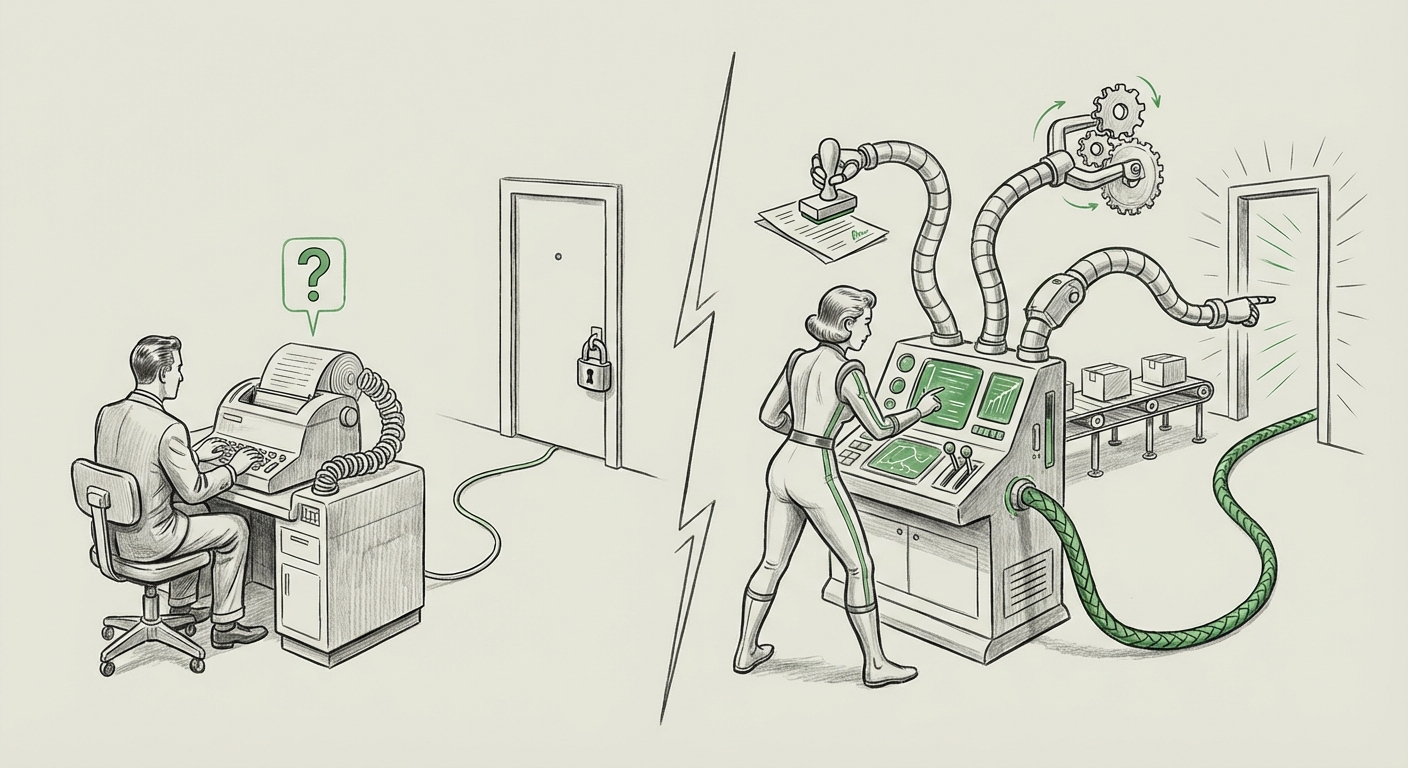
The Unexpected Comeback of RNNs: Unpacking What It Means for AI's Future Evolution
In the rapidly evolving landscape of artificial intelligence, shifts in foundational technologies can signal profound changes across industries. A compelling new development highlighted by The Sequence Knowledge on April 28, 2026, points to what many might consider an unexpected turn: the comeback of Recurrent Neural Networks (RNNs). For years, the AI community has been captivated by the rise of Transformer architectures, which redefined capabilities in natural language processing (NLP) and beyond. The notion that RNNs—an older guard in neural network design—could be making a significant return invites a crucial re-evaluation of current trends and future directions in AI development.
This "unexpected comeback" isn't merely a nostalgic nod; it hints at deeper insights and potential breakthroughs that could unlock new efficiencies, expand AI's reach into novel applications, and even reshape our understanding of optimal architectures for various tasks. Understanding the implications of this reported resurgence requires a look back at where RNNs came from, why they receded, and what a return to prominence might signify for the future of AI and its integration into our world.
Understanding the Original Reign of RNNs and the Rise of Transformers
To fully appreciate the "unexpected" nature of RNNs' comeback, it's essential to recall their initial dominance and the reasons for their subsequent decline in favor of Transformers. Recurrent Neural Networks were groundbreaking in their ability to process sequential data. Unlike traditional neural networks that treat inputs as independent, RNNs possess an internal memory, allowing them to carry information from previous steps in a sequence to influence the processing of current steps. This made them ideal for tasks involving natural language, speech recognition, and time-series analysis, where the order of information is critical.
Early RNN variants, like simple RNNs, faced challenges such as vanishing or exploding gradients, which made it difficult for them to learn long-term dependencies in sequences. This led to the development of more sophisticated architectures, notably Long Short-Term Memory (LSTM) networks and Gated Recurrent Units (GRUs). LSTMs and GRUs introduced "gates" that control the flow of information, allowing them to selectively remember or forget parts of their memory, thus effectively mitigating the gradient problems and improving performance on longer sequences. For a significant period, LSTMs and GRUs were the state-of-the-art for many sequence-based tasks, demonstrating impressive capabilities in translating languages, generating text, and understanding spoken commands.
However, the AI world experienced a seismic shift with the introduction of the Transformer architecture in 2017. Transformers, particularly through their "attention mechanism," offered a new way to process sequences. Instead of processing data sequentially, Transformers could process all parts of a sequence simultaneously, weighing the importance of different parts relative to each other. This parallelism drastically sped up training times on modern hardware like GPUs and TPUs. More importantly, the attention mechanism proved incredibly effective at capturing long-range dependencies, often outperforming LSTMs and GRUs on complex tasks. This led to an explosion of large language models (LLMs) built on the Transformer architecture, making them the undisputed champion for many cutting-edge AI applications.
The ubiquity of Transformers in recent years made their ascendancy seem absolute, leading many to consider RNNs a foundational but largely superseded technology. Thus, a report detailing an "unexpected comeback" of RNNs suggests a significant re-evaluation or breakthrough in their capabilities or application domains.
What an RNN Comeback Implies for the Future of AI
The reported comeback of RNNs, as highlighted by The Sequence Knowledge, signals a potentially multifaceted evolution in AI, moving beyond the narrative of Transformer dominance. This shift could have profound implications for how AI models are designed, deployed, and ultimately impact various sectors.
1. A Push Towards Greater Efficiency and Resource Optimization
One of the most compelling reasons for a renewed interest in RNNs could stem from a drive for efficiency. While Transformers excel in performance, especially with massive datasets, they are also notoriously computationally expensive and memory-intensive. Training and running large Transformer models require significant computational resources, power, and cost. If RNNs are making a comeback, it likely implies new advancements that address some of their historical limitations while retaining, or even enhancing, their inherent advantages in resource efficiency for specific tasks.
- Reduced Computational Footprint: New RNN architectures or training techniques might allow for models that perform comparably to Transformers on certain tasks but with significantly less computational overhead. This would be revolutionary for smaller organizations, researchers with limited budgets, and the broader goal of making AI more sustainable.
- Edge AI and IoT: The sequential nature of RNNs, potentially requiring less memory and computational power for inference compared to Transformers, could make them ideal for deployment on edge devices, such as smartphones, smart sensors, and embedded systems. This would enable more AI processing locally, reducing reliance on cloud infrastructure and improving real-time responsiveness and privacy.
- Real-time Applications: Many real-world scenarios, from fraud detection to predictive maintenance, require immediate processing of streaming data. RNNs, by their very nature of processing information sequentially, are well-suited for such real-time or online learning tasks where data arrives in a continuous stream. Their comeback might mean they are now more capable of handling these demanding, low-latency requirements.
2. Diversification of AI Architectures and Specialized Solutions
The AI landscape has, for a time, appeared to converge heavily on Transformer architectures. An RNN comeback suggests a move towards a more diverse and specialized architectural ecosystem. Instead of a "one-size-fits-all" approach, the future of AI may embrace a broader toolkit, selecting the optimal architecture based on the specific problem's constraints and requirements.
- Beyond General-Purpose Models: While Transformers are powerful generalists, RNNs might be proving superior in highly specialized domains. This could involve tasks where strict sequential order is paramount, or where the input sequence length is extremely long, potentially exceeding the practical limits of Transformer attention mechanisms without significant computational cost.
- Hybrid Models: The comeback might not be about replacing Transformers entirely but rather about complementing them. Hybrid architectures that combine the strengths of both RNNs (e.g., efficiency in sequential processing) and Transformers (e.g., global context understanding) could emerge, leading to even more powerful and versatile AI systems.
- New Theoretical Insights: The resurgence could be driven by fundamental theoretical breakthroughs in understanding how RNNs learn and process information. These insights could lead to novel ways of designing recurrent connections, managing memory, or optimizing training, unlocking previously unreachable performance levels.
3. Broader Accessibility and Democratization of Advanced AI
If RNNs offer comparable performance with significantly less resource demand, this could democratize access to advanced AI capabilities. Smaller companies, academic institutions, and individual developers could deploy sophisticated AI solutions without the prohibitively high costs associated with large Transformer models.
- Lower Barrier to Entry: Reduced computational requirements mean less reliance on massive cloud budgets, fostering innovation from a wider range of participants.
- Sustainability: The environmental impact of large AI models is a growing concern. More efficient RNNs could contribute to a greener AI ecosystem, aligning with global efforts towards sustainability.
Practical Implications for Businesses and Society
The "unexpected comeback" of RNNs isn't just a technical curiosity; it has tangible practical implications that businesses and society must consider to stay ahead in the AI revolution.
For Businesses: Re-evaluating AI Strategies and Investments
For businesses currently investing heavily in Transformer-based solutions, this news should prompt a strategic re-evaluation.
- Optimized Resource Allocation: Companies can explore if certain tasks, particularly those involving real-time data streams, edge deployment, or very long sequences, could be handled more efficiently and cost-effectively by new RNN architectures. This could free up valuable GPU resources for other complex Transformer-based tasks.
- New Product Development: Industries reliant on sequential data, such as finance (algorithmic trading, fraud detection), manufacturing (predictive maintenance, quality control), healthcare (patient monitoring, drug discovery), and telecommunications (network optimization), could find new avenues for innovation. RNNs might enable powerful, localized AI solutions that were previously infeasible due to cost or latency constraints.
- Talent Development: Businesses should ensure their data science and AI engineering teams are up-to-date not just on the latest Transformer models but also on advancements in RNNs. A diversified skillset will be crucial for selecting and implementing the most appropriate AI solutions.
- Competitive Advantage: Early adopters of these new RNN capabilities could gain a significant competitive edge by deploying faster, cheaper, and more energy-efficient AI systems for specific use cases.
For Society: Smarter Devices and More Sustainable AI
On a societal level, an RNN resurgence promises benefits that extend beyond corporate bottom lines.
- Smarter Everyday Devices: If AI processing becomes more efficient, we could see more powerful AI capabilities embedded directly into everyday devices, from smart home appliances to wearables, offering enhanced personalization and responsiveness without constant cloud connectivity.
- Improved Accessibility: Cheaper, more efficient AI could mean that advanced capabilities become more accessible to a broader range of communities and applications, particularly in developing regions where computational resources may be limited.
- Environmental Impact: The massive energy consumption of training and deploying large AI models is a growing concern. If efficient RNNs can achieve similar results for certain tasks, it could contribute to a more environmentally sustainable future for AI.
- Enhanced Privacy: Processing data on the device itself, rather than sending it to the cloud, can significantly enhance user privacy and data security, addressing a critical concern in today's digital age.
Actionable Insights for Navigating This Shift
Given the reported "unexpected comeback" of RNNs, how should organizations and individuals prepare for this potential paradigm shift in AI?
- Stay Informed and Monitor Research: Keep a close watch on AI research papers, particularly those emerging from institutions and companies that have historically invested in RNN development. Publications like The Sequence Knowledge are vital sources for tracking these trends. Look for specific breakthroughs in RNN architectures, training methodologies, or novel applications.
- Pilot and Experiment: For businesses, consider piloting new RNN-based solutions for specific, resource-constrained, or real-time use cases. Evaluate their performance against current Transformer-based or other ML models. Identify areas where efficiency gains could translate into significant cost savings or new product features.
- Invest in Diversified Expertise: Foster teams that are knowledgeable across various neural network architectures, including both Transformers and the evolving landscape of RNNs. Encourage continuous learning and cross-pollination of ideas.
- Re-evaluate Infrastructure Needs: Assess whether existing computational infrastructure is optimized for diverse AI workloads. The resurgence of RNNs might imply different hardware or software optimization strategies compared to purely Transformer-centric environments.
- Consider Hybrid Approaches: Explore how RNN components could be integrated into existing or future Transformer pipelines to achieve the best of both worlds – leveraging attention for global context while utilizing recurrence for efficient local processing or long-sequence handling.
- Prioritize Sustainability: With growing pressure for ethical and sustainable AI, actively seek out and implement architectures that offer comparable performance with a lower carbon footprint. RNNs could play a key role in this initiative.
Conclusion
The report from The Sequence Knowledge on 2026-04-28, heralding the "unexpected comeback of RNNs," suggests that the narrative of AI development is far from settled. While Transformers have rightfully dominated the recent discourse and innovation, the potential resurgence of Recurrent Neural Networks reminds us that the best solutions are often those that are purpose-built and highly optimized for specific problems and constraints. This isn't necessarily a story of one architecture triumphing over another, but rather a story of increasing architectural diversity, specialization, and a renewed focus on efficiency and sustainability within the AI ecosystem.
For both technical professionals and business leaders, this moment presents an exciting opportunity. It's a call to broaden our understanding, challenge existing assumptions, and explore a richer, more varied toolkit of AI capabilities. As the field matures, expect to see AI solutions that are not only powerful but also remarkably efficient, adaptable, and integrated more seamlessly into every facet of our lives, driven by a renewed appreciation for the enduring strengths of architectures like RNNs.