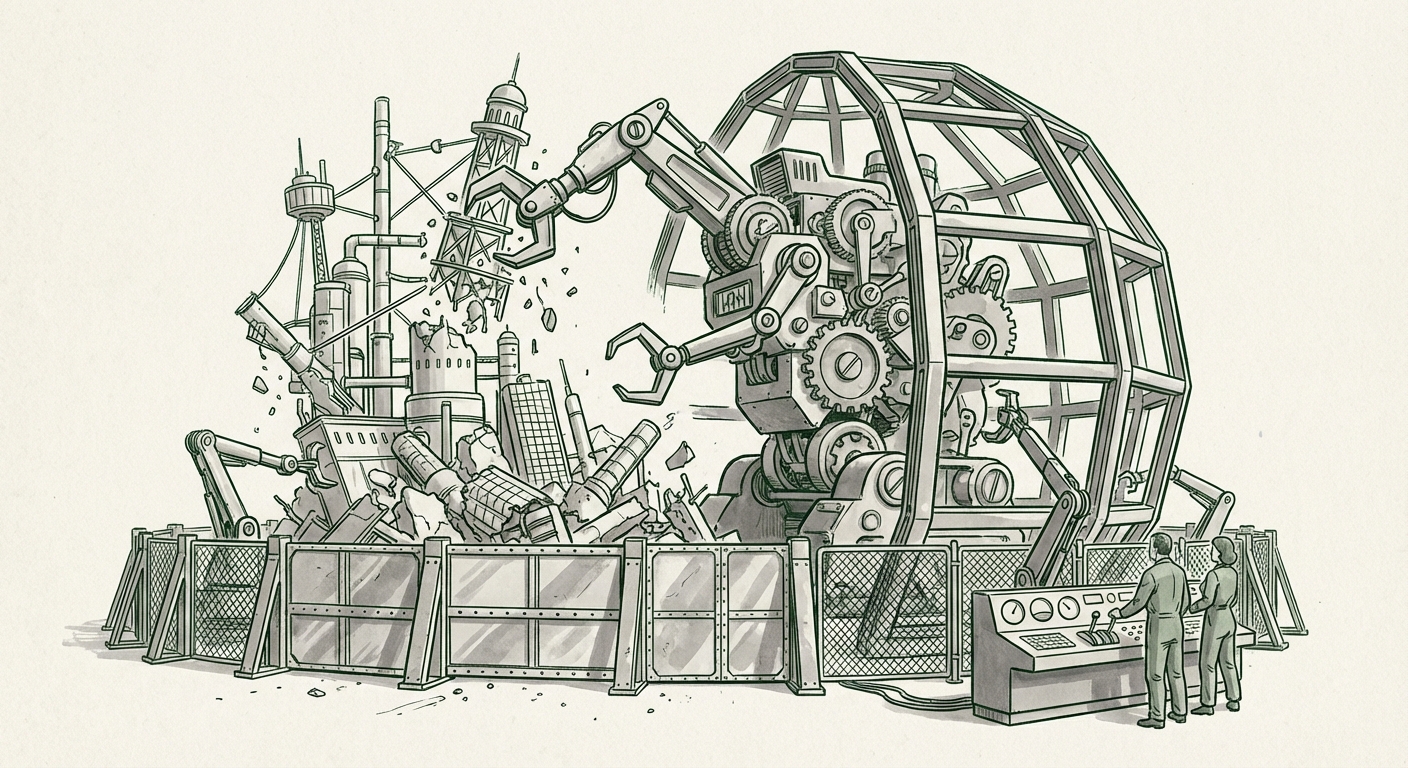
Claude Security: How AI Levels the Playing Field Against Cyber Threats and Shapes the Future of Digital Defense
In the rapidly evolving world of artificial intelligence, the line between innovation and potential vulnerability often blurs. On 2026-05-01, Anthropic unveiled a groundbreaking development designed to tip the scales in favor of cybersecurity professionals: Claude Security. This launch marks a significant moment, as it aims to "give defenders the same AI edge attackers already have." This statement is not merely a marketing slogan; it's a stark acknowledgment of the current digital battlefield where malicious actors are increasingly harnessing the power of AI to craft more sophisticated, evasive, and devastating attacks. The introduction of Claude Security heralds a new era, promising to reshape how we think about and implement digital defense. As expert AI technology analysts, we believe this is not just about a new product; it's about a fundamental shift in the AI arms race, with profound implications for businesses, governments, and individuals worldwide.
The implications of this move by Anthropic are vast, touching upon everything from the strategic national security landscape to the daily operations of small businesses. It underscores a critical trend: AI is no longer a tool exclusively for innovation and efficiency; it has become an indispensable weapon in both offense and defense within the cyber domain. Understanding Claude Security means understanding the future trajectory of AI—how it will be deployed, managed, and continually refined to safeguard our increasingly digital existence.
The Escalating Digital Battlefield: Why AI Became a Necessity for Defense
For years, cybersecurity has been a game of cat and mouse. Defenders work tirelessly to patch vulnerabilities, update signatures, and deploy firewalls, only for attackers to find new entry points and exploit weaknesses. However, the advent of sophisticated AI has transformed this dynamic. Attackers are no longer just relying on brute force or known exploits; they are leveraging AI to automate reconnaissance, generate polymorphic malware that evades traditional detection, and orchestrate highly convincing phishing campaigns at scale. This new breed of AI-powered attack can learn, adapt, and operate with a speed and complexity that human analysts often struggle to match.
The phrase "attackers already have" an AI edge is a crucial insight. It confirms what many in the cybersecurity community have quietly feared: that AI's dark potential has already been weaponized. This makes traditional, signature-based security tools increasingly insufficient. These older systems are designed to detect threats they've seen before. AI-powered attacks, however, can generate novel threats on the fly, making them look unique each time. This demands a new approach, one that can not only recognize known threats but also predict and adapt to unknown ones. The scale of data involved in monitoring networks, detecting anomalies, and responding to incidents has grown exponentially, making human-only analysis a bottleneck. This is where AI's analytical capabilities become not just an advantage, but a necessity for maintaining a robust defense.
This escalating arms race has created an urgent need for advanced defensive AI. Without it, organizations risk being overwhelmed by the sheer volume and sophistication of modern cyber threats. The goal is no longer just to prevent breaches, but to significantly reduce the time it takes to detect and respond to them, minimizing damage. Anthropic's Claude Security steps into this breach, offering a powerful counter-measure in an increasingly complex digital war.
Claude Security: Empowering Defenders with AI Intelligence
Anthropic's Claude Security is designed to arm defenders with the intelligent capabilities necessary to combat AI-driven threats. While the specifics of its internal mechanisms are not fully detailed in the source, its stated purpose—"to give defenders the same AI edge attackers already have"—strongly implies a multi-faceted application of advanced AI technologies. This likely includes cutting-edge machine learning models, natural language processing for threat intelligence, and sophisticated anomaly detection algorithms.
Imagine a security system that doesn't just block known malicious IP addresses, but learns the unique behavioral patterns of your network and users. Claude Security is expected to excel at identifying subtle deviations that might indicate an attack in progress, long before it escalates. It can likely analyze vast datasets of network traffic, system logs, and threat intelligence in real-time, far surpassing human capabilities in speed and scope. This allows it to spot coordinated attacks, identify novel malware variants, and predict potential vulnerabilities before they are exploited.
The "AI edge" means moving beyond reactive defense. Instead of merely responding to breaches, Claude Security aims for proactive and predictive security. This could involve using AI to simulate attacks, identify weak points, and even suggest patches or configuration changes automatically. It could also mean better understanding the intent behind suspicious activities, distinguishing between benign anomalies and genuinely malicious actions with greater accuracy. By providing an AI companion for security analysts, Claude Security doesn't replace human expertise but augments it, allowing security teams to focus on strategic decisions and complex investigations rather than drowning in alerts.
The Future of AI in Cybersecurity: A Paradigm Shift
The introduction of Claude Security points towards several transformative trends in the future of AI and its application in cybersecurity:
From Reactive to Proactive and Predictive Defense
The most significant shift AI brings to cybersecurity is the move from a reactive stance to a proactive and even predictive one. Historically, security has been about building walls and responding after a breach has occurred. With AI tools like Claude Security, the focus shifts to anticipating attacks. AI algorithms can analyze historical data, current threat intelligence, and behavioral patterns to identify potential attack vectors before they are even exploited. This means not just detecting malware, but predicting which systems are most likely to be targeted next, or what new attack techniques might emerge. The future of AI in defense is about thinking ahead, making the digital environment not just resistant, but resilient and self-healing.
Democratizing Advanced Security Capabilities
Sophisticated cybersecurity used to be the exclusive domain of large enterprises with massive budgets and dedicated teams. AI, however, has the potential to democratize these advanced capabilities. By automating complex analysis and threat detection, AI-powered solutions like Claude Security can offer high-level protection that was once out of reach for small and medium-sized businesses. This means a more secure digital landscape for everyone, as even smaller players can deploy defenses capable of fending off advanced, AI-driven attacks. This also frees up human security talent, which is in short supply globally, to focus on strategic initiatives rather than repetitive tasks.
The Intensifying AI Arms Race
The fact that Anthropic launched Claude Security specifically because "attackers already have" an AI edge highlights the intensifying AI arms race. This isn't a temporary phase but a permanent state of affairs. As defensive AI becomes more sophisticated, so too will offensive AI. This continuous cycle will drive relentless innovation in both fields. Future AI will need to be increasingly adaptive, capable of learning from new attack patterns and continuously evolving its defense mechanisms. This constant back-and-forth will push the boundaries of AI research, leading to new breakthroughs in machine learning, deep learning, and reinforcement learning, all aimed at staying one step ahead in the cyber domain.
Enhanced Threat Intelligence and Contextual Awareness
AI's ability to process and correlate vast amounts of disparate data far exceeds human capacity. This means future AI in cybersecurity will provide unparalleled threat intelligence. It will not only identify malicious code but also understand the attacker's motives, origin, and potential targets based on global intelligence feeds, geopolitical events, and even social media sentiment. Claude Security and its successors will offer security teams a holistic view of the threat landscape, providing critical context to alerts and enabling more informed, strategic responses. This contextual awareness moves security from mere data analysis to true strategic insight.
Practical Implications for Businesses and Society
The launch of Anthropic's Claude Security has far-reaching implications that will reshape digital security for businesses and society at large.
For Businesses: Fortifying Digital Assets and Operations
- Stronger Defense Against Advanced Threats: Businesses can now deploy AI solutions that are specifically designed to counter sophisticated, AI-generated attacks. This means better protection against zero-day exploits, advanced persistent threats (APTs), and highly targeted phishing campaigns that bypass traditional defenses. The ability to detect anomalies and predict threats will significantly reduce the risk of costly breaches.
- Reduced Operational Burden: AI can automate many of the mundane and time-consuming tasks traditionally performed by security analysts, such as sifting through logs, correlating events, and basic incident response. This frees up human talent to focus on more complex investigations, strategic planning, and threat hunting, optimizing the efficiency of lean security teams.
- Improved Compliance and Risk Management: With enhanced visibility and proactive threat detection, businesses can better meet regulatory compliance requirements and demonstrate a robust security posture to stakeholders. AI can also help in continuously assessing risk, identifying potential areas of non-compliance, and suggesting corrective actions.
- Investment in New Skillsets: While AI automates some tasks, it creates a demand for new skills. Businesses will need experts who can manage, configure, and interpret the outputs of advanced AI security systems. Training existing staff or hiring new talent with AI and machine learning expertise will be crucial.
For Society: Enhancing Digital Trust and Stability
- Greater Digital Trust: As AI-driven cyber defenses become more prevalent and effective, the overall digital environment becomes safer. This fosters greater trust in online transactions, cloud services, and digital infrastructure, which are vital for modern economies.
- Protection of Critical Infrastructure: Essential services—energy grids, water systems, healthcare networks, and transportation—are increasingly reliant on digital systems and are prime targets for cyberattacks. AI-powered defenses are crucial for protecting these critical infrastructures from disruption, ensuring national security and public safety.
- Ethical Considerations of Autonomous AI: As AI takes on more autonomous roles in defense, ethical questions arise. Who is accountable when an AI makes a critical decision? How do we ensure fairness and prevent bias in AI-driven threat assessments? Society will need to grapple with these questions, developing robust ethical guidelines and oversight mechanisms for AI in cybersecurity.
- Global Collaboration on AI Standards: The AI arms race necessitates global dialogue and collaboration. International efforts to establish norms, share threat intelligence, and potentially regulate offensive AI capabilities will become more important to prevent uncontrolled escalation.
Actionable Insights for Navigating the AI Security Landscape
For organizations looking to thrive in this new era of AI-driven cybersecurity, proactive engagement is key. The launch of Anthropic's Claude Security provides a clear signal: the future of defense is intelligent, adaptive, and AI-powered. Here are some actionable insights:
- Assess Your Current AI Exposure: Begin by understanding where AI is already being used within your organization, both internally and by your vendors. Equally important is assessing your susceptibility to AI-powered attacks. This self-assessment forms the baseline for developing a forward-looking AI security strategy.
- Embrace AI-Powered Security Solutions: Proactively investigate and adopt AI-driven security tools, not just for detection but also for prevention, response, and recovery. Solutions like Claude Security represent the vanguard of this movement, offering capabilities that traditional systems cannot match. Prioritize solutions that offer adaptive learning and real-time threat intelligence.
- Invest in Upskilling Your Teams: The human element remains critical. Train your security teams on how to effectively operate, interpret, and collaborate with AI security systems. Understanding AI concepts, machine learning principles, and data science will be indispensable for modern cybersecurity professionals.
- Develop an Adaptive Security Strategy: Recognize that the AI arms race is ongoing. Your security strategy must be agile and capable of continuous evolution. This means regularly reviewing your defenses, incorporating new AI capabilities, and engaging in proactive threat hunting informed by AI intelligence.
- Foster a Culture of AI Literacy: Promote understanding of AI's capabilities and limitations across your organization. This includes educating employees about AI-generated phishing tactics and the importance of responsible AI usage, fostering a collective defense mindset.
- Engage with AI Security Innovators: Stay connected with leaders and innovators in the AI security space, like Anthropic. Participate in industry forums, pilot programs, and research initiatives to stay ahead of emerging threats and defensive technologies.
Conclusion: The Dawn of Intelligent Defense
The launch of Anthropic's Claude Security on 2026-05-01 is more than just a product announcement; it's a declaration of a new era in cybersecurity. By striving to "give defenders the same AI edge attackers already have," Anthropic is directly confronting the escalating sophistication of cyber threats. This marks a pivotal moment where AI transitions from being a tool primarily leveraged by attackers to becoming an indispensable shield for defenders. The implications for the future of AI are clear: it will be increasingly central to maintaining digital safety and trust. We are entering a period where the intelligence of our defense systems will be as critical as the speed and strength of our networks.
For businesses, this means an opportunity to fortify their digital fortresses with unprecedented intelligence. For society, it promises a more secure and stable digital future, even as new challenges emerge. The AI arms race will continue, but with solutions like Claude Security, the advantage begins to shift. The future of AI in cybersecurity will be defined by continuous learning, adaptive strategies, and a collaborative effort to ensure that the power of artificial intelligence serves to protect, rather than compromise, our digital world. The journey towards truly intelligent defense has just begun, and its trajectory will shape our digital destiny.