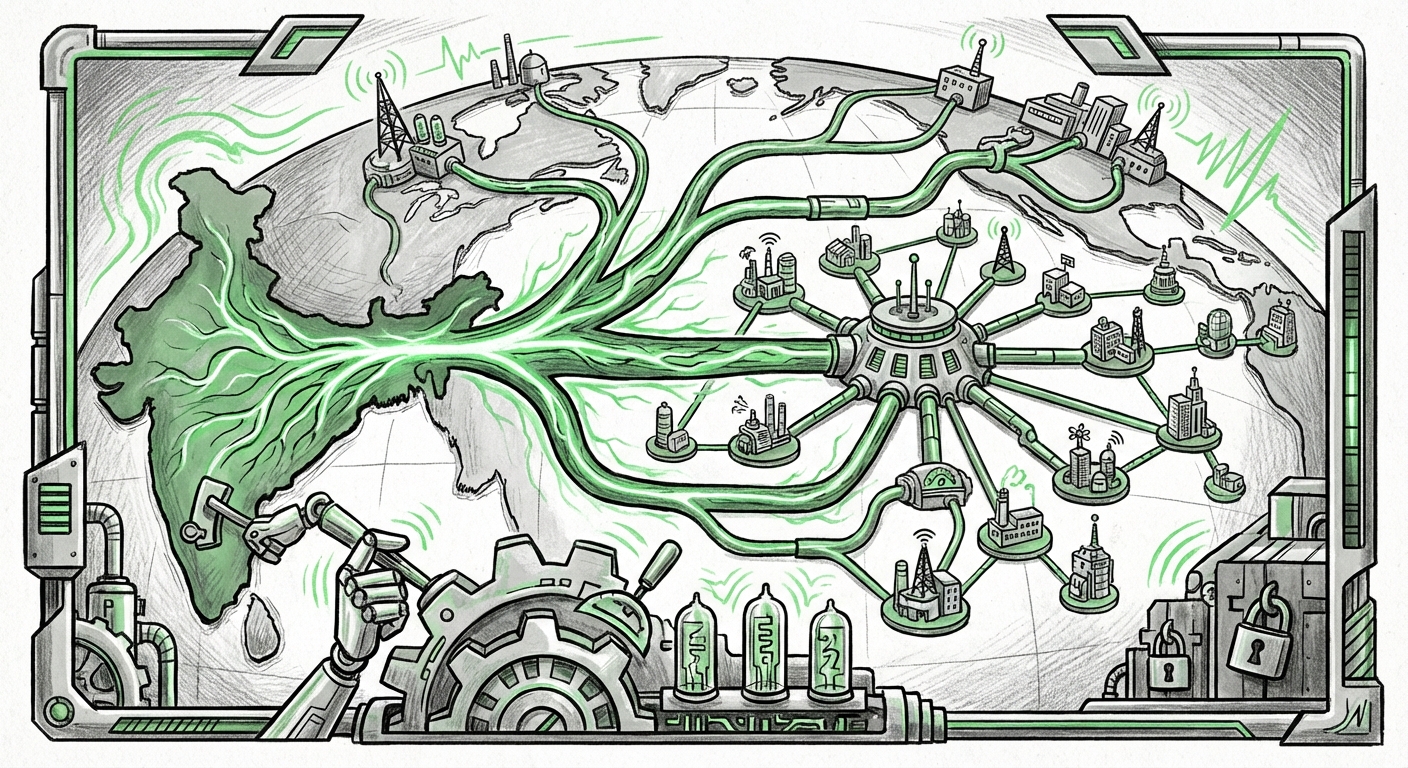
Unlocking AI's Predictable Future: How MIT Explains Reliable Language Model Scaling
The world of Artificial Intelligence has been captivated by the astonishing capabilities of large language models (LLMs). From drafting emails to generating complex code, these digital apprentices continue to redefine what's possible. A fundamental principle driving their meteoric rise has been a seemingly simple one: scaling. For years, researchers and engineers observed a consistent, almost magical pattern: make an LLM bigger – add more parameters, train it on more data, provide more computational power – and its performance reliably improves. This empirical observation has been the bedrock of modern AI development, yet the precise scientific reasons why this scaling works so reliably remained somewhat of an enigma. Now, a groundbreaking study from MIT, published on May 3, 2026, has emerged to provide that crucial explanation, transforming our understanding from empirical observation to theoretical certainty. This isn't just a technical footnote; it's a pivotal moment that will reshape the future of AI, offering profound implications for businesses, society, and the very trajectory of innovation.
The Era of Empirical Scaling: Before the "Why"
For the better part of a decade, the AI community has operated on a powerful, albeit partially understood, premise: bigger is better. This concept, often dubbed "scaling laws," described how the performance of large language models, measured across various benchmarks and tasks, consistently improved as the models increased in size, computational budget, and the sheer volume of training data. It was an engineering marvel built on a robust but unexplained foundation.
Developers learned to simply feed these models more of everything – more data, more compute, more parameters – and watched as their abilities blossomed. Models became more coherent, more capable of complex reasoning, better at understanding nuance, and more adept at generating creative and contextually appropriate responses. This reliability fostered an intense period of innovation and investment, fueling the rapid development of tools and applications that have permeated industries worldwide. The success of many of today's leading AI platforms is a direct testament to the power of this scaling paradigm.
However, the lack of a comprehensive theoretical explanation presented certain challenges. While the path to improvement seemed clear, the underlying mechanisms were opaque. This meant that optimization efforts were often guided by intuition and extensive experimentation, rather than by first principles. It raised questions about the limits of scaling, the efficiency of resource allocation, and whether there might be unforeseen plateaus or fundamental bottlenecks that could eventually halt progress. The "black box" nature of these models, already a topic of much discussion, extended even to their most fundamental growth mechanism.
MIT's Breakthrough: Illuminating the Reliable Scaling Phenomenon
The landscape shifted dramatically with the announcement of the MIT study, published on May 3, 2026, by the-decoder.com. This research represents a monumental leap, moving beyond merely observing that scaling works, to explaining why it works so reliably. While the specifics of their findings are profound and warrant deep diving into the full study, the core takeaway is clear: MIT has provided a scientific framework that demystifies the consistent performance gains seen in language models as they grow. This validation transforms an empirical observation into a rigorously understood scientific principle.
This study provides the theoretical bedrock that the field has long sought. It suggests that the reliable improvement seen with scaling isn't accidental or arbitrary, but rather rooted in fundamental principles that govern how these complex neural networks learn and generalize from vast amounts of data. This scientific endorsement carries immense weight. It confirms that the current trajectory of AI development, heavily reliant on scaling, is not just a fortunate coincidence but a robust and theoretically sound path forward. For researchers, it opens new avenues for inquiry, offering a map for more targeted experimentation and innovation. For industry, it solidifies confidence in the long-term viability and predictability of AI progress driven by scale.
What This Means for the Future of AI Development
The scientific explanation for reliable scaling has far-reaching implications for how AI will evolve and be built in the coming years:
Accelerated and Targeted Research & Development
- Beyond Trial-and-Error: With a scientific explanation, researchers can move beyond expensive and time-consuming brute-force experimentation. Instead of merely trying bigger models, they can develop more sophisticated hypotheses about model architectures, training algorithms, and data curation strategies that are specifically designed to leverage the identified mechanisms of scaling.
- Optimized Resource Allocation: Understanding the underlying principles of scaling means that compute resources, which are substantial for large models, can be allocated more intelligently. This could lead to more efficient training, faster iteration cycles, and a reduction in the massive energy footprint associated with current LLM development.
- Predictable Progress Roadmaps: The ability to explain why scaling works reliably offers a level of predictability previously unavailable. AI labs and companies can now chart more confident roadmaps for future model capabilities, setting clearer expectations for performance improvements with increased investment.
Demystification and Enhanced Trust in AI
- Clarity for Complex Systems: By shedding light on the "black box" of scaling, the MIT study contributes to a broader effort to make AI systems more transparent and understandable. While the models themselves remain complex, knowing the fundamental principles guiding their growth and capability will foster greater confidence.
- Foundation for Robustness and Safety: A deeper theoretical understanding of how AI systems acquire their capabilities through scaling can be instrumental in building more robust, reliable, and safer AI. If we understand the "why," we are better equipped to anticipate potential failure modes, biases, and unintended behaviors, leading to more responsible AI development.
- Public Acceptance and Policy: As AI becomes more integral to daily life, public trust is paramount. A scientific explanation for a core aspect of AI's power can help inform public discourse, mitigate speculative fears, and provide a stronger basis for policymakers to regulate and guide AI's integration into society.
New Frontiers in Architectural Innovation and Specialization
- Smarter Architectures: Knowing the scientific basis for scaling might inspire entirely new neural network architectures or modifications to existing ones that inherently scale more effectively or exhibit desired properties at scale.
- Specialized Scaling: The study could inform how scaling can be tailored for specific tasks or domains. For example, instead of general-purpose scaling, we might see methods for "domain-specific scaling" that efficiently amplify capabilities in areas like scientific discovery, medical diagnosis, or creative arts.
- Multimodal Scaling Insights: While the study focuses on language models, the principles uncovered could potentially extend to other forms of AI, offering insights into how to reliably scale multimodal models (combining text, images, audio) or even generalist AI systems.
Practical Implications for Businesses and Society
The implications of this MIT research extend far beyond the laboratory, impacting strategic decisions for businesses and shaping the fabric of society:
Strategic Business Investment and Innovation
- Deeper Confidence in AI Roadmaps: Businesses that were cautious about long-term investments in AI, perhaps due to the opaque nature of scaling, can now proceed with greater confidence. The proven reliability of performance gains through scaling makes AI a more predictable and therefore less risky investment.
- Accelerated AI Integration: Companies can double down on integrating LLMs into their core operations, knowing that these tools will only become more powerful and versatile over time. This includes everything from automating customer service and content generation to powering sophisticated data analysis and predictive modeling.
- Competitive Advantage Through Scale: Businesses that strategically leverage large-scale AI will gain a significant competitive edge. This implies not just adopting off-the-shelf solutions but investing in customized, enterprise-grade LLM deployments that benefit from continuous scaling.
- New Product and Service Opportunities: As AI capabilities predictably expand, entirely new classes of products and services become viable. Businesses should explore how highly capable, reliably scaled LLMs can unlock novel solutions to existing problems or create entirely new markets.
Societal Transformation and Workforce Evolution
- Enhanced Human Capabilities: Reliably scaling AI promises to augment human intelligence across numerous domains. From assisting doctors in diagnosing rare diseases to helping engineers design more efficient structures, AI will serve as an increasingly powerful co-pilot, enhancing productivity and problem-solving abilities across the board.
- Economic Growth and Productivity: The predictable advancement of AI through scaling will drive significant economic growth. Increased automation, optimized resource allocation, and the creation of new industries will lead to higher productivity and new forms of value creation.
- Rethinking Education and Skills: The continuous evolution of AI capabilities necessitates a proactive approach to education and workforce development. Future generations will need strong critical thinking skills, adaptability, and the ability to effectively collaborate with advanced AI systems. Lifelong learning will become even more crucial as job roles transform.
- Ethical Frameworks and Governance: With increasingly powerful and reliable AI, the urgency for robust ethical guidelines, regulatory frameworks, and societal governance mechanisms grows. Understanding *why* AI systems scale reliably can help inform these frameworks, ensuring that development remains aligned with human values and societal well-being.
Actionable Insights for Navigating the Scaled AI Era
For organizations and individuals alike, understanding the implications of the MIT study on reliable AI scaling offers clear pathways for action:
- Prioritize Scalable AI Solutions: When evaluating AI technologies, favor those built on architectures and principles known to scale effectively. This ensures that your investment today will continue to yield benefits as models improve.
- Invest in Data Infrastructure: The quality and quantity of data remain paramount. Scaling models are only as good as the data they consume. Organizations should prioritize building robust data pipelines, ensuring data quality, and exploring strategies for ethical data acquisition and curation.
- Cultivate AI Literacy and Expertise: Foster a culture of AI understanding across all levels of your organization. This includes training employees on how to effectively use AI tools, developing internal AI expertise, and understanding the strategic implications of AI advancements.
- Embrace Experimentation with a Clear Strategy: While the MIT study provides foundational understanding, the application of scaling principles will still require experimentation. Develop a clear AI strategy that identifies key areas where scaled LLMs can deliver maximum value, and then systematically experiment and iterate.
- Engage in Ethical AI Development and Governance: As AI capabilities grow more predictable and powerful, so does the responsibility to deploy them ethically. Establish internal guidelines, consider external certifications, and actively participate in discussions around AI ethics and regulation to ensure responsible innovation.
- Stay Abreast of Fundamental Research: Keep a close eye on foundational research, particularly from institutions like MIT. Breakthroughs that explain core AI phenomena will continue to shape the field and provide leading indicators for future technological shifts. Regularly review publications from leading academic institutions and reputable tech news outlets like the-decoder.com.
The MIT study, published on May 3, 2026, marks a pivotal moment. It shifts our understanding of AI's core engine – large language model scaling – from an empirical observation to a scientifically explained phenomenon. This transition provides a robust foundation for the next generation of AI innovation, making its progress more predictable, its development more targeted, and its integration into our world more confident.
Conclusion: A Future of Predictably Powerful AI
The journey of Artificial Intelligence has been marked by incredible leaps, often driven by empirical breakthroughs that preceded a full theoretical understanding. The consistent, reliable improvement observed in large language models through scaling has been one such phenomenon, propelling AI into the forefront of technological innovation. The MIT study, revealed on May 3, 2026, represents a critical turning point, providing the much-needed scientific explanation for *why* this scaling works so dependably. This is more than just an academic achievement; it's a foundational insight that validates the current trajectory of AI development and unlocks a future of even more predictable, powerful, and trustworthy AI systems.
For businesses, this means investing in AI with renewed confidence, leveraging ever-more capable models to drive efficiency, innovation, and new market opportunities. For society, it promises a future where AI acts as a more reliable partner, augmenting human potential and tackling complex global challenges with unprecedented effectiveness. As we move forward, the focus will not only be on making models bigger, but on making them smarter through a deeper, scientifically informed understanding of their very nature. The era of predictably powerful AI has truly begun, and its transformative impact will only continue to unfold.