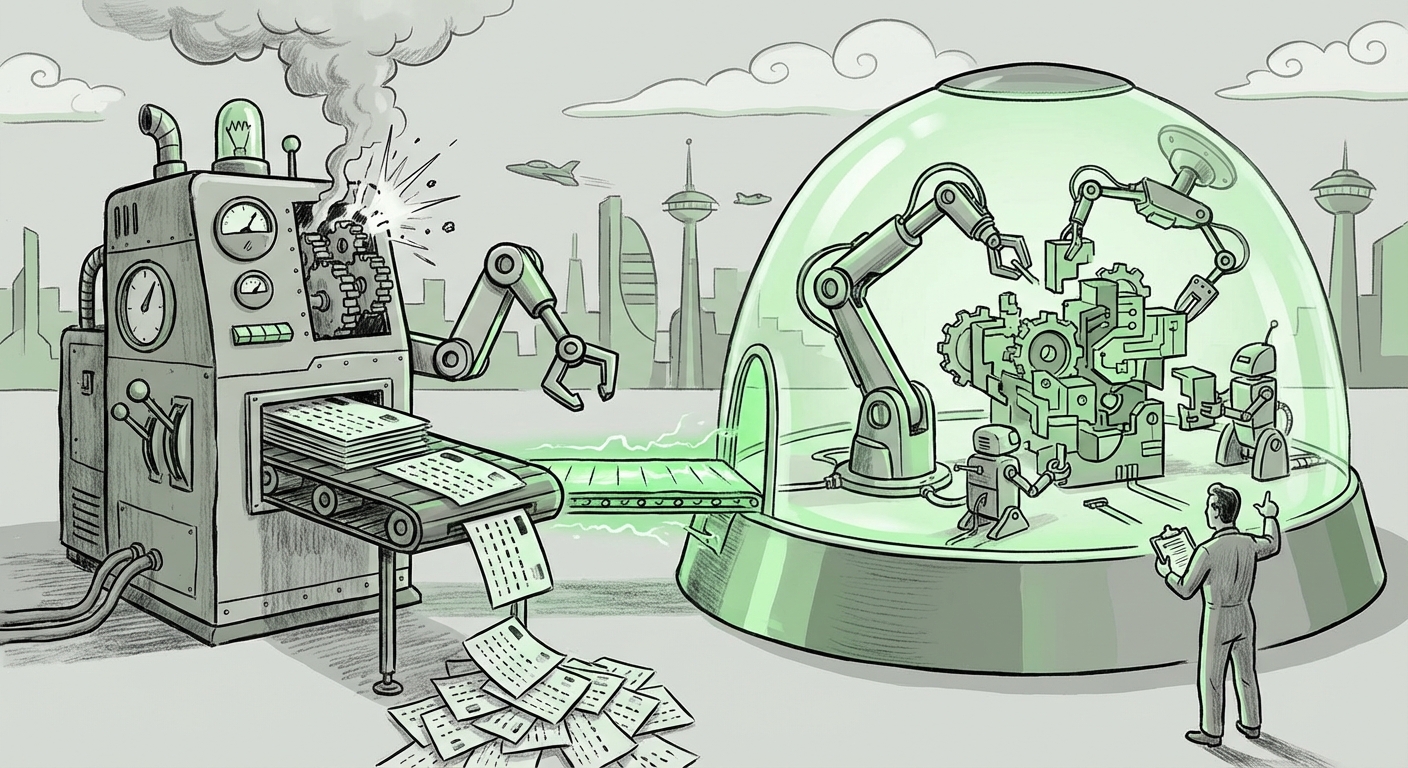
AI's Compute Conundrum: Why Data Centers Are Stressing Banks and Shaping Our Future
The relentless march of artificial intelligence continues to reshape industries, economies, and societies worldwide. At the heart of this revolution lies a fundamental, yet often overlooked, challenge: the colossal infrastructure required to power it all. As of 2026-05-04, a significant trend is emerging, highlighted by reports from sources like the-decoder.com: building AI data centers is becoming a stress test for banks. This isn't just a technical hurdle; it’s a profound financial and economic challenge with far-reaching implications for the future of AI and how it will be used.
This development signals a maturation of the AI industry, moving beyond purely software innovation to encompass massive physical infrastructure demands. Understanding why these data centers are stretching the financial sector, and what that means for everyone from global corporations to individual consumers, is crucial for navigating the next phase of AI evolution.
The Unprecedented Scale of AI Infrastructure Demands
Modern artificial intelligence, particularly the large language models (LLMs) and complex neural networks driving much of the current excitement, requires an extraordinary amount of computational power. This isn't just about faster processors; it's about an entirely new class of specialized hardware, primarily Graphics Processing Units (GPUs) and Application-Specific Integrated Circuits (ASICs), designed for parallel processing. These components, coupled with their supporting ecosystems, form the core of what we now call AI data centers.
The construction and operation of these facilities are staggering in their requirements:
- Specialized Hardware: Thousands upon thousands of advanced AI accelerators, costing significantly more per unit than general-purpose CPUs. These units often need to be upgraded or replaced much faster than traditional server hardware due to rapid technological advancements.
- Immense Power Consumption: AI workloads are incredibly energy-intensive. A single AI data center can consume as much electricity as a small town, necessitating robust power grids and, increasingly, dedicated power generation solutions. This drives up operational costs and raises significant environmental concerns.
- Advanced Cooling Systems: The sheer density of heat generated by AI accelerators demands sophisticated cooling infrastructure, often liquid-based, adding layers of complexity and cost to design and maintenance.
- Real Estate and Location: Finding suitable locations with access to reliable, affordable power, fiber optic networks, and skilled labor is a growing challenge. Land acquisition and construction costs are substantial.
- Network Connectivity: High-bandwidth, low-latency internal and external networking is critical to connect thousands of GPUs and to enable rapid data transfer for training and inference.
- Software and Maintenance: Beyond hardware, the sophisticated software stacks, constant monitoring, and specialized personnel required to keep these complex systems running efficiently add to the ongoing financial burden.
These combined factors mean that building an AI data center is not merely an IT project; it's a massive capital expenditure project on par with large-scale industrial endeavors or utility infrastructure. And like any large-scale project, it requires significant financing, pushing banks into uncharted territory.
Why Banks Face a "Stress Test"
The traditional banking sector is accustomed to financing large infrastructure projects, but AI data centers present unique challenges that are creating a "stress test" for their established models of risk assessment and lending. This is where the core tension lies, as reported by outlets like the-decoder.com.
The Magnitude of Investment and Capital Intensiveness
AI data centers represent an unprecedented level of capital intensiveness in the technology sector. Projects often run into the billions of dollars, requiring syndicated loans and complex financial instruments. Banks must commit vast amounts of capital, often for assets with unclear long-term valuation trajectories. The sheer scale pushes the boundaries of individual bank exposure and necessitates new consortiums of lenders.
Novel Risk Assessment Challenges
Unlike mature industries with predictable asset lifecycles and revenue streams, AI infrastructure introduces several novel risks:
- Rapid Obsolescence: The pace of innovation in AI hardware is breathtaking. Today's cutting-edge GPUs could be significantly less efficient or outright obsolete in just a few years. This rapid depreciation makes it difficult for banks to assess the collateral value over typical loan terms.
- Unpredictable Demand: While demand for AI is currently surging, accurately forecasting long-term demand for specific types of compute or specialized hardware is challenging. Future technological shifts or breakthroughs could alter the landscape, impacting the profitability and utilization of these centers.
- Energy Volatility: The immense power needs expose these projects to significant energy price fluctuations, geopolitical risks affecting energy supply, and the increasing costs associated with carbon emissions or renewable energy mandates.
- Cybersecurity and Data Risk: Housing vast amounts of proprietary data and critical AI models makes these centers prime targets for cyberattacks, posing operational and reputational risks that can impact financial viability.
- Market Concentration Risk: A significant portion of AI innovation is driven by a few dominant tech companies. Banks lending heavily to these few players could face concentration risk if market dynamics shift or if one of these major players faces unforeseen challenges.
Long-Term Returns Versus Short-Term Pressures
The investment horizon for AI infrastructure often clashes with banks' traditional lending cycles and return expectations. Developing powerful AI models requires years of sustained investment in compute, yet the monetization strategies and return on investment for these capabilities are still evolving. This mismatch between the long-term strategic needs of AI development and the shorter-term financial metrics banks typically use creates tension.
Regulatory Scrutiny and Financial Stability
As banks increase their exposure to these high-stakes technology projects, regulators are likely to intensify their scrutiny. Concerns about systemic risk, asset bubbles, and the stability of the financial system could lead to new capital requirements or tighter lending standards for AI infrastructure financing. This regulatory environment adds another layer of complexity to the "stress test" banks are undergoing.
Implications for the Future of AI
The financial challenges faced by banks in financing AI data centers will inevitably cascade through the entire AI ecosystem, profoundly shaping the future of AI development and deployment. This is not merely a background financial detail; it is a critical determinant of who builds AI, what kind of AI gets built, and who benefits from it.
Pace and Direction of Innovation
Should financing become more difficult or expensive, the pace of AI innovation could be directly impacted. Companies, especially startups and smaller research labs, might find it harder to secure the necessary compute resources to train next-generation models. This could lead to a slowdown in certain areas of research or force a greater focus on more computationally efficient AI architectures.
Furthermore, the high cost of compute might incentivize a shift towards optimizing existing models rather than pursuing entirely new, resource-intensive paradigms. The direction of AI research could become biased towards what is financially feasible rather than what is scientifically most promising.
Centralization Versus Decentralization of AI Power
The immense capital requirements inherently favor large technology companies with deep pockets and established relationships with financial institutions. This could lead to an increased centralization of AI development, with a few dominant players controlling the most powerful models and infrastructure. This concentration of power raises concerns about monopolies, limited diversity in AI development, and potential societal biases embedded in widely used AI systems.
Conversely, if traditional banking channels struggle to meet demand, it could spur innovation in alternative financing models, or even encourage more decentralized compute networks. However, for the foreseeable future, the trend points towards consolidation of AI infrastructure in the hands of a few.
Accessibility of Advanced AI
The "stress test" for banks directly impacts who gets to build and utilize advanced AI. If the cost of compute remains astronomically high, access to leading-edge AI capabilities might be restricted to well-funded corporations and research institutions. This creates a potential digital divide, where smaller businesses, individual developers, and developing nations are left behind, unable to leverage the full potential of AI.
Democratization of AI, often touted as a societal benefit, hinges on accessible infrastructure. Financial bottlenecks threaten this vision, potentially exacerbating existing inequalities.
The Drive for Sustainable AI
The financial strain also brings the significant energy consumption of AI data centers into sharper focus. Banks are increasingly incorporating ESG (Environmental, Social, Governance) factors into their lending decisions. Projects that cannot demonstrate a clear path to sustainable energy sourcing or significant energy efficiency improvements may struggle to secure financing, or face higher borrowing costs.
This financial pressure could, paradoxically, accelerate the push for more energy-efficient AI algorithms, hardware, and data center designs. The need to reduce operational costs and enhance appeal to financially responsible lenders could become a powerful driver for "green AI."
Practical Implications for Businesses and Society
The ripple effects of this banking "stress test" extend far beyond the financial sector, touching every business and societal layer engaging with AI.
For AI Startups and SMEs
Smaller AI companies and startups will face intensified pressure. They will likely become even more reliant on large cloud providers (who can afford to build these data centers) for access to compute. This dependence could limit their flexibility, increase their operational costs, and potentially lead to vendor lock-in. Innovative funding models, partnerships, and a strong focus on capital efficiency will be paramount for their survival and growth.
For Traditional Industries
Businesses in traditional sectors looking to integrate AI will need to factor in the rising costs and potential complexities of securing AI infrastructure. Whether building their own private AI clouds or leveraging public cloud services, the underlying financial dynamics of these massive compute factories will influence their digital transformation strategies. Robust risk management and careful strategic planning will be essential to ensure AI investments yield expected returns.
For the Banking Sector
For banks themselves, this isn't just a challenge but also an opportunity to innovate. They will need to:
- Develop Specialized Expertise: Build dedicated teams with deep understanding of AI technology, hardware lifecycles, and energy markets to accurately assess risks.
- Innovate Financial Products: Create new lending products, insurance options, and structured finance solutions tailored to the unique characteristics of AI infrastructure. This might include project finance models that account for rapid technology refresh cycles.
- Embrace ESG Integration: Actively incorporate environmental and social governance criteria into financing decisions, favoring sustainable AI projects.
- Foster Collaboration: Engage in partnerships with tech firms, energy providers, and other financial institutions to share risks and expertise.
For Society as a Whole
The societal implications are profound. Economic stability could be influenced by the success or failure of these massive AI infrastructure investments. The technological divide between nations or economic classes could widen if access to foundational AI compute becomes a prohibitive barrier. Policymakers will need to consider how to encourage responsible investment, ensure fair access, and manage the environmental impact of this burgeoning infrastructure. The strategic importance of AI infrastructure might even elevate it to the level of national critical infrastructure, warranting government support or regulation.
Actionable Insights for Navigating the AI Compute Landscape
Given that building AI data centers is becoming a critical stress point for the financial sector, proactive strategies are vital for all stakeholders:
- For Banks and Investors:
- Deepen Tech Acumen: Invest in understanding the nuances of AI hardware, software, and market trends to accurately model risk and return.
- Diversify Portfolios: Explore a range of AI infrastructure projects, from core compute to specialized niches, and across different geographical locations to mitigate concentration risk.
- Structure Flexible Financing: Design loan agreements that account for accelerated depreciation, technology refreshes, and variable revenue streams inherent to AI compute.
- For AI Developers and Businesses:
- Optimize for Efficiency: Prioritize developing and deploying AI models that are computationally and energy efficient, reducing reliance on ever-increasing raw compute.
- Explore Hybrid Strategies: Combine on-premises infrastructure for sensitive or highly specialized workloads with strategic use of public cloud resources.
- Foster Strategic Partnerships: Collaborate with infrastructure providers, energy companies, and even financial institutions to co-develop solutions and share investment burdens.
- For Policymakers and Regulators:
- Monitor Financial Stability: Closely watch the banking sector's exposure to AI infrastructure investments to identify and mitigate potential systemic risks.
- Incentivize Sustainable Practices: Implement policies that encourage the development of green AI data centers, including tax breaks or subsidies for renewable energy integration and energy-efficient designs.
- Promote Fair Competition: Explore mechanisms to ensure broad access to AI compute, preventing monopolistic control and fostering innovation across the ecosystem.
Conclusion: The Financial Bedrock of AI's Future
The report from the-decoder.com on 2026-05-04 underscores a pivotal moment in the evolution of artificial intelligence. The reality that building AI data centers is becoming a stress test for banks is a clear signal that the AI revolution has moved beyond theoretical algorithms to a phase dominated by tangible, incredibly expensive physical infrastructure.
This financial crucible will shape everything from the pace of AI advancement to its accessibility and ethical deployment. Banks, by necessity, are being pushed to innovate their risk models and financial products, while AI developers must grapple with the economic realities of their compute demands. As we look to the future, the strength and adaptability of the financial systems that underpin AI infrastructure will be as critical to its progress as any algorithmic breakthrough. Navigating this complex financial landscape with foresight, innovation, and collaboration will be key to unlocking AI's full potential for the benefit of all.