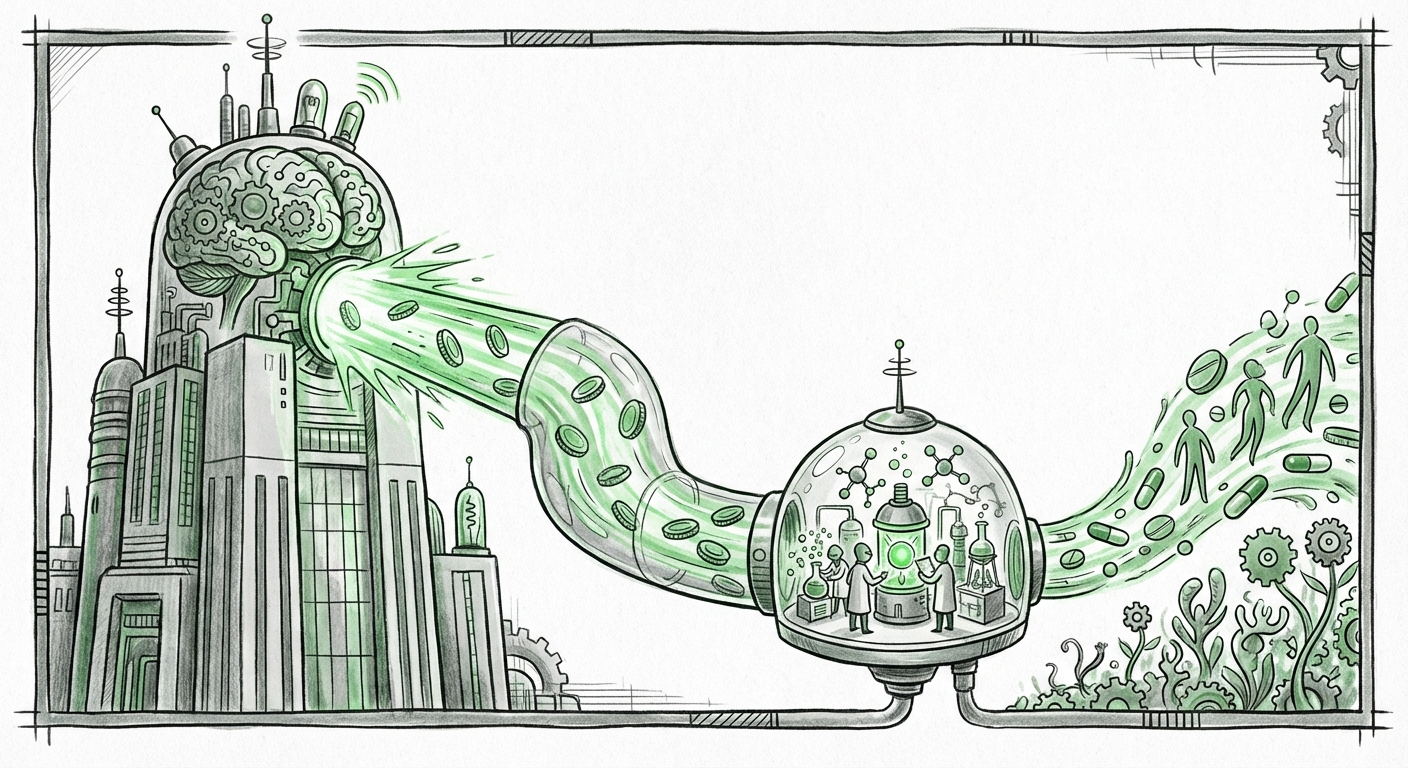
OpenAI's Game-Changer: How Self-Managing AI Agents Are Breaking the Human Attention Bottleneck and Reshaping the Future of AI
In a significant development reported on May 4, 2026, OpenAI announced a pivotal shift in AI design and deployment. The renowned AI research organization highlighted a critical limitation facing the widespread adoption and scaling of artificial intelligence: human attention. To address this, OpenAI has reportedly developed a groundbreaking system that empowers AI agents to manage themselves. This move is not merely an incremental improvement; it signals a fundamental re-evaluation of how humans interact with and oversee advanced AI systems, promising to unlock new levels of autonomy, efficiency, and capability across industries and society at large.
The implications of such a system are vast, stretching from the very architecture of future AI models to the practical applications in everyday business and the ethical frameworks that will govern our increasingly intelligent world. As we look ahead to an era where AI can operate with greater independence, understanding this development becomes crucial for anyone looking to navigate the evolving landscape of technology.
Understanding the Bottleneck: Why Human Attention Matters (and How It Limits AI)
For years, even the most advanced AI systems, from sophisticated language models to complex robotic platforms, have required a significant degree of human oversight. This human involvement has manifested in numerous ways:
- Task Definition and Refinement: Humans are often needed to break down complex problems into manageable steps that AI can understand and execute.
- Contextual Understanding: While AIs excel at pattern recognition, grasping nuanced real-world context often requires human judgment, especially in ambiguous situations.
- Error Correction and Debugging: When AI makes mistakes or encounters unexpected scenarios, human intervention is typically necessary to diagnose the problem and steer the system back on track.
- Ethical and Safety Oversight: Ensuring AI systems operate within ethical boundaries and do not cause harm demands continuous human monitoring and decision-making.
- Performance Monitoring and Optimization: Humans review AI outputs, provide feedback, and fine-tune parameters to improve performance over time.
- Resource Allocation and Prioritization: Even in automated workflows, a human often decides which tasks AI should prioritize or how much computational resource it should expend.
This constant need for human attention creates a significant bottleneck. It limits the number of AI tasks that can be run concurrently, slows down the deployment of new AI applications, and increases operational costs due to the required human labor. For AI to truly scale and address complex, multi-faceted problems, it needs to reduce its dependency on continuous human interaction. OpenAI's identification of this "human attention bottleneck" and its reported solution directly targets this fundamental constraint, pointing towards a future where AI can achieve unprecedented levels of autonomy.
The Rise of Self-Managing AI Agents: OpenAI's Vision for Autonomy
The core of OpenAI's reported breakthrough lies in creating a system that enables AI agents to "manage themselves." While the specifics of this system are not detailed in the provided source, the concept itself implies a profound shift. A self-managing AI agent would conceptually be able to:
- Set and Refine Goals: Beyond simply executing instructions, such an agent might be capable of understanding higher-level objectives and breaking them down into actionable sub-goals autonomously.
- Plan and Execute Tasks Independently: It would devise its own strategies and carry them out without step-by-step human guidance.
- Monitor Its Own Performance: The system would likely have internal mechanisms to assess its progress, identify errors, and determine if it's on the right path.
- Self-Correct and Adapt: Upon encountering challenges or making mistakes, a self-managing agent would ideally be able to learn from them and adjust its approach without immediate human intervention. This could involve re-planning, seeking new information, or even modifying its internal processes.
- Manage Resources: An autonomous agent might be able to allocate computational resources, prioritize tasks, and manage dependencies more effectively.
- Communicate Progress and Problems: While reducing constant oversight, such agents would still need to report their status, highlight critical issues, or request human input for truly novel or sensitive situations. The key is that these interactions would be event-driven, not continuous.
This development suggests a move beyond merely "smart" tools to truly "intelligent" collaborators that can operate effectively with minimal human hand-holding. It paints a picture of AI systems that are not just reactive but proactive, capable of taking initiative and demonstrating a form of operational self-awareness. The system built by OpenAI, as reported in 2026, aims to be a cornerstone for a new generation of AI applications where the human role shifts from constant manager to strategic architect and ethical guardian.
Future Implications for AI Development: A Leap Towards Greater Autonomy
If successful, OpenAI's development of self-managing AI agents will have transformative effects on the trajectory of AI itself:
- Accelerated Research and Development: With agents capable of managing themselves, the pace of AI research could accelerate dramatically. Researchers might be freed from mundane oversight tasks, allowing them to focus on more complex theoretical problems. AI systems could even potentially manage parts of the experimentation process, running simulations, analyzing results, and proposing new hypotheses with reduced human input.
- Enabling Complex, Long-Horizon Tasks: Current AI often struggles with tasks that require many steps, dynamic adaptation, and long-term planning. Self-managing agents could tackle these "long-horizon" challenges, breaking them down into sub-problems and executing them sequentially, or even in parallel, over extended periods without human intervention. This could unlock solutions for grand challenges in science, engineering, and global logistics.
- Enhanced Robustness and Resilience: Systems that can self-diagnose and self-correct are inherently more robust. They would be less prone to failure due to minor glitches or unexpected inputs, leading to more reliable AI deployments in critical applications.
- New Paradigms for AI Architectures: This shift might lead to new ways of designing AI, moving towards more modular, agent-based systems that can interact and collaborate autonomously. The focus could shift from training single, monolithic models to orchestrating entire ecosystems of specialized, self-managing agents.
- A Stepping Stone Towards Advanced AI: While not necessarily AGI (Artificial General Intelligence), self-managing capabilities are a crucial ingredient. They represent a significant step towards AI that can operate effectively in open-ended environments, a hallmark of more generalized intelligence.
The reported development on 2026-05-04 suggests that the AI community is actively pushing the boundaries of autonomy, moving towards systems that are not just intelligent in their processing, but also intelligent in their operation and management.
Practical Implications for Businesses: Unlocking Unprecedented Efficiency
For businesses across every sector, the advent of self-managing AI agents presents a profound opportunity to redefine operations, enhance productivity, and unlock new value streams. The practical implications are far-reaching:
- Hyper-Automated Workflows: Beyond automating simple, repetitive tasks, businesses could deploy agents to manage entire projects, coordinate complex supply chains, or even oversee software development lifecycles. This could free up vast amounts of human capital currently tied to project management and oversight.
- Significant Cost Reductions: By minimizing the need for constant human supervision, operational costs associated with AI deployment and maintenance could drop dramatically. This would make advanced AI more accessible and cost-effective for a wider range of businesses, including small and medium-sized enterprises.
- Enhanced Productivity and Speed: Self-managing agents operate 24/7 without fatigue, breaks, or human attention limitations. This enables continuous operation and faster execution of tasks, leading to unprecedented levels of productivity and quicker time-to-market for products and services.
- New Business Models and Service Offerings: Companies could build entirely new services around autonomous AI. Imagine fully automated customer support systems that adapt and evolve, or personalized education platforms that manage learning paths independently, or even scientific research labs where AI agents run experiments and analyze data autonomously.
- Strategic Advantage for Early Adopters: Businesses that embrace and integrate self-managing AI agents early are likely to gain a significant competitive edge, allowing them to innovate faster, optimize resources more effectively, and capture new market opportunities.
- Workforce Transformation: The nature of human work will evolve. Instead of performing routine oversight, employees will shift towards higher-level strategic planning, ethical governance, creative problem-solving, and developing new ways to leverage autonomous AI. This necessitates substantial investment in upskilling and reskilling initiatives.
The ability of AI to manage itself fundamentally changes the economic equation, making advanced intelligence a more scalable and impactful resource for organizational growth and innovation.
Impact on Society: Redefining Our Relationship with Technology
The introduction of self-managing AI agents will inevitably ripple through society, impacting everything from the economy to daily life and our fundamental understanding of work and human purpose.
- Redefining Work and Employment: As AI takes on more autonomous roles, jobs requiring repetitive oversight or even complex project coordination may be significantly altered or displaced. Society will need to grapple with how to transition workforces and create new opportunities that leverage uniquely human creativity, empathy, and strategic thinking.
- Increased Accessibility to Advanced AI: By simplifying deployment and reducing the need for specialized human managers, self-managing AI could become more accessible to non-experts and smaller organizations. This could democratize access to powerful AI capabilities, fostering innovation across a broader spectrum of society.
- Ethical and Safety Frameworks: The increased autonomy of AI agents amplifies the importance of robust ethical guidelines and safety protocols. Ensuring that self-managing systems align with human values, prevent unintended consequences, and remain accountable will be a paramount challenge for policymakers, developers, and society as a whole. Discussions around "control problem" and "alignment" will become even more urgent.
- Productivity Gains and Economic Growth: On the positive side, the efficiency unleashed by autonomous AI could lead to unprecedented levels of productivity, potentially driving economic growth, creating new wealth, and freeing up human capacity to address complex global challenges.
- Human-AI Collaboration at a New Level: The relationship might evolve from a master-slave dynamic to one of true collaboration, where humans set the high-level vision and autonomous agents execute the intricate details, providing feedback and seeking clarification when necessary.
This development requires thoughtful consideration from all stakeholders to harness its benefits while mitigating potential risks, ensuring that this powerful technology serves humanity's best interests.
Actionable Insights for Navigating This Transformative Shift
For individuals, businesses, and policymakers, adapting to the era of self-managing AI agents requires proactive steps. The 2026-05-04 announcement from OpenAI serves as a clear signal for immediate action:
For Businesses:
- Invest in AI Strategy: Develop a clear strategy for integrating autonomous AI into your operations. Identify areas where reducing human oversight can yield the greatest benefits.
- Prepare Your Workforce: Implement robust training programs to upskill employees in AI management, ethical AI, and new roles that leverage human-AI collaboration. Focus on skills that complement AI capabilities, such as critical thinking, creativity, and emotional intelligence.
- Pilot Autonomous Agents: Start with controlled pilot projects to understand the capabilities and limitations of self-managing agents in your specific context. Learn how to define high-level goals and monitor their performance effectively.
- Establish Governance: Develop internal policies and frameworks for the responsible deployment and oversight of autonomous AI, addressing ethical considerations, accountability, and security.
For Developers and Technologists:
- Focus on Robustness and Explainability: Design self-managing agents that are resilient to errors, can explain their decision-making processes, and provide clear audit trails for accountability.
- Prioritize Safety and Alignment: Embed safety mechanisms and alignment principles from the ground up to ensure autonomous agents operate within desired parameters and human values.
- Master Agent Orchestration: The future may involve orchestrating multiple specialized, self-managing agents. Developing skills in agent communication, coordination, and overall system architecture will be crucial.
For Policymakers and Society:
- Develop Adaptive Regulations: Create agile regulatory frameworks that can keep pace with rapid AI advancements, focusing on principles of safety, transparency, fairness, and accountability.
- Foster Public Dialogue: Encourage widespread public education and discussion about the benefits, risks, and societal implications of autonomous AI to build informed consensus.
- Invest in Future-Proofing: Support research into ethical AI, job creation in new sectors, and social safety nets to prepare for potential economic shifts caused by increased automation.
Conclusion: A New Era of AI Autonomy Dawns
OpenAI's reported development on May 4, 2026, marking human attention as a bottleneck and responding with a system for self-managing AI agents, signifies a momentous turning point in the evolution of artificial intelligence. This is more than just an efficiency gain; it's a conceptual leap towards true AI autonomy, where intelligent systems can operate with unprecedented independence, freeing human potential from the constant demands of oversight. The journey ahead will undoubtedly bring both immense opportunities for innovation, productivity, and solving complex global challenges, alongside significant questions about control, ethics, and the future of work. As AI systems learn to manage themselves, humanity's role will shift from daily supervision to strategic guidance, ethical stewardship, and creative collaboration. The future of AI, as envisioned by OpenAI's latest breakthrough, is one where intelligence itself becomes a self-propelling force, continuously evolving and expanding its capabilities, guided by—but not constrained by—human ingenuity.