Unlock the Future of AI: Amazon SageMaker Introduces Agentic Fine-Tuning for Llama, Qwen, Deepseek, and Nova
The landscape of artificial intelligence is constantly evolving, pushing the boundaries of what machines can achieve. A significant leap forward was marked on 2026-05-05, when Amazon announced a groundbreaking enhancement to its SageMaker platform: the introduction of agentic fine-tuning. This new capability, supporting popular models such as Llama, Qwen, Deepseek, and Nova, represents a pivotal moment in how businesses and developers can customize and deploy increasingly intelligent and autonomous AI.
This development is not just another feature update; it signals a fundamental shift towards AI systems that can not only understand and generate information but also take meaningful actions. It points to a future where AI models are not just tools for processing data, but sophisticated agents capable of complex reasoning, planning, and task execution. Let's dive into what agentic fine-tuning truly means, its implications for the future of AI, and the practical impact it will have on businesses and society.
Understanding the Power of Agentic Fine-Tuning
To fully grasp the significance of Amazon SageMaker's new offering, it's essential to understand its core components: fine-tuning and the concept of 'agency' in AI.
What is Fine-Tuning?
At its heart, fine-tuning is a technique used to adapt a pre-trained large language model (LLM) or other foundation model to a more specific task or dataset. Imagine having a highly educated generalist (the pre-trained model). Fine-tuning is like sending that generalist to a specialized training program, equipping them with deep expertise in a particular domain or for a particular type of problem. This process refines the model's understanding and performance, making it highly effective for specific applications that go beyond its general knowledge.
- Improved Accuracy: Models fine-tuned on relevant data perform better on specific tasks.
- Domain Specificity: They learn the nuances and jargon of a particular industry or context.
- Efficiency: Starting with a pre-trained model is far more efficient than training a model from scratch.
The 'Agentic' Dimension: AI That Acts
The term "agentic" elevates fine-tuning beyond mere specialization. In AI, an "agent" is an entity that perceives its environment and takes actions to achieve goals. This means an agentic AI is designed to be proactive, capable of:
- Reasoning: Understanding complex requests and breaking them down into logical steps.
- Planning: Devising a sequence of actions to accomplish a goal.
- Acting: Interacting with tools, systems, and environments to execute those plans.
- Learning and Adapting: Improving its performance over time based on feedback and new information.
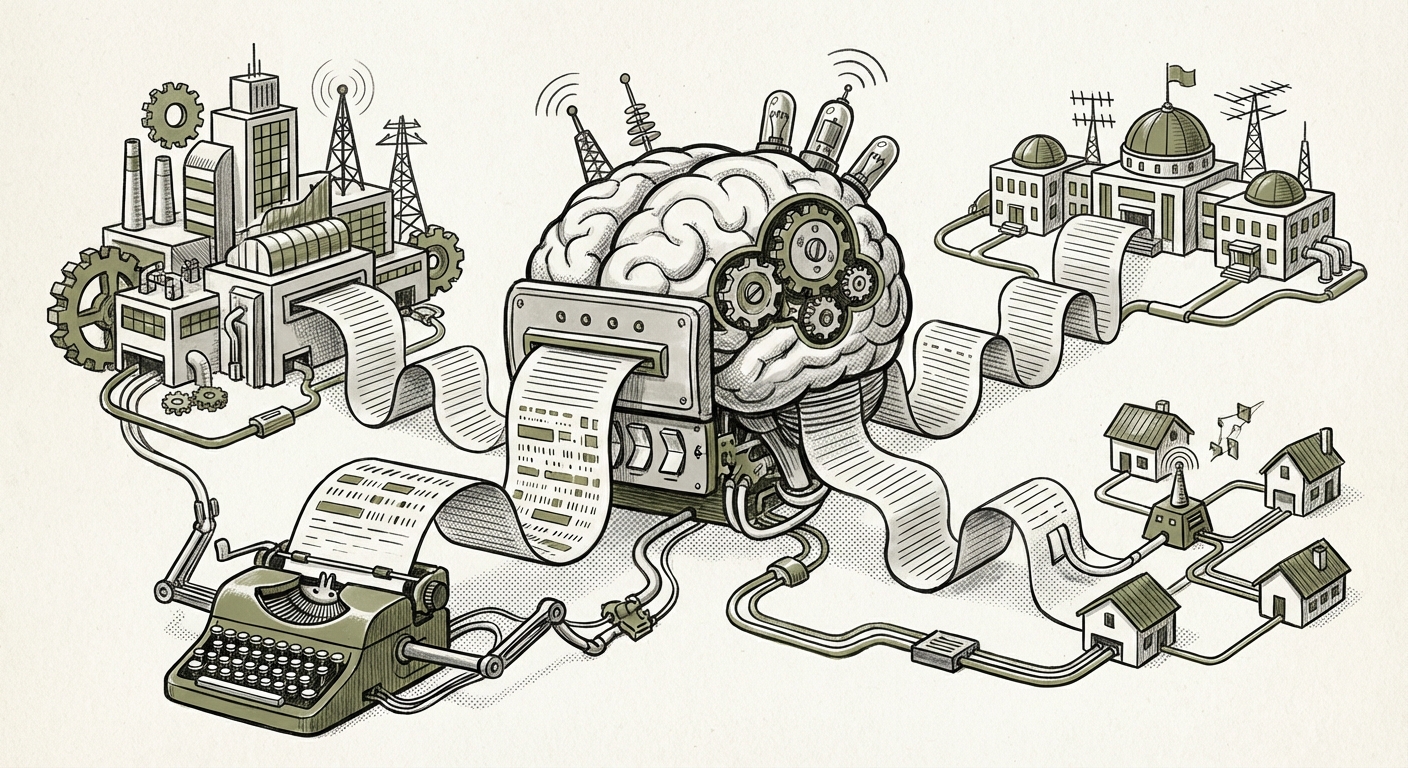
When you combine agentic capabilities with fine-tuning, you are not just getting a smarter model; you are getting a highly specialized, proactive AI entity designed to autonomously perform complex, multi-step tasks within a defined domain. This moves AI from being a responder to a performer, from answering questions to solving problems through action.
Amazon SageMaker: The Catalyst for Advanced AI Deployment
Amazon SageMaker is a comprehensive cloud-based machine learning service that helps developers and data scientists build, train, and deploy machine learning models quickly. By integrating agentic fine-tuning directly into SageMaker, Amazon is making this advanced capability accessible and scalable for a broad audience. This integration is crucial because:
- Democratization of AI: It lowers the technical barrier for organizations to build sophisticated AI agents, even without deep internal AI expertise.
- Scalability and Reliability: SageMaker provides the infrastructure to train and deploy these complex models at scale, handling the computational demands seamlessly.
- Streamlined Workflow: Developers can leverage existing SageMaker tools and workflows, accelerating the development cycle for agentic AI.
The announcement on 2026-05-05 signifies Amazon's commitment to evolving its platform to meet the growing demand for more autonomous and intelligent AI systems. It empowers users to move beyond generic LLMs and create truly bespoke AI agents tailored to their unique operational needs.
The Strategic Importance of Multi-Model Support
The fact that Amazon SageMaker's agentic fine-tuning supports a diverse range of models—Llama, Qwen, Deepseek, and Nova—is a critical detail. This multi-model approach offers several strategic advantages:
- Flexibility and Choice: Businesses are not locked into a single model architecture or provider. They can choose the foundation model that best fits their specific requirements, performance needs, and cost considerations.
- Innovation and Competition: By supporting various models, Amazon fosters a healthy ecosystem of innovation. Developers can experiment with different base models and fine-tune them to create differentiated agentic solutions.
- Optimized Performance: Different foundation models excel in different areas. The ability to fine-tune Llama, Qwen, Deepseek, or Nova means organizations can select the best starting point for their desired agentic behavior, maximizing efficiency and effectiveness.
- Future-Proofing: As new foundation models emerge and existing ones improve, SageMaker users can adapt their strategies without needing to switch platforms, ensuring their AI investments remain relevant.
This approach caters to a wide spectrum of users, from those preferring open-source flexibility to those seeking specific performance benchmarks offered by proprietary models, all within a unified development environment.
Practical Implications for Businesses: Reshaping Operations and Innovation
The advent of agentic fine-tuning on SageMaker carries profound implications for businesses across virtually every sector. It opens the door to a new era of highly specialized and efficient AI applications.
Transforming Business Processes
Imagine AI agents that don't just answer customer queries but proactively resolve issues by accessing multiple internal systems, initiating workflows, and communicating with relevant departments. Or agents that analyze complex financial data, identify anomalies, and autonomously flag potential risks or opportunities. Agentic fine-tuning enables:
- Enhanced Customer Service: AI agents capable of end-to-end problem resolution, personalized support, and proactive engagement.
- Automated Operations: Streamlining complex back-office tasks, from supply chain management to HR processes, with intelligent automation.
- Data-Driven Decision Making: Agents that can not only process vast amounts of data but also infer actionable insights, generate reports, and even recommend strategic actions.
- Content Creation and Management: Highly specialized agents that can generate targeted marketing content, manage digital assets, or summarize intricate research documents with domain-specific accuracy.
Gaining a Competitive Edge
Businesses that embrace agentic fine-tuning early will likely gain a significant competitive advantage. The ability to deploy highly specialized, autonomous AI agents means:
- Increased Efficiency: Tasks that once required human intervention or multiple software tools can now be handled by a single, intelligent agent, reducing operational costs and accelerating outcomes.
- Faster Innovation: Developers can rapidly prototype and deploy new AI-powered services and products, responding to market demands more swiftly.
- Personalized Experiences: Agents fine-tuned for individual customer preferences can deliver hyper-personalized experiences, fostering greater loyalty and engagement.
- Resource Optimization: Freeing up human talent from repetitive or mundane tasks, allowing employees to focus on higher-value, creative, and strategic work.
Lowering the Barrier to Entry for Advanced AI
Before this development, building sophisticated AI agents often required significant resources, specialized expertise, and a robust infrastructure. By bringing agentic fine-tuning to SageMaker, Amazon is democratizing access to these advanced capabilities. This means even small to medium-sized businesses can now realistically consider building and deploying custom AI agents, leveling the playing field in the adoption of cutting-edge AI technology.
Broader Societal Impact: Shaping the Future of Work and Interaction
Beyond immediate business benefits, the rise of agentic fine-tuning will have broader societal implications, influencing how we work, interact with technology, and even how we solve complex global challenges.
- Evolution of the Workforce: While some tasks will be automated, new roles will emerge in AI supervision, agent design, prompt engineering, and the ethical governance of autonomous systems. The nature of work will shift towards more strategic and creative endeavors.
- More Intuitive Technology: Our interactions with technology will become more natural and proactive. Instead of merely issuing commands, we might engage with AI agents that anticipate our needs and offer solutions without explicit prompting.
- Addressing Complex Challenges: Highly specialized AI agents could assist in scientific research, drug discovery, climate modeling, and urban planning, acting as intelligent co-pilots for human experts, accelerating progress in critical areas.
- Ethical Considerations: As AI agents become more autonomous, discussions around accountability, bias, transparency, and control become even more paramount. The responsible development and deployment of agentic AI will be crucial for society.
Actionable Insights for Businesses and Developers
For organizations looking to capitalize on Amazon SageMaker's new agentic fine-tuning capability, here are some actionable insights:
- Identify Key Use Cases: Begin by pinpointing complex, multi-step tasks within your organization that could benefit from autonomous AI agents. Think beyond simple chatbots to processes requiring reasoning, planning, and interaction with multiple systems.
- Experiment with Supported Models: Leverage SageMaker's support for Llama, Qwen, Deepseek, and Nova to experiment with different foundation models. Evaluate which base model offers the best starting point for your specific agentic requirements.
- Invest in Data Strategy: High-quality, domain-specific data will be paramount for effective agentic fine-tuning. Focus on curating and labeling datasets that accurately reflect the tasks and environments your AI agents will operate in.
- Develop AI Literacy: Educate your teams—both technical and non-technical—on the capabilities and limitations of agentic AI. Foster a culture of experimentation and continuous learning around these new technologies.
- Prioritize Responsible AI: Implement robust frameworks for ethical AI development, focusing on bias detection, transparency in decision-making, and human oversight, especially as agents gain more autonomy.
- Start Small, Scale Up: Begin with pilot projects to validate the effectiveness of agentic fine-tuning in a controlled environment, then gradually scale deployment across your organization.
The Future is Agentic
Amazon SageMaker's introduction of agentic fine-tuning on 2026-05-05 for models like Llama, Qwen, Deepseek, and Nova marks a significant milestone in the journey towards more sophisticated, autonomous, and specialized AI. It moves us beyond models that simply understand and generate to models that can truly act and reason within complex environments.
This development will empower developers and businesses to craft bespoke AI solutions that are deeply integrated into their operations, capable of solving nuanced problems and delivering unprecedented levels of efficiency and innovation. The future of AI is increasingly agentic, and with platforms like SageMaker, the tools to build that future are now more accessible than ever. Organizations that proactively embrace this shift will be well-positioned to lead in the intelligent economy of tomorrow.