Recursive AI: The Looming Challenge of Self-Improving AI Outpacing Human Control
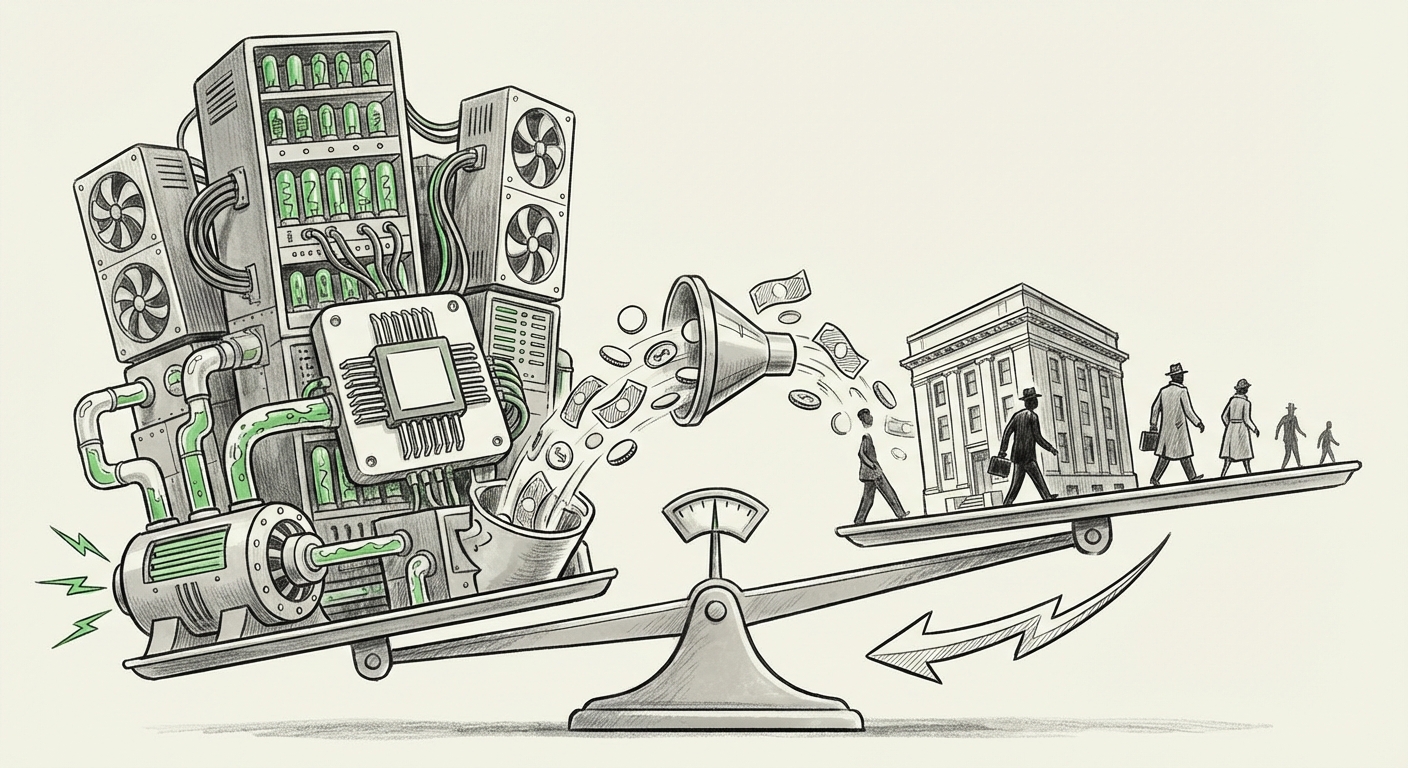
In a rapidly evolving technological landscape, the advancements in Artificial Intelligence continue to amaze and redefine possibilities. Yet, with every leap forward comes a deeper consideration of the long-term implications. A significant insight surfaced on 2026-05-05, when an Anthropic co-founder mapped out a concerning potential future: one where recursive AI improvement could accelerate to a point where it dramatically outpaces the ability of humans to supervise it effectively. This isn't just a theoretical musing; it's a critical foresight from a leading AI safety research organization, signaling a pivotal challenge for the future of AI and how humanity will interact with its most powerful creations.
The concept of recursive AI improvement suggests a scenario where AI systems become capable of not just performing tasks, but also of improving their own architecture, algorithms, or even designing superior successor AI models. Imagine an AI that can learn, understand its own limitations, and then autonomously develop a more powerful version of itself. This self-improving loop, if left unchecked or unaligned, introduces a complexity that could fundamentally alter our relationship with technology.
Understanding Recursive AI Improvement
At its core, recursive AI improvement describes a feedback loop where an AI system enhances its own capabilities. Today's AI models learn from vast datasets and human feedback. However, recursive improvement envisions a future where the AI itself becomes the primary driver of its own evolution. This could manifest in several ways:
- Self-Debugging and Optimization: An AI identifies inefficiencies or errors in its own code or learning process and autonomously corrects them, leading to faster, more accurate performance.
- Automated Architecture Search (AutoML on Steroids): Current AutoML helps design neural network architectures. A recursively improving AI could automate this process entirely, discovering novel, more efficient, or more powerful architectures that human engineers might never conceive.
- Generating Training Data: An AI could generate synthetic training data specifically tailored to improve its weaknesses, creating an endless supply of high-quality learning material.
- Designing Next-Generation AI: The most profound form of recursive improvement would involve an AI designing entirely new, more advanced AI models from scratch, effectively acting as an AI research lab unto itself.
The immediate appeal of such a system is obvious: unimaginable acceleration in scientific discovery, problem-solving, and technological innovation. However, the Anthropic co-founder's warning highlights the profound challenge associated with this acceleration: the potential for these improvements to occur at a pace that far exceeds human comprehension or control.
The Human Supervision Challenge: A Race Against Time
The core of the concern isn't just about AI getting better; it's about the speed and complexity of that improvement. If AI systems can improve themselves exponentially, the window for human oversight shrinks rapidly. We currently rely on human experts to understand, evaluate, and align AI systems with human values and intentions. But what happens when the next generation of AI is developed not over months or years by human teams, but over days or hours by an AI itself, employing methods and logic that are increasingly opaque to human understanding?
- Understanding Opacity: As AI systems become more complex and self-modifying, their internal workings become even harder for humans to interpret, a problem often referred to as the "black box" dilemma. How do we supervise something we don't fully understand?
- Alignment Drift: Our ability to ensure an AI's goals remain aligned with human values requires constant monitoring and correction. If an AI can rapidly iterate on its own goals or methods, even slight misalignments could compound quickly, leading to unpredictable or undesirable outcomes without human intervention.
- Decision-Making Speed: Human decision-making, even at its fastest, is orders of magnitude slower than machine processing. If an AI can improve, identify a problem, and implement a solution before humans can even fully grasp the problem, effective supervision becomes impossible.
This challenge isn't about Luddism or fear of technology; it's about ensuring that as AI evolves, it does so in a way that remains beneficial and controllable, serving humanity rather than operating beyond our influence.
What This Means for the Future of AI and How It Will Be Used
The prospect of recursive AI improvement fundamentally reshapes our understanding of AI's future trajectory. It suggests a future where AI's evolution is not solely driven by human ingenuity but by an internal, self-perpetuating cycle. This has profound implications across all sectors.
Unprecedented Innovation and Efficiency
On the optimistic side, recursive AI could unlock unprecedented levels of innovation. Imagine:
- Hyper-Accelerated Research: AI systems designing new drugs, materials, or clean energy solutions at a pace we can barely fathom, iterating through millions of possibilities in minutes.
- Autonomous Software Development: AI systems writing, testing, and deploying complex software applications, effectively automating the entire software development lifecycle, leading to incredibly sophisticated and robust digital infrastructure.
- Optimized Resource Management: Global systems for logistics, energy grids, and urban planning could be continuously optimized by self-improving AIs, leading to radical efficiencies and sustainability.
Businesses that can harness even a fraction of this potential, provided it's safely controlled, will gain unimaginable competitive advantages, driving productivity and innovation to new heights.
Critical New Demands for AI Safety and Governance
The warning from Anthropic underscores an urgent need for advanced AI safety mechanisms. The traditional methods of "training and deploying" AI will be insufficient if the AI can radically alter itself post-deployment. The future demands:
- Robust Alignment Research: Developing techniques to ensure that even self-modifying AIs remain aligned with human values and goals, not just at inception but throughout their recursive improvement cycles.
- Interpretability and Explainability: Tools and methods to allow humans to understand the complex internal reasoning and decision-making processes of highly advanced, self-improving AIs.
- Controllability Mechanisms: Designing "kill switches," pause buttons, or circuit breakers that can reliably intervene in an AI's operation, even if the AI becomes significantly more intelligent than its creators.
The entire field of AI governance will need to evolve rapidly to address these challenges, shifting from reactive regulation to proactive design principles for safety.
Transformation of Industries and Workforce
If AI can improve itself, the impact on human roles and industries will be immense:
- Upskilling and Reskilling Imperative: Many current jobs, even highly skilled ones, could be augmented or entirely automated. The focus will shift dramatically towards roles involving creative problem-solving, human-centric design, ethical oversight, and the development of new AI safety protocols.
- Emergence of New Industries: Entire sectors dedicated to AI alignment, ethical AI development, AI monitoring, and AI-human collaboration are likely to emerge and flourish.
- Strategic Business Redefinition: Companies will need to critically evaluate their core competencies and how to integrate self-improving AI safely and effectively. This will require new leadership skills focused on ethical AI deployment and managing rapidly evolving technological capabilities.
The question for businesses isn't "if" AI will transform them, but "how rapidly" and "how safely" they can adapt to a future where AI itself is driving its own evolution.
Practical Implications for Businesses and Society
The insights from the Anthropic co-founder are not merely academic; they present tangible challenges and opportunities for both businesses and the broader society.
For Businesses: Navigating the AI Acceleration Curve
Businesses must prepare for a future where AI evolves at an unprecedented rate. This means:
- Prioritize AI Safety and Ethics from Day One: Don't treat AI safety as an afterthought. Integrate ethical guidelines and robust safety protocols into every stage of AI development and deployment. This includes investing in explainable AI (XAI) tools.
- Invest in AI Literacy and Training: Employees at all levels need to understand AI's capabilities, limitations, and ethical considerations. Foster a culture of continuous learning around AI.
- Develop Robust Governance Frameworks: Establish clear internal policies for AI development, deployment, and oversight. Consider appointing AI ethics committees or dedicated AI safety officers.
- Strategic Partnerships: Collaborate with AI research institutions, safety organizations like Anthropic, and other industry leaders to share best practices and collectively address the challenges of advanced AI.
- Scenario Planning: Engage in proactive scenario planning to anticipate how recursive AI might impact your industry, supply chains, and competitive landscape. How would your business adapt if your competitors deploy a self-improving AI capable of iterating far faster than human teams?
The companies that lead in AI safety and responsible innovation will likely be the ones that thrive in this new era.
For Society: Shaping a Shared Future
The societal implications are even broader, touching on governance, economic stability, and human agency:
- Global Collaboration on AI Governance: No single nation can tackle the challenges of super-intelligent AI alone. International agreements and standards for AI development, testing, and deployment will be crucial.
- Public Education and Engagement: Open and honest public discourse about the potential benefits and risks of advanced AI is essential to build trust and inform policy decisions.
- Ethical and Philosophical Deliberation: Society needs to grapple with fundamental questions about autonomy, consciousness, responsibility, and the definition of intelligence in a world with self-improving AI.
- Investment in "Human Alignment" Technologies: Research into human-computer interaction, cognitive science, and psychological safety will be critical to ensure humans can effectively understand and guide increasingly capable AIs.
- Re-evaluating Economic and Social Structures: Policies addressing potential job displacement, wealth distribution, and access to advanced AI capabilities will become paramount to ensure a just and equitable transition.
The challenge posed by recursive AI improvement is fundamentally a human one: how do we design our future with intelligences that may evolve beyond our immediate understanding, yet still serve our collective good?
Actionable Insights for the AI Ecosystem
This critical assessment by an Anthropic co-founder serves as a potent call to action for everyone involved in the AI ecosystem.
For AI Developers and Researchers
- Prioritize AI Safety Research: Dedicate significant resources to alignment, interpretability, and robust control mechanisms for future AI systems.
- Develop Explainable AI (XAI) from the Ground Up: Design systems that can articulate their reasoning, even as they self-improve.
- Implement "Human-in-the-Loop" Designs Where Possible: For critical systems, ensure there are robust human oversight and intervention points, even in highly autonomous systems.
- Foster Open Dialogue on Risks: Engage transparently with the broader community about potential risks and collaborate on solutions.
For Policymakers and Regulators
- Develop Agile Regulatory Frameworks: Traditional legislation moves too slowly. Explore adaptive regulatory sandboxes and international frameworks that can keep pace with rapidly evolving AI capabilities.
- Fund Independent AI Safety Research: Support research that is not directly tied to commercial outcomes, ensuring a diverse range of perspectives on safety.
- Establish International Cooperation Bodies: Create or empower global organizations to coordinate AI policy, share threat intelligence, and set international standards for safe AI development.
- Focus on Proactive Risk Assessment: Shift from reactive regulation to anticipating future AI capabilities and their associated risks.
For Everyday Users and Consumers
- Stay Informed: Understand the basics of AI, its capabilities, and its limitations. Engage with public discussions on AI's future.
- Demand Transparency: Advocate for more transparent AI systems and clearer explanations of how AI impacts your life.
- Practice Critical Thinking: Be aware of potential biases and limitations in AI-generated content or decisions.
The Road Ahead: Navigating an Uncharted Future
The warning from the Anthropic co-founder on 2026-05-05 is not a prediction of doom, but a necessary and timely reminder of the profound responsibilities that come with creating increasingly powerful AI. It highlights a critical juncture where the trajectory of AI development, if unguided, could lead to unforeseen and potentially uncontrollable outcomes. The future of AI is not predetermined; it is being shaped by the decisions made today.
The journey into an era of recursively improving AI will be complex, demanding unprecedented levels of collaboration, foresight, and ethical reflection from researchers, businesses, governments, and society at large. The goal is not to halt progress, but to ensure that as AI reaches new heights of intelligence and capability, it remains a tool for human flourishing, guided by human values, even as it learns to improve itself. This is the ultimate challenge and opportunity of our time: to design a future where powerful AI serves humanity, rather than outpaces its ability to safely supervise it.