Decoding OpenAI's Potential Phone: The Agent Task Stream Revolutionizing Mobile AI
Imagine a smartphone that doesn't bombard you with an endless grid of apps. Instead, it offers a seamless, intelligent stream of tasks, proactively managing your day, anticipating your needs, and executing complex actions with minimal input. This isn't science fiction; according to a report published on 2026-05-05 by the-decoder.com, this could be OpenAI's audacious entry into the hardware market: a phone that replaces your traditional app grid with an agent task stream. This potential development represents a monumental shift in how we interact with mobile technology and signals a profound evolution in the future of AI.
For years, the smartphone has been defined by its app ecosystem. Icons representing individual applications have populated our screens, demanding our attention and requiring us to manually switch between them to accomplish tasks. From ordering food to booking a ride, checking weather, or managing finances, each action typically involves opening a specific app. OpenAI's rumored hardware play suggests a radical departure from this paradigm, proposing a world where AI agents orchestrate these tasks for us, presenting solutions rather than just tools.
The Dawn of the Agent Task Stream: A Paradigm Shift
The core concept of this potential OpenAI phone lies in its "agent task stream." To truly grasp the significance, let's break down what this implies. Currently, our phones are essentially repositories for apps, each a siloed program designed for a specific function. We, the users, act as the central orchestrator, deciding which app to open for which task. This requires constant context switching, mental load, and navigation through various interfaces.
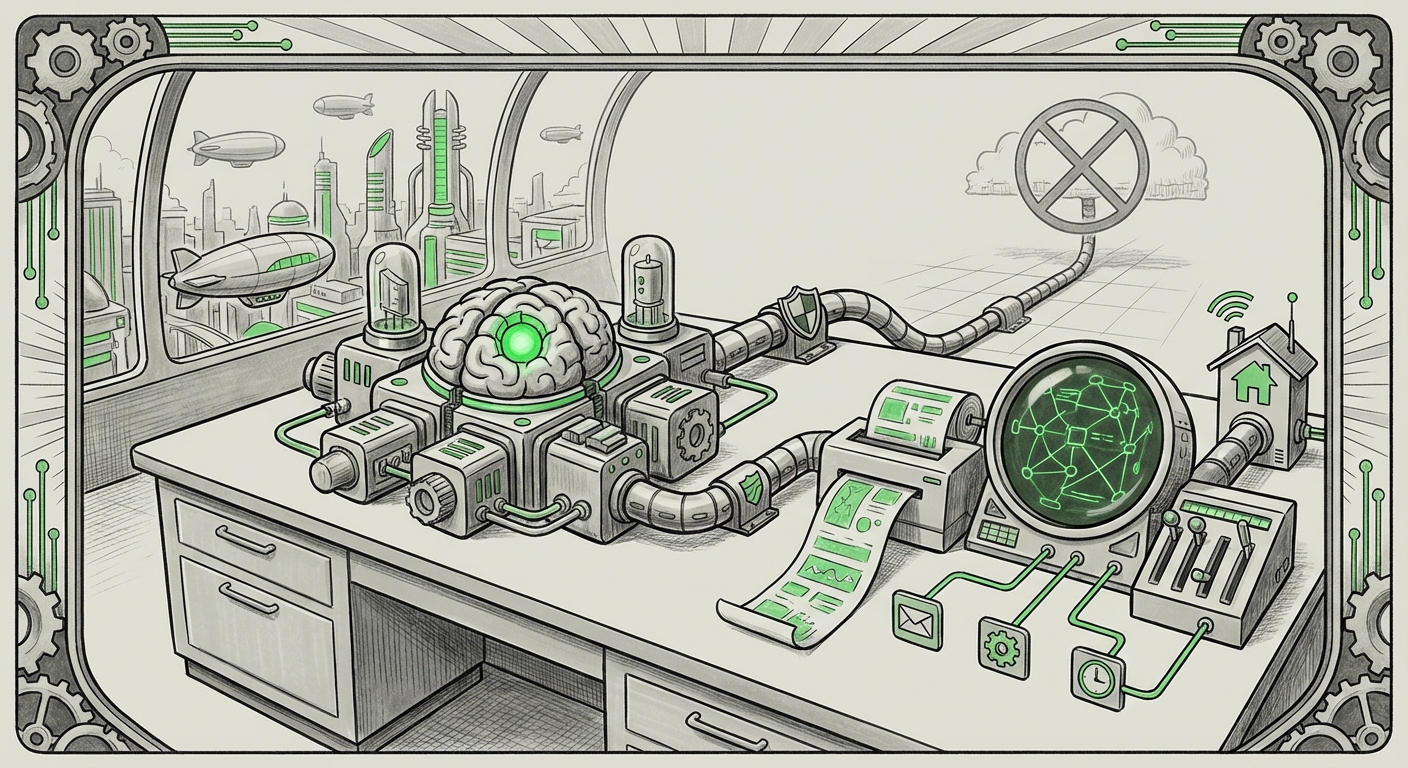
An agent task stream flips this model on its head. Instead of an app grid, imagine an intelligent AI agent observing your context, understanding your goals, and presenting a continuous flow of actionable items or completed tasks. For instance, if you've just landed at an airport, the agent wouldn't show you icons for "Maps," "Ride-sharing," and "Hotel Booking." Instead, it might present a stream saying: "Your ride to [Hotel Name] is booked and arriving in 5 minutes," "Your room is checked in," or "Would you like to find the nearest coffee shop?"
This isn't merely about voice commands or a smart assistant performing one-off queries. It's about a persistent, proactive intelligence that understands the progression of your day, your routines, and your broader objectives. The "stream" suggests a dynamic, evolving interface that surfaces information and actions precisely when and where they are most relevant, potentially making the traditional act of "opening an app" obsolete for many common scenarios.
What This Means for the Future of AI: Beyond Reactive to Proactive
OpenAI's rumored phone, with its agent task stream, points towards a crucial evolution in AI: the shift from reactive to profoundly proactive and context-aware intelligence. For years, AI has primarily served as a tool we invoke – asking Siri a question, typing into ChatGPT, or using Google Assistant. While powerful, these interactions are largely initiated by the user.
An agent task stream embodies the next frontier of AI integration. It requires AI to:
- Understand User Intent Holistically: Not just a single query, but a deeper comprehension of ongoing goals and preferences across different domains.
- Contextual Awareness: Seamlessly integrating data from location, calendar, communication, and other sensors to build a rich understanding of the user's current situation.
- Proactive Problem Solving: Identifying potential needs or challenges before the user even explicitly recognizes them and offering solutions.
- Orchestrate Complex Workflows: Instead of simply launching an app, the AI agent would coordinate multiple underlying services and data points to complete a multi-step task, such as planning a trip or managing a project.
- Personalization at its Core: The effectiveness of such a system relies heavily on its ability to learn and adapt to individual user habits, preferences, and even emotional states over time.
This move is about making AI an intrinsic part of our daily digital existence, acting as a personal digital concierge rather than a collection of distinct digital tools. It's about ambient intelligence, where AI fades into the background, empowering us by reducing cognitive load and maximizing efficiency.
Practical Implications for Businesses and Industries
The transition from an app grid to an agent task stream, if realized, would send ripple effects across numerous industries. Businesses need to start considering these implications now:
1. The App Ecosystem: A Fundamental Rethink
- Shift from Standalone Apps to Agent Integration: Traditional app developers might find their standalone applications less frequently directly interacted with. The focus will shift from creating engaging interfaces within an app to developing robust, API-driven services that AI agents can tap into.
- Importance of APIs and Data Access: Companies will need to ensure their services are easily discoverable and accessible by AI agents through well-documented, secure APIs. Data privacy and consent will become even more critical as agents access and process user information across services.
- New Metrics of Success: App downloads and daily active users might become secondary metrics. The new focus could be on "agent integration volume," "task completion rate via agent," or "value delivered through agent orchestration."
- Reduced App Discovery Challenges: For smaller businesses, getting noticed in a crowded app store is tough. If agents surface relevant services proactively, it could level the playing field, but also means brands need to optimize for agent discoverability, not just app store SEO.
2. Hardware Manufacturers and Operating Systems: New Battlegrounds
- OpenAI's Direct Competition: If OpenAI enters hardware, it directly challenges established players like Apple and Google, who have invested heavily in their own AI assistants and ecosystems. This could ignite a new era of AI-first hardware innovation.
- The "Brain" vs. the "Body": The value might shift from the physical device's specifications to the intelligence powering its interactions. The OS itself might evolve into a "super agent" platform, rather than just a framework for apps.
- Opportunity for Differentiation: Other hardware manufacturers might need to innovate beyond faster chips and better cameras, focusing on how their devices can best host and interact with sophisticated AI agents, whether OpenAI's or others.
3. Service Industries: From Human Interaction to Agent-Facilitated Transactions
- Enhanced Customer Service: AI agents could handle an even greater percentage of routine customer inquiries and transactions, freeing human agents for more complex issues.
- Proactive Service Delivery: Imagine an agent noticing you're low on a specific grocery item and suggesting adding it to your next delivery, or automatically rescheduling an appointment based on a conflicting calendar entry.
- Personalized Recommendations and Offers: With deeper contextual understanding, agents could deliver hyper-personalized recommendations for products, services, or entertainment, blurring the lines between advertising and utility.
- Ethical Considerations: As agents mediate more of our transactions, questions of transparency, bias, and control over our data become paramount.
4. Data Privacy, Security, and Trust: A Magnified Challenge
- Centralized Intelligence, Centralized Risk: An agent task stream requires a comprehensive view of a user's life. This consolidation of personal data under a single AI entity, even if highly secure, raises significant privacy concerns.
- User Control and Transparency: Users will demand clear controls over what data their agent accesses, how it's used, and the ability to audit or override agent decisions. Building trust will be crucial for adoption.
- New Regulatory Frameworks: Governments and regulatory bodies will likely face pressure to develop new guidelines specifically for pervasive AI agents that handle deeply personal and transactional data.
Societal Implications: Reshaping Daily Life and Work
The impact of an agent task stream phone extends far beyond technology and business. It could fundamentally reshape our daily lives and the nature of work:
- Reduced Digital Clutter and Cognitive Load: By automating routine tasks and surfacing information intelligently, such a device could significantly reduce the mental burden of managing digital life, allowing users to focus on higher-value activities or simply enjoy more leisure.
- Enhanced Productivity: For professionals, the ability to offload scheduling, research, communication management, and other administrative tasks to a proactive agent could lead to unprecedented levels of efficiency.
- Changes in Human-Computer Interaction: We would move further away from direct manipulation (tapping icons) towards conversational and contextual interaction. This might require a new kind of digital literacy, one focused on guiding and refining AI agents rather than navigating interfaces.
- Potential for Digital Divide: Access to such advanced AI tools could exacerbate existing digital divides if not made widely available and affordable, creating a gap between those who benefit from AI-powered efficiency and those who do not.
- Impact on Attention Economy: If agents proactively manage our information flow, it could reshape how we consume content and interact with brands, potentially shifting power away from platforms built on advertising and attention capture.
Actionable Insights for Navigating the Agent-Driven Future
While this is a potential future, the direction is clear. Businesses and individuals should prepare:
For Businesses:
- Invest in Robust APIs: Future-proof your services by ensuring they have well-designed, secure, and easily integratable APIs. Think about how your service could be a component in a larger AI-driven workflow.
- Rethink Customer Journeys: Map out customer interactions not just through your app or website, but through the lens of a proactive AI agent. How would an agent guide a user to your service?
- Prioritize Data Ethics and Trust: Develop clear policies for data usage, consent, and privacy. Transparency will be key to building user trust as agents become more deeply embedded in personal lives.
- Experiment with AI Agents: Start building or integrating with AI agents for internal processes or specific customer-facing tasks to gain experience and understand their capabilities and limitations.
- Monitor Ecosystem Shifts: Keep a close eye on developments from OpenAI and other major AI players. Understand their AI agent platforms and how your business can participate or adapt.
For Individuals:
- Embrace New Interaction Paradigms: Be open to learning new ways of interacting with your devices, moving beyond the tap-and-scroll to more conversational and trust-based relationships with AI.
- Understand Your Digital Footprint: Become more aware of the data you generate and how it might be used by AI agents. Exercise control over your privacy settings.
- Develop AI Literacy: Learn about how AI works, its capabilities, and its limitations. This will be crucial for effectively leveraging and guiding advanced AI agents.
- Focus on Higher-Order Skills: As AI automates more routine tasks, human creativity, critical thinking, emotional intelligence, and complex problem-solving will become even more valuable.
Conclusion: A Glimpse into the AI-First Mobile Era
The report from 2026-05-05 about OpenAI potentially developing a phone that replaces the app grid with an agent task stream is more than just news about a new gadget. It's a powerful signal of an impending revolution in mobile computing and a testament to the accelerating pace of AI integration into our daily lives. This vision suggests a future where our devices are not just tools we operate, but intelligent partners that understand, anticipate, and proactively assist us in navigating the complexities of modern existence.
If OpenAI succeeds in bringing such a device to market, it could redefine the very essence of the smartphone, shifting it from an app-centric device to an agent-centric one. This change would demand significant adaptation from businesses, a re-evaluation of our digital habits as individuals, and a renewed focus on the ethical implications of pervasive AI. The future of AI on mobile isn't just about faster processing or smarter apps; it's about a fundamental transformation in how we interact with technology, moving towards a truly ambient, intelligent assistant that lives in our pocket.