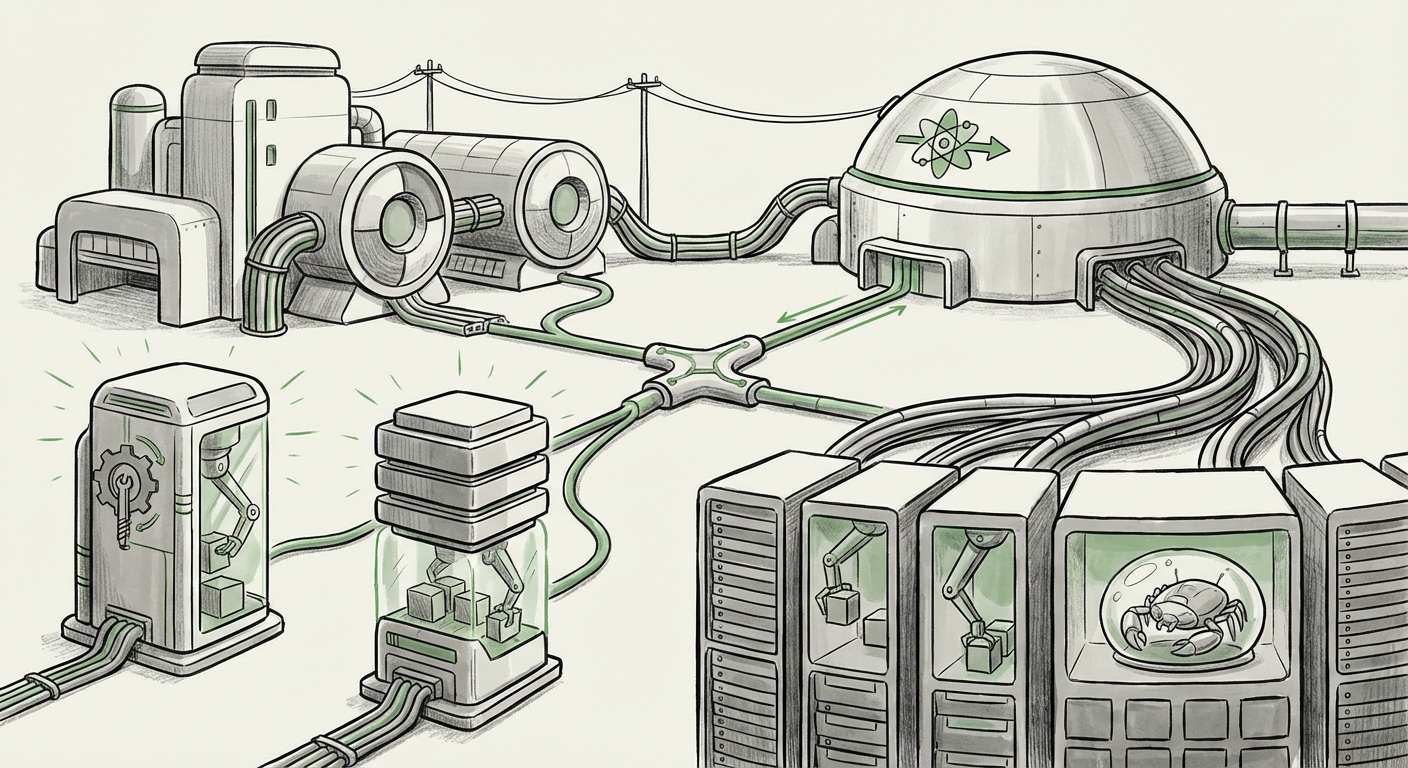
OpenAI, AMD, Broadcom, Intel, and NVIDIA Join Forces to Fix the Biggest Problem in AI Supercomputers
If you follow AI news, you've probably noticed a pattern: every few months, a new model comes out that is bigger, smarter, and more expensive to train. But there's a hidden problem that rarely makes headlines. Even the most powerful AI supercomputers in the world have a weak spot. They can think fast, but they can't talk to each other fast enough. That's about to change.
On May 6, 2026, OpenAI announced it has built a new networking protocol in collaboration with AMD, Broadcom, Intel, Microsoft, and NVIDIA. This is not just another software update. It's a major effort to fix the bottlenecks that slow down AI supercomputers. When you have thousands of chips trying to work together on one problem, the speed at which they share information can become a bigger limitation than the speed of the chips themselves.
The Problem: AI Supercomputers Are Starving for Data
Think of an AI supercomputer like a massive orchestra. Each GPU or AI accelerator is a musician. To play a symphony (train a huge AI model), every musician needs to know exactly what the others are doing at the exact same moment. If any musician gets the sheet music late, the whole performance falls apart.
In technical terms, this is called a "communication bottleneck." When training a large AI model, the chips spend a huge amount of time just waiting for data to arrive from other chips. The faster the chips get, the worse this bottleneck becomes, because they finish their work faster but then sit idle waiting for data.
This is why OpenAI decided to act. They realized that simply making faster chips was not going to solve the problem. You need a better way for all those chips to talk to each other. That's where this new networking protocol comes in.
Who Is Involved and Why It Matters
The list of partners in this effort reads like a who's-who of the semiconductor industry: AMD, Broadcom, Intel, Microsoft, and NVIDIA. Each company brings something critical to the table:
- NVIDIA dominates the AI chip market with its GPUs. They know how AI chips work better than anyone.
- AMD and Intel are the two biggest CPU and GPU makers in the world. They contribute deep expertise in how processors handle data.
- Broadcom is a leader in networking chips. They design the hardware that moves data between servers in data centers.
- Microsoft operates one of the largest cloud computing platforms (Azure). They understand the real-world constraints of running massive AI workloads.
- OpenAI brings the AI application perspective. They know exactly what bottlenecks hurt model training the most.
The fact that these fierce competitors are collaborating on a single protocol is a huge signal. It says that the current way of connecting AI chips is broken for everyone. No single company can fix it alone, so they're joining forces.
What Is a Networking Protocol, and How Will This New One Work?
A networking protocol is basically a set of rules for how devices communicate. The internet runs on protocols like TCP/IP. AI supercomputers use specialized protocols designed for high-performance computing.
The new protocol from OpenAI and its partners is designed specifically for the unique demands of AI training. It aims to solve two key challenges:
- Latency: How fast a message travels from one chip to another. AI models need near-instant communication.
- Bandwidth: How much data can be sent at once. Modern AI models are enormous, so they need to move huge chunks of data quickly.
By creating a common standard that works across different chips (from AMD, Intel, and NVIDIA), this protocol will make it possible to build larger, more efficient AI supercomputers. You won't need to use only one brand of chips to get good performance. This could break NVIDIA's near-monopoly on AI hardware.
What This Means for the Future of AI
This development changes the trajectory of AI in several profound ways. Let's break them down.
1. Much Faster Model Training
Today, training a frontier-level AI model (like GPT-5 or Gemini) can take weeks or months and cost hundreds of millions of dollars. A significant portion of that time and money is wasted on idle chips waiting for data. By removing the networking bottleneck, this protocol could cut training times dramatically. What used to take three months might take three weeks. That means AI models can iterate faster, and new capabilities arrive sooner.
2. Lower Costs for Everyone
When chips spend less time idle, the overall cost of training drops. These savings can be passed down to customers. It might become affordable for smaller companies and startups to train their own models, not just the giants like Google and Meta. This democratizes AI development, allowing more players to participate.
3. More Efficient Use of Energy
Idle chips still consume electricity. If chips are busy doing actual computation instead of waiting for data, the energy efficiency of AI training improves. This is critical as the world worries about AI's rapidly growing energy consumption. A greener AI is a more sustainable AI.
4. Unlocking the Next Generation of Models
Current AI models like GPT-4 or Llama 3 are already mind-blowingly capable. But researchers believe that even larger models, with trillions of parameters, could unlock new capabilities like true reasoning or general intelligence. Until now, building such models was impractical because the networking would collapse under the data load. This protocol removes that barrier, making super-large models possible for the first time.
5. A More Competitive Hardware Market
Because this protocol is built to work across AMD, Intel, and NVIDIA chips, it reduces lock-in to a single vendor. Data centers could mix and match hardware from different companies based on price and performance. This competition will drive innovation and lower prices for everyone. It's a huge win for the entire AI ecosystem.
Practical Implications for Businesses and Society
So what does this mean for you? Whether you're a CTO of a Fortune 500 company or a student learning about AI, this matters.
For Businesses
- AI becomes more accessible: If training costs drop by half, your company can now experiment with custom AI models that were previously out of reach. This includes fine-tuning models for your specific industry or data.
- Faster time-to-market: When training cycles shrink, you get new AI features months earlier. That's a competitive advantage.
- Infrastructure planning: Your data center team can now use a mix of AMD, Intel, and NVIDIA chips without worrying about compatibility issues. This flexibility can save money and improve performance.
For Society
- Faster scientific discovery: AI is already used for drug discovery, climate modeling, and materials science. Faster training means AI can help solve humanity's hardest problems faster.
- Energy savings: More efficient AI training means less strain on the power grid. That's good for the planet.
- Economic impact: Cheaper AI means more jobs in AI development, not fewer. More companies will hire people to build and manage AI systems.
Actionable Insights: How to Prepare for This Shift
Don't wait for the protocol to be finalized (it could take 18-24 months). Here's what you can do now:
- Start planning for multi-vendor AI hardware. If you're building an AI data center, start evaluating AMD and Intel AI accelerators. The lock-in to NVIDIA is loosening.
- Invest in networking expertise. The biggest bottleneck in AI is no longer the chips; it's the network. Your team needs experts in high-speed networking protocols.
- Watch for the standard's adoption. When cloud providers like Microsoft Azure adopt this new protocol, it will become a selling point. Ask your cloud provider about their plans.
- Revisit your AI training budgets. If you delayed a custom AI project because it was too expensive, re-run the numbers. Costs are about to drop significantly.
- Stay flexible. The AI hardware landscape is changing rapidly. Don't commit to one vendor for your next five-year plan. This protocol signals that the future is open and inter-operable.
Conclusion: This Is the Moment AI Grows Up
The announcement of this new networking protocol is not just a technical footnote. It's a recognition that the entire AI industry has hit a wall. We have incredibly powerful chips, but they can't work together efficiently. By creating a common language for all those chips to communicate, OpenAI and its partners are solving the single biggest obstacle to the next generation of AI.
This collaboration between AMD, Broadcom, Intel, Microsoft, NVIDIA, and OpenAI is a rare moment of unity in a fiercely competitive industry. It shows that everyone understands the problem is bigger than any one company can solve. The result will be faster, cheaper, and more energy-efficient AI. And that means the future of AI is not just bigger models, but smarter, more accessible, and more practical AI for everyone.
Stay tuned. The age of massive AI supercomputers that actually work efficiently is about to begin.