The Return of Knowledge Engineering: What Rainbird’s 2026 Panel Reveals About the Future of AI
For years, the conversation around artificial intelligence has been dominated by massive language models, deep learning, and the promise of machines that can “learn anything from data.” But a major shift is happening. A recent panel of Rainbird Knowledge Engineers, hosted in a webinar on May 7, 2026, reveals a growing trend: the return of knowledge engineering as a critical human role in trustworthy AI. This article unpacks what that panel means for the future of AI, how businesses and society can prepare, and why explainable, auditable systems are becoming the next big thing.
The Knowledge Engineer: A New Kind of AI Expert
During the Rainbird webinar, a panel of Knowledge Engineers discussed how they build AI systems that are not just black boxes. Unlike most AI models that only use patterns from data, knowledge engineers combine human expertise with structured rules. They create systems that can explain why they gave a certain answer. This is a major departure from the typical “garbage in, garbage out” approach of large language models.
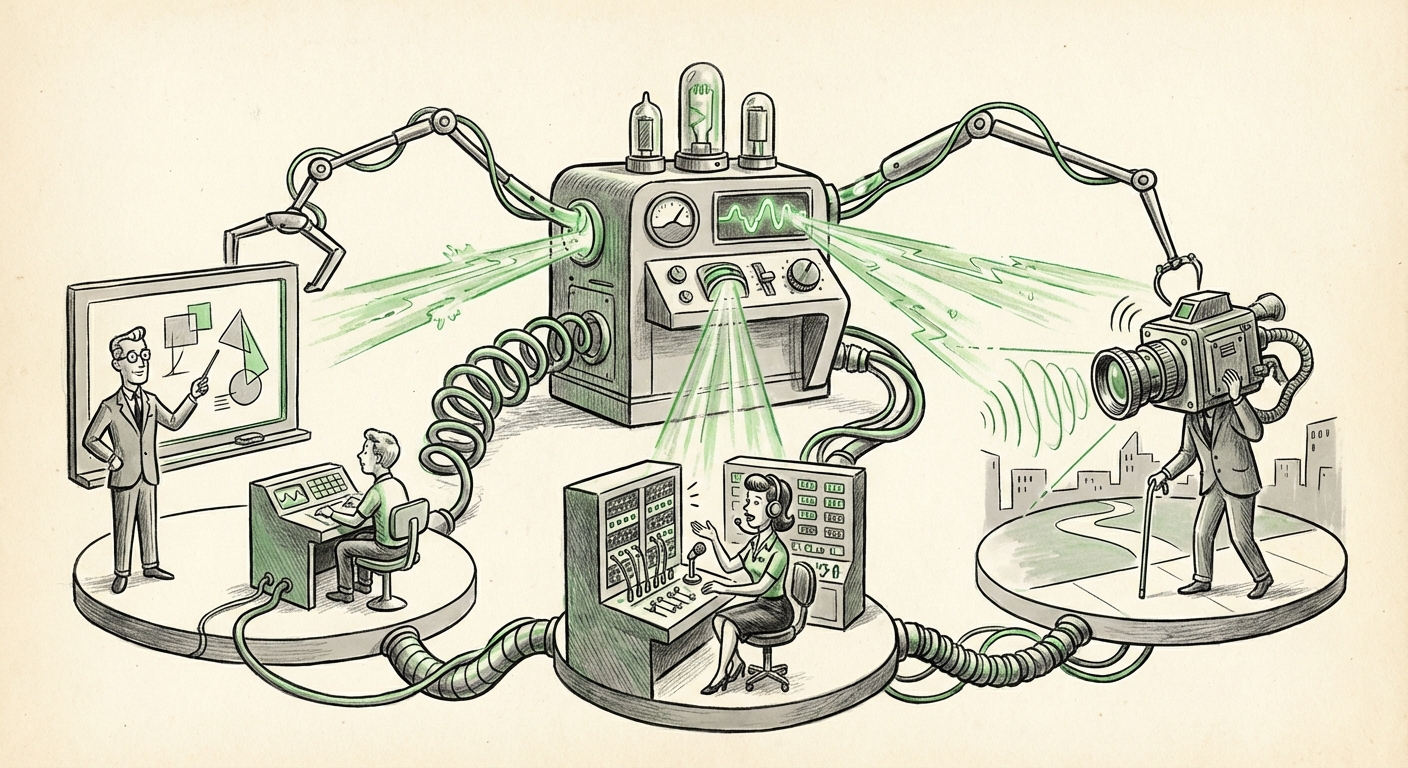
The future of AI, according to this panel, is not about replacing humans with smarter algorithms. It is about human-machine collaboration. Knowledge engineers are the bridge. They are experts in translating what people know—how a doctor diagnoses a disease, how a loan officer assesses risk, how a mechanic troubleshoots an engine—into a language that an AI system can follow and justify.
What this means for the future: We are moving away from AI that just guesses based on data. Instead, we are building AI that thinks alongside people. For businesses, this means hiring or training knowledge engineers will become as important as hiring data scientists.
Explainability Is No Longer Optional—It’s Essential
One of the biggest takeaways from the Rainbird panel is the focus on explainability. In 2026, regulations around AI are tightening. The European Union’s AI Act and similar laws in other regions demand that companies using AI can show how decisions are made. A black-box model that cannot explain itself is a legal liability.
Rainbird’s Knowledge Engineers emphasized that their systems are built from the ground up to be auditable. Every decision can be traced back to a rule or a piece of human knowledge. This is a stark contrast to neural networks, where we often cannot tell why a certain output was produced.
Practical implications for society: When AI is used in healthcare, finance, or law enforcement, explainability builds trust. Patients want to know why an AI recommended a specific treatment. Borrowers deserve to know why a loan was denied. Citizens need to understand why an AI flagged them for security checks. The Rainbird panel shows that the future AI industry is listening.
Why Large Language Models Alone Are Not Enough
The panel did not dismiss large language models (LLMs), but they highlighted their limitations. LLMs are great at generating text, summarizing information, and creative tasks. However, they are unreliable for high-stakes decision-making. They can “hallucinate” (make up facts) and they cannot provide a clear chain of reasoning.
Rainbird’s knowledge engineers pointed out that for tasks where accuracy and auditability matter—like insurance claims, medical diagnosis support, or compliance checks—pure data-driven models are risky. The future will likely combine the best of both worlds: LLMs for natural language interaction, but knowledge-engineered systems for the actual reasoning.
Actionable insight for businesses: Do not rely solely on off-the-shelf language models for critical decisions. Invest in a hybrid approach where a knowledge-engineered system provides the logic, and an LLM provides the interface. This creates a safety net.
The Re-Emergence of Symbolic AI
What the Rainbird panel is really showing is the comeback of symbolic AI. Symbolic AI was the dominant AI approach before deep learning took over. It uses clear symbols (like “patient has fever” or “loan amount > $10,000”) and logical rules (like “if fever AND cough, then possible flu”). Knowledge engineers are experts at building these rule-based systems.
For years, some AI researchers thought symbolic AI was outdated. But the need for reliable, transparent systems has brought it back into the spotlight. The panel made it clear that symbolic AI is not competing with machine learning—it is complementing it.
What this means for the future of AI: Expect to see more companies like Rainbird that offer “explainable AI platforms” built on symbolic reasoning. The AI landscape will be less monolithic. There will be specialized tools for different problems, and knowledge engineers will be the experts who choose the right tool for the job.
How Businesses Can Adapt and Thrive
Based on the insights from the Rainbird Knowledge Engineers, here are practical steps for businesses and technology leaders:
- Hire knowledge engineers early. If you are building any AI system that makes important decisions, you need someone who can formalize human expertise. This role is different from a data scientist. They focus on rules and logic, not just statistics.
- Audit your current AI systems. Can your AI explain why it rejected a customer application? If not, start planning a transition to more explainable technology. Legal and reputational risks will only grow.
- Invest in hybrid AI architectures. Use LLMs for chat and search, but use a knowledge-engineered core for anything where a mistake could cost money or harm.
- Train your workforce. Knowledge engineering is a skill that can be taught. Many existing domain experts (doctors, lawyers, engineers) can learn to build these systems with the right platform.
Real-World Use Cases from the Panel
While the panel did not name specific client projects, the discussion hinted at several areas where Rainbird’s knowledge engineers add value:
- Insurance underwriting: Instead of a black-box risk score, the system shows step-by-step how it evaluated each factor.
- Medical decision support: The AI can point to specific clinical guidelines that led to its recommendation.
- Financial compliance: The system can produce a clear audit trail for regulators.
These are areas where trust is paramount. The Rainbird panel demonstrates that knowledge engineers are the key to unlocking that trust.
Society’s Gain: More Democratic and Accountable AI
One of the most exciting implications discussed in the webinar is that knowledge engineering makes AI more democratic. You do not need a PhD in machine learning to build an expert system. A seasoned nurse, a skilled electrician, or a veteran accountant can become a knowledge engineer. They bring their deep experience into the AI, rather than letting data alone drive the decisions.
This shifts the power dynamic. Instead of a handful of big tech companies controlling the most advanced AI, knowledge engineering allows smaller businesses and industries to build specialized, trustworthy AI that reflects their own expertise. It also makes the AI easier to inspect and modify by non-programmers.
What this means for society: We are moving toward an AI ecosystem that values human judgment over raw data volume. This could reduce bias if knowledge engineers carefully encode fair rules. It could also empower workers, because their expertise becomes the core of the AI, not something to be replaced.
The Bigger Picture: AI as a Collaborative Partner
The Rainbird panel titled “Webinar 4: Panel with Rainbird Knowledge Engineers” is part of a larger trend. The date 2026-05-07 places this discussion in a critical moment for the AI industry. After years of hype around generative AI, the focus is shifting to reliability. Companies and governments are demanding AI that can be trusted.
Knowledge engineers are the people who make that possible. They ensure that AI systems are not just clever, but also careful and transparent. They turn AI from a mysterious oracle into a collaborative partner that can explain its reasoning and accept human corrections.
For technical audiences, this means learning about rule engines, knowledge graphs, and inference algorithms. For business audiences, it means understanding that the most valuable AI may not be the one that learns the fastest, but the one that explains the best.
Conclusion: The Knowledge Engineer Era Has Begun
The future of AI is not about bigger models. It is about smarter, more human systems. The Rainbird Knowledge Engineers’ panel in May 2026 sends a clear signal: the era of the knowledge engineer is here. These professionals are the unsung heroes who make AI accountable, understandable, and useful for high-stakes decisions.
Businesses that ignore this trend risk building brittle, black-box systems that will fail when trust matters most. Those that embrace knowledge engineering will create AI that earns users’ confidence, withstands regulatory scrutiny, and truly amplifies human expertise.
The key takeaway? The most advanced AI is not just learned—it is engineered. And that engineering starts with knowledge.