Beyond the Chat: What 'Inside the Machine, Outside the Text Box' Means for AI's Future
Published on May 10, 2026, a pivotal edition of The Sequence Radar titled "Inside the Machine, Outside the Text Box" hit the inboxes of thousands of technology leaders and AI enthusiasts. The title itself suggests a massive shift in how we think about artificial intelligence. For years, AI has been mostly about chat interfaces—text boxes where we type prompts and get answers. But the real action, the true revolution, is happening inside the machine, far away from the simple text box. This comprehensive article analyzes the major trends from that report, what they mean for the future of AI, and how you can use these insights to stay ahead.
The Great Shift: From Text Box to Inner Workings
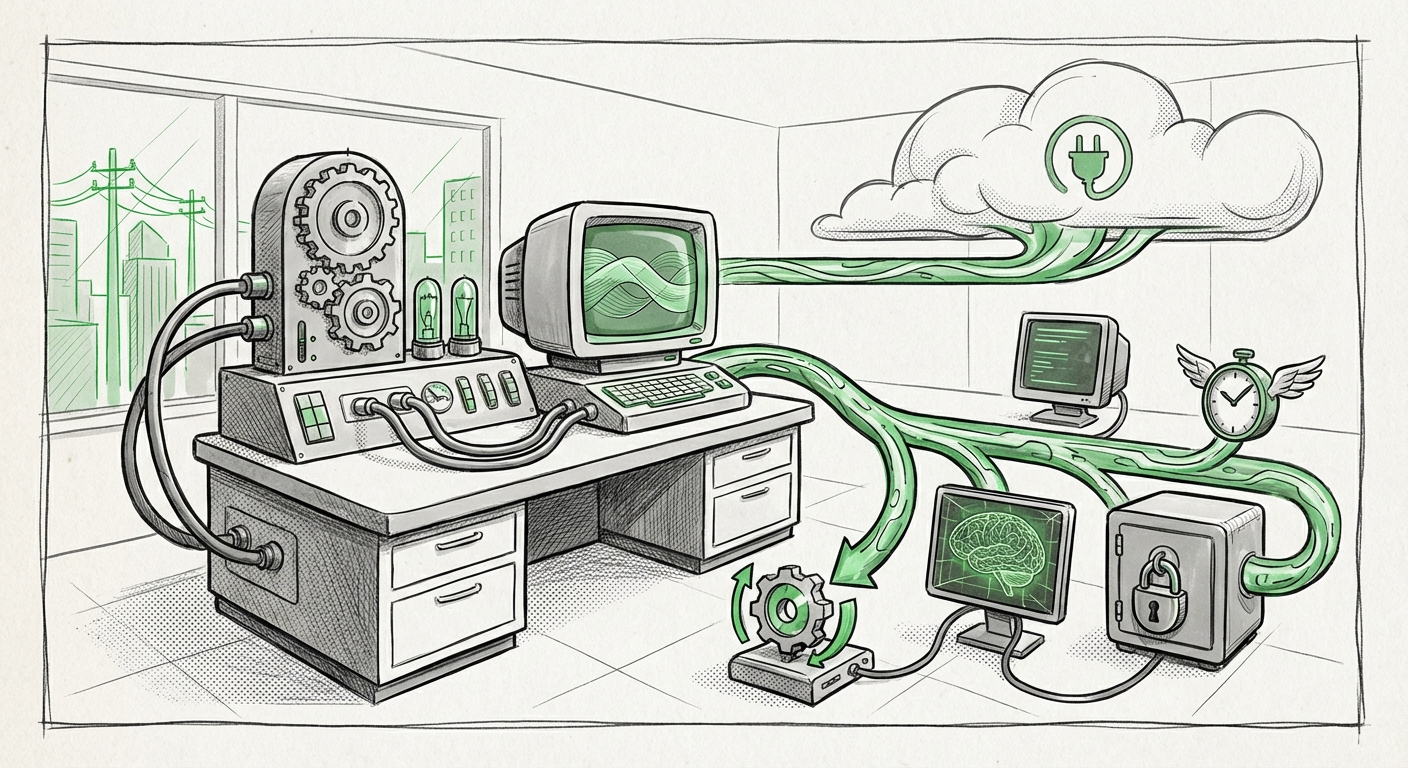
The phrase "Inside the Machine, Outside the Text Box" captures a crucial transition. Think of early AI as a black box: you put something in and got something out. But now, the focus is on what happens inside that machine. Developers and businesses are no longer satisfied with just getting a good answer. They want to know how the AI arrived at that answer, how it reasons, how it plans, and how it connects with other software. This is a move from simple automation to true, intelligent agency.
In practice, this means that the most exciting AI developments are happening under the hood. We are seeing less emphasis on flashy new chatbots and more focus on powerful models that can run complex software, manage databases, write code, and even control robots. The "text box" is becoming just one of many ways to interact with AI. The real power lies in the machine’s ability to operate autonomously across many different domains, often without any user typing a single word.
For businesses, this is a game-changer. Instead of asking an AI to "write a summary," a company might have an AI continuously monitoring its supply chain, predicting disruptions, and automatically ordering new parts. That is the future—an AI that lives inside the machine, constantly working to improve the system.
Key Trend 1: AI as an Autonomous Agent
The first major trend from the report is the rise of AI agents. These are not just chatbots that answer questions. These are AI systems that can set goals, make plans, and execute tasks over long periods of time. For example, an AI agent could be given the goal "increase website traffic by 20%." It would then brainstorm ideas, test different marketing headlines, adjust content strategy, analyze the data, and refine its approach—all without a human telling it each step.
This is a massive leap. It means AI is moving from being a tool you use to a teammate that collaborates with you. For small businesses, this could mean having a virtual employee that works 24/7 on marketing, customer service, or product development. For larger corporations, it means automating entire workflows that currently require teams of people.
Practical Implications for Society
This shift will change the nature of work. Jobs that involve repetitive decision-making (like data entry, basic coding, or simple analysis) will be heavily impacted. But new jobs will also appear—jobs like "agent manager" or "AI overseer," where humans supervise these autonomous systems. Society will need to invest in education to train people for this new world. The key skill will not be coding, but promise engineering—learning how to set clear goals and constraints for AI agents.
Key Trend 2: Reasoning and Planning Take Center Stage
Another major theme from The Sequence Radar is the focus on deep reasoning and planning. In the past, AI models were good at pattern matching—they could predict the next word in a sentence very well. But they struggled with logical deduction, multi-step planning, and common sense. The latest developments show a massive leap in this area. AI is now starting to "think" more like a human, breaking down complex problems into steps and testing different solutions.
This is critical for real-world applications. Imagine an AI planning a global shipping route. It has to consider weather, port delays, fuel costs, and customs regulations, all at once. This requires advanced planning. Or think about an AI helping a doctor diagnose a rare disease. It needs to reason through symptoms, test results, and patient history in a logical way. The report highlights that the latest models are getting much better at this.
What This Means for Business
Businesses should start looking at how to integrate reasoning AI into their core operations. For example:
- Customer Support: AI can now diagnose complex problems and plan a multi-step solution, rather than just giving a basic answer.
- Finance: AI can reason through market scenarios to find new investment opportunities.
- Research & Development: AI can plan experiments and analyze results much faster than humans.
The window for getting ahead is closing. Early adopters of this deep-reasoning AI will have a significant competitive advantage.
Key Trend 3: Breaking Out of the Chat Window
The "Outside the Text Box" part of the title points directly to a third major trend: AI is escaping the chat interface. While chatting is convenient, it is also limiting. The future of AI lies in its ability to interact with the world through APIs, tools, and even the physical environment. This means AI can control software, update databases, send emails, and, in the future, drive cars or operate factory machinery.
This is already happening. We are seeing AI models that can write and execute code, directly controlling a computer. Other models can see your screen and move your mouse for you. They are becoming the "operating system" of the digital world, connecting all your apps and tools. For a typical employee, this means an AI could automate their entire daily routine—checking emails, scheduling meetings, updating spreadsheets, generating reports—without any need for a special "AI app."
Actionable Insight for Leaders
If you are a business leader, start today by identifying all the manual processes in your business that involve moving data from one system to another. Those are prime candidates for automation. Do not wait for a perfect solution. The technology is maturing fast. Even simple automation can save hours per week, freeing your team for higher-value work.
What This Means for the Future of Everything
Taking these trends together—AI as autonomous agents, deep reasoning, and breaking out of the text box—we get a clear picture of the future. Within the next few years, AI will move from being a novelty to being an invisible, essential part of every organization. It will be like electricity: you will not think about it, but you will rely on it completely.
Here are the key implications for different groups:
For Business Leaders: Start experimenting with autonomous agents now. Do not just use a chatbot for customer service. Give an AI a real business goal (like "reduce customer churn") and see what it can do. The learning curve is steep, but the payoff is massive.
For Developers: Your job is changing. You will no longer just write code. You will design agents and their goals. Learn how to work with these systems. Understand how to prompt effectively and how to hook AI into your existing infrastructure.
For Society: We must address the ethical questions. How do we ensure these autonomous agents act safely? What happens when an AI makes a mistake? How do we prevent bias in these powerful new systems? These are not just technical questions—they are societal ones. We need new laws, new standards, and new education.
How to Prepare for the AI-Driven Future
Based on the trends from The Sequence Radar, here are five actionable steps you can take right now:
- Educate Yourself: Read publications like The Sequence Radar. Follow AI news. The field changes every week.
- Focus on Goals, Not Tasks: Start thinking about your work in terms of goals and outcomes, not just daily tasks. Learn how to describe what you want to achieve.
- Build Agents Now: Use available tools to build a simple AI agent. Even a basic one that helps with your email or calendar will teach you the key concepts.
- Invest in Data: AI agents need good data to make good decisions. Clean up your company's data. Make it accessible.
- Ethics First: Build transparency and safety into your AI systems from day one. This is not just good ethics—it is good business. Customers will trust a company that is upfront about how its AI works.
Conclusion: The Inside Story is Just Beginning
The Sequence Radar's "Inside the Machine, Outside the Text Box" is not just a clever title. It is a roadmap. The AI revolution is no longer about a chat window. It is about intelligence that can work autonomously, reason deeply, and interact with the real world. This will change how we work, how we live, and how we solve problems. The "machine" is waking up, and it is operating far beyond the simple text box. The question is: are you ready to work with it? The answer, for those who pay attention, is a resounding yes. The future is not something that happens to you. It is something you build. And now, you have the blueprint.