OpenAI's DeployCo Subsidiary Adopts Palantir's Playbook, Building a Moat from Workflows No Lab Can Simulate
What happens when the world's most advanced AI lab stops just building smarter models and starts building real-world operations? According to a recent report, OpenAI's subsidiary DeployCo is doing exactly that — and it's borrowing a page directly from Palantir's famous playbook.
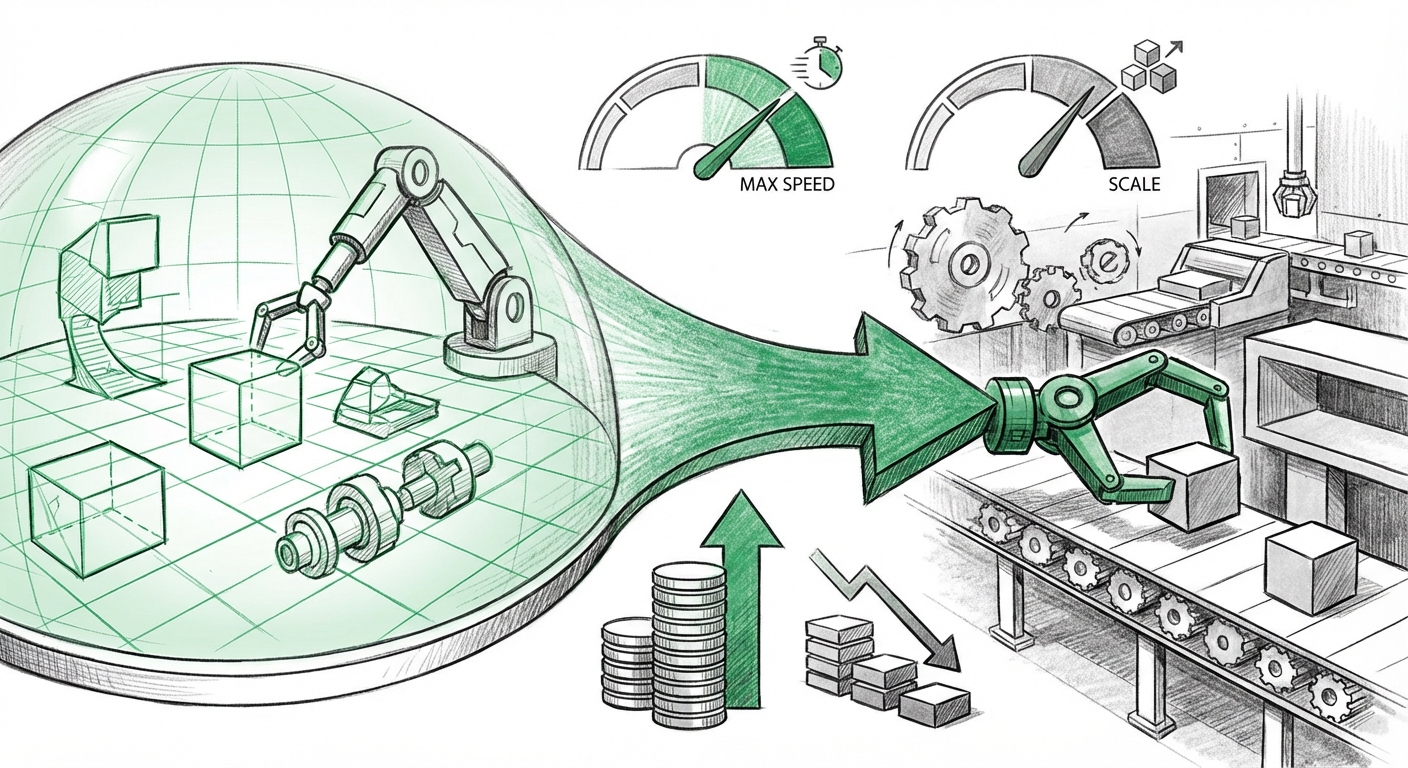
The core idea? Durable competitive advantage in AI doesn't come from having the best algorithm in a vacuum. It comes from embedding AI so deeply into messy, human, real-world workflows that no other lab — no matter how genius — can replicate the system. This shift could completely reshape how businesses think about AI and what the future of AI adoption looks like.
The Palantir Playbook: Why Workflows Beat Algorithms
For years, Palantir has been one of the most valuable — and most misunderstood — software companies on the planet. Its secret isn't cutting-edge AI or perfect algorithms. Its secret is workflow integration. Palantir builds software that lets humans and machines work together inside complex decision-making processes. Once those processes are locked in, switching costs become enormous.
Now, according to the-decoder.com, OpenAI's DeployCo subsidiary is adopting this exact approach. Instead of just selling API access or a chatbot, DeployCo focuses on embedding OpenAI's models into the operational backbone of large organizations. The idea is that workflows no lab can simulate become the true competitive moat.
Why is this so powerful? Because a lab can build a model that answers any question. But only a company that has spent months or years inside a customer's operations can build a system that actually works within their existing tools, data, and human processes.
What DeployCo Is Actually Doing
Based on the primary source, DeployCo isn't a flashy research division. It's a deployment and integration arm. Think of it as a specialized team that goes into companies, maps their current workflows, and builds custom AI solutions that slot into those workflows like a missing puzzle piece.
This isn't about giving a company a model. It's about giving them a system. That system includes:
- Data pipelines that feed the model the right information at the right time.
- Human-in-the-loop interfaces where people can check, correct, or override AI decisions.
- Feedback loops that continuously improve the model based on real-world use.
- Security and compliance structures that fit within the customer's industry regulations.
Once that entire ecosystem is built, it becomes nearly impossible for a competitor to rip it out. The AI isn't just a tool; it's part of the company's DNA.
Why This Matters for the Future of AI
For the last few years, the narrative around AI has been about raw intelligence. Bigger models, more parameters, better benchmarks. But DeployCo's approach signals a major shift. The future of AI won't be won by the lab with the smartest model. It will be won by the company that can operationalize AI faster, deeper, and more securely than anyone else.
This has huge implications:
- Incumbency advantage shifts. Companies that already have deep customer relationships and complex integrations will have a leg up on pure-play AI startups.
- Data becomes less about quantity, more about context. The specific workflows and human decisions inside a company are data that no public dataset can replicate.
- Customization becomes the norm. Off-the-shelf AI will be generic. The real value will come from tailored systems that fit specific operations.
What This Means for Businesses
For business leaders, this development provides a clear roadmap for AI adoption. Instead of asking "Which AI model should we buy?", the smart question becomes "How can we deeply integrate AI into our unique workflows to create something no competitor can easily copy?"
Here are practical steps businesses can take today:
1. Start mapping your workflows now
The companies that will benefit most from DeployCo's model — or similar offerings from other AI providers — are those that already understand their own operations inside out. If you have messy, undocumented processes, AI integration will be slow and expensive. If you have clean, well-understood workflows, integration becomes fast and valuable.
2. Think about switching costs
When you bring in an AI system, ask yourself: "How easy would it be to replace this system in two years?" If the answer is "very easy," you haven't integrated deeply enough. The goal is to weave AI into the fabric of your business operations — just like DeployCo is doing.
3. Prioritize human-in-the-loop systems
Palantir's playbook works because it keeps humans in the loop. No AI is perfect, and the best systems let people correct mistakes and guide the model. DeployCo's approach seems to reflect this. For your business, this means building interfaces where humans can easily collaborate with AI, not just consume its outputs.
4. Prepare for vendor lock-in — but embrace it strategically
Once your workflows are deeply tied to a specific AI system, switching becomes hard. That's the whole point of a moat. But you can manage this by ensuring your data and processes are well-documented and portable. Negotiate contracts that let you keep your workflow schemas and data even if you change AI providers.
What This Means for Society
The rise of workflow-based AI moats has broader societal implications. On one hand, it could lead to more reliable and safer AI systems because they will be deeply tested in real-world contexts. On the other hand, it could concentrate power in the hands of a few companies that control the most critical workflow integrations.
There's also a risk that this model slows down innovation. If every company builds unique, deeply embedded AI systems, it becomes harder for new, better models to break in. This is exactly the dynamic Palantir has enjoyed for years in government and finance.
But there's also a positive angle: less hype, more substance. Workflow-driven AI is inherently boring compared to flashy demos. That's a good thing. It means AI is becoming a utility, not a magic trick.
The Technical Side: Why Labs Can't Simulate This
From a computer science perspective, many of the problems DeployCo solves are not model problems — they are systems engineering problems. How do you handle latency when a model needs to query five different databases? How do you retrain a model when a customer changes their data schema? How do you ensure an AI decision is auditable in a heavily regulated industry?
These are not problems you can solve in a research lab. They require being on the ground, working with real IT teams, real data quality issues, and real human decision-makers. And once solved, they become a data flywheel. Every interaction improves the system, making it harder for any competitor to catch up.
OpenAI seems to understand that the biggest bottleneck in AI adoption isn't model capability — it's integration friction. DeployCo directly attacks that friction.
Conclusion: The Moat Is the Workflow
The story of DeployCo adopting Palantir's playbook is a powerful signal for where the AI industry is heading. The era of pure model competition is ending. The new era is about workflow integration, operational depth, and human collaboration.
For business leaders, the message is clear: The companies that will win with AI are not those that buy the best model, but those that embed AI into their unique operations so deeply that no lab can simulate — and no competitor can copy — their advantage.
For technologists, it's a reminder that the hardest problems in AI are not in the algorithm. They are in the messy, beautiful complexity of how people and machines work together in the real world.