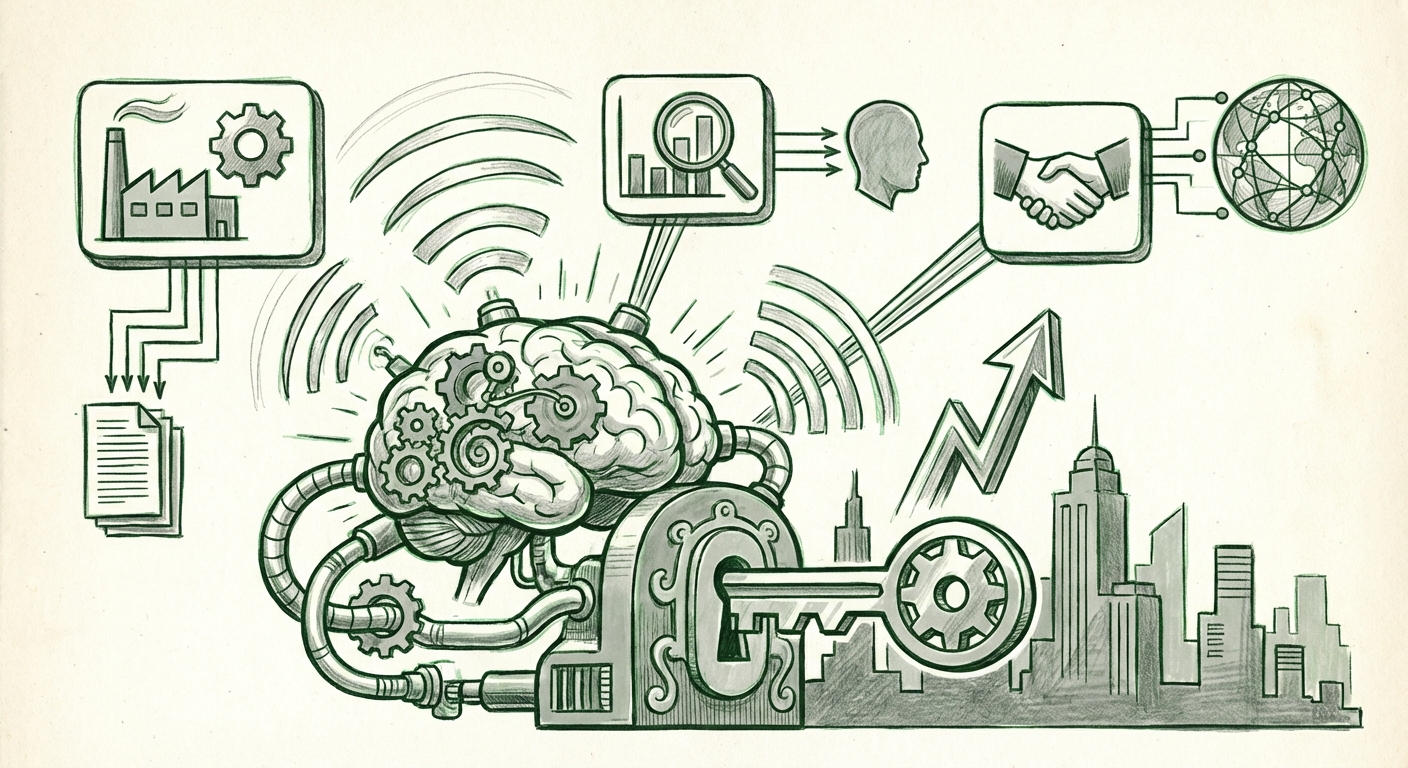
SAP Enterprise Planning Meets AI: How DataRobot Is Turning Corporate Planning into a Superpower
For decades, enterprise planning has been a painful ritual. Teams spend weeks crunching numbers in spreadsheets, building budgets, and forecasting demand. Then, as soon as the plan is done, reality changes — and the plan becomes obsolete. Business leaders often joke that their annual plans are outdated the moment they're printed. But what if planning could be different? What if it could be alive, intelligent, and constantly adapting?
That's exactly what a new partnership between SAP Enterprise Planning and DataRobot aims to deliver. Announced on May 11, 2026, by DataRobot, this integration promises to transform static planning processes into dynamic, AI-powered action systems. For anyone interested in the future of AI and how it will be used in the real world, this story is a big deal.
A Fresh Look at Business Planning
The core idea is simple but powerful: instead of relying on human guesses and static models, companies can now use machine learning to continuously improve their plans. SAP Enterprise Planning is a popular tool that helps organizations coordinate everything from financial budgets to supply chain forecasts. But like many traditional planning tools, it often lacks the ability to learn from new data automatically. That's where DataRobot comes in.
DataRobot is a leading AI platform that automates the creation of machine learning models. By connecting DataRobot's predictive power directly into SAP Enterprise Planning, the combination allows companies to:
- Generate accurate forecasts based on up-to-date internal and external data
- Identify hidden patterns in sales, inventory, and customer behavior
- Test "what-if" scenarios instantly, without manual spreadsheet work
- Automatically adjust plans as new information flows in
This is a move away from "plan and forget" toward "plan and adapt." It's a shift that many businesses desperately need.
Why This Matters for the Future of AI
This integration is not just a product announcement. It's a sign of where AI is heading. For years, AI was mostly used in isolated tasks — like recommending products on a website or flagging spam emails. But the real value of AI comes when it is embedded into the core processes that run a business. That means things like budgeting, hiring, production scheduling, and strategic planning.
The partnership between SAP and DataRobot shows that AI is moving from the sidelines to the center of decision-making. Instead of being a separate tool that analysts use on the side, AI becomes a part of the planning software that executives and managers use every day. This is called "operational AI" — AI that works inside the systems people already rely on.
In the future, every major enterprise software application will likely have built-in machine learning. But the key difference will be how well that AI is integrated. A simple "add AI" button doesn't cut it. The AI needs to understand the context of the business, respect data governance, and provide explanations that humans can trust.
From Static Spreadsheets to Living Plans
One of the biggest problems with traditional planning is that spreadsheets are static. A financial plan made in January might assume interest rates stay the same, or that a competitor won't launch a new product. But reality rarely follows the plan. By the time March rolls around, those assumptions are wrong.
With the combination of SAP Enterprise Planning and DataRobot, plans become living. They can be updated automatically as new sales data comes in, as weather patterns change, or as supply chain disruptions happen. The AI not only predicts what might happen next but also suggests what actions to take. For example, if the model predicts a sudden spike in demand for a certain product, the system could automatically recommend increasing inventory orders.
This moves companies from reactive planning (looking at last month's results and scrambling) to proactive planning (seeing the future and preparing for it). For industries like retail, manufacturing, and logistics, this could mean fewer stockouts, less waste, and more profit.
Practical Implications for Businesses
What does this mean for a typical company? Let's break it down into three key areas:
1. Faster, Smarter Financial Planning
Finance teams often spend 50-70% of their time just preparing and cleaning data for budgets and forecasts. With DataRobot's automation, that time can be drastically reduced. The AI can find patterns in historical data that humans might miss, such as seasonal trends or correlations between marketing spend and revenue. This means CFOs can have more time for strategy and less time for spreadsheet formulas.
2. Supply Chain Resilience
Supply chains have become incredibly complex and fragile. A missed shipment from a supplier in one part of the world can cause havoc. By integrating AI into SAP Enterprise Planning, companies can predict disruptions days or weeks in advance. The system can recommend alternative suppliers, adjust production schedules, or even change pricing to manage demand. This kind of agility was once only possible for the most advanced tech companies — now it's becoming mainstream.
3. Better Sales and Marketing Decisions
Sales teams can use AI to forecast which deals are most likely to close and which customers might be at risk of churning. Marketing teams can optimize budgets by predicting which campaigns will generate the highest return. The AI doesn't just predict; it also provides clear reasoning, so humans can understand why a certain recommendation is made.
Actionable Insights for Leaders
If you're a business leader looking to take advantage of this trend, here are a few steps to consider:
- Start with a clear use case. Don't try to deploy AI everywhere at once. Pick one planning process — like demand forecasting or budget planning — that would benefit from better predictions.
- Invest in data quality. AI is only as good as the data it learns from. Ensure your data is clean, consistent, and accessible.
- Embrace a culture of experimentation. The best AI systems are built iteratively. Start with a pilot project, learn from it, and expand.
- Train your people. AI tools are powerful, but they still need human judgment. Train your planners to interpret AI outputs and to know when to override them.
What This Means for Society and the Workforce
As AI takes over more of the routine planning work, the role of the human planner will change. Instead of spending hours crunching numbers, people will focus on interpreting insights, making strategic choices, and handling exceptions. This can make work more interesting and less boring. However, it also means that workers will need new skills — like data literacy and critical thinking — to stay relevant.
There is also a potential downside. If companies rely too heavily on AI predictions, they might become less flexible. Systems can be tricked by unusual events, like a global pandemic or a sudden change in consumer taste. It's important to keep human oversight and to build systems that can handle uncertainty gracefully.
For society as a whole, the spread of operational AI could lead to more efficient use of resources. Fewer goods go to waste, less energy is consumed in supply chains, and companies can respond faster to changing customer needs. That's good for the economy and the environment.
The Bigger Picture: AI as a Planning Partner
The partnership between SAP Enterprise Planning and DataRobot is part of a broader shift. We are moving from a world where AI is a fancy add-on to one where AI is a core part of how organizations manage their future. In the same way that spreadsheets replaced paper ledgers, AI-enhanced planning will eventually replace static spreadsheets. The question is not if this will happen, but how quickly companies will adopt it.
For anyone watching the AI industry, this is an exciting development. It shows that the technology is maturing and becoming practical for everyday business use. No longer do you need a PhD in data science to benefit from machine learning. Tools like DataRobot are making AI accessible to everyone — from the finance analyst to the supply chain manager.
As we look ahead, the most successful companies will be those that learn to combine human judgment with machine predictions. They will treat AI not as a replacement for planners but as a partner that makes them faster, smarter, and more adaptable. That is the true promise of "From Planning to Action" — a world where plans are not just documents but dynamic, living guides that help businesses navigate an uncertain world.