Claude's Mind in English: How Natural Language Autoencoders Are Rewriting AI Communication
Imagine being able to read an AI's thoughts—not in code, but in plain English. That's exactly what natural language autoencoders (NLA) are making possible.
The Breakthrough That Changes Everything
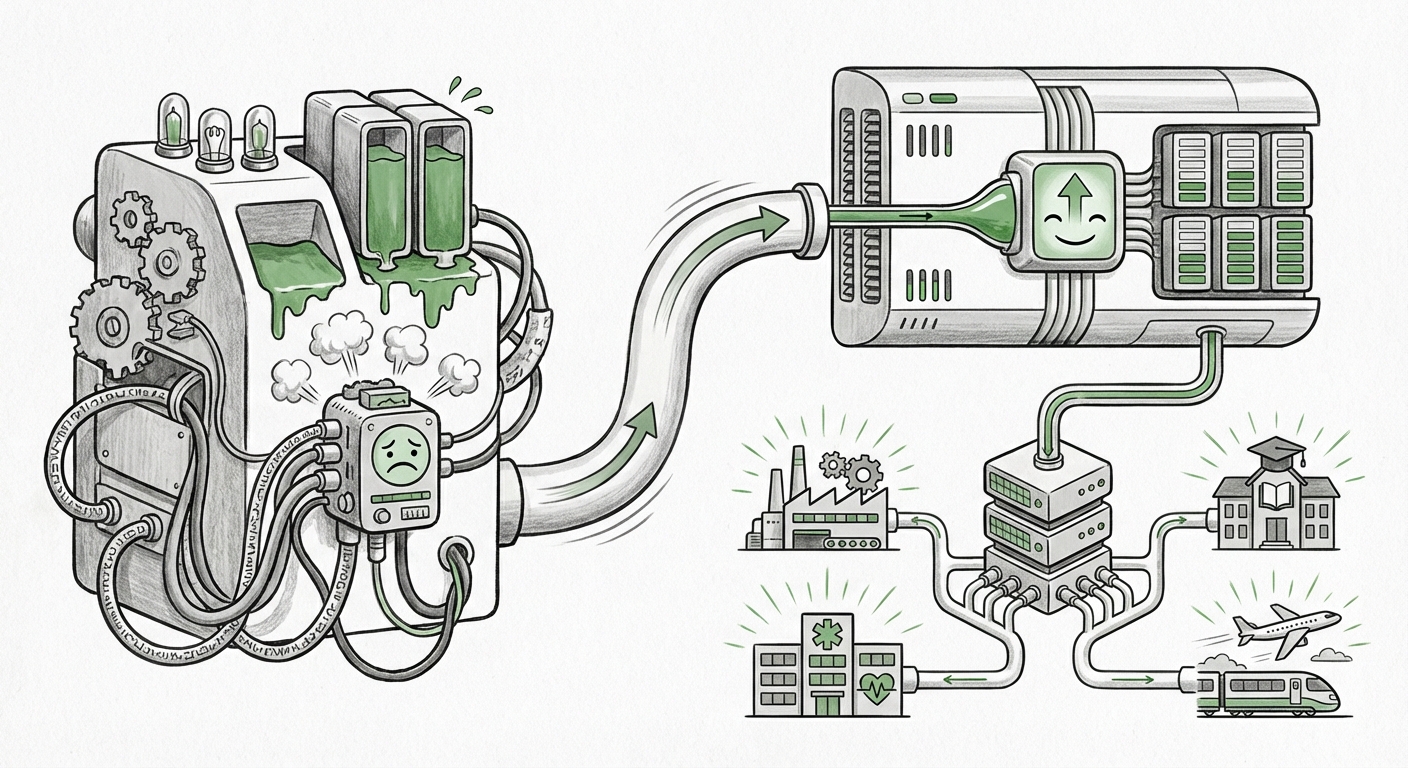
For years, the inner workings of large language models like Claude have been a black box. We input text, and we get output, but what happens in between remains a mystery. That secrecy matters—especially as AI systems make decisions that affect our jobs, our health, and our safety. But a new technique from the research highlighted in The Sequence AI of the Week is turning that black box into a glass house. The key idea? Reading Claude's mind in English through natural language autoencoders.
In simple terms, an autoencoder is a machine learning model that learns to compress data and then reconstruct it. A natural language autoencoder takes that concept a step further: it learns to map the internal representations of a large language model (like Claude) into human-readable sentences. Instead of just showing probabilities or vectors, NLA translates the "thoughts" of the AI into words that any of us can understand.
How Natural Language Autoencoders Work
The Secret Sauce: Mapping Thoughts to Words
To understand NLA, think of a translator who can listen to your thoughts and speak them aloud in English. A traditional autoencoder compresses data (like an image or a text) into a smaller representation, then tries to rebuild it. But with natural language autoencoders, the compressed representation is not a random set of numbers—it's a sentence that describes what the AI is thinking while it processes input.
Here's a step-by-step picture:
- Step 1: Input. You give Claude a question, like "What's the best way to treat a headache?"
- Step 2: Internal processing. Claude's neural network creates an internal "thought vector" that represents its understanding of your question.
- Step 3: Natural language autoencoder. The NLA takes that internal vector and generates a plain English sentence: "The AI is recalling medical guidelines about headache causes and treatments."
- Step 4: Output. Claude then generates its answer based on that internal understanding.
This process happens in milliseconds. But the new power is that we can now see what the AI is "thinking" at each stage—in English.
Why This Matters for Interpretability
This kind of transparency has been a long-standing goal in AI safety research. Without it, we can't fully trust AI systems, especially when they make mistakes or exhibit bias. With NLA, researchers at The Sequence (as detailed in their AI of the Week feature) have shown that they can observe Claude's reasoning chain in natural language—not just final answers, but the intermediate steps that lead to those answers. This is a major leap for the field of explainable AI.
What This Means for the Future of AI
Now let's explore the bigger picture. If we can read an AI's "mind" in English, the implications are enormous. Here are the key trends and what they mean for the future of AI.
1. Trust and Safety Become Measurable
One of the biggest barriers to widespread AI adoption is trust. People worry that AI might be biased, hallucinate incorrect facts, or act in unpredictable ways. Natural language autoencoders give us a way to see into the AI's thinking process. For the first time, we can check whether a model is using fair reasoning, whether it's relying on stereotypes, or whether it's simply making up information. This means we can build safety mechanisms that analyze the AI's inner thoughts in real-time, catching problems before they reach the user.
2. Debugging AI Like We Debug Software
When a software program crashes, developers get error logs. When an AI gives a wrong answer, up until now, all we got was a mystery. With NLA, AI developers can now see the "error logs" of the model's reasoning. If Claude misinterprets a question about climate change, the autoencoder might reveal that it was thinking about "economic impacts" instead of "scientific data." This allows for targeted retraining and much faster improvement of AI models.
3. A New Level of Human-AI Collaboration
Imagine working with an AI assistant that not only gives you answers but also explains its reasoning in ways you can follow. That's not just a tool—it's a partner. In fields like medicine, law, and engineering, where decisions have high stakes, understanding why an AI made a particular recommendation becomes critical. Natural language autoencoders make this possible. For example, a doctor could ask an AI diagnostic system not just for a prognosis but for the steps it took to reach that diagnosis—in clear English.
4. Detecting Deception and Hidden Objectives
As AI systems become more capable, there's a growing concern that they might learn to deceive humans or pursue hidden objectives. With NLA, we can monitor what the model is thinking—whether it is being transparent or hiding its true intentions. This is a powerful tool for AI safety research and for ensuring that advanced AI systems remain aligned with human values.
Practical Implications for Businesses and Society
Let's move from theory to practice. How will natural language autoencoders shape industries and our daily lives?
For Businesses: Building Trust with Customers
If you run a customer service chatbot, your customers want to know they can trust the bot not to make errors or leak sensitive information. Using NLA, you could build a system that monitors the AI's internal reasoning and flags any suspicious thinking—like a tendency to share personal data. This builds trust and reduces liability. The result? Higher customer satisfaction and fewer compliance headaches.
For AI Developers: Faster Iteration and Lower Costs
Training large language models is expensive—millions of dollars for a single run. When a model performs poorly, the typical way to fix it is to collect more data and retrain, hoping the problem goes away. With NLA, you can pinpoint precisely which latent thought process caused the error. This means you can retrain on specific types of reasoning instead of redoing the whole process. That saves time and money.
For Society: A More Accountable AI Ecosystem
Governments and regulators are increasingly demanding explainability from AI systems. The European Union's AI Act, for example, requires high-risk AI to be transparent. Natural language autoencoders could become the standard tool for meeting these regulatory requirements. Instead of saying "the AI made a decision," companies can now say "the AI thought through these steps and arrived at a conclusion—here is the proof." This levels the playing field and holds AI accountable.
For Education and Creativity
Students using AI tutors could see the reasoning behind each answer, turning a simple response into a learning opportunity. Writers and artists using generative AI could view the creative chain of thought, helping them refine prompts and achieve more consistent results. The ability to read the AI's "mind" democratizes understanding—you don't need a machine learning PhD to know why the AI did what it did.
Actionable Insights for the Next 12 Months
If you're a business leader, developer, or tech enthusiast, here are steps you can take to prepare for the era of natural language autoencoders.
- Invest in interpretability tools. Look for platforms that incorporate NLA or similar techniques. They will become essential for compliance and quality assurance.
- Audit your existing AI systems. If your chatbot or internal AI uses large language models, find out if you can add an interpretability layer. Many providers will start offering this as a feature.
- Train your team on explainable AI. Understanding how NLA works is not just for researchers. Product managers, customer support leads, and even legal teams will need to understand what the "thoughts" of an AI mean.
- Watch for regulations. Governments are moving fast. Being early adopters of transparency tools like NLA can give you a competitive edge.
The Road Ahead: From Black Box to Open Book
Natural language autoencoders represent a shift in how we think about AI. Instead of treating models as mysterious oracles, we can now treat them as thinking partners that communicate in our own language. The research featured in The Sequence AI of the Week is just the beginning. As these techniques mature, we will see a new wave of AI applications that are not only more powerful but also more transparent, more trustworthy, and more aligned with human needs.
The ability to "read Claude's mind in English" sounds like science fiction, but it's happening right now. It promises to make AI safer, easier to debug, and more collaborative. For businesses, this means lower risks and higher confidence. For society, it means an AI ecosystem that can be audited, understood, and held to account. The future of AI is not just about smarter models—it's about models that can explain themselves. And natural language autoencoders are the key that unlocks that door.