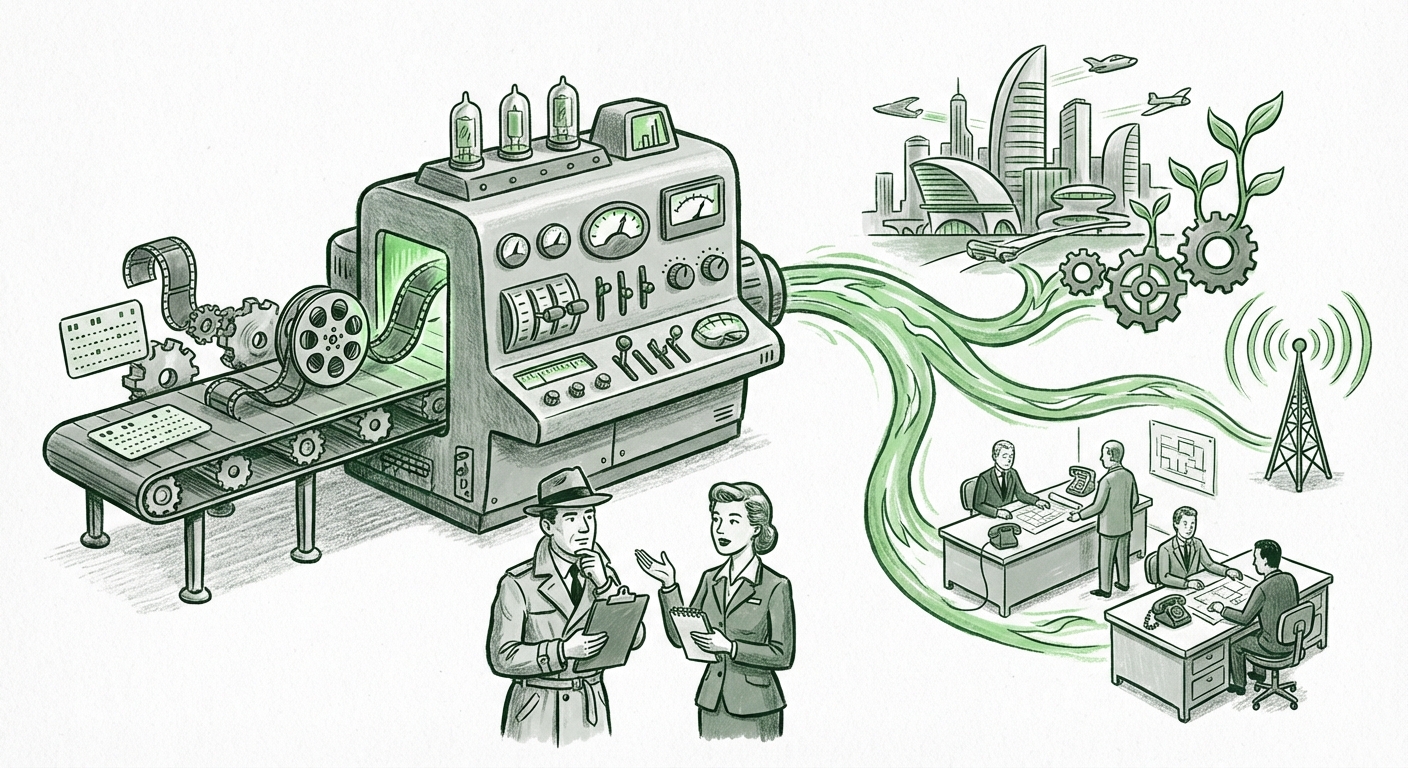
Google Just Killed the AI SEO Playbook: What This Means for Your Content Strategy
For months, a big question has been buzzing around the world of digital marketing: does AI search need its own special playbook for SEO? Many experts thought the answer was yes. They believed that as Google and other search engines began to use more artificial intelligence to generate answers, the old rules of search engine optimization would become useless. You would need completely new tactics, new keywords, and a new way of thinking to get your content found.
But on May 15, 2026, Google itself stepped in to bust that myth. In a significant statement covered by The Decoder, Google made it clear: you do not need a separate SEO playbook just for AI search. This is huge news for anyone who creates content, runs a website, or relies on search traffic. It changes the entire conversation about the future of AI and how it will be used in the world of search.
Let's break down what Google actually said, what it means for the future of AI, and how businesses and content creators should respond.
The Big Announcement: What Google Actually Said
According to the source material from The Decoder, Google "busts the myth that AI search needs its own SEO playbook." This means that the company is telling website owners and marketers that they should not panic. You do not need to throw away everything you know about SEO just because AI is being used to power search results.
Think of it this way: when Google first started using AI to summarize answers in search results (like with the Search Generative Experience), many people thought it spelled the end of traditional search traffic. They worried that AI would just answer the question itself, and no one would click on links. But Google's message is different. The company is saying that the same core principles of good SEO that worked before still apply. You need great content, clear structure, and authority. AI does not change that fundamental need.
This is not about ignoring AI. It is about understanding that AI is a tool that enhances search, not a revolution that destroys the old rules. The myth that a brand new SEO playbook is needed has been officially put to rest.
Why This Myth Got So Popular in the First Place
To understand why Google's statement matters so much, we need to look at why the "AI SEO playbook" myth became so popular. There was a lot of fear, uncertainty, and doubt (often called FUD) in the digital marketing world. Many so-called experts were selling courses and tools promising to unlock the secrets of "AI search optimization." They claimed that AI algorithms would rank content based on completely different factors than before.
Some of the common myths included:
- AI prefers short, simple answers over long-form content. The reality: AI still needs all the context and depth that comes from well-written articles.
- Keywords are dead in an AI world. The reality: Understanding what people search for remains incredibly important.
- AI will only show one answer, making clicks irrelevant. The reality: Google's own data suggests users still want to click through to sources for more information.
- You need to optimize for how AI "thinks" using new meta tags or formats. The reality: Standard web best practices are what matter.
These myths created a lot of noise. Marketers felt like they were in a race to learn a completely new set of skills. But Google's recent statement serves as a huge reality check. It tells us that the fundamentals have not changed. The future of AI in search is not about throwing away the old playbook; it is about evolving it.
What This Means for the Future of AI
Google's announcement is not just a piece of news for SEO nerds. It tells us something deeper about how big tech companies want AI to be used. Here are some key takeaways for the future of AI:
AI Is Being Designed to Work With Humans, Not Replace Them
The myth that AI search needs its own playbook was based on the idea that AI is a completely alien intelligence that thinks in ways humans cannot understand. Google is pushing back against that. By saying the old SEO rules still apply, Google is saying that AI is being trained to understand content the way humans do. AI is learning from human-made rules and patterns, not creating its own secret language. The future of AI will be about collaboration, not replacement of human understanding.
Content Quality Will Matter More Than Ever
If AI search does not need a special playbook, then what matters? The answer is high-quality, trustworthy content. AI models (like the ones Google uses) are trained to find the most authoritative and useful information. They can spot fluff, keyword stuffing, and low-effort content from a mile away. The future of AI in search is a world where mediocre content has nowhere to hide. Businesses that invest in genuine expertise, original research, and clear writing will be the ones that succeed.
AI Will Drive a Return to Core Web Principles
Things like site speed, mobile-friendliness, and clear page structure have always been important for SEO. With AI summarizing content, these factors become even more critical. AI needs to be able to quickly parse a website and understand what it is about. If your site is slow, messy, or hard to navigate, the AI will struggle to use your content. The future of AI will push all websites to clean up their act and focus on technical excellence.
Practical Implications for Businesses and Content Creators
So, what should you actually do? Stop worrying about a magical "AI SEO playbook" and focus on what works. Here are actionable insights for businesses and society:
For Businesses:
- Stop chasing AI SEO fads. Ignore gurus who promise secret hacks for AI search. They are selling a solution to a problem that does not exist.
- Double down on your expertise. Google's AI will favor content that demonstrates Experience, Expertise, Authoritativeness, and Trustworthiness (E-E-A-T). Write content that shows you know what you are talking about.
- Focus on user intent, not keywords. Instead of obsessing over specific phrases, think about what a user really wants to know. Answer their questions completely. AI search is great at understanding the meaning behind a search query.
- Improve your site's technical health. Make sure your site loads fast, works on mobile, and has a logical structure. AI needs to trust your website to surface your content.
For Content Creators:
- Write for humans first, AI second. The best way to be found by AI is to write content that people actually find useful. Natural, conversational writing will get picked up by AI models more effectively than stiff, keyword-stuffed text.
- Use clear headings and structure. AI tools often use headings (H2, H3) to understand the key points of an article. A well-structured article is an AI-friendly article. This is not a new trick; it is basic good writing.
- Cite sources and link to authority. AI models love content that is backed up by data and links to trusted sources. This builds the trust that AI algorithms look for.
- Do not try to "trick" the AI. Attempting to game the system with hidden text, manipulative phrasing, or low-quality content will backfire. AI is getting better at detecting manipulation every day.
For Society at Large:
Google's message is also a positive sign for the health of the internet. If AI search rewarded weird, unnatural content, the web would become a worse place. By sticking to the basics, Google is encouraging the kind of content that builds a useful and trustworthy web. It means that small publishers and niche experts still have a chance to compete. The barrier to entry is not about mastering a new secret code; it is about being good at what you do.
The Bottom Line: Don't Panic, Just Write Better
The myth of the "AI SEO playbook" was causing a lot of unnecessary stress. Google has now officially dismissed it. The future of AI in search is not about a radical new set of rules. It is about the old rules being enforced more strictly and more intelligently.
AI is powerful, but it is not a mystery. It learns from patterns in human content. So the best strategy for the future is simple: create the best possible content for your audience. That is a playbook that has worked since the dawn of the internet, and it is not going anywhere.
Businesses that adapt will not be the ones who learn some secret AI trick. They will be the ones who stay calm, focus on quality, and remember that the purpose of search is to connect people with useful information. AI is just a faster, smarter way to make those connections.