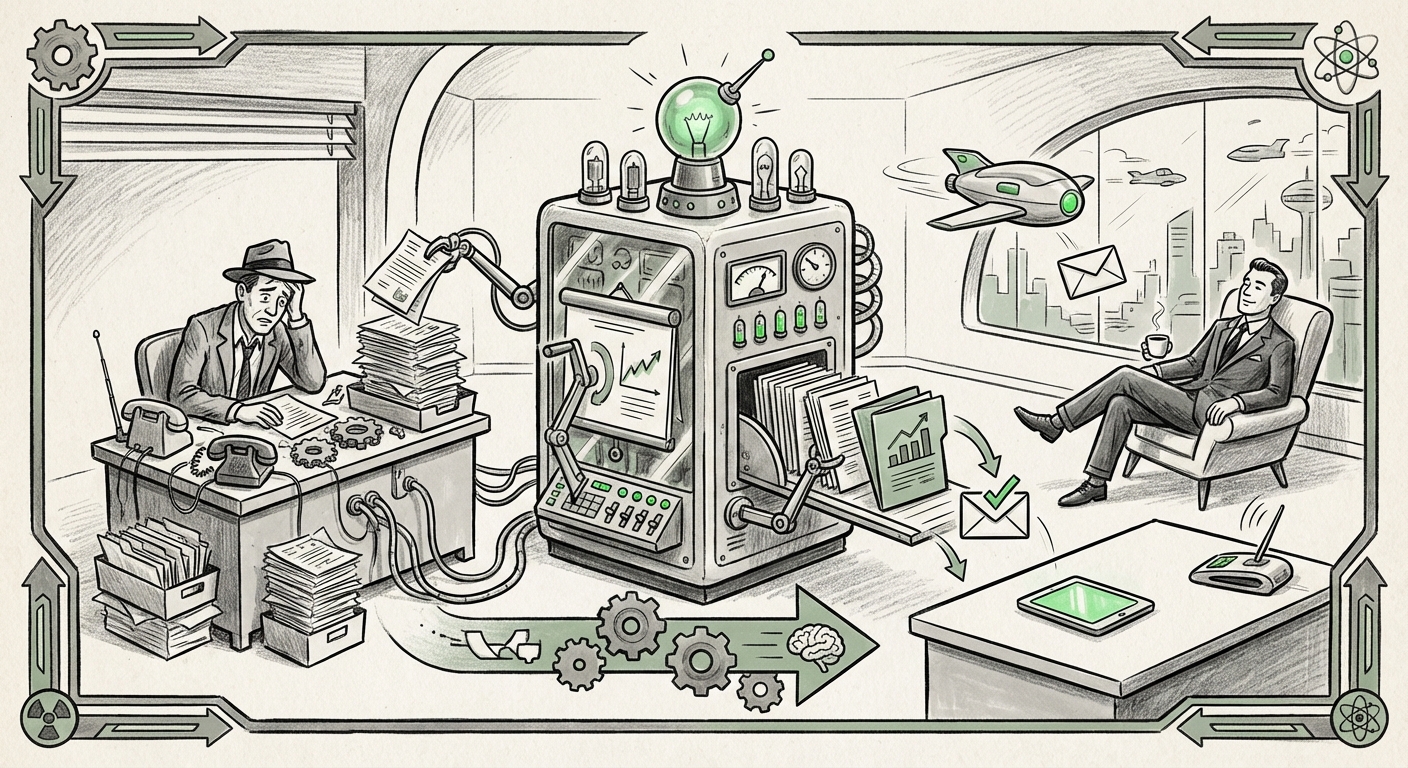
AI Video Generators Look Stunning But Still Can't Understand Reality — New Benchmark
If you've seen any of the latest AI-generated videos, you know they look almost magical. A dog playing piano? Perfect. A car driving through a neon city at night? Gorgeous. But here's the catch: these models don't actually understand what they're showing you.
A new benchmark from The Decoder, published on May 16, 2026, confirms what many researchers suspected: AI video generators look stunning but still can't reason about the world. The models create beautiful pixels, but they fail at basic tasks like understanding cause and effect or predicting what happens when objects interact.
This isn't just academic. It has huge implications for businesses, filmmakers, educators, and anyone hoping to use AI for serious work. If a video generator doesn't understand that a ball bounces when it hits the ground, how can you trust it to make safety training videos, product demos, or scientific content?
Let's break down what the benchmark found, why it matters, and what the future holds for AI video generation.
What the Benchmark Actually Tested
The researchers at The Decoder designed tests that go beyond simple visual quality. They wanted to see if AI video models understand the scenes they create. This is a big step up from past evaluations, which mostly focused on how realistic the videos look.
The benchmark checked for three key abilities:
- Object permanence — Does the model know objects still exist when they go behind something else?
- Cause and effect — If one object hits another, does the second one move?
- Common sense physics — Do objects fall down, not up? Do liquids flow?
And the results? They are clear: the models fail these tests consistently. They often produce videos where objects disappear, gravity works backwards, or actions have no consequences.
"AI video generators look stunning but still can't reason about the world." — The Decoder, May 16, 2026
Why Beautiful but Dumb Matters
On the surface, a video that looks great might seem good enough. After all, movies and TV shows aren't real either. But the problem runs deeper than appearance.
When a model doesn't understand the world, it can't do consistent generation. Ask for a "car driving left to right," and it might produce a beautiful car that suddenly vanishes and reappears. Or a car that drives through a wall. That's fine for a one-off art project, but terrible for professional use.
Businesses need reliability. A marketing team using AI to create product videos can't have a chair that floats away mid-scene. A film studio can't plan a scene around a character that forgets it was holding a cup. The lack of world reasoning makes current AI video generation a novelty, not a tool.
The benchmark confirms this: visual quality has outpaced physical reasoning. We now have models that can produce 4K video, but they can't tell you what happens when you drop a glass of water.
What This Means for the Future of AI Video
If you're excited about AI video, don't lose hope. The benchmark shows us exactly what needs to be fixed. Here's what the future likely holds:
1. Hybrid models will emerge
The next generation of AI video generators will likely combine visual generation with physics simulation. Think of it like adding a game engine brain to a pretty face. A model that uses a lightweight physics engine under the hood could ensure objects obey gravity, collisions, and momentum.
Companies like Nvidia and Google are already working on this. They want to merge the creativity of large language models with the precision of 3D simulators. The Decoder's benchmark will accelerate this work by giving them a clear target to beat.
2. Specialized models for specific tasks
Instead of one model that does everything, we may see specialized models for different domains. A model trained on sports footage might understand ball physics better than a general model. A model trained on cooking videos might grasp how ingredients mix and change.
This is similar to how early AI image generators got better when they were fine-tuned on specific subjects like "dogs" or "cars." The same pattern will apply to video.
3. Human oversight will remain critical
For the foreseeable future, anyone using AI for professional video creation will need to review and fix physics errors. Tools may emerge that automatically flag impossible scenes — "Warning: object disappears behind table" — but the final say will be human.
This is actually good news for human creators. It means AI won't replace them overnight. Instead, it becomes a collaborative tool where humans handle logic and AI handles visual polish.
Practical Implications for Business
If you're a business leader considering AI video, here's what you need to know:
- Don't use current AI for mission-critical content — Avoid using AI-generated video for safety training, technical manuals, or anything where accuracy matters. The physics and object consistency aren't reliable enough.
- Use it for early-stage conceptual work — AI video is great for storyboards, mood boards, and quick visualizations. The "dumb but pretty" nature actually helps here because you can iterate fast and don't need perfect physics.
- Budget for human correction — If you do use AI for final output, plan for humans to fix logic errors. This might cost as much as producing the video traditionally.
- Watch for domain-specific tools — Keep an eye on startups that train video models on specific industries (e.g., construction, medical, automotive). These may get world reasoning better because their training data has less variety.
What the Tech Community Should Do
For developers and researchers, the benchmark from The Decoder is a call to action. Here are the key directions:
- Build better evaluation metrics — Visual quality metrics like FID or CLIP score don't capture physical reasoning. We need benchmarks that actively test cause-and-effect, object permanence, and physics.
- Incorporate symbolic reasoning — Pure neural networks struggle with explicit rules. Adding modules that enforce basic physics (objects can't overlap, gravity pulls down) can dramatically improve consistency.
- Training data diversity matters — Models trained on YouTube videos learn the visual look of things but not the underlying rules. Using generated 3D simulations with physics labels could teach models what actually happens in the world.
The Decoder's work provides a clear baseline. Now the race is on to build models that don't just look good, but that understand what they're showing.
The Long-Term Outlook
Looking ahead five years, it's likely that AI video generators will overcome this reasoning gap. The combination of neural networks with symbolic physics, reinforcement learning from simulated environments, and massive datasets of labeled video will eventually produce models that understand the world as well as they depict it.
But that day is not today. And that's okay. The current state — stunning visuals with no reasoning — is a natural step on the path to truly intelligent video generation. It's like a toddler who can draw beautiful pictures but can't explain what they mean. The skills are separate, and one develops before the other.
The key insight from The Decoder's benchmark is that we can now measure this gap precisely. And once you can measure something, you can improve it.
For businesses and creators, the advice is straightforward: use AI video for what it's good at — rapid visual exploration and inspiration — but keep humans in the loop for logic, physics, and truth. The future will bring models that combine beauty with understanding, but we aren't there yet.
In the meantime, the benchmark serves as a reality check. AI video generators may look like they've mastered the world, but right now, they're just painting on the surface. The real work — teaching them how the world actually works — has only just begun.
TLDR: A new benchmark from The Decoder (published May 16, 2026) confirms that AI video generators produce visually stunning clips but fundamentally lack reasoning about the physical world — they fail at basic cause-and-effect, object permanence, and common sense physics. For now, businesses should use these tools for creative exploration and early concept work, but must keep humans in the loop for tasks requiring logical consistency or accurate physics. The gap between visual quality and world understanding is now measurable, pointing the way toward hybrid models that combine stunning generation with true physical reasoning.