How IPOs, Interactive Models, and Recursive Dreams Are Reshaping AI's Next Decade
The artificial intelligence landscape is moving at breakneck speed, and the past week has offered a concentrated glimpse into where the industry is heading. According to the most recent edition of The Sequence Radar (published May 17, 2026, on thesequence.substack.com), three major trends dominated the conversation: IPOs, interactive models, and what is being called recursive dreams. These aren't just standalone events—they represent deep structural shifts in how AI companies grow, how users engage with AI, and how machines might learn to think more like humans.
For business leaders, technologists, and anyone watching the space, this is a moment to step back and understand what these signals truly mean for the future of AI and how it will be used. Let's dig into each of these trends, unpack the implications, and explore what actionable steps you should consider.
The Surge of AI IPOs: A Maturing Market
One of the biggest stories of the week was the wave of IPO activity among AI companies. For years, the AI sector has been dominated by well-funded private firms, venture capital rounds, and speculative excitement. But an IPO is a different animal entirely. It signals that a company has reached a level of maturity where it can handle public scrutiny, consistent revenue, and long-term accountability. When multiple AI firms go public in a short period, it suggests the industry is moving from experimentation into a phase of established growth.
What does this mean for the future? First, IPOs bring more transparency. Public companies must disclose financials, risks, and strategies. That means we, as observers, get a clearer picture of which AI business models actually work. Second, IPOs unlock a much larger pool of capital, allowing these firms to invest aggressively in R&D, talent, and infrastructure. This can accelerate the development of next-generation models and tools that otherwise might have stayed in the lab.
Implications for Businesses
If you are running a business that relies on AI, this is good news. More public AI companies mean more competition, which often drives down costs and improves quality. You may soon have more options for enterprise-grade AI services from stable, publicly traded vendors. Additionally, the influx of capital will likely lead to faster innovation cycles, so keep an eye on the product roadmaps of these newly public firms.
Implications for Society
Greater scrutiny also means ethical considerations come to the forefront. Public companies face pressure from shareholders and regulators to manage risks like bias, privacy, and safety. This could lead to stronger industry standards around responsible AI development. For society, that is a net positive—but it also means that the days of "move fast and break things" in AI are likely numbered.
Interactive Models: Moving Beyond the Chatbot
The second major trend is the rise of interactive models. These are AI systems that don't just take a prompt and produce a response—they engage in back-and-forth, multi-turn conversations, adapt in real time, and even let users steer the model's behavior mid-interaction. This is a significant step beyond the chatbots many of us have experimented with. Interactive models can ask clarifying questions, explain their reasoning, and adjust their tone or level of detail based on user feedback.
Why does this matter for the future? Because it changes how we think about human-AI collaboration. Instead of treating AI as a one-shot tool, we can now treat it more like a teammate—one that you can correct, guide, and refine in real time. This is especially powerful in domains like education, customer support, creative writing, and software development.
How It Will Be Used
Imagine a student learning calculus. Instead of getting a single answer, they can have a conversation where the AI notices they are struggling with a concept and adjusts its teaching style. Or consider a product designer who can brainstorm ideas with an AI, then ask it to elaborate on certain points—the AI remembers the context and builds on previous turns. In customer support, interactive models can handle complex issues by gathering information step by step, rather than forcing users into rigid menus.
Practical Takeaways
- Invest in user experience: For businesses building AI products, the interface is just as important as the model. Make sure your system can handle fluid, multi-turn interactions.
- Train your teams: Employees who interact with AI should learn how to guide and correct models effectively. This is a new skill that differentiates passive usage from true collaboration.
- Watch for new standards: As interactive models become more common, expect best practices to emerge around transparency—when a model is uncertain, it should say so.
Recursive Dreams: Machines That Learn to Learn
The most mind-bending trend reported by The Sequence Radar is recursive dreams. This concept refers to AI models that are trained using iterative self-simulation—essentially, models that can generate their own training data in a recursive loop, much like a dream within a dream. Instead of relying solely on human-collected datasets, these models explore hypothetical scenarios, generate synthetic examples, and then learn from them. It is a form of self-improvement that could dramatically reduce the need for human-labeled data.
This is a frontier area, but the implications are profound. Currently, one of the biggest bottlenecks in AI development is data scarcity and the cost of annotation. Recursive dreams offer a path around that. If a model can simulate countless variations of a problem space, it can achieve deeper understanding without ever seeing a real-world example. Combined with interactive capabilities, this could lead to AI that is both more powerful and more adaptable.
What This Means for the Future of AI
First, it accelerates the pace of improvement. Models using recursive dreams can potentially improve overnight, without human intervention. For businesses, this means AI tools may get smarter faster than current roadmaps predict. Second, it raises new questions about control and alignment. If an AI is effectively training itself, how do we ensure it learns the right things? That is the challenge that safety researchers are now grappling with.
How Businesses and Society Should Prepare
- Embrace synthetic data: Companies should explore ways to generate their own synthetic datasets, especially if they operate in niche domains where real data is hard to get.
- Demand transparency: When using third-party AI services that incorporate recursive dreams, ask for details about how the training process is monitored. Checkpoints and validation steps matter.
- Stay informed: Recursive dreams are still experimental. Follow research from academic labs and leading AI firms to understand when this technology moves from the lab to production.
The Convergence: Where These Trends Meet
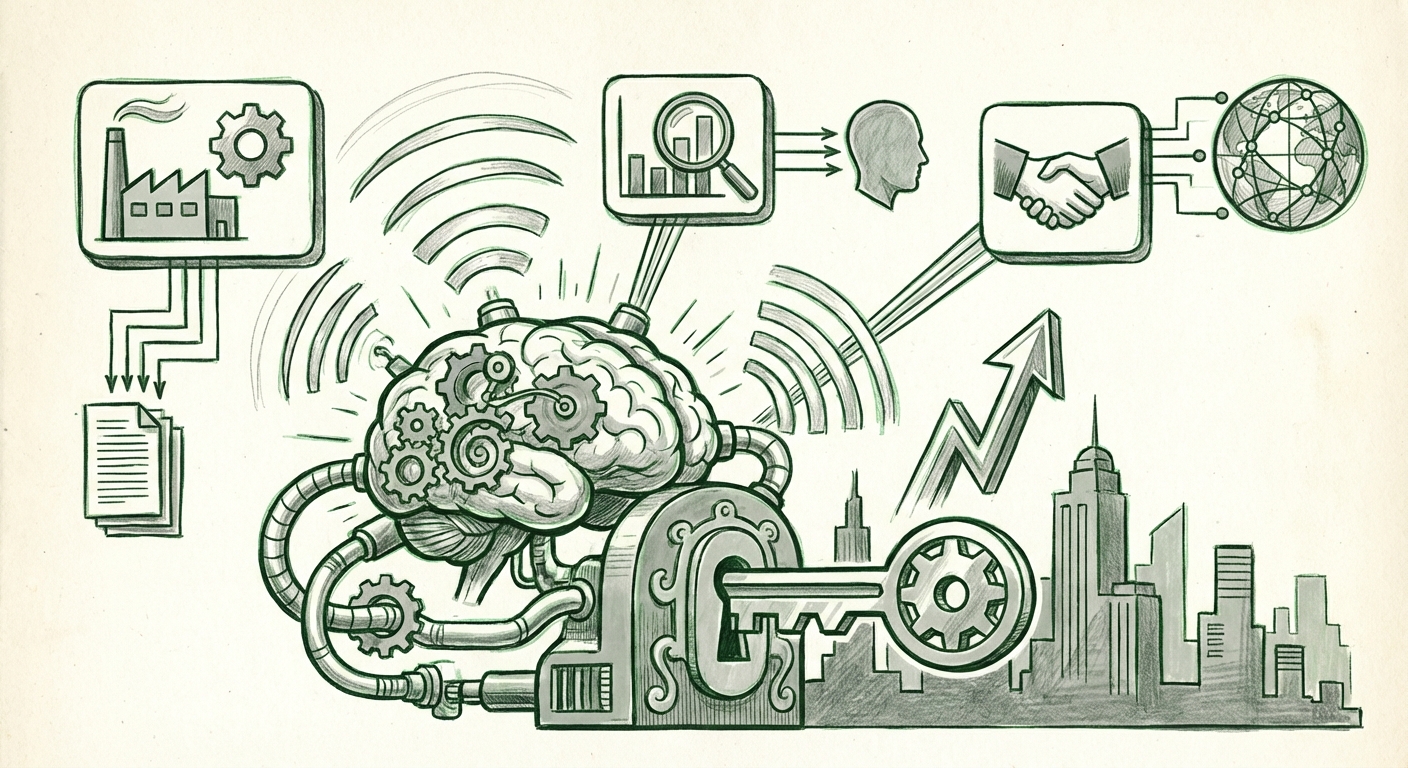
The most exciting part isn't any single trend—it is how they all fit together. IPOs provide the capital and stability for long-term research into interactive models and recursive dreams. Interactive models give users a natural way to interact with increasingly capable systems. And recursive dreams could be the engine that makes those interactive models smarter with every conversation.
For example, imagine a publicly traded AI company that offers an interactive customer service platform. With the funding from its IPO, it invests heavily in recursive dreaming techniques. As a result, its model gets better at handling unusual requests overnight, without requiring new human data. The customer gets a smoother experience, the company gains a competitive edge, and society benefits from a more efficient service economy. That is the virtuous cycle we are beginning to see.
Actionable Insights for Business Leaders
Based on these developments, here are concrete steps you can take today:
- Monitor IPO announcements. Track which AI companies are going public and read their filings. Their stated R&D priorities will hint at where the market is heading.
- Experiment with interactive models. If you haven't already, test current-generation interactive systems. Look for ones that allow you to guide and refine outputs—this is the direction the industry is moving.
- Start a pilot program for synthetic data. Even if recursive dreams are not yet mainstream, synthetic data techniques are already viable. Begin exploring them internally.
- Invest in AI literacy. Prepare your workforce for a future where AI is not just a tool but a collaborator. Training programs should cover how to effectively interact with and manage AI systems.
Conclusion: A New Chapter in AI's Story
The events of this past week, as captured by The Sequence Radar, are not isolated news items. They are signals of a deeper transformation. AI is moving from a phase of hype and experimentation into one of structure, ubiquity, and self-improvement. IPOs bring accountability. Interactive models bring usability. Recursive dreams bring potential for incredible autonomy.
For everyone from startup founders to Fortune 500 executives, the message is clear: the time to engage seriously with these trends is now. The future of AI is not a distant dream—it is being shaped in real time, and the smartest move is to be an active participant. Pay attention to the capital flows, experiment with new interfaces, and keep an open mind about what self-learning machines can achieve. The next decade of AI will be defined by the choices we make this year.