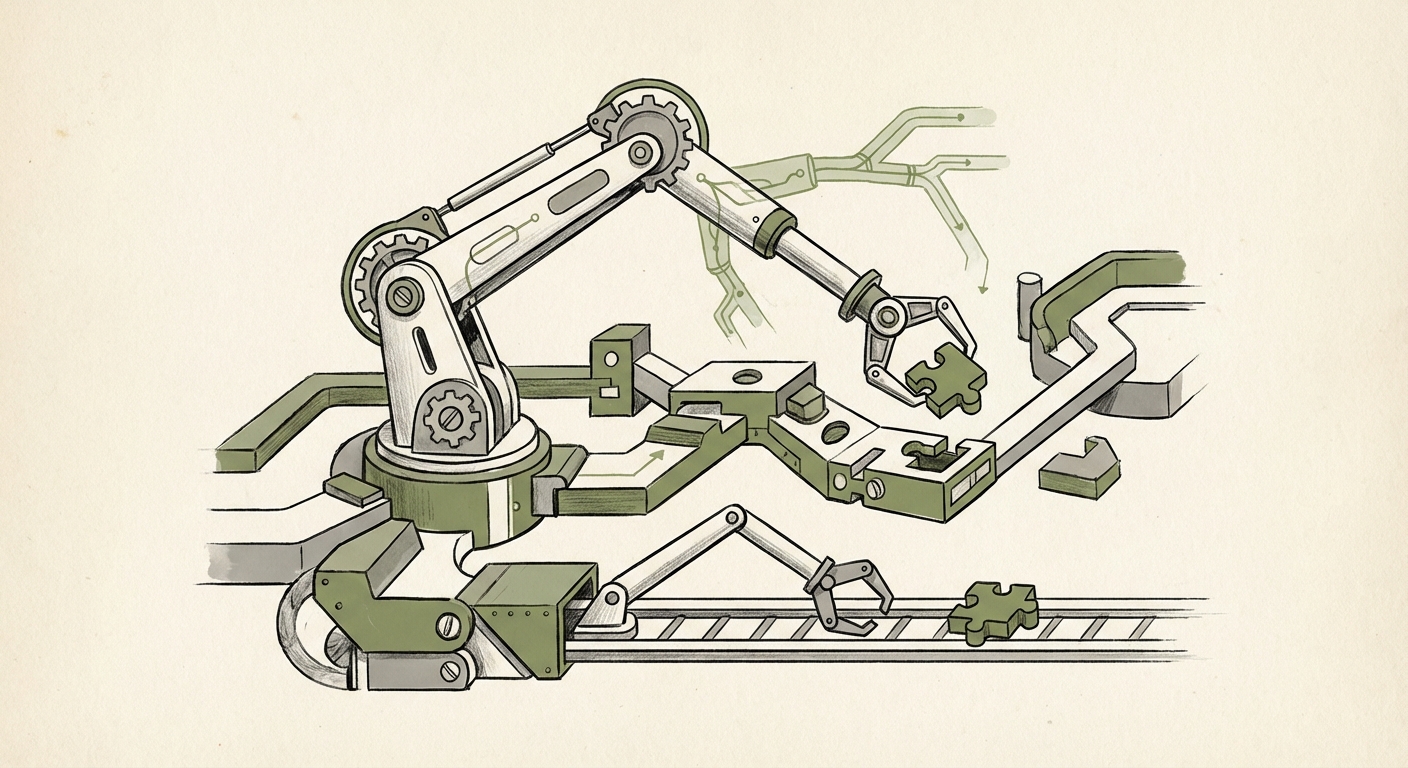
New Math Benchmark Reveals AI Models Confidently Solve Problems That Have No Solution
Imagine asking a smart assistant to solve a math problem, and it gives you a confident, detailed answer. But the problem itself has no solution. That is exactly what a new math benchmark has revealed about today’s most advanced AI models. According to a report published on May 17, 2026, by the-decoder.com, researchers have created a benchmark that exposes a troubling weakness: AI models often confidently solve problems that have no solution. This discovery has massive implications for how we trust and use AI in the future.
What the New Math Benchmark Found
The new benchmark is designed to test AI models on math problems that are deliberately unsolvable. Instead of admitting defeat or saying "I don't know," many AI models produce a string of logical steps and a final answer as if the problem were perfectly solvable. The study shows that these models are overconfident—they generate plausible-looking reasoning even when the premise is impossible. This is not just a minor bug; it points to a fundamental gap between how AI models mimic human reasoning and how they actually work.
The implications are huge. If an AI cannot tell the difference between a solvable problem and an impossible one, how can we rely on it for critical tasks? This benchmark is a wake-up call for the AI industry.
What This Means for the Future of AI Reasoning
This discovery strikes at the heart of what we mean by "AI reasoning." Current large language models (LLMs) are trained to predict the next word in a sequence based on patterns in their training data. They are not trained to understand logic or truth. When faced with an unsolvable problem, the model follows its training: it produces a sequence of steps that looks like a solution because that's what it has seen millions of times in its data. It doesn't "know" that the problem is a trap.
This has deep consequences for the future of AI. Here's what we can expect:
- New benchmarks for reliability: The industry will need to develop more robust tests that check for "unsolvable" scenarios. AI models will be judged not just on how many correct answers they give, but on how gracefully they handle impossible questions.
- Better training methods: Researchers will explore training AI to recognize when a problem has no solution. This could involve teaching models to ask clarifying questions or to output "I don't know" as a valid response.
- AI that admits uncertainty: The future of AI will likely include models that are more aware of their own limitations. Instead of pretending to know everything, they will be designed to express confidence levels and flag uncertain answers.
Practical Implications for Businesses and Society
For businesses, this benchmark is a critical reminder: AI is not a magic oracle. It is a powerful tool that can still make confident mistakes. Here are some practical takeaways:
- Healthcare and diagnostics: If an AI system confidently misdiagnoses a patient because it sees a pattern that doesn't exist, the consequences could be deadly. The new benchmark highlights why human oversight is essential in high-stakes fields.
- Finance and legal decisions: Automated systems that approve loans or write legal contracts must be able to detect when they are working with flawed data or impossible requests. A model that confidently solves the wrong problem could lead to huge financial losses.
- Customer support and chatbots: Many companies use AI to handle customer queries. If a chatbot confidently gives a wrong answer to an impossible question (e.g., "How do I reset my password for a service I don't have?"), it frustrates users and damages trust.
Society as a whole also needs to adjust its expectations. We are in an era where AI is becoming ubiquitous, but the "hype" often overshadows the reality. The new benchmark from the-decoder.com is a reminder that we must treat AI outputs with healthy skepticism.
How AI Will Be Used Differently Because of This
This discovery will change how we design and deploy AI systems. Here are the most likely shifts:
- AI as a co-pilot, not an autopilot: Businesses will increasingly treat AI as an assistant that suggests answers, but a human always makes the final call. This "human-in-the-loop" approach becomes non-negotiable when the AI can be wrong and act confident about it.
- More transparent AI: Future AI models will be built to show their reasoning process and flag uncertainty. Tools like chain-of-thought prompting will become standard, but they will be augmented with "uncertainty tokens" that let users know when the model is guessing.
- Training on "negative examples": AI training data will include many examples of unsolvable problems and correct responses like "This problem has no solution." This will help future models learn the difference between a solvable challenge and a dead end.
- Specialized benchmarks for trust: The new math benchmark is just the beginning. Expect a wave of new tests focused on reliability, robustness, and the ability to detect impossible scenarios. Companies that score well on these benchmarks will have a competitive advantage.
Why This Is a Turning Point
This finding is important because it exposes a blind spot in how we evaluate AI. Until now, most benchmarks have focused on how often AI gets the right answer. The new benchmark shows that we also need to measure how often AI confidently gives the wrong answer to an impossible question. This is a different kind of failure—one that is harder to catch because the output looks so plausible.
For the future of AI, this means we need to build systems that are not just powerful, but also humble. The best AI systems will be those that know what they don't know.
Actionable Insights for Today
If you are a business leader, developer, or policy maker, here is what you can do right now:
- Test your AI for overconfidence: Use unsolvable test cases to see how your AI systems behave. If they confidently produce nonsense, you need better guardrails.
- Invest in human oversight: Never let AI make final decisions in critical areas without a human review. The cost of a confident mistake is too high.
- Demand transparency: When choosing an AI vendor, ask how their model handles uncertainty. Look for systems that can output confidence scores or "I don't know" responses.
- Educate your team: Make sure everyone who uses AI understands that it can be confidently wrong. This is not a bug—it is a feature of the current technology that we must work around.
Conclusion
The new math benchmark from the-decoder.com is a groundbreaking study that reveals a fundamental flaw in today's AI models: they often confidently solve problems that have no solution. This is not just a curiosity—it has real-world consequences for how we deploy AI in business, healthcare, finance, and everyday life. The future of AI will be shaped by our ability to build systems that are both powerful and honest about their limits. As we move forward, the most valuable AI will be the one that admits when it doesn't know the answer.