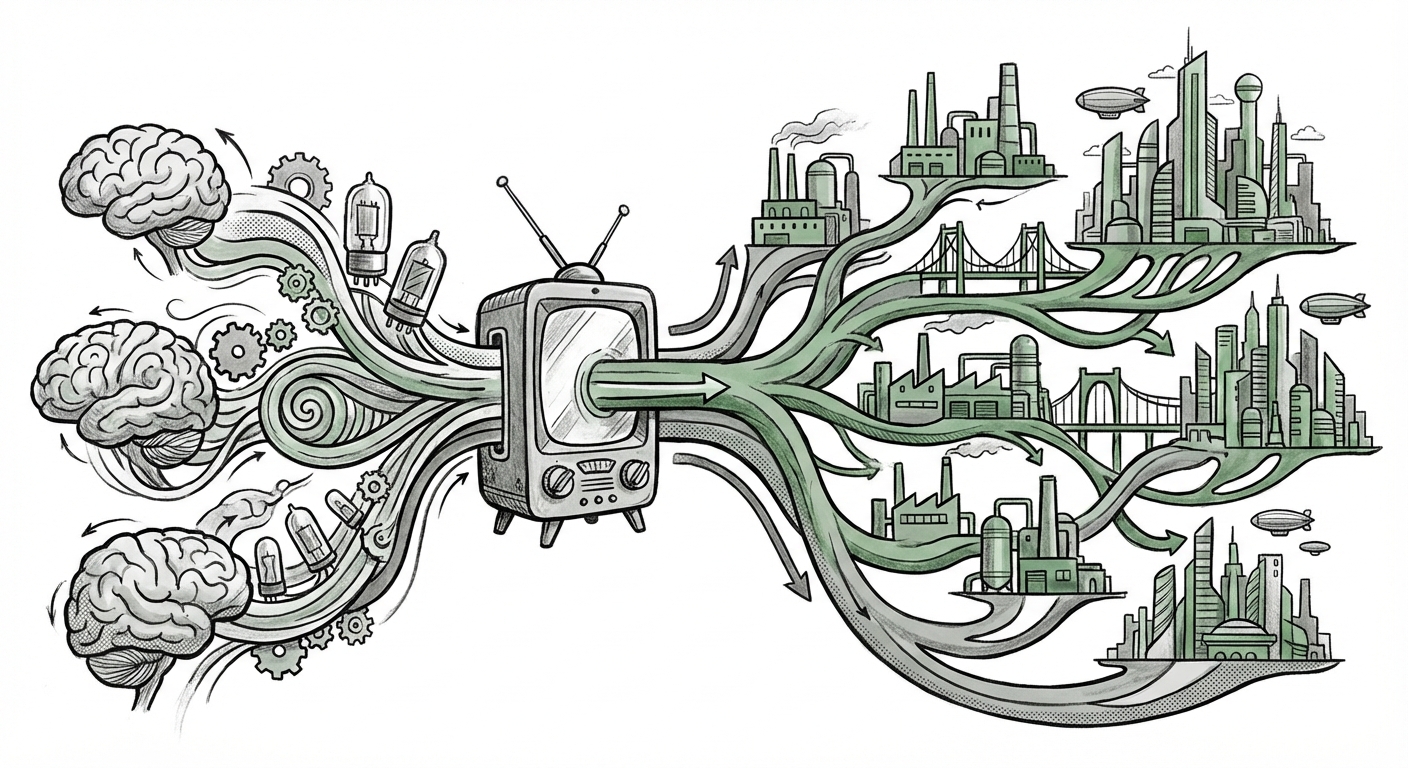
World Action Models Give Robots the Ability to Simulate Consequences Before They Move
Imagine a robot that can "think" before it acts – not by guessing, but by running a mental movie of what will happen next. A newly reported breakthrough, called World Action Models, gives robots exactly that ability. According to the source material from the-decoder.com, published May 17, 2026, these models allow robots to simulate consequences before they move. This is not just a small step for robotics. It is a major shift in how machines understand and interact with the physical world. For businesses, this means smarter factories, safer autonomous vehicles, and more helpful home robots. For society, it means AI that can predict and avoid accidents rather than just reacting to them. Let's explore what World Action Models are, why they matter, and how they will change the future of AI and everyday life.
What Are World Action Models?
At its core, a World Action Model is a type of AI system that builds a mental model of the world and uses it to predict the consequences of actions before carrying them out. Think of it like a chess player who visualizes several moves ahead. A robot equipped with this model does not just follow a pre-programmed path. Instead, it first imagines what will happen if it reaches out, turns, or lifts an object. Only if the simulation shows a safe and successful outcome does the robot physically move.
The source material from The Decoder highlights that World Action Models give robots the ability to simulate consequences before they move. This is a huge departure from older methods, where robots relied on rigid rules or trial-and-error learning in the real world. Now, robots can test thousands of possible futures in a split second inside their own digital brains, picking the best action every time.
Why This Breakthrough Matters for the Future of AI
Robotics has always struggled with one big problem: the real world is messy and unpredictable. A robot trained in a clean lab may fail when it faces a cluttered room or a slippery floor. World Action Models tackle this head-on by allowing the robot to update its mental picture of the world based on new information. Instead of memorizing fixed responses, the robot learns a general understanding of physics, motion, and objects. It can then use that understanding to simulate any new situation.
For the future of AI, this is a critical step toward what researchers call "general intelligence." An AI that can imagine outcomes is no longer just a pattern-matching machine. It becomes a planning machine. It can weigh risks and benefits, avoid dangerous mistakes, and even discover new ways to achieve goals. The ability to simulate consequences before they move makes robots much more autonomous and trustworthy.
How World Action Models Work in Practice
The source material does not dive into deep technical details, but we can understand the basic idea. A World Action Model likely uses a neural network trained on enormous amounts of data about how objects behave in the real world. This data might include videos, sensor readings, and robot demonstrations. The model learns a compressed representation of reality. When a robot faces a new task, it feeds its current situation into the model. The model then runs many rapid simulations, each trying a different sequence of actions. It picks the action that leads to the best simulated outcome, then tells the real robot to execute only that one.
This process is far more efficient than having the robot physically try every possibility. It also prevents accidents because the robot never attempts a dangerous move in the real world. Factories can operate with less downtime, and households can trust robots near fragile items and children.
Practical Implications for Businesses
Businesses stand to gain immensely from robots with World Action Models. Here are the most important areas of impact:
Manufacturing and Warehousing
In factories and warehouses, robots already handle many tasks, but they often need tightly controlled environments. A World Action Model lets a robot adapt to changes on the fly. If a box falls off a conveyor belt, the robot can simulate the best way to pick it up without hitting nearby equipment. This flexibility reduces the need for expensive safety cages and constant human supervision. Companies can deploy robots in more varied roles, speeding up production and cutting costs.
Autonomous Vehicles
Self-driving cars, drones, and delivery bots all need to predict what will happen next. World Action Models are a natural fit. A car can simulate the consequences of braking hard, swerving, or accelerating before actually doing any of them. It chooses the path that minimizes risk. According to the source, giving robots (and by extension vehicles) the ability to simulate consequences before they move could dramatically reduce accidents caused by unexpected obstacles or poor road conditions.
Healthcare and Service Robotics
Robots in hospitals already deliver supplies and assist surgeons. With World Action Models, they become much safer. A surgical robot can simulate the precise movements needed to avoid blood vessels before making an incision. A service robot in a nursing home can simulate how to navigate around a walking patient without causing a fall. The possibilities are vast, and the key advantage is always the same: simulation prevents real-world harm.
Home and Personal Robots
The dream of having a robot that cleans, cooks, or cares for the elderly has always been limited by safety concerns. A robot that can simulate consequences before it moves is far less likely to knock over a vase, step on a pet, or bump into a person. This makes home robots more practical and appealing. When a robot can mentally test whether it can safely pick up a glass cup without breaking it, people can trust it more.
Societal Impact: Trust, Safety, and Jobs
The introduction of World Action Models will likely change how society views robots. One of the biggest barriers to adoption is the fear that robots are unpredictable and dangerous. Simulation-based planning directly addresses that fear. When a robot can show (or at least guarantee) that it has considered the consequences, people feel safer interacting with it.
This technology may also shift the job market. While some manual jobs might be automated more thoroughly, new roles will emerge for people who design, train, and maintain these predictive robots. Workers will need skills in data curation, simulation validation, and ethical oversight. The overall effect is a world where robots collaborate more closely with humans, taking over dangerous or repetitive tasks while leaving complex decision-making to people.
Ethical Considerations
With great power comes great responsibility. A robot that simulates consequences could still make mistakes if its model of the world is incomplete or biased. It might simulate only the outcomes it was trained on, missing rare but critical scenarios. Engineers and policymakers must ensure that World Action Models are tested thoroughly before deployment. Transparency is also important: users should know that the robot is simulating outcomes and what those simulations include.
There is also the question of accountability. If a robot with simulation capabilities makes a harmful decision, who is responsible? The developer, the owner, or the AI itself? These questions will become pressing as simulation-based robots enter the mainstream. The source material does not address these issues directly, but they are vital for responsible adoption.
Actionable Insights for Business Leaders
If you are a business leader considering how World Action Models might affect your industry, here are five steps you can take today:
- Stay informed: Follow developments from robotics labs and companies like those mentioned on the-decoder.com. The field moves fast, and early understanding gives you a competitive edge.
- Assess your operations: Identify tasks in your organization where a robot with predictive abilities would add the most value. Look for high-risk, repetitive, or precision-demanding jobs.
- Invest in simulation infrastructure: Even if you do not build robots yourself, you may need simulation software to test your own processes. Familiarity with simulation tools is a growing asset.
- Build a skilled team: Hire or train people who understand both AI simulation and your specific industry domain. The best results come from teams that bridge technology and practical needs.
- Plan for ethics and safety: Develop internal standards for how your company will use simulation-based AI. Establish clear accountability and testing procedures before deployment.
Looking Ahead: A New Era for Robotics
World Action Models represent a fundamental advance. They close the gap between a robot that merely follows orders and one that truly understands its environment. As the source material states, this gives robots the ability to simulate consequences before they move, which is the cornerstone of intelligent action. In the coming years, we will see robots that can handle novel situations with grace and safety. We will see fewer manufacturing errors, safer highways, and more capable home helpers.
For AI as a whole, this trend toward simulation-based reasoning is a stepping stone toward machines that can plan, reason, and even innovate. While we are still far from human-like general intelligence, World Action Models show that we are moving in the right direction. The future of AI is not just about bigger models or more data. It is about giving machines the gift of foresight.