Agentic AI Goes to Work: How DataRobot and Dell Are Building the Enterprise AI Factory
Artificial intelligence has moved beyond chatbots and simple automation. In 2026, the most transformative development is agentic AI — systems that don't just answer questions but take action on their own. But moving from a cool demo to a business that runs on AI is a huge leap. That's where the partnership between DataRobot and Dell comes in. They are building what they call the enterprise agentic AI factory, a structured, scalable way to solve real business problems. This article explores what this factory is, what it means for the future of AI, and how your business can prepare.
What Is an Agentic AI Factory?
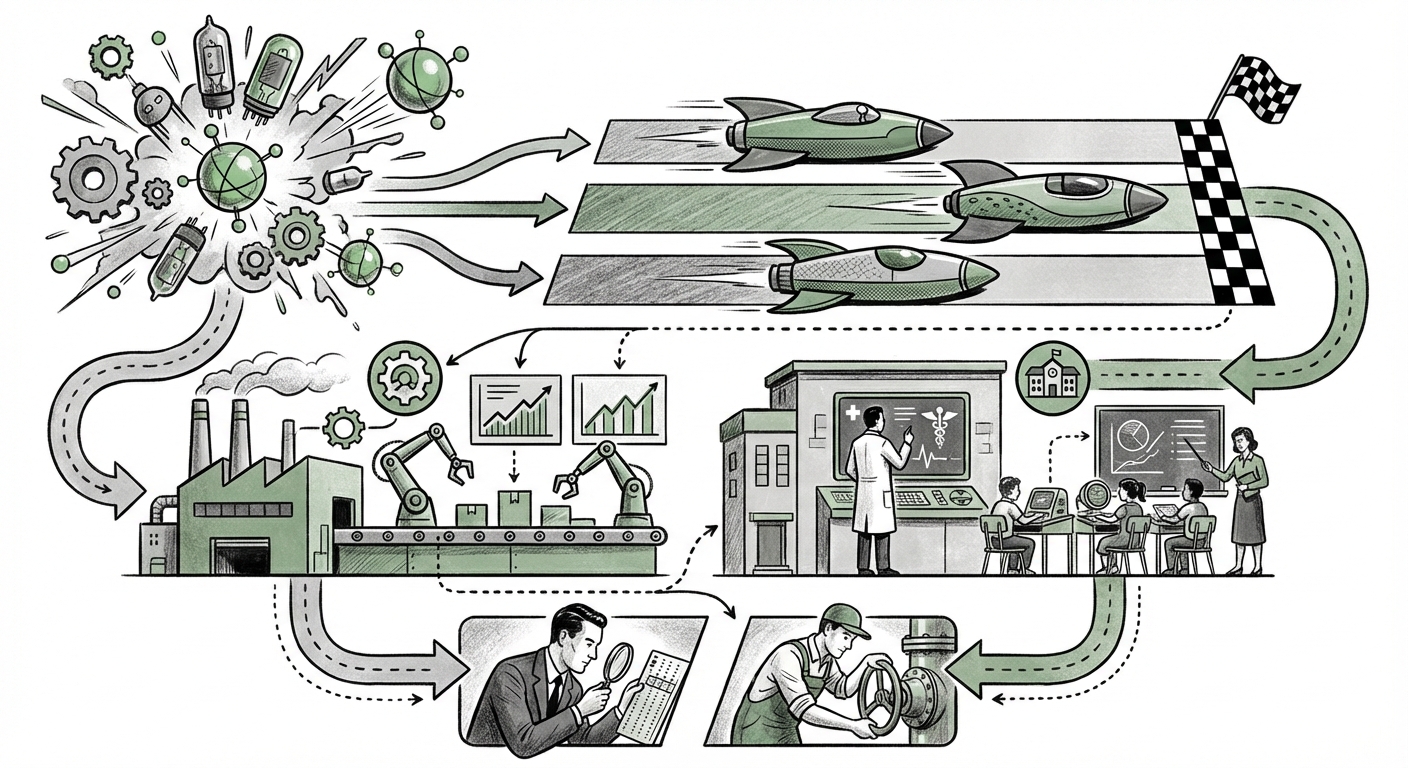
Think of a traditional factory. You have raw materials going in one end, a series of machines and workers doing specific tasks, and a finished product coming out the other end. An agentic AI factory works the same way, but the raw materials are data and business goals, and the machines are AI agents — software programs that can reason, plan, use tools, and take actions independently.
DataRobot and Dell are designing this factory to be enterprise-grade. That means it's not just a one-off project. It's a repeatable, secure, and scalable system that any large organization can use to turn AI into a core business function. Instead of every team building AI from scratch, the factory provides a standardized way to create, deploy, and manage AI agents that handle tasks like customer service, supply chain management, financial analysis, and more.
The key idea is factory problems: instead of focusing on one narrow AI tool, the goal is to build a system that can solve many problems using a consistent approach. This makes AI much more practical for businesses that have hundreds of different challenges.
Key Trends Driving the Agentic AI Factory
Several major trends in AI are coming together to make this factory possible. Understanding these helps you see why this moment is so important.
From Generative AI to Agentic AI
The first wave of modern AI, starting in late 2022, was all about generative AI — models that could create text, images, code, and more. These were like very smart assistants. You asked a question, and they gave you an answer. The next wave is agentic AI, where the AI doesn't just answer — it takes action. It can write an email, update a database, order supplies, or negotiate with another AI system. This shift from passive to active is the foundation of the factory.
The Need for Structured Problem Solving
Businesses have tried throwing generative AI at problems and hoping for the best. That doesn't work. A factory approach demands a structured pipeline: define the business problem, prepare the data, design the agent's workflow, test it safely, deploy it, and then monitor it. DataRobot and Dell are building this structure so that AI projects don't fail because of a lack of process. This is a huge step forward for making AI reliable in critical business operations.
Hardware and Infrastructure Maturity
Running AI agents is very different from running a simple website. They need powerful computers, fast storage, and secure networks. Dell provides the hardware and infrastructure — from servers with specialized AI chips to edge devices that run AI locally. DataRobot provides the software platform to manage the AI lifecycle. Together, they create a full-stack solution. This infrastructure maturity means that an enterprise AI factory is no longer a science experiment; it's a real system you can buy and operate.
How the Factory Solves Real Enterprise Problems
Let's get concrete. What kinds of problems can this factory actually solve? The source material from DataRobot emphasizes that the factory is built to address practical, everyday business challenges that have been hard to solve with previous AI approaches.
- Customer Service Automation: Instead of a simple chatbot that can only answer FAQs, an agentic AI can understand a complaint, check your account history, initiate a refund, and update the CRM system — all without human help. If it gets stuck, it hands off to a person with a complete summary of what happened.
- Supply Chain Optimization: An AI agent can monitor inventory levels in real time, predict when raw materials will run low, check supplier prices and lead times, place purchase orders, and even reroute shipments if there's a port delay. It acts like an entire procurement team working 24/7.
- Financial Compliance: Banks and insurance companies face mountains of regulatory requirements. An AI agent can scan transactions for suspicious activity, prepare reports for regulators, and suggest actions to reduce risk. It adapts as new rules come out, without needing a full software rewrite.
- IT Operations: When a server starts to fail, an agent can diagnose the problem, search through knowledge bases, spin up a backup server, and notify the on-call engineer with a detailed analysis. This reduces downtime dramatically.
The beauty of the factory is that once you build the capabilities for one problem, you can reuse the same building blocks for others. This dramatically reduces the cost and time to deploy new AI solutions.
What This Means for the Future of AI
The creation of an enterprise agentic AI factory changes the trajectory of AI in several profound ways. It's not just about better technology; it's about how AI is adopted, governed, and trusted.
AI Becomes a Managed Service, Not a Science Project
Most companies today have a few data scientists building models in isolation. The factory model changes that. AI becomes a managed platform, much like cloud computing or ERP systems. Business leaders don't need to understand every detail of machine learning. They just need to define what they want the AI to achieve, and the factory handles the complexity. This lowers the barrier to entry and will likely lead to a surge in AI adoption across mid-sized and large enterprises.
Trust and Reliability Become Built-in Features
One of the biggest fears about agentic AI is that it will do something unpredictable or harmful. A factory approach forces rigor into the process. Every agent has a defined scope, a set of approved actions, and a way to be overridden by a human. Monitoring and logging are part of the system from day one. As these factories mature, they will build governance directly into the AI, making it safer and more trustworthy. This is essential for industries like healthcare, finance, and defense, where mistakes can be catastrophic.
Human Roles Will Shift from Operators to Orchestrators
As AI agents take over repetitive tasks, human workers will move up the value chain. Instead of manually processing invoices or answering basic emails, people will manage the agents. They will design workflows, train agents on new policies, handle exceptions, and audit outcomes. This is a shift from being a doer to being an orchestrator. The factory creates new, higher-skilled jobs while automating the drudgery. Companies that invest in reskilling their workforce today will have a huge advantage tomorrow.
Practical Implications for Businesses and Society
This isn't just a technology story. It has deep implications for how companies compete and how society organizes work.
For Businesses: The Competitive Advantage of Speed
If your competitor has an AI factory and you are still doing things manually, you will fall behind. The factory allows companies to respond to changes in the market much faster. For example, if a new competitor enters the market, a retail company with an agentic AI factory can automatically adjust pricing, optimize marketing campaigns, and reallocate inventory within minutes instead of weeks. Speed of adaptation becomes a core competitive advantage.
For IT Leaders: The Need for Infrastructure Strategy
The Dell side of the partnership underscores that AI is an infrastructure play as much as a software play. IT leaders need to plan for GPU clusters, high-speed networking, data storage, and security. They cannot just buy a SaaS subscription and hope for the best. The factory needs a solid foundation. Companies should start assessing their data center capabilities, cloud strategy, and edge computing needs now. The factories will run on hybrid infrastructure, mixing on-premise for sensitive data with cloud for elasticity.
For Society: The Promise and Peril of Autonomous Systems
Agentic AI factories will create enormous economic value, but they also raise serious questions. If an AI agent makes a mistake in a supply chain and causes a shortage of medicine or food, who is responsible? How do we ensure that AI agents don't collude with each other to fix prices? These aren't futuristic worries — they are imminent. Governments and industry bodies need to start creating standards and regulations for agentic systems. The good news is that a factory approach, with its built-in logging and control, makes it easier to audit and regulate than a chaotic, ad-hoc deployment of AI.
Actionable Insights for Leaders
How can you start preparing your organization for the agentic AI factory? Here are practical steps you can take today.
- Start with a Small, High-Value Problem: Don't try to rebuild your entire company at once. Pick one repetitive, high-volume task — like invoice processing or user support ticket triage — and build a single agent to handle it. Use the factory approach: define the goal, prepare the data, test in a sandbox, and then deploy with monitoring.
- Invest in Data Readiness: AI agents are only as good as the data they access. Clean up your data silos, build a unified data catalog, and ensure data quality. This is the hardest and most valuable work you can do.
- Build a Cross-Functional Team: Don't leave AI to the data science team alone. You need IT people for infrastructure, business analysts for defining problems, legal and compliance for governance, and HR for workforce training. Break down the silos now.
- Plan for Governance from Day One: Implement logging, approval workflows, and human-in-the-loop oversight before you release any agent into production. This will build trust with both your internal stakeholders and your customers.
- Reskill Your Workforce: Start training your employees on how to work with AI agents. Focus on skills like prompt engineering, workflow design, exception handling, and ethics. The factories will need managers, not just operators.
Conclusion: The Age of the AI Factory Has Begun
The partnership between DataRobot and Dell is a clear signal that AI is moving from experimental projects to industrial-scale operations. The enterprise agentic AI factory is not a futuristic concept — it's being built right now to solve factory problems: practical, repetitive, high-volume business challenges that have been waiting for a solution. This approach makes AI predictable, reliable, and manageable. It is the bridge between the promise of generative AI and the reality of running a business.
For leaders, the message is clear: the window to get ready is closing. The companies that build their own AI factories will move faster, serve customers better, and operate more efficiently. Those that don't will struggle to keep up. The future of AI is not about magic — it's about manufacturing. And the factory is now open for business.