The Model is the Interface: How Thinking Machines Is Rewriting the Rules of AI Interaction
For the past decade, the story of artificial intelligence was largely about building bigger, smarter models. But a shift is happening. A new philosophy is emerging, one that flips the script on how we think about AI tools. It's no longer just about the model inside the box. It's about the model being the box itself. This is the core insight from The Sequence AI of the Week: Inside Thinking Machines' Interactive Models, a piece that recently ran on The Sequence Substack. The headline idea is simple yet profound: "The Model is the Interface."
Thinking Machines, the company behind this approach, is leading a quiet revolution. They are building AI systems that don't just process commands but actively shape how you interact with them. Instead of a traditional user interface—full of buttons, menus, and dropdowns—the model itself becomes the conversation, the dashboard, and the tool. This isn't just a cool tech trick. It represents a fundamental change in how businesses, developers, and everyday people will use AI in the future.
In this article, we'll break down what "the model is the interface" really means, explore the trends that made it possible, and examine its practical implications for the future of AI. Whether you're a technical expert or a business leader, understanding this shift will help you see what's coming next.
The Old Way: Models Behind the Curtain
Traditionally, AI models have lived in the background. Think about a chatbot on a website. You see a text box and a send button. That's the interface. The actual AI—the large language model or the neural network—is hidden somewhere in the cloud, processing your words and spitting out a reply. The interface and the model are separate things. Developers build one, and then bolt on the other.
This separation has worked, but it creates friction. Users have to learn how to use the interface. They need to know what buttons to click or what commands to type. The model is "dumb" to the interface; it doesn't know if you're struggling or if you want something different. It just waits for input. This is efficient for simple tasks, but it limits how natural and fluid interactions can be.
The New Paradigm: Models as the Interface
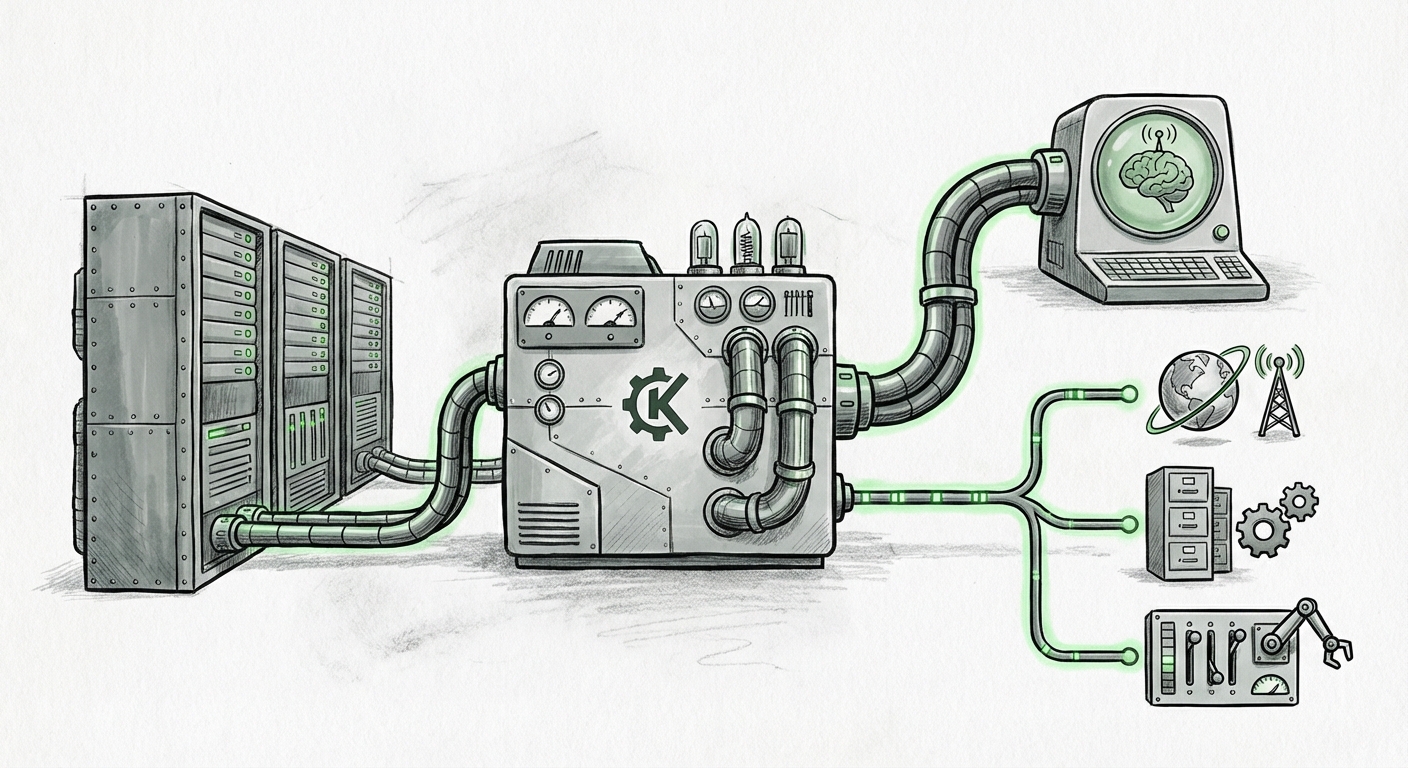
Thinking Machines' interactive models flip this dynamic. In their view, the model doesn't sit behind a separate interface. Instead, the model itself generates and controls the interface in real time. When you talk to an AI, the conversation, the visuals, the options, and even the flow of the tool are all part of the model's output. The AI is not just answering questions; it's building the environment in which you ask them.
This is a subtle but powerful shift. It means the AI can adapt its own "look and feel" based on your needs. If you're a beginner, the model might offer simpler buttons and explanations. If you're an expert, it might present a more streamlined, powerful interface. The model is no longer a passive tool. It is an active partner that builds a custom experience for each interaction. This is what The Sequence calls "AI of the Week" material—a genuine breakthrough in how we design with AI.
Why This Matters for the Future of AI
This trend is not just a gimmick. It points to a future where AI becomes truly conversational and context-aware. Here are the key trends and developments this signals for the industry:
1. The End of Rigid User Interfaces
Static interfaces—those fixed menus and forms—are often frustrating because they force you to adapt to the computer's logic. With models that are the interface, the computer adapts to you. For example, a customer service AI might start with a simple greeting, but if it senses you're frustrated, it can change its tone and offer a "speak to a human" button that wasn't there before. The interface literally reshapes itself based on the model's understanding of your emotional state and intent. This makes interactions feel more human and less robotic.
2. Democratization of AI Use
One of the biggest barriers to using AI is that you often need to know how to "prompt" it correctly. But if the model builds its own interface, the model can guide you. It can ask clarifying questions, offer suggestions, or even do things for you without you needing to type a perfect command. This lowers the skill barrier. Suddenly, your grandmother or your accountant can use complex AI tools just by talking naturally. The model becomes the friendly face of the technology, not a cryptic black box.
3. Real-Time Adaptation
Because the interface is generated by the model, it can change instantly based on new information. Think of a financial planning AI. You start by asking about retirement savings. The model builds a dashboard showing your current plan. Then you mention you're buying a house. The model instantly updates the interface to include mortgage options, tax implications, and a new savings goal. Without any buttons or reloads, the tool morphs to fit your new reality. This kind of fluidity is impossible with traditional interfaces.
Inside Thinking Machines' Interactive Models
So, how does Thinking Machines make this work? According to The Sequence, their approach centers on building models that are trained not just on language, but on interaction patterns. The model learns how to "be" an interface. It knows that certain questions should trigger a visual chart, a step-by-step guide, or a simple text reply. Its training data includes examples of how people navigate tools, and it learns to mimic that navigation on the fly.
This is a big step beyond a simple chatbot. A regular chatbot just answers. Thinking Machines' interactive models do things. They can create a form for you to fill out, highlight important options, and even predict what you'll need next. For developers, this means less time coding UI elements and more time focusing on the core AI logic. For users, it means a smarter, more helpful assistant that feels intuitive from the first click.
Practical Implications for Businesses
This new model-as-interface approach is not just a theoretical concept. It has real, practical implications for businesses looking to deploy AI today. Here are a few concrete takeaways:
- Customer Support: Imagine a support chatbot that doesn't just answer questions but actually builds a troubleshooting wizard tailored to your specific problem. The interface changes from a simple chat to a guided flow with buttons, images, and error checks. This reduces frustration and increases resolution rates.
- Sales and Marketing: A sales AI could start a conversation about a product and, as it learns about your interests, build a custom demo page right in the chat. It could highlight features you care about and even offer a live pricing calculator. The model is both the salesperson and the brochure.
- Internal Tools and Training: Companies can build AI-powered training assistants that adjust their interface based on the employee's role and skill level. New hires get a friendly, step-by-step tutorial. Experienced staff get a streamlined dashboard with advanced features.
- Healthcare and Education: Patients could interact with a diagnostic AI that builds a personal health profile on the fly. Students could work with a tutor AI that changes its teaching style and visual aids based on how the student learns best.
For any business, the key insight is this: you don't need to design a separate interface anymore. The AI can design it for you, for each user, every time. This reduces development costs, improves user experience, and makes your AI feel smarter and more helpful.
Implications for Society
Beyond the business world, this trend has significant social implications. As AI interfaces become more fluid and adaptive, they will become more accessible to people with disabilities, language barriers, or limited technical skills. A model that builds an interface in real time can always present information in the most accessible format—audio for the visually impaired, simple text for non-native speakers, or visual diagrams for those who learn by seeing.
However, there are also risks. If the model becomes the sole interface, it also becomes a gatekeeper. It decides what options to show you and what information to hide. This raises questions about bias and control. Will these models always show you fair, balanced choices? Or could they steer you toward certain outcomes? The responsibility lies with developers to train these models to be transparent, fair, and aligned with user interests. The "model is the interface" philosophy is powerful, but it must be built on a foundation of trust.
What's Next: The Road Ahead
Thinking Machines is at the forefront, but the trend is likely to spread across the entire AI industry. We can expect to see more companies adopting the "model is the interface" approach in the next few years. Here are a few predictions for what this future looks like:
- No-Code and Low-Code Evolution: Building interfaces will become even easier. Instead of dragging and dropping widgets, you'll describe what you want to an AI, and it will build the interactive model for you. This will empower non-programmers to create powerful AI tools.
- Disappearing Apps: Traditional standalone apps might fade. Why open a "calculator" app when you can just ask an AI to calculate something, and it instantly shows you a custom calculation interface? The line between a tool and a conversation will blur.
- Emotional and Contextual Awareness: Future models will not only build interfaces based on what you say, but also on how you say it. Tone, pace, and even facial expressions (if using a camera) could influence the interface. The AI will become a truly empathetic interaction partner.
- New Security Challenges: If an AI can shape its own interface, it can also be tricked into showing something malicious. Security researchers will need to develop new ways to ensure that the model's output remains safe, even when it's generating dynamic UI elements.
Actionable Insights for Today
While the future is exciting, there are things you can do now to prepare for this shift:
- Start Experimenting: If you're a developer, look at how current models can generate UI elements like HTML, SVG, or buttons. Try building a small app where the language model creates the entire user experience on the fly.
- Design for Conversation: If you're a product manager or designer, start thinking about your product not as a set of screens, but as a conversation. How can an AI guide a user through a task using natural dialogue, instead of a form?
- Focus on Training Data: The success of a model-as-interface approach depends on high-quality training data that includes examples of real user interactions. Start collecting data on how your users naturally navigate your tools today.
- Embrace Flexibility: Stop building rigid interfaces. Plan for a world where your AI can change its own UI. This will require new ways of testing and validating your product, but it will pay off in user satisfaction.
Conclusion
The idea that "the model is the interface" is a turning point in AI history. Thinking Machines has shown us a path where AI is not a tool you use, but a partner you interact with. The model becomes a living, breathing environment that shapes itself to your needs. This is not just a technology upgrade. It is a new way of thinking about human-computer interaction. For businesses, it promises lower costs, better user experiences, and smarter products. For society, it offers more accessible, more human-friendly technology. As we move forward, the most successful AI systems will be the ones that don't just get smarter, but that also build their own way for you to talk to them. The future is not about clicking buttons. It's about talking, and listening, to a machine that is always ready to reshape itself for you.