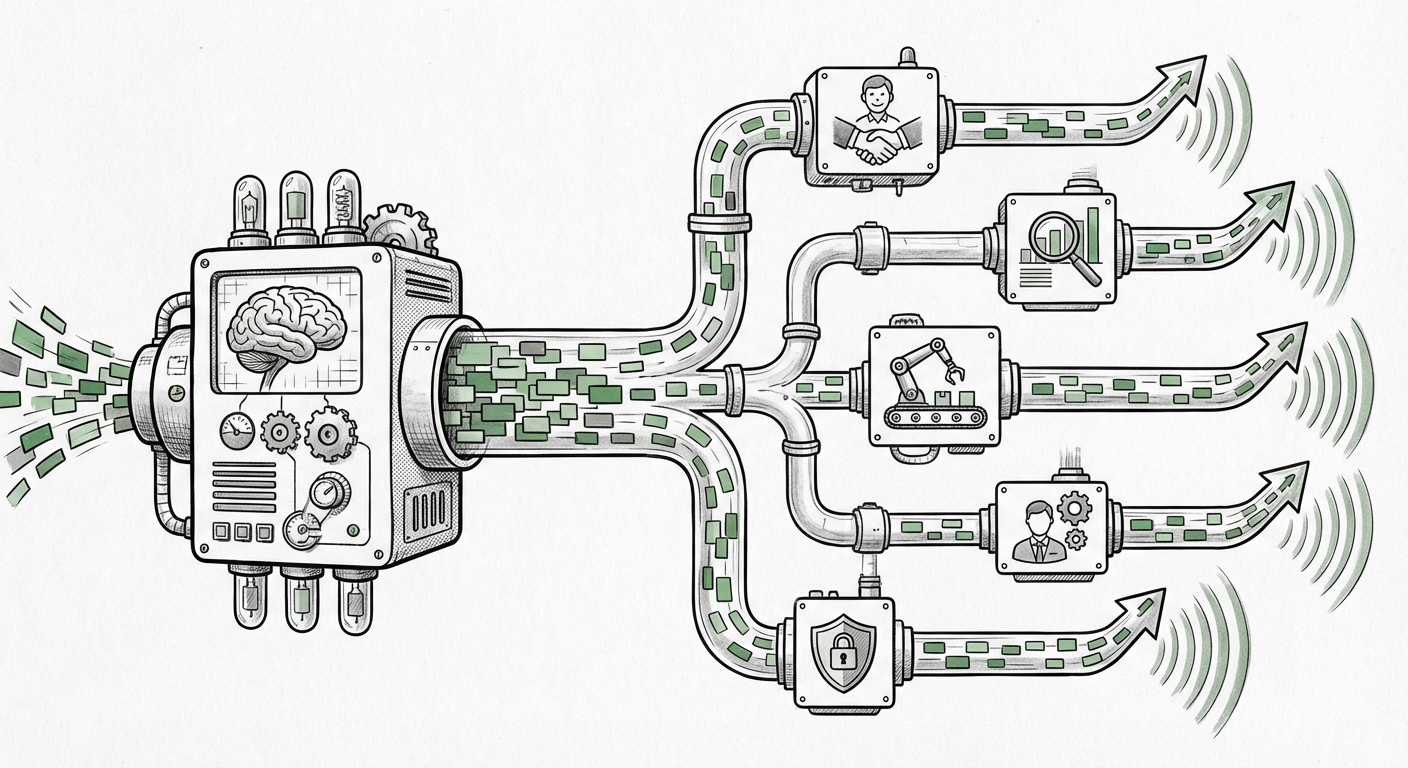
Why Every AI Agent Needs Its Own Computer: The Future of Autonomous AI
Imagine a world where artificial intelligence (AI) agents don't just run inside a big, shared cloud server. Instead, each one has its own dedicated computer, just like a person has their own laptop. According to a compelling opinion piece titled "Every AI Agent Needs a Computer" published on The Sequence on May 21, 2026, this is exactly the direction AI development is heading.
This might sound like a small technical detail, but it's a huge shift. It changes how we think about AI safety, speed, privacy, and even how businesses will use AI in the future. In this article, we'll break down what this means in simple terms, look at the key trends, and explore what it means for the future of AI and how it will be used.
The Core Idea: A Computer for Every AI Agent
The central argument from The Sequence is straightforward and powerful: for AI agents to become truly autonomous, reliable, and useful, they need their own isolated computing environment. Instead of sharing resources on a massive server farm, each agent gets its own dedicated hardware or virtual machine. This is a lot like how every smartphone runs its own operating system and apps independently. Why is this so important?
Think about an AI agent that is managing your calendar, browsing the web on your behalf, or even controlling a robot in a warehouse. If it shares a computer with thousands of other AI agents, problems can arise. One agent might use up all the memory, slowing down another. A malicious agent could spy on another's data. The shared environment becomes a safety and performance risk. A dedicated computer solves all of this. Each agent gets its own sandbox, ensuring it can't be interfered with and that its performance is consistent.
Key Trends Driving the "One Agent, One Computer" Model
This idea isn't coming out of nowhere. It results from several powerful trends in the AI industry. Let's look at the main ones:
1. The Rise of Autonomous AI Agents
AI is moving beyond simple chatbots. We are entering the age of autonomous agents. These are AIs that can set a goal, make a plan, take actions in the digital world (like sending emails, booking flights, or writing code), and learn from the results. A shared computer is a terrible fit for this. An agent that needs to run for hours, continuously interacting with the internet, needs a stable, dedicated computer. It cannot be interrupted or slowed down by another agent's tasks.
2. Growing Concerns About Security and Privacy
When you let an AI agent operate on your behalf, you are giving it access to sensitive information: your emails, your bank accounts, your calendar, maybe even your home security system. If that agent shares a computer with another agent, your data could leak. Dedicated computers create hardware-level isolation. This is the most secure way to run an AI agent because even if one agent is compromised, it cannot access the memory or files of another. This is a major shift from software-only isolation, which is less reliable.
3. The Need for Guaranteed Performance
Many AI applications, especially in robotics, self-driving cars, and real-time data analysis, need predictable performance. They need to know they will have enough compute power (CPU, GPU, memory) at a specific moment. In a shared environment, this is impossible. A dedicated computer guarantees a certain level of performance. This is critical for safety-critical systems where a delay could cause an accident or a financial loss.
4. The Explosion of AI Hardware
We are seeing a huge boom in specialized AI hardware. Companies are designing chips (like neural processing units (NPUs) and tensor processing units (TPUs)) that are purpose-built for running AI models. As these chips become cheaper and more powerful, it becomes economically feasible to put one inside every dedicated computer. This is the hardware revolution that makes the "every agent a computer" idea practical.
What This Means for the Future of AI
If this trend continues, the future of AI will look radically different. Here's a breakdown of the implications:
For Developers: A New Way of Building AI
Instead of writing code that runs on a big server, developers will start thinking about each AI agent as a standalone device. This is akin to developing a mobile app versus a website. Mobile apps have their own sandbox, their own permissions, and their own resources. Developers will need to build for this new model, optimizing for power efficiency, security, and local data processing. Tools and frameworks will emerge specifically for managing fleets of dedicated AI computer agents.
For Businesses: New Opportunities and Responsibilities
This model opens up powerful new business models. Imagine a marketplace where you can "hire" an AI agent that runs on its own dedicated computer. You would pay for the agent's compute time, just like you pay for a cloud server. This changes from "pay per API call" to "pay per compute instance." It creates a much more predictable cost structure for businesses.
For example, a logistics company could deploy hundreds of dedicated AI agents, each managing a single delivery route. Each agent has its own computer, its own data, and its own decision-making logic. If one agent fails, it doesn't affect the others. This provides reliability and scalability that is hard to achieve with shared systems. The business responsibility also shifts: companies become the operators of these agent computers, responsible for their security, software updates, and lifecycle management.
For Society: Better Privacy and Control
For the average person, this is excellent news for privacy. If you have a personal AI assistant that runs on its own dedicated computer inside your home (like a small box), your data never has to leave your house. The AI processes everything locally. This is often called edge AI, but the "one agent, one computer" model takes it to the extreme. Your AI agent becomes a personal appliance, not a cloud service. You own it, you control it, and you can turn it off whenever you want. This could fundamentally change the public's trust in AI.
Practical Implications: How It Will Be Used
Let's look at a few concrete examples of how this will play out in the real world:
- Personal AI Asssistants: Instead of asking Siri or Alexa via a shared cloud, you'll have a dedicated AI box in your home that learns your habits, manages your smart home, and books appointments. It never shares your data with anyone else. It sleeps when you sleep and wakes when you need it.
- Healthcare AI: A hospital could deploy an AI agent on a dedicated computer to monitor a single patient's vital signs and coordinate their care. This computer is isolated from the hospital's main network, preventing data breaches. It runs 24/7 without interruption.
- Financial Trading: High-frequency trading firms already use dedicated hardware for speed. This will extend to AI agents that make complex risk assessments. Each agent gets its own dedicated server to execute trades, ensuring no interference and millisecond-level response times.
- Manufacturing Robots: Each robot in a factory gets a dedicated computer brain that controls its movements and sensors. This is safer because the robot's control system is isolated from the plant's IT network, reducing the risk of cyberattacks that could physically harm people.
The Challenges Ahead
Of course, this shift is not without challenges. The biggest is the sheer cost and complexity of managing thousands or millions of dedicated computers for AI agents. Ensuring they all have the latest security patches, are connected properly, and are using energy efficiently will require new infrastructure. Also, this model is not a good fit for every AI application. Simple chatbots or image recognition calls that only last a second are still best done on shared servers. The dedicated model is for agents that have a continuous, autonomous existence.
Conclusion: A New Kind of AI Citizenship
The opinion from The Sequence that every AI agent needs a computer is more than a technical observation. It is a blueprint for a future where AI agents are citizens of our digital world, each with their own home (their computer), their own name (their identity), and their own responsibilities. This shift promises to deliver more reliable, more secure, and more private AI systems.
For businesses, it means building new operational models around fleets of agent computers. For developers, it means learning a new way of thinking about AI as a platform for standalone agents. For society, it offers a path toward AI that we can trust and control. The idea of "every AI agent needs a computer" is not just a tech trend; it is the next logical step in the evolution of artificial intelligence. It is the move from a shared, chaotic, and crowded cloud into a world with dedicated, secure, and predictable digital entities. The future of AI is not a single big brain in the sky; it is a billion small brains, each in its own little room.
TLDR: A leading AI opinion argues that truly autonomous, secure, and reliable AI agents will require their own dedicated computers instead of sharing cloud resources. This shift from shared to isolated computing will improve privacy, performance, and safety. It changes how businesses deploy AI (from pay-per-call to pay-per-compute instance), how developers build AI (as standalone devices), and gives society more control over personal AI. While challenging to implement at scale, this model is the most promising path to trustworthy, independent AI agents.