Google Is Now Checking Your Website for 'llms.txt' — The AI Audit That Changes Everything
If you run a website, your content is about to get a new set of eyes. Not human eyes — AI agents. And Google just started testing how friendly your site really is toward them.
On May 21, 2026, Google announced a new agentic browsing audit that checks websites for a file called llms.txt. This small text file tells large language models (LLMs) and AI agents exactly how to browse your site, what to read, and what to skip. Think of it like a robots.txt for the AI era — but far more powerful.
This is not just a technical update. It marks a fundamental shift in how the web is built and used. For the first time, Google is actively evaluating how well your site works for AI agents, not just for human visitors or search engine crawlers. The implications for businesses, developers, and users are enormous.
What Is 'llms.txt' and Why Does Google Care?
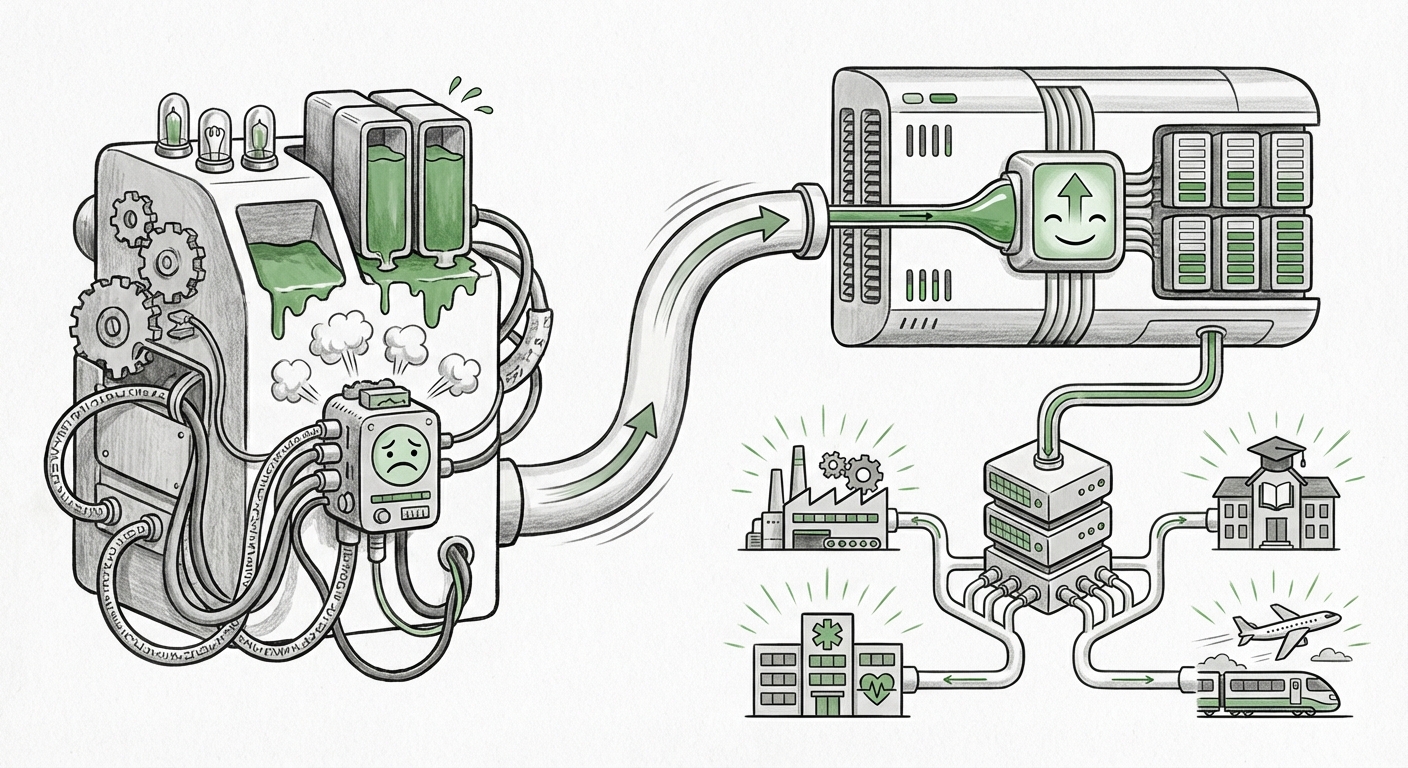
The llms.txt file is a simple text file placed on your website's root directory (just like robots.txt). It provides a clear, machine-readable guide for AI agents. It tells them which pages are most useful, which information is authoritative, and which parts of your site they should avoid wasting time on.
The concept emerged from the llmstxt community and quickly gained traction among developers building AI-powered tools. It solves a key problem: large language models often struggle to navigate chaotic websites cluttered with menus, ads, and boilerplate text. llms.txt removes the noise and gives AI a direct path to clean, structured content.
Google's new audit tests websites for this file and evaluates how agent-compatible they are. An agent-compatible website is one that AI bots can navigate easily, retrieve accurate information from, and use to complete tasks on behalf of a user — like booking a flight, comparing products, or answering complex questions.
This is a huge deal. For years, websites were optimized exclusively for human visitors and search engine spiders. Now, AI agents are becoming a third type of visitor — and Google is making it clear that how you treat them matters.
How the Agentic Browsing Audit Works
Google's audit is not just a simple check for the file's existence. It examines how well a site supports autonomous AI task completion. The audit looks at factors like:
- Presence of llms.txt: Does the site have the file? Is it correctly formatted?
- Content organization: Is the llms.txt file well-structured with clear sections for different use cases?
- Agent navigation paths: Can an AI agent start at the homepage and logically reach key services (like checkout, support, or data retrieval) without hitting dead ends?
- Speed and simplicity: Are pages fast-loading and free of unnecessary clutter that confuses AI parsers?
- Data accessibility: Can the agent pull actionable data — like pricing, availability, or specifications — from the site without complex form submissions?
Think of it this way: if a human user gets frustrated by slow pop-ups and broken links, they leave. An AI agent does the same, but it also doesn't come back — and neither does the user who relied on it. Google's audit essentially grades your site's hospitality toward the new class of digital visitors.
Why This Matters for the Future of AI
This is where we step back and ask: what does this mean for the future of AI and how it will be used?
The answer is simple but profound: AI agents are about to become the primary interface between users and the web. Instead of searching for a product, reading reviews, and clicking "buy" manually, you'll tell an AI agent, "Find me the best mid-range laptop that can run video editing software, has at least 16GB RAM, and is under $1,200, then buy it." The agent will browse dozens of sites, compare specs, check availability, and complete the purchase — all on your behalf.
For that to work, websites must be agent-readable. That means they must present data in a way that AI can parse, reason about, and act upon. The llms.txt file is the first step. It's a declaration: "Here is our clean, authoritative content. Trust this."
But Google's audit goes further. It signals that being agent-compatible will soon affect your search rankings and visibility. If your site lacks an llms.txt file or fails the audit, AI agents might skip you entirely. Your content becomes invisible to the most powerful traffic source of the next decade: autonomous AI assistants.
This shift also democratizes access to information. Small businesses with clean, well-structured llms.txt files can compete with large media sites because AI agents value clarity over brand size. The future of the web is not about who has the flashiest design — it's about who speaks the language of machines clearly.
Practical Implications for Businesses
If you own or manage a website, here is what you need to do immediately:
1. Create Your llms.txt File Today
This is the lowest-hanging fruit. Create a plain text file named llms.txt in your website's root directory. List your most important pages, a brief description of each, and categorize them (e.g., "products," "support," "about"). Use the standard format that LLMs expect. There are many templates available online. Do not overcomplicate it — start simple and refine.
2. Review Your Site Structure for AI Browsing
An agent needs to flow logically through your site. If your checkout process requires five modal pop-ups and a CAPTCHA, an AI agent will likely fail. Simplify navigation. Ensure that key actions (purchase, request a quote, submit a ticket) are reachable in three clicks from the homepage without JavaScript-heavy obstacles.
3. Treat llms.txt Like Your SEO Strategy
Just as you optimize title tags and meta descriptions for search engines, you now need to optimize your llms.txt for AI agents. Update it whenever you add important content. Include structured data references where possible. Good llms.txt entries are concise, honest, and up to date. Misleading entries will harm your credibility with AI agents.
4. Monitor Google's Agentic Browsing Audit Tools
Google will likely roll out auditing tools in Search Console or similar platforms. Watch for warnings about agent compatibility. Fix flagged issues quickly. This is a new metric — don't let it slip.
Broader Societal and Ethical Considerations
This shift raises important questions about control, accuracy, and fairness. Google's audit puts significant power in the hands of one company. What happens if Google decides that certain types of llms.txt structures are "bad"? Could that harm small sites that cannot afford to keep up?
There is also the risk of llms.txt spam — where sites include misleading entries to trick AI agents into recommending subpar products. Google's audit must evolve to detect and penalize such behavior.
Additionally, the rise of AI agents means that human browsing patterns will change. Fewer people will visit websites directly. Instead, they will interact with a chatbot that reads your content and acts on their behalf. This reduces ad revenue opportunities and changes the entire digital advertising business model. Companies that rely on pageview metrics will need to adapt or die.
Finally, there is the question of privacy. If AI agents are browsing your site, do they leave logs? Can you tell a "good" agent from a "bad" one? The llms.txt standard is still emerging, and rules about agent identity and transparency are not fully settled. Website owners must demand clarity from all AI companies about how their agents behave.
Actionable Insights for Technical Teams
For developers and technical leaders, here is a roadmap for the next 90 days:
- Week 1: Audit your current site structure for AI agent friendliness. Remove unnecessary pop-ups and barriers to automated access.
- Week 2: Create a pilot llms.txt file and test it with open-source LLM crawlers (like those from Meta or Mistral). Iterate based on feedback.
- Week 4: Deploy llms.txt to production. Add it to your CI/CD pipeline so it stays current.
- Week 8: Begin monitoring Google Search Console for any new agentic browsing reports. Adjust your site accordingly.
- Week 12: Review analytics to see if AI agent traffic is increasing. If not, refine your llms.txt structure.
Remember: speed matters. AI agents are impatient. If your site takes more than a few seconds to load key content, you lose a digital customer who will never complain — they will just go elsewhere.
The Bigger Picture: A Web Designed for AI
Google's llms.txt audit is not an isolated feature. It is part of a broader movement toward agent-native experiences across the tech industry. Major companies like Microsoft, OpenAI, and Amazon are all investing in AI agents that shop, book, research, and automate tasks. The common bottleneck is always the same: websites that are not built for AI.
In the next two to five years, we will likely see the rise of "agent-first" web design — where sites are built with an AI agent as the primary user, and human interfaces (like fancy graphics) become secondary. This is a complete reversal of how we think about web development today.
The businesses that adapt earliest will benefit from a flood of automated traffic. Those that ignore the shift will see their organic traffic drop silently as AI agents stop recommending their services to users.
This is also a chance for the open web to remain relevant. If every website becomes an API for agents, we need open standards like llms.txt to prevent monopolistic gatekeepers from controlling how agents interact with content. Early adoption by Google is good, but the community must ensure the standard remains truly open and neutral.
Conclusion: The Clock Is Ticking on Agentic Readiness
Google testing websites for llms.txt is a clear signal that the era of AI-first browsing has begun. Every website owner now has a new checklist item: Are you ready for AI agents?
The good news is that getting ready is not expensive or technically difficult. A simple text file and a few structural tweaks can make a huge difference. The bad news is that ignoring this shift will have real consequences — your site could become invisible to the fastest-growing segment of internet traffic in history.
This is a turning point. The web started as a network of pages for humans. Then it became a network optimized for search engines. Now it is becoming a network optimized for autonomous AI agents that act on behalf of humans. The llms.txt file is the humble foundation of this new era. Do not underestimate it. Create it, maintain it, and build your site around it.
The future of AI is not in the clouds — it is on your website, waiting for a clear path.