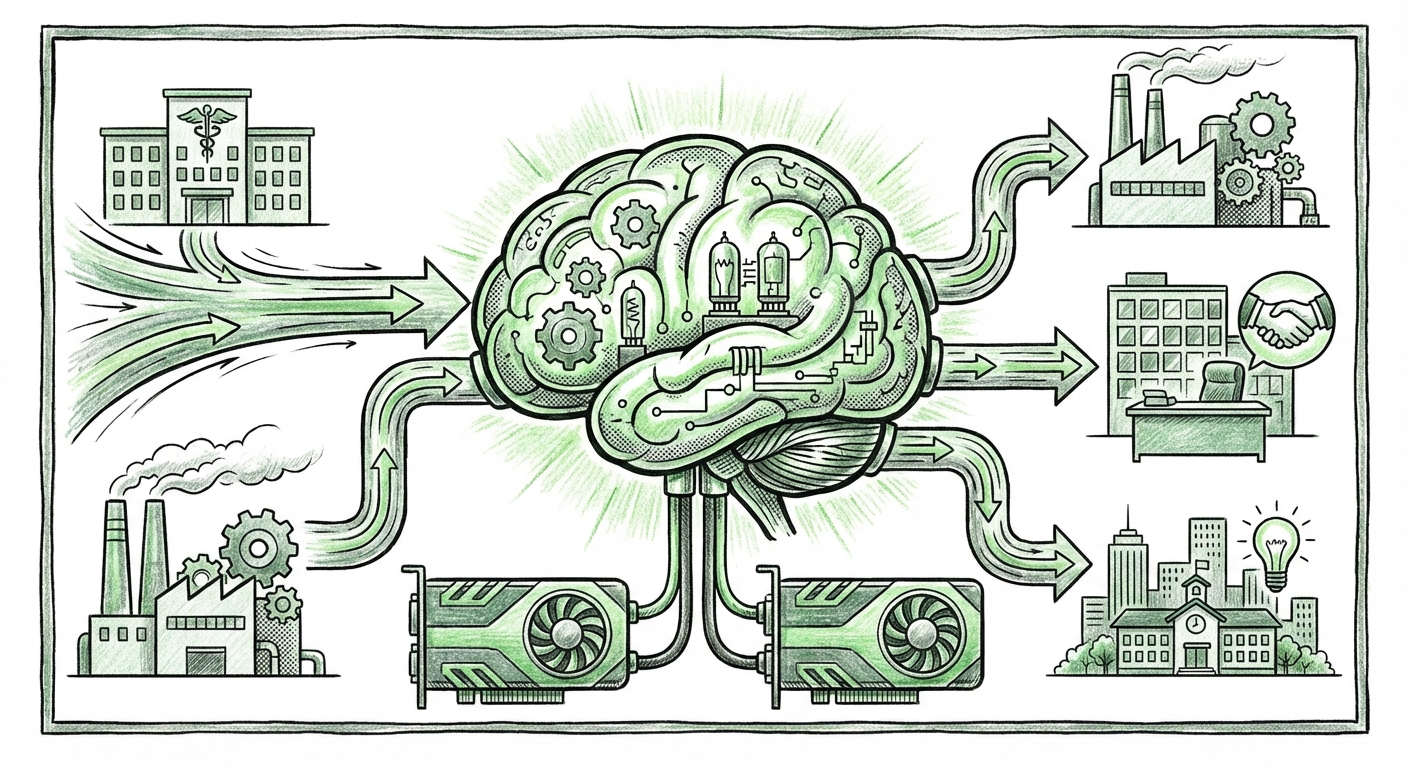
OpenAI’s IPO Filing: A Turning Point for the Future of AI
The news broke: OpenAI could file confidential IPO paperwork within days. According to a report from the-decoder.com on May 21, 2026, this marks a seismic shift in the artificial intelligence landscape. For years, OpenAI has been the poster child for cutting-edge AI research—ChatGPT, GPT-4, DALL·E, and more. But filing for an initial public offering (IPO) is about much more than raising money. It signals that AI is moving from a research lab curiosity to a mature, commercial industry.
But what does this mean for the future of AI? And how will it be used in business and society? Let's break down the key trends, implications, and actionable insights.
Why an OpenAI IPO Changes Everything
An IPO is a huge milestone for any company, but for OpenAI, it is particularly significant. OpenAI started as a non-profit research lab with a mission to ensure that artificial general intelligence (AGI) benefits all of humanity. Over time, it added a "capped profit" arm to attract investment and scale. Now, filing confidential IPO paperwork signals that OpenAI is ready to play in the public markets—and that AI itself is becoming a mainstream investment category.
What is a confidential IPO? Under the JOBS Act, companies with less than $1 billion in revenue can file their initial public offering paperwork privately with the SEC. This allows them to keep their financial details secret until closer to the public offering. OpenAI qualifies as an "emerging growth company" under these rules. The confidential filing means that OpenAI can test the waters, refine its prospectus, and gauge investor interest without revealing everything to competitors like Google, Meta, or Anthropic.
This move also signals confidence. If OpenAI were in trouble, it wouldn't be filing for an IPO. It shows that the company believes its technology, business model, and future prospects are strong enough to withstand public scrutiny.
Key Trends That This IPO Highlights
1. AI Is Becoming Big Business
For years, AI was a research discipline. Companies like Google and Microsoft used it internally, but most AI companies were startups or academic projects. OpenAI’s IPO changes that. It validates that AI can be a standalone, profitable industry. This will likely encourage more venture capital investment in AI startups and push other AI companies—like Anthropic, Cohere, or Mistral AI—to consider their own public offerings.
What this means for the future: Expect a wave of AI IPOs in the next 2–3 years. Public markets will become the primary funding source for advanced AI research. This democratizes access to AI stock for everyday investors.
2. Pressure to Show Profits
OpenAI has been burning through cash. Training models like GPT-4 costs millions of dollars per run. Running ChatGPT for millions of users costs huge sums in cloud computing. An IPO means quarterly earnings calls, analyst scrutiny, and pressure to show a path to profitability.
What this means for the future: OpenAI will need to monetize more aggressively. This could mean higher subscription prices for ChatGPT Plus and ChatGPT Pro, more enterprise deals, or licensing AI models to other companies. It may also push OpenAI to focus on high-margin products like custom enterprise AI agents.
3. Regulation and Scrutiny Will Intensify
A public company faces much more regulatory oversight than a private one—especially one with a confidential IPO filing. The SEC will ask tough questions about AI safety, data privacy, and ethical use. Governments around the world are already drafting AI regulation, and a public OpenAI will be in the spotlight.
What this means for the future: Expect OpenAI to become a lightning rod for AI regulation debates. There will be more demands for transparency about training data, model biases, and safety testing. This could slow down new model releases as compliance costs rise.
4. Talent War Intensifies
Public companies can offer stock options to attract top AI researchers. But they also face more restrictions on executive pay and retention bonuses. Private competitors like Anthropic or xAI might lure away talent with promises of quick private exits or different missions.
What this means for the future: Watch for OpenAI to use its IPO to create a new class of millionaire employees. This could stabilize its workforce after years of high-profile departures (like co-founder Ilya Sutskever leaving in 2024). Other AI companies will counter by increasing compensation.
What This Means for Businesses and Society
Business Implications
- Enterprise AI adoption will accelerate. A public OpenAI means more enterprise contracts. Companies that were hesitant to use OpenAI because of its non-profit origins will now see it as a stable, regulated vendor. Expect more Fortune 500 companies to deploy ChatGPT Enterprise or custom OpenAI models.
- Costs may stabilize or drop. As OpenAI scales its infrastructure to serve a public company's demands, it can negotiate better deals with cloud providers (Microsoft Azure) and optimize model efficiency. This could lead to lower API pricing for developers.
- Partnerships will shift. Microsoft is already a major investor in OpenAI. With an IPO, OpenAI has more independence. Microsoft might reduce its reliance on OpenAI and invest more in its own AI models (like the Phi series) or other partners.
- Competition will increase. A public OpenAI will be under pressure to show growth. This means aggressive marketing, patent filings, and possibly lawsuits to protect its intellectual property. Other AI companies will need to differentiate or risk being squeezed out.
Societal Implications
- AI access becomes more democratic. Public ownership means more people can own a piece of the AI revolution. But it also means that OpenAI must serve shareholders, not just humanity. Critics worry that this could undermine OpenAI's original mission of safe, beneficial AGI.
- Jobs will change faster. With more capital, OpenAI can deploy AI agents that automate white-collar tasks—customer support, coding, content creation, legal document review. This accelerates job displacement but also creates new roles in AI supervision and ethics.
- Misinformation risks grow. A profitable OpenAI needs more users, which means more generative AI content. This could flood the internet with AI-generated articles, images, and videos. Regulation will struggle to keep up.
- Energy and environmental impact. Running massive AI models requires huge amounts of electricity. As OpenAI grows to meet public market expectations, its carbon footprint could rise. Pressure from ESG investors might push OpenAI toward greener data centers.
Actionable Insights for Businesses and Investors
For Businesses
- Start experimenting with OpenAI's tools now. The IPO means OpenAI will have more resources to improve its API, GPT Store, and enterprise offerings. But early adopters will have an advantage in learning how to integrate AI into workflows.
- Diversify your AI vendors. Don't put all your eggs in one basket. Even though OpenAI is the leader, consider Microsoft, Google, Anthropic, and open-source models like Llama or Mistral. An IPO could bring increased regulatory scrutiny that disrupts service.
- Prepare for pricing changes. As OpenAI moves toward profitability, it may increase API costs or change its pricing model. Lock in long-term contracts if possible, and build flexibility into your AI budget.
- Invest in AI literacy. Train your employees on how to use AI responsibly. As AI becomes more integrated into business processes, companies with a skilled workforce will outcompete those that ignore the trend.
For Investors
- Watch the S-1 filing carefully. When OpenAI makes its public filing (likely in the coming weeks), analyze the financials. Look at revenue growth, gross margins, R&D spending, and customer concentration.
- Consider the risks. AI stocks are volatile. Regulation, competition from open-source models, and potential lawsuits (over copyright or biases) could tank the stock. Only invest what you can afford to lose.
- Think long-term. The AI revolution is still in its early stages. OpenAI's IPO is a milestone, not an endpoint. If you believe AI will transform every industry, a diversified AI investment (including Microsoft, Nvidia, and AI ETFs) might be safer than betting on one company.
For Policymakers
- Accelerate AI regulation. A public OpenAI means more power concentrated in one company. Antitrust, data privacy, and AI safety laws need to be modernized. The EU AI Act is a starting point, but global coordination is key.
- Fund public AI research. As OpenAI focuses on profitability, public sector AI research becomes more important to ensure that AI benefits society broadly, not just shareholders.
- Prepare for job transitions. Governments should invest in retraining programs for workers whose jobs are automated by AI. The IPO will accelerate AI deployment, so these programs need to scale quickly.
What This Means for the Future of AI and How It Will Be Used
The OpenAI IPO is not just a financial event—it is a signal of where AI is heading. Here’s the big picture:
AI will become more commercial, more regulated, and more integrated into daily life. In the short term, expect faster deployment of AI assistants, better AI-powered software tools, and more efficient business processes. OpenAI will use its IPO cash to build even more powerful models—maybe GPT-5 or beyond—and to expand into new areas like robotics or healthcare.
But the trade-off is real. The original "safe AGI" mission may take a back seat to shareholder returns. OpenAI will face pressure to ship features fast, even if they are not fully safe. The company will need to walk a tightrope between innovation and responsibility.
For the average person, AI will become more useful but also more pervasive. You might use an OpenAI-powered assistant in your car, your doctor's office, or your workplace. The IPO makes that more likely because it provides the capital to scale deployment.
For society, the big question is: who controls AI? A public company is controlled by shareholders—which can be anyone. But hedge funds, index funds, and billionaires will have outsized influence. The IPO transfers some control from founders Sam Altman and the board to the public markets. That could be good for transparency, but bad for mission purity.
The bottom line: OpenAI's IPO is a once-in-a-generations event for technology. It signals that AI has arrived as a mainstream industry. The decisions made now—by executives, investors, and regulators—will shape how AI is used for decades. The future is being written, and it's happening fast.
Conclusion
OpenAI’s confidential IPO paperwork is a major milestone in the history of artificial intelligence. It marks the moment when AI moved from a niche research field to a core part of the global economy. For businesses, this means new opportunities to streamline operations and create value. For society, it raises urgent questions about regulation, jobs, and ethics. And for everyone, it signals that the AI revolution is accelerating.
The next few months—when OpenAI files its public S-1 and hits the road to pitch investors—will be crucial. But the trend is clear: AI is going public, and the world will never be the same.