Alibaba's AI Just Spent 35 Hours Rewriting Its Own Chip's Code – Here's Why That's Huge
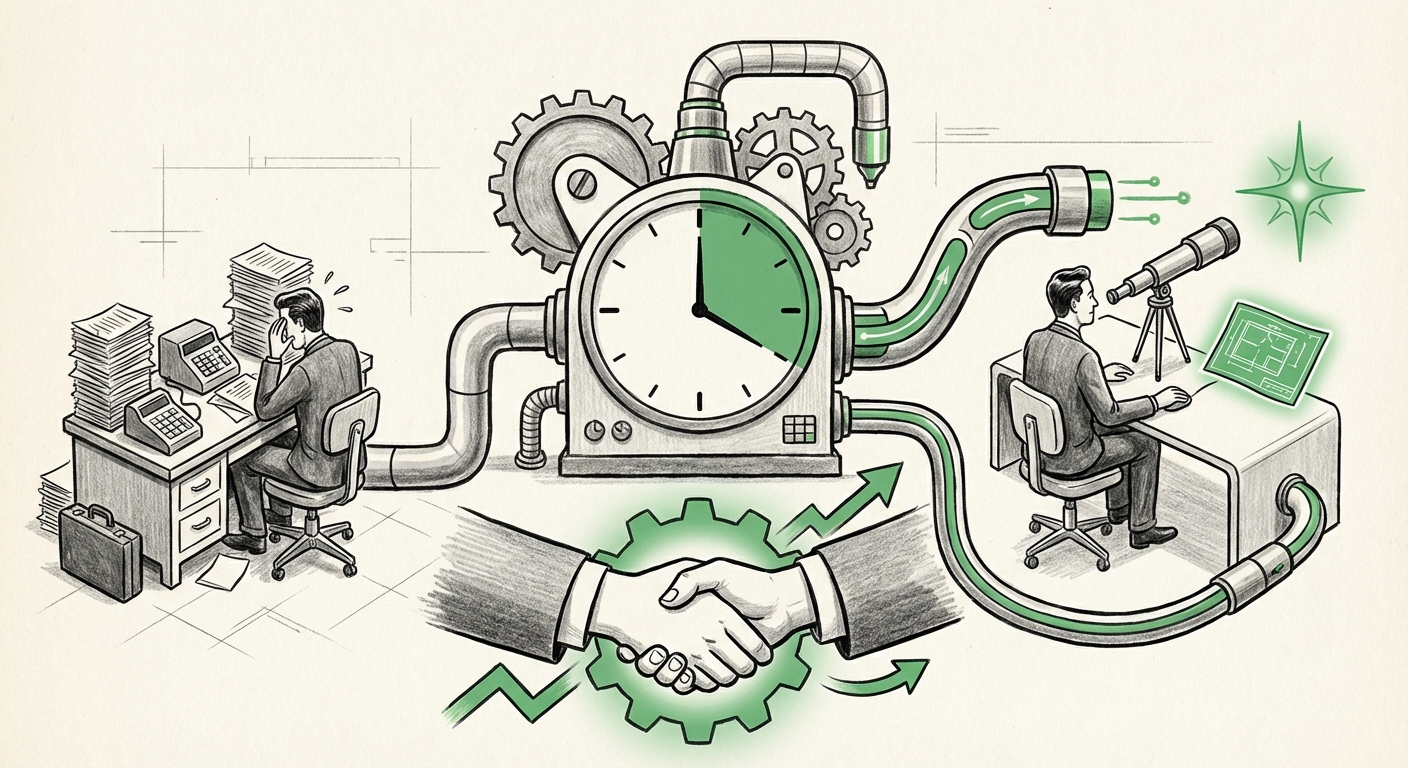
On May 23, 2026, a story broke that might sound like science fiction: Alibaba's latest AI model ran autonomously for 35 hours to optimize code for its own custom chip. This isn't just another AI benchmark. It's a signal that we've entered a new phase where AI doesn't just help humans write code—it takes on long, complex hardware engineering tasks entirely on its own.
Think about what that means. For 35 hours, no human had to check the work. No engineer had to push updates. The AI just kept going, refining and improving the software that makes Alibaba's specialized silicon run faster and more efficiently. The implications are enormous, not just for chip companies like Alibaba, but for every business that relies on computing power—which is practically all of them.
What Actually Happened? The Breakthrough Explained
According to the report on The Decoder, Alibaba's AI model was tasked with optimizing code specifically for Alibaba's own custom chip. The model ran without human intervention for 35 hours, autonomously analyzing, debugging, and improving the codebase that controls how that chip operates.
This is a huge step beyond previous AI coding tools. Earlier AI assistants like GitHub Copilot or Amazon CodeWhisperer help programmers write individual functions or suggest short code snippets. They work alongside humans. Alibaba's model, by contrast, operated as an independent agent on a problem that typically takes teams of engineers weeks to solve.
The key factors here are: duration (35 hours of uninterrupted work), autonomy (no human oversight needed during the run), and specificity (the code was for a proprietary, custom chip design—not a generic processor).
Why Custom Chip Code Is So Hard to Write
To understand why this matters, you need to know a little about what makes chip optimization so tough. A custom chip—like Alibaba's—isn't a standard CPU you can buy off the shelf. It's designed for specific workloads, often AI inference, data processing, or cloud computing. The software that runs on that chip must be finely tuned to take advantage of the chip's unique hardware features: its memory hierarchy, its specialized compute units, its power management.
Usually, this optimization requires a deep understanding of both the chip architecture and the application. Engineers spend countless hours profiling performance, rewriting assembly-level code, and testing edge cases. One mistake can cause crashes or reduce efficiency by double-digit percentages. It's painstaking, expensive work.
Now imagine an AI that can do that work for 35 hours straight—without eating, sleeping, or getting distracted. That's exactly what Alibaba just demonstrated.
What This Means for the Future of AI and Chip Design
This event signals several major shifts that will play out over the next few years:
1. AI Will Become a Primary Designer of Its Own Hardware
The most immediate implication is a feedback loop. Alibaba's AI optimized code for Alibaba's chip. But as the model improves, it could start suggesting changes to the chip design itself. We're moving toward a world where AI helps design the chips that run AI, creating a virtuous cycle of improvement. Leading companies like Nvidia, Google (with its TPUs), and Amazon (with Trainium) already design custom silicon. Alibaba's demonstration shows they can now enlist AI to squeeze more performance out of that silicon—autonomously.
2. Long-Duration Autonomous AI Agents Are Real
Until recently, most AI agents could handle tasks that take minutes, maybe an hour. Alibaba's 35-hour run proves that AI can sustain focus on a complex, multi-step goal for an entire work week. This opens the door to AI agents that manage server farms overnight, optimize supply chains over weekends, or run batch simulations for days. For businesses, this means AI isn't just a tool for quick answers—it's a 24/7 engineer.
3. The Speed of Chip Development Will Accelerate
Chip design cycles for custom silicon typically take 18-24 months from concept to tape-out. By automating the code optimization phase, Alibaba's approach could shave months off that timeline. When you can let an AI run for 35 hours optimizing code that would take humans weeks to perfect, you bring products to market faster. In the competitive cloud and AI hardware market, speed is everything.
4. Smaller Companies Could Benefit from Chip Optimization
Today, only giants like Alibaba can afford to design custom chips and then spend further millions optimizing the software for them. But if AI makes that optimization cheap and autonomous, it might become accessible to mid-sized firms. Imagine a startup that buys off-the-shelf FPGA or ASIC accelerators and uses an AI agent to tune the code for its specific workload. The democratization of hardware optimization could be a game changer for AI startups and edge computing.
Practical Implications for Businesses and Society
Let's break down what this means for different audiences:
For tech leadership and CIOs: Start thinking about AI as an autonomous operator, not just an assistant. If Alibaba's AI can handle a chip optimization task for 35 hours, what can your AI handle? Consider where your organization has long-duration, repetitive, but high-skill tasks—simulation runs, code reviews, compliance checks. Those are prime candidates for autonomous AI agents.
For software and hardware engineers: Your job is changing, not disappearing. Instead of hand-tuning assembly code for a custom chip, you'll become the supervisor of AI agents that do the heavy lifting. Your value will shift to defining what needs to be optimized, validating the AI's output, and handling novel problems the AI can't solve yet. Upskill in AI agent orchestration and prompt engineering.
For cloud providers and data centers: Custom chips are already a differentiator. Now, AI-driven optimization of those chips becomes a force multiplier. Expect cloud services to advertise not just "fast hardware" but "AI-optimized hardware that improves automatically." The cost per inference could drop significantly, making AI services cheaper for everyone.
For society: The environmental impact is a double-edged sword. On one hand, if AI optimizes chip code for power efficiency, we might reduce energy consumption in data centers. On the other hand, if AI makes chips dramatically faster, we may just run more AI workloads, leading to increased total energy use. Policymakers should watch this space closely.
The Bigger Picture: AI That Builds Its Own Foundation
This is part of a broader trend where AI is starting to improve its own underlying infrastructure. We've seen AI design novel transistor layouts (Google's circuit reinforcement learning), write better compilers (Facebook's reinforcement learning for compilers), and now optimize chip code autonomously. Each step creates a tighter integration between the AI model and the hardware it runs on.
Eventually, this could lead to what researchers call "self-improving AI systems"—where an AI tunes both the software and the hardware to maximize its own performance. Alibaba's 35-hour run is a concrete step toward that future.
What to Watch Next
Here are the key milestones to look for in the next 12-24 months:
- Duration records: Will another company announce an AI agent that runs for 100 hours or more? That would signal readiness for continuous infrastructure management.
- End-to-end chip design: Watch for an AI that not only optimizes code but also suggests architectural changes to the chip itself.
- Published benchmarks: Alibaba hasn't released detailed performance numbers for the optimized code. When companies publish before/after results, we'll see how much performance gain AI can unlock.
- Open-source models: If Alibaba open-sources the agent or methodology, it could accelerate the entire field.
Conclusion: The 35-Hour Autonomous Run Is a Watershed Moment
Alibaba's AI working autonomously for 35 hours to optimize custom chip code isn't just a headline. It's a proof point that AI is ready for long-haul, high-stakes engineering tasks. The era of AI as a quick chatbot is giving way to AI as a persistent, focused engineer that works around the clock.
For businesses, the lesson is clear: Invest in the infrastructure to deploy autonomous AI agents. For engineers, the message is adapt—become the supervisor of AI agents. And for everyone watching the AI race, remember this date: May 23, 2026. That's when an AI clocked in for a 35-hour shift to make its own chip better, without a single human checking its work.
The future of AI isn't just about smarter models. It's about models that take action on their own, for days at a time, optimizing the very hardware that powers them.