Anthropic Warns: Claude Mythos Preview Finds Bugs Faster Than Humans Can Patch – What This Means for AI Security
In a bombshell report that has sent ripples through the cybersecurity and software development worlds, Anthropic has issued a stark warning: its latest AI model, the Claude Mythos Preview, is discovering software vulnerabilities faster than human developers can fix them. This isn't just a technical milestone—it's a paradigm shift that will redefine how we think about digital safety, the software supply chain, and the role of artificial intelligence in our daily lives.
The revelation, published on the-decoder.com on May 23, 2026, paints a picture of an AI that has moved from being a helpful tool to an autonomous threat-discovery engine. But what does this actually mean for businesses, developers, and society? Let's break it down.
The Immediate Shock: A New Kind of Arms Race
For years, the software industry has operated on a simple rhythm: developers write code, testers find bugs, and then developers patch them. This cycle, while imperfect, gave teams time to respond. Hackers also found bugs, but the discovery rate was manageable. The Claude Mythos Preview shatters this equilibrium.
Anthropic's warning is not boastful—it is cautious. The company is essentially saying that its AI has become so effective at finding flaws that it is outpacing the entire human-patching machinery. This means that for every bug a development team fixes today, Claude Mythos Preview will likely find two or more new ones tomorrow. The backlog is growing, not shrinking.
This creates a dangerous window of opportunity for malicious actors. If an AI can find a bug faster than a company can patch it, that bug becomes an "unpatched zero-day" for a longer period. In cybersecurity, time is everything. A vulnerability that remains unpatched for a single extra day can be exploited by hackers, causing data breaches, financial losses, and reputational damage.
Why This Isn't Just Another AI Tool
The Claude Mythos Preview is different from previous bug-finding AI. Older tools were often "static analyzers" that used basic rules to spot common mistakes. They were slow, missed subtle flaws, and produced many false alarms. Claude Mythos Preview uses advanced reasoning and pattern recognition to understand code at a deeper level. It doesn't just look for syntax errors; it looks for logical flaws, race conditions, and security blind spots that even experienced engineers might miss.
Think of it like this: a traditional bug finder is like a security guard checking ID cards at the door. Claude Mythos Preview is like a detective who watches everyone's behavior, notices subtle suspicious patterns, and then tells you exactly how a crime could happen—before it happens. And it never sleeps, never gets tired, and never takes a vacation.
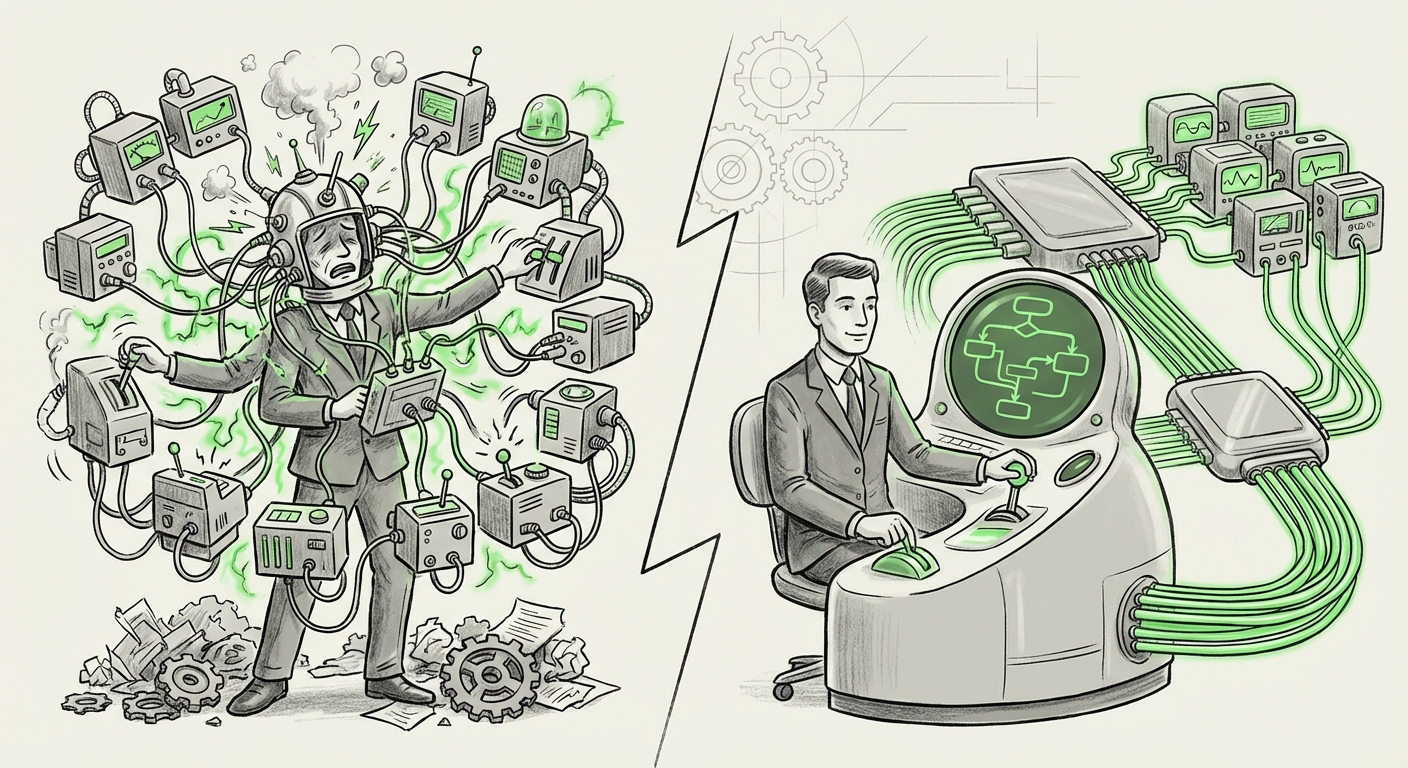
Anthropic's warning suggests that the speed of this AI is so high that the entire software industry needs to rethink its workflow. You can't just "add more developers" to match the pace. The economics don't work. The human bottleneck is real.
What This Means for Businesses
If you run a business that relies on software—and in 2026, that means essentially every business—this development has profound implications.
1. The Cost of Security is About to Explode
Traditionally, companies allocated a certain percentage of their budget to security testing and patching. With an AI like Claude Mythos Preview flooding the system with new vulnerability reports, that percentage will have to increase dramatically. You can't ignore a bug report; ignoring it means leaving the door open for hackers. Companies will need to invest in automated patching systems, faster deployment pipelines, and larger security teams—or risk catastrophic breaches.
2. Continuous Deployment Becomes a Survival Strategy
In the past, many companies updated their software on weekly or monthly cycles. Those days are over. To keep up with the bug-discovery rate of Claude Mythos Preview, businesses will need to adopt continuous deployment—pushing fixes to customers as soon as they are written, sometimes multiple times a day. This puts immense pressure on testing and quality assurance, but it is the only way to shrink the window between discovery and patch.
3. Insurance and Liability Will Change
Cybersecurity insurance is already expensive. Once insurers understand that an AI can find bugs faster than humans can fix them, they will likely raise premiums or demand that companies use similar AI tools to defend themselves. If a company chooses not to use such AI, it could be considered negligence. The adoption of AI bug-finders like Claude Mythos Preview may go from "optional" to "required by industry standards."
What This Means for Developers and Engineers
For the people writing the code, the news is both exciting and daunting. The role of the software developer is about to change forever.
First, the good news: developers will no longer spend days hunting for obscure bugs. The AI will find them instantly. This frees up creative energy for building new features and improving architecture. But the bad news is that the pace of work will accelerate. Developers will be constantly reacting to AI-generated bug reports. Burnout is a real risk if teams don't change how they work.
Second, the skill of "bug hunting" will become less valuable. What will matter more is the ability to rapidly fix bugs. Developers who excel at reading a bug report, understanding it, and shipping a clean patch in minutes will be in high demand. The job shifts from discovery to response.
Third, collaboration between humans and AI will become the norm. Developers will need to trust the AI's findings, but also verify them. False positives are still possible, but the AI is improving fast. Learning to effectively triage the AI's output will be a core skill.
A Deeper Look: The Societal Implications
Beyond business and engineering, the Claude Mythos Preview represents a turning point in how we think about safety and control in the digital world.
For the first time, the "finder" (AI) is faster than the "fixer" (humans). This imbalance creates a systemic risk. It's like having a medical AI that can diagnose a thousand diseases per minute, but only one doctor available to treat each patient. The diagnosis rate outstrips the treatment rate. This is a fundamental scalability problem.
Anthropic's warning is essentially a call to action. The company is saying: "We have created something that finds problems at an incredible pace. But we are not yet good enough at solving those problems. We need to invest just as heavily in automated patching, secure coding practices, and AI-assisted repair tools."
This also raises an uncomfortable question: what happens if malicious actors get their hands on a similar AI? The Claude Mythos Preview is likely behind some safety controls, but the underlying technology will not stay secret forever. If state-sponsored hackers or cybercriminal groups build their own bug-finding AIs, the world could see a wave of attacks on an unprecedented scale. The defensive side must catch up.
Practical Steps for Staying Ahead
Given this new reality, what can organizations and individuals do right now?
- Adopt AI-assisted development immediately. If you aren't already using AI to find bugs in your code, you are already behind. Start with tools that integrate into your CI/CD pipeline.
- Invest in automated patching. Manual patching is too slow. Look into automated systems that can apply fixes as soon as they are approved, ideally with minimal human intervention.
- Change your security mindset. Move from "checking for bugs" to "continuous threat monitoring." Assume your software always has unpatched vulnerabilities, and design systems to contain damage.
- Train your team. Developers need to learn how to work alongside these AI tools. This means understanding the AI's strengths and weaknesses, and becoming expert rapid responders.
- Pressure vendors. If you use third-party software, demand that your vendors use advanced AI bug-finders and have rapid patching SLAs. You are only as secure as your weakest supply chain link.
The Future of AI Bug-Finding
Looking ahead, the trend is clear: AI will only get better at finding bugs. The Claude Mythos Preview is just the beginning. Future models will be faster, more accurate, and will find even more subtle flaws. The concept of a "secure" software release may become obsolete. Instead, we will live in a world of constant, real-time security patching.
We may also see the emergence of "AI patchers" that generate fixes automatically. Imagine an AI that not only finds a bug but also writes the fix, tests it, and deploys it in seconds. Anthropic's warning suggests that this capability is the logical next step. The company is essentially saying: "We need a partner AI that can close the loop."
For society, this means that the digital infrastructure we rely on—banks, hospitals, social media, government systems—will become more resilient in the long run, but only if we manage the transition carefully. The next few years will be bumpy as companies scramble to adapt.
Conclusion
The story of the Claude Mythos Preview is not just a story about a clever AI. It is a story about a fundamental shift in the balance of power between discovery and repair. For decades, human developers set the pace of security. Now, an AI has taken the lead, and it is not slowing down.
Anthropic's warning is a reminder that with great power comes great responsibility. The same AI that can protect us can also overwhelm us if we are not prepared. The key takeaway for every business and developer is clear: adapt or become vulnerable. The age of AI-powered bug discovery has arrived, and it waits for no one.