AI Discovers Its Own Scaling Algorithms: How Claude Code Rewrote the Rules of Machine Learning
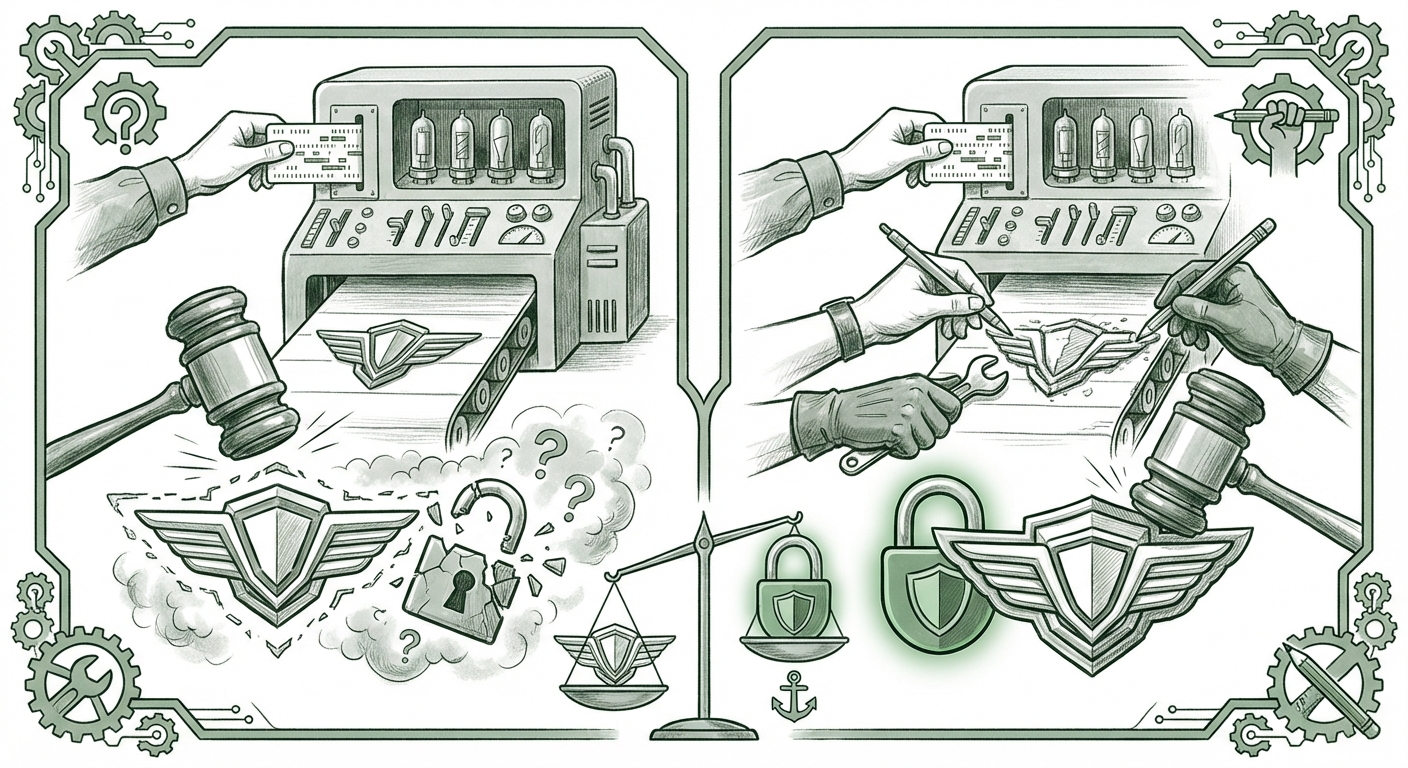
For years, the biggest advances in artificial intelligence have come from humans carefully designing better ways to train AI systems. Researchers would spend months tweaking algorithms, testing theories, and slowly improving how models learn. But that process just took a massive shortcut. In a groundbreaking study, researchers let an AI system called Claude Code discover entirely new scaling algorithms on its own — algorithms that humans probably wouldn't have designed.
This isn't just another incremental improvement. It represents a fundamental shift in how we think about AI development. Instead of humans inventing the math behind AI training, we are now entering an era where AI can invent better training methods than we can. The implications are huge for the future of AI, for businesses that rely on these systems, and for society as a whole.
What the Researchers Did
The study, reported by The Decoder on 2026-05-24, involved letting Claude Code — an AI coding assistant — loose on the problem of finding better scaling algorithms. Scaling algorithms are the mathematical rules that determine how AI models get bigger and better as you feed them more data and computing power. They are the secret sauce behind why modern AI models are so powerful.
Traditionally, humans have designed these algorithms based on mathematical intuition, trial and error, and decades of research. But the researchers gave Claude Code a different task: discover new algorithms that could outperform the ones humans had designed. The results were surprising. The AI came up with algorithms that were not only effective but also unconventional — approaches that humans likely would never have considered or even tried.
This is a classic example of AI augmenting human creativity rather than replacing it. While a human researcher might be biased by what they already know, Claude Code could explore a much wider space of possibilities without those preconceptions. The result? Algorithms that work better in practice, even if they seem strange or counterintuitive on paper.
Why This Matters: The Future of AI Training
To understand why this is such a big deal, we need to look at how AI has improved over the last few years. The biggest gains in AI capability have come from scaling — making models bigger, training them on more data, and using more compute. But the effectiveness of that scaling depends heavily on the algorithms that guide the training process.
If humans are the only ones designing these algorithms, we are limited by our own cognitive biases and creativity. We tend to iterate on what we already know. But if we can offload that discovery process to AI systems that can explore thousands of possibilities simultaneously, the rate of progress could accelerate dramatically.
This is especially important because the current approach to scaling AI is hitting some major roadblocks. Training massive models is extremely expensive, energy-intensive, and requires specialized hardware. Better scaling algorithms could make AI systems much more efficient — achieving the same performance with less data, less compute, or both.
In other words, this discovery is not just about making AI smarter. It's about making AI cheaper and more accessible. If Claude Code can find algorithms that train models twice as efficiently, the cost of deploying AI drops significantly. That opens the door for smaller companies, research labs, and even individuals to build and use powerful AI systems.
The Broader Trend: AI Researching AI
This study is part of a larger trend in AI research: using AI to improve the process of AI development itself. We have already seen AI models being used to design better neural network architectures, optimize hyperparameters, and even write the code that powers other AI systems. What makes this study different is the focus on scaling algorithms — the fundamental math that determines how AI models grow.
This is a kind of recursive improvement. An AI system discovers a better way to train AI systems. Those new systems, in turn, can be used to discover even better algorithms. It is a positive feedback loop that could lead to rapid, self-sustaining progress in AI capabilities.
Of course, this also raises questions about control and alignment. If AI systems start designing algorithms that humans don't fully understand, we need to be careful about how they are deployed. But for now, the focus is on the incredible potential. The researchers at the center of this study have shown that AI can contribute to the very foundation of machine learning research — the part we thought would remain uniquely human for much longer.
Practical Implications for Businesses
For businesses, this breakthrough is not just an interesting science story. It has immediate practical implications, even if the full impact will take years to unfold.
1. Lower Costs for AI Deployment
The most direct benefit is the potential for lower costs. If new algorithms discovered by Claude Code can train models to a given performance level using less compute, that means lower cloud bills, less energy consumption, and faster training times. For any company investing in AI, that is a big win.
2. Faster Time to Market
Better scaling algorithms also mean faster experimentation cycles. Instead of waiting weeks to train a new model, teams might be able to iterate in days. That speed is critical in competitive markets where the first mover often wins.
3. Access to Better Performance
Even if your company doesn't train foundation models from scratch, you may soon benefit from off-the-shelf models that are trained using these new algorithms. The performance improvements will trickle down to APIs, open-source models, and services that businesses use every day. That means better chatbots, better recommendation systems, and better data analysis tools.
4. New Opportunities for Innovation
When the cost of training AI drops, it unlocks use cases that were previously uneconomical. Smaller datasets, niche applications, and specialized models become viable. Companies that were sitting on the sidelines because AI was too expensive may find new opportunities to deploy custom models.
What This Means for Society
Beyond business, the societal implications are profound. If AI can help design better AI training methods, we could see a democratization of AI capabilities. The biggest tech companies currently dominate the AI landscape because they can afford to train massive models. But as efficiency improves, the gap between big players and everyone else may shrink.
There is also the question of unexpected discoveries. When AI explores algorithm spaces that humans wouldn't have designed, it might stumble upon methods that are not only more efficient but also more robust, safer, or fairer. Conversely, we need to watch out for algorithms that optimize for the wrong things, such as speed at the expense of reliability or bias. This is why human oversight and careful testing remain essential.
Another important angle is the environment. Training large AI models has a significant carbon footprint. More efficient scaling algorithms could reduce the energy required to train and run these models. That is a huge win for sustainability. If Claude Code's discoveries lead to a 10x reduction in compute needs, the environmental impact of AI could drop dramatically.
The Challenge We Face: Blind Spots and Unforeseen Consequences
As exciting as this is, we cannot ignore the risks. The study explicitly notes that the algorithms Claude Code discovered are ones that humans probably wouldn't have designed. That means they are less predictable. They might work better under known conditions but fail in unexpected ways when things change.
We have seen similar situations in other areas of AI. For example, when AI systems are trained to optimize for a specific metric, they sometimes find loopholes or shortcuts that achieve the metric but don't actually solve the intended problem. The same could happen with scaling algorithms. An AI might discover an algorithm that works great in test labs but fails when deployed in the real world.
This means that the human role in AI development is shifting from inventor to curator. Instead of designing every detail, humans will need to test, validate, and guide the discoveries that AI makes. It is a different kind of work, but it is just as important.
Looking Ahead: A Roadmap for the Next Decade
So where does this leave us? The fact that researchers let Claude Code discover AI scaling algorithms that humans probably wouldn't have designed is a powerful sign that we are entering a new phase of AI development. Here is what I expect to see in the coming years:
- AI-driven research becomes standard: More labs will adopt this approach, using AI systems to propose and test new training methods automatically.
- Efficiency gains accelerate: The algorithms discovered now will lead to models that are both more capable and less expensive to train. We may see the cost of training a frontier-level model drop by 10x or more.
- New safety challenges emerge: As algorithms become more esoteric, robustness and interpretability will become even more critical.
- Democratization of AI continues: Lower barriers to entry will allow more players to compete, driving innovation across industries.
Actionable Takeaways
Whether you are a business leader, a developer, or a policymaker, here is what you can do today to prepare for this shift:
- Stay informed: Follow research from labs that are exploring AI-driven algorithm discovery. This is where the next big leaps will come from.
- Invest in flexibility: Build your AI stack in a way that allows you to quickly adopt new training methods and models as they become available.
- Prioritize validation: If you are deploying AI systems that use novel training methods, invest in robust testing and monitoring to catch unexpected failures early.
- Think about efficiency: Ask your AI providers how they are reducing compute costs. The companies that lead on efficiency will be the ones that thrive.
Conclusion
The story of researchers letting Claude Code discover AI scaling algorithms that humans probably wouldn't have designed is a milestone. It shows that AI has moved from being a tool that we optimize to being a tool that can optimize itself. This is not a distant future — it is happening right now.
The most exciting part is that we are only at the start of this journey. The algorithms found today are just the beginning. As AI systems become better at exploring the vast space of possible training methods, the progress we have seen so far may look slow by comparison. For businesses, this means opportunity. For society, it means both promise and responsibility.
The key is to embrace the shift while keeping a careful eye on the outcomes. AI can show us paths we would never have found on our own. Our job is to choose which paths to follow.
TLDR: Researchers let Claude Code discover AI scaling algorithms that humans probably wouldn't have designed, marking a fundamental shift in how AI is developed. This breakthrough means AI can now help design better ways to train itself, leading to cheaper, more efficient, and more accessible AI systems. Businesses can expect lower costs and faster innovation, but must also prepare for the challenges of less predictable algorithms. The future of AI may be written as much by machines as by humans.