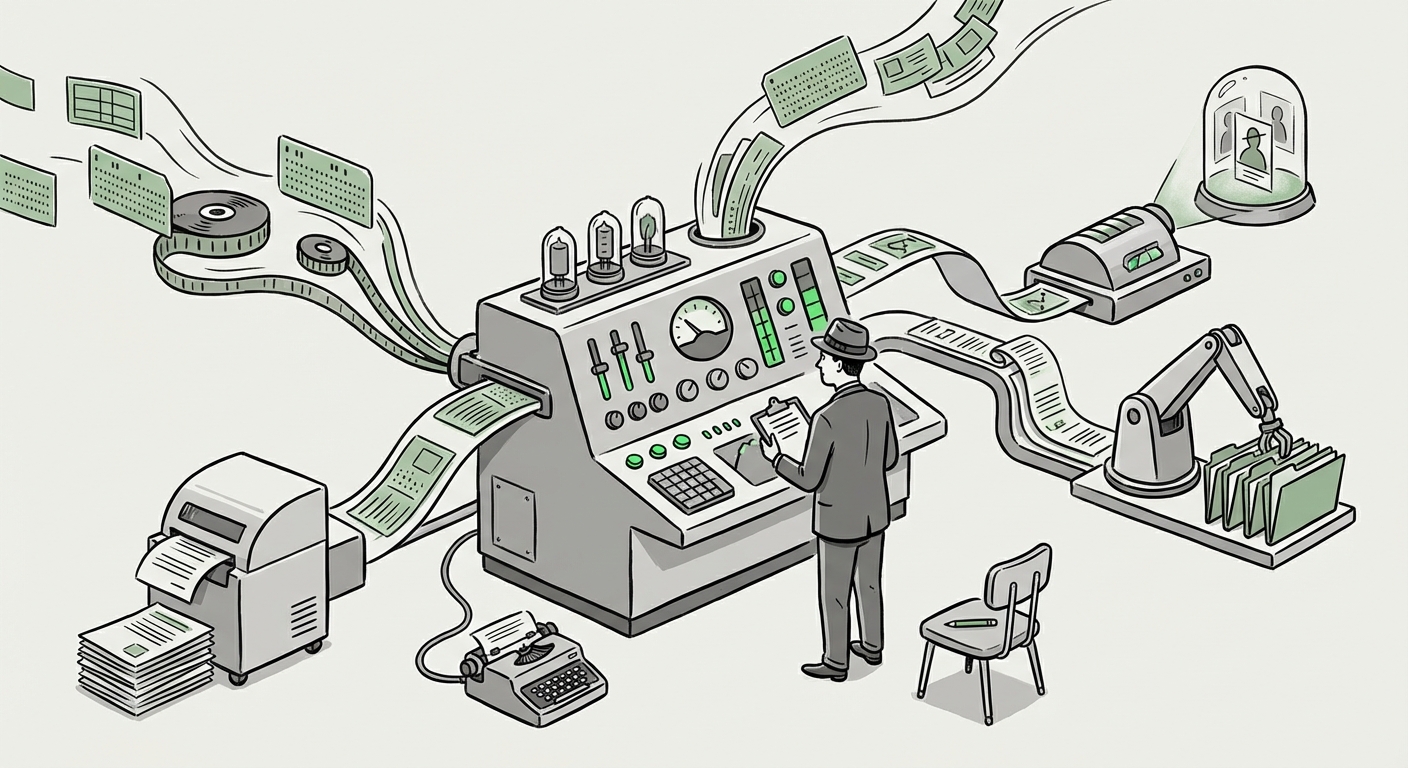
DataRobot for Developers: Skills in Cursor, Gemini, and Claude — A New Era of AI-Powered Coding
In the rapidly shifting landscape of artificial intelligence, a quiet revolution is taking place in how developers build software. The recent announcement from DataRobot — spotlighting its new Skills for Cursor, Gemini, and Claude — signals a fundamental shift in the relationship between humans and machines. No longer are AI tools just passive assistants that autocomplete a few lines of code. They are becoming true collaborators, capable of understanding complex workflows, generating entire functions, and even guiding developers through sophisticated machine learning projects.
This article dives deep into what DataRobot’s move means for the future of AI. We will explore the key trends behind this development, analyze the implications for businesses and society, and offer actionable insights for anyone looking to stay ahead in this new world. Whether you are a seasoned software engineer, a business leader, or simply curious about where AI is heading, you will find a clear, engaging, and practical breakdown here.
The Big Picture: Why DataRobot Skills Matter
DataRobot has long been a leading platform for AI and machine learning, making it easier for organizations to build, deploy, and manage predictive models. By introducing Skills for Cursor, Gemini, and Claude, the company is bridging the gap between traditional coding environments and the power of generative AI.
Think of these Skills as specialized plug-ins or extensions that bring DataRobot's intelligence directly into the tools developers already use every day. Cursor is a modern, AI-first code editor. Gemini is Google's multimodal AI model. Claude is Anthropic's conversational AI assistant. By integrating with them, DataRobot is making its powerful modeling capabilities accessible right where code gets written.
This is not just about convenience. It represents a paradigm where AI becomes a native part of the development workflow, rather than a separate application you have to switch to. For the future of AI, this is a huge leap forward.
Key Trend #1: From Autocomplete to Co-Creation
For years, AI coding assistants have focused on autocompleting the next line or suggesting a function. They were helpful but limited. DataRobot Skills for Cursor, Gemini, and Claude take this to a new level.
With these Skills, a developer can describe a business problem — like “predict customer churn based on usage data” — and the AI will help generate the entire data pipeline, feature engineering steps, model selection, and evaluation code. This is co-creation. The developer provides the direction and business context, while the AI handles the heavy lifting of implementation, best practices, and code generation.
For the future, this means that the role of the developer is shifting from writing every line of code to being an architect and a reviewer. The skill of the future is not memorizing syntax but understanding how to frame problems, evaluate AI outputs, and integrate them into robust systems.
What This Means for Businesses
Companies that embrace this shift will see a dramatic increase in developer productivity. Tasks that used to take days can be completed in hours. However, it also requires new governance. Businesses must invest in training their teams to prompt effectively, validate AI outputs, and manage the ethical implications of AI-generated code.
What This Means for Society
On a societal level, this could democratize software creation. People with domain expertise but limited coding skills may be able to build functional applications with the help of AI agents that incorporate Skills like DataRobot’s. This could unlock innovation in fields like healthcare, education, and local government, where technical talent is often scarce.
Key Trend #2: The Rise of Specialized AI Agents
DataRobot Skills for Cursor, Gemini, and Claude are not just generic AI tools. They are specialized agents designed for a specific purpose: building and deploying machine learning models. This specialization is a major trend in AI. We are moving away from monolithic, general-purpose chatbots toward a world of many small, expert AI assistants that work together.
Imagine a developer working in Cursor. They can call on DataRobot's Skill to help with data analysis, switch to a different Skill for cloud deployment, and use another for security scanning. Each agent is an expert in its domain. The developer orchestrates them like a conductor leading an orchestra.
For the future, this means AI systems will be more reliable and trustworthy for specific tasks. Instead of one model trying to do everything—and often failing at the edges—we will have a mosaic of specialized models that excel in their areas. DataRobot's move is a clear bet on this future.
Key Trend #3: The Convergence of Data Science and Software Engineering
Historically, data scientists and software engineers have worked in different worlds. Data scientists focused on algorithms and models, while software engineers focused on production systems. DataRobot Skills for Cursor, Gemini, and Claude blur this line.
A software engineer using Cursor can now directly leverage DataRobot’s sophisticated machine learning capabilities without needing a deep background in data science. They can create a model, test it, and deploy it—all from within their code editor. Similarly, a data scientist can use Claude or Gemini to write production-ready code around their models, making them easier to deploy and maintain.
This convergence is a powerful force. It will lead to faster iteration cycles and more robust AI applications because the same person (or a tighter team) can handle both the data science and software engineering aspects.
Analyzing the Future: How AI Will Be Used
Based on the trends visible in DataRobot's announcement, we can paint a vivid picture of how AI will be used in the coming years:
- Embedded AI Wizards: Tools like Cursor, Gemini, and Claude will become “AI wizards” embedded in every professional tool. You won’t launch a separate AI app; AI will be a feature of your IDE, your spreadsheet, your design software, and your CRM.
- Context-Aware Assistants: Future assistants will understand not just your code but your entire project context — your data schemas, your business rules, your team’s coding conventions. DataRobot Skills are a step in this direction, as they bring model context into the editor.
- Automated Experimentation: AI will automatically run experiments to find the best model, the best parameters, and the best data pipeline. Developers will set the goal and constraints, and the AI will explore the solution space. DataRobot’s automation prowess, now available through Skills, is a precursor to this.
- Natural Language as the New Programming Language: While code won’t disappear, a growing share of programming will be done in plain English. Developers will describe what they want, and AI systems—like those powered by Gemini or Claude and augmented with DataRobot Skills—will generate the code, tests, and documentation.
- Citizen Development 2.0: Non-technical domain experts will be able to build powerful AI-driven applications with minimal coding. They will orchestrate AI agents using natural language, creating workflows that were previously impossible without a dedicated engineering team.
Practical Implications for Businesses
For business leaders, the message is clear: the window to adapt is closing. Companies that fail to integrate these AI assistants into their development processes will fall behind. Here are the actionable steps you can take today:
Invest in Developer Enablement
Your developers are your most valuable asset. Provide them with access to modern tools like Cursor, as well as skills like DataRobot’s. More importantly, train them on how to use these tools effectively. The value comes not from the tool alone but from the skill of the person wielding it.
Redesign Your Workflows
Don’t just add AI as an afterthought. Redesign your entire software development lifecycle around AI co-creation. How does code review change when a significant portion of code is AI-generated? How do you test AI-generated code? How do you manage versions? These are questions every tech organization must answer.
Focus on Quality and Governance
With great power comes great responsibility. AI-generated code can contain subtle bugs, security vulnerabilities, or biased logic. Establish clear guidelines for reviewing and testing AI outputs. Use automated tests and static analysis as your safety net. Implement AI governance policies to ensure ethical use.
Embrace a Platform Mindset
DataRobot’s Skills architecture shows the power of platforms. Rather than building everything from scratch, leverage platforms that offer a marketplace of skills or agents. This allows you to combine best-in-class capabilities (like DataRobot for ML, and specific models for text or vision) into a cohesive workflow.
What This Means for Developers
For individual developers, this is both an exciting and challenging time. The skills that made you valuable five years ago are changing. The most important new skills are:
- Prompt Engineering: Knowing how to communicate with AI systems to get the right output.
- Critical Evaluation: Being able to quickly assess whether AI-generated code is correct, efficient, and secure.
- System Design: Understanding how to compose AI agents and traditional code into a working system.
- Domain Expertise: Deep knowledge of your business domain will become even more valuable, as you guide AI tools to solve real problems.
The developers who thrive will be those who see AI not as a threat but as a partner. They will use tools like DataRobot Skills in Cursor, Gemini, and Claude to amplify their own abilities, focusing on the creative and strategic parts of their job while letting AI handle the drudgery.
A Concrete Example: Building a Churn Model
Let’s bring this to life with a simple example. A developer at a telecom company wants to build a model to predict which customers are likely to leave (churn). In the past, this would require weeks of work: collecting data, cleaning it, building features, training models, evaluating them, and writing the deployment code.
With DataRobot Skills in Cursor (or via Gemini or Claude), the developer can:
- Describe the goal in natural language: “Build a churn prediction model using our customer dataset. Use features like usage, support calls, and contract length.”
- Let the AI generate the code to explore the data, handle missing values, and create features.
- Review the proposed model — the AI might suggest a gradient boosting or random forest model, show performance metrics, and even explain the most important features.
- Deploy the model with a single command, using DataRobot’s automation to create an API endpoint.
The entire process could take a few hours, not weeks. And the developer can spend their time on the parts that require human judgment: interpreting the business impact of the model, deciding how to act on its predictions, and ensuring fairness.
Risks and Challenges Ahead
No analysis is complete without acknowledging the challenges. The integration of AI Skills into development workflows raises several concerns:
- Over-reliance: Developers may become less skilled at foundational coding if they always rely on AI. It is crucial to maintain a deep understanding of the fundamentals.
- Security: AI-generated code can inadvertently introduce vulnerabilities. Organizations must have robust security review processes.
- Intellectual Property: Questions around ownership of AI-generated code are still evolving. Companies need clear policies.
- Model Hallucination: AIs can produce confident but wrong answers. Always verify critical outputs.
These are not reasons to avoid the technology, but reasons to adopt it thoughtfully. The benefits far outweigh the risks for organizations that proceed with eyes wide open.
Conclusion: The Future Is Collaborative
DataRobot’s Skills for Cursor, Gemini, and Claude represent more than a product update. They are a signpost pointing toward the future of AI. That future is not about machines replacing humans. It is about a new kind of partnership where humans and AI work together, each doing what they do best.
For the world of software development, this means faster innovation, lower barriers to entry, and more time for creative problem-solving. For businesses, it means the ability to harness the power of AI without needing a huge data science team. For society, it holds the promise of more accessible technology, helping people everywhere build solutions to their unique challenges.
The tools are here. The skills are available. The question is no longer whether AI will change how we build software, but how quickly we will adapt. The most successful individuals and organizations will be those who learn to collaborate with these new digital partners effectively. The future of AI is not a single super-intelligence, but a connected ecosystem of specialized, helpful agents — and DataRobot is showing us one way to build it.