AI Coding Agent Devin Maker Cognition More Than Doubles Its Valuation to $26 Billion – What This Means for the Future of Software Development
The world of artificial intelligence continues to move at a breathtaking pace. In a stunning development that underscores the explosive growth of AI-powered coding tools, Cognition AI, the company behind the headline-grabbing coding agent Devin, has more than doubled its valuation to a staggering $26 billion in under nine months. This isn't just a financial milestone; it is a powerful signal about the direction of the entire technology industry. For business leaders, tech enthusiasts, and anyone curious about how we will build software in the future, this news demands a closer look.
This article breaks down the key trends behind this valuation surge, analyzes what it means for the future of AI, and offers actionable insights for businesses and professionals. We will explore why investors are betting so heavily on AI coding agents and what this acceleration means for the very nature of work in the digital age.
The $26 Billion Signal: Why This Valuation Matters
In less than nine months, Cognition's valuation has skyrocketed. To put this in perspective, reaching a $26 billion valuation is a feat that traditionally took successful companies years, or even decades. This rapid ascent from a smaller valuation (its previous valuation was roughly half of this) tells us a few critical things about the market's belief in AI coding agents.
Investors See a Paradigm Shift, Not Just an Upgrade
This valuation is not based on current revenue alone. It is a bet on a future where AI doesn't just assist human developers but fundamentally changes how software is created. Devin is marketed as an "AI software engineer," capable of planning, writing, testing, and deploying code. This is a leap beyond simple autocomplete tools like GitHub Copilot. Investors are betting that this paradigm shift will unlock massive productivity gains and create entirely new markets.
The speed of the valuation increase suggests that the market believes Cognition is winning a crucial race. In the world of AI, the first-mover advantage can be enormous. By becoming the poster child for the fully autonomous coding agent, Cognition is positioning itself as the leader in a category that is being born right now. This creates a powerful feedback loop: more investment leads to more talent, more data, and better product, which justifies even higher valuations.
Confidence in the AI Coding Agent Market's Size
The $26 billion valuation reflects a massive total addressable market. Every company in the world is, to some degree, a software company. The need to write, maintain, and improve code is universal. If AI agents can handle a significant portion of this work, the economic impact is staggering. Consider the billions of dollars spent on software engineering salaries globally. If an AI can do the work of even a junior engineer for a fraction of the cost, the market for such a tool is essentially limitless. Cognition's valuation is a bet that they will capture a meaningful share of this transformative market.
Key Trends Driving the AI Coding Agent Revolution
The success of Devin and its creator is not happening in a vacuum. It is the culmination of several powerful trends that have been building for years. Understanding these trends helps explain the current excitement and predict what comes next.
1. The Shift from Assistance to Automation
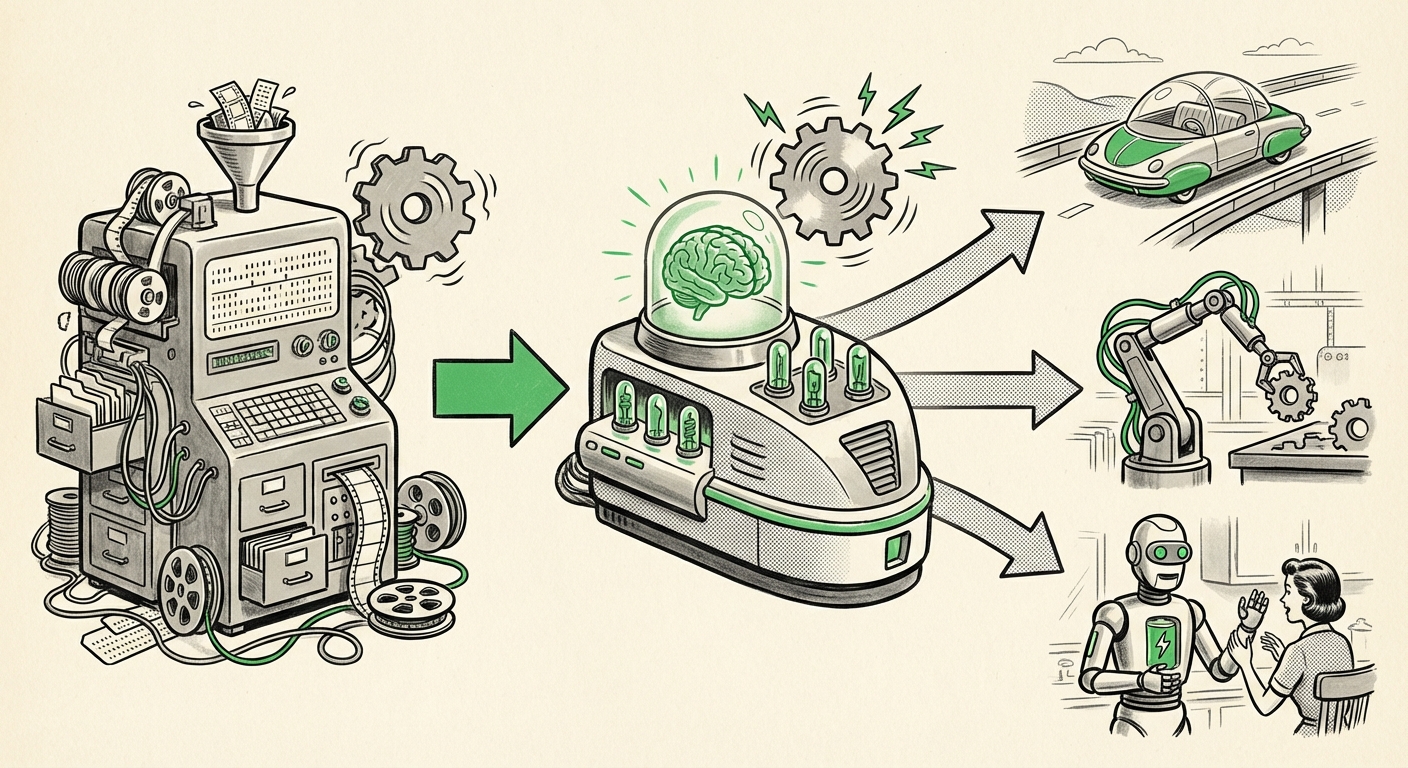
Early AI coding tools were largely about assistance. They helped developers write code faster by suggesting the next line or function. Devin represents a move toward automation. It is designed to take a high-level task or a bug report and go execute it with minimal human supervision. This is a profound difference. It moves the AI from a collaborator to an autonomous agent that can own entire workflows. For businesses, this means the potential to reduce the need for large teams of engineers for routine tasks, freeing up the best human talent to focus on complex architecture, innovation, and strategic problems.
2. The Maturation of "Agents"
The concept of an "AI agent" – a system that can interact with its environment, plan, use tools, and learn from results – has been a research goal for decades. Recent breakthroughs in large language models (LLMs) have finally made this a practical reality. Devin leverages these advances to plan software projects, use a terminal, a code editor, and a browser, and even fix its own mistakes. This kind of multi-step, tool-using capability marks a significant maturity for the field. Cognition's soaring valuation is a direct result of successfully turning this advanced research into a usable product.
3. The Democratization of Software Creation
One of the most exciting implications of powerful coding agents is the potential to lower the barrier to entry for creating software. In the future, a business analyst with a great idea might be able to describe a new feature in plain English, and an AI agent could build the initial prototype. This could unleash a wave of innovation from people who are not professional coders. While this is still early, the trajectory is clear. The $26 billion valuation reflects a belief that the market for software creation is about to expand dramatically to include non-traditional creators.
What This Means for the Future of AI and Its Use
So, what does a $26 billion company in the AI coding space mean for the next few years? Let's break it down into practical implications.
For Businesses: A Call to Re-Evaluate Your Tech Strategy
This is not a "future" trend. It is happening now. The rapid valuation increase of Cognition is a clear signal that the tools for AI-powered development are becoming serious business assets. Companies should not wait for the technology to be perfect. The time to start experimenting is now. This means actively piloting AI coding agents like Devin (and its competitors) within your development teams.
- Start small, but start now: Identify repetitive, low-risk coding tasks like writing unit tests, fixing simple bugs, or generating boilerplate code. Let an AI agent handle these to measure productivity gains.
- Focus on your human talent: The goal is not to replace engineers but to augment them. The companies that win will be those that use AI to free their best people from drudgery so they can focus on high-value architectural decisions and creative problem-solving.
- Re-evaluate your hiring plans: The skills you need in a developer will change. You will need people who are excellent at prompt engineering, reviewing AI-generated code, and designing systems that agents can work within. The demand for "middle of the road" coders may shrink, while the demand for expert architects and creative thinkers increases.
For Society and the Workforce: The Reskilling Imperative
The speed of this change has significant societal implications. While AI coding agents will not eliminate the need for humans in software development, they will profoundly alter who does what work. This necessitates a serious conversation about reskilling and education.
- Prepare for job transformation, not just job loss: Many current software engineering roles will evolve. A junior developer today who spends half their day writing boilerplate code will need to become a "specifier" or a "validator" of AI output. Education systems need to adapt to teach students how to work effectively with AI, not just how to write code line by line.
- The rise of the "AI Collaborator": The most valuable skill may soon be the ability to communicate intent clearly. This is the core of effective prompt engineering. The person who can best articulate a problem and guide an AI agent to a solution will be in high demand, regardless of their traditional coding ability.
For AI and Technology: The Race Accelerates
Cognition's valuation will act as a massive accelerant for the entire industry. Competitors like Microsoft (with Copilot), Google, Amazon, and a host of startups will feel immense pressure to match or exceed Devin's capabilities. This competition is great for innovation.
- Expect rapid improvement: The bottleneck is no longer technology but the speed of implementation. We can expect to see Devin-like agents become more capable, faster, and more reliable with every passing month. The gap between an AI coding agent and a human junior developer will close rapidly.
- Specialization and competition: While Devin aims to be a generalist, we will likely see an explosion of specialized AI coding agents – one for data science, one for web development, one for security. The influx of venture capital that this valuation will attract will fund many of these specialized tools, creating a rich ecosystem.
Actionable Insights: How to Prepare for the AI-First World of Software
This news is not just for reading; it is for acting. Here are concrete steps you can take today to prepare.
1. For Individual Developers
- Become an expert in AI collaboration: If you haven't already, start learning how to use advanced AI coding tools. This is no longer optional; it is the path to being a "next-generation" developer.
- Deepen your high-level skills: Master system design, architecture, and problem decomposition. These are skills that are harder for AI to replicate in the near term.
- Embrace development ops (DevOps) and testing: Understanding how to set up environments, write robust tests, and oversee AI agents will become more important than hand-writing every line of code.
2. For Tech Leaders and CTOs
- Create an internal "AI sandbox": Give your teams a safe environment to experiment with AI coding agents. Capture the learnings and measure the productivity impact.
- Rethink your development lifecycle: How does a project change when an AI can do the initial groundwork? You may need to put more effort into initial specifications and more effort into final review and testing.
- Invest in data quality: AI agents are only as good as the codebases they learn from. Clean, well-documented, and well-structured code will be a major competitive advantage.
3. For Business Leaders
- Ask your tech team for a plan: demand a clear strategy for how they will integrate AI coding agents over the next 12-18 months. This is not a hobby project; it is a competitive necessity.
- Budget for experimentation: Include a line item for AI tool licenses and training. The returns from increased developer productivity will far outweigh the costs.
- Focus on your software strategy: When building software becomes dramatically cheaper and faster, what will you do? This is the time to think big about the features and products that were previously out of reach.
Conclusion: The Beginning of a New Era in Software
Cognition's leap to a $26 billion valuation is more than a headline. It is a historical marker that signals a definitive shift in the technology landscape. We are moving from an era where AI assists with code to an era where AI takes the lead on entire coding tasks. The implications of this are profound: faster innovation, lower barriers to creation, and a fundamental reshaping of the software engineering profession.
This isn't a reason to panic; it is a reason to act. The future of AI is not about machines replacing humans; it is about humans and machines co-creating in ways we have never seen before. The companies and individuals that understand this, embrace these new tools, and adapt their skills will not just survive this change – they will lead it. The race to build the software of the future is now a race to build with AI, and the starting gun has just been fired. The future of code is collaborative, and it has already arrived.