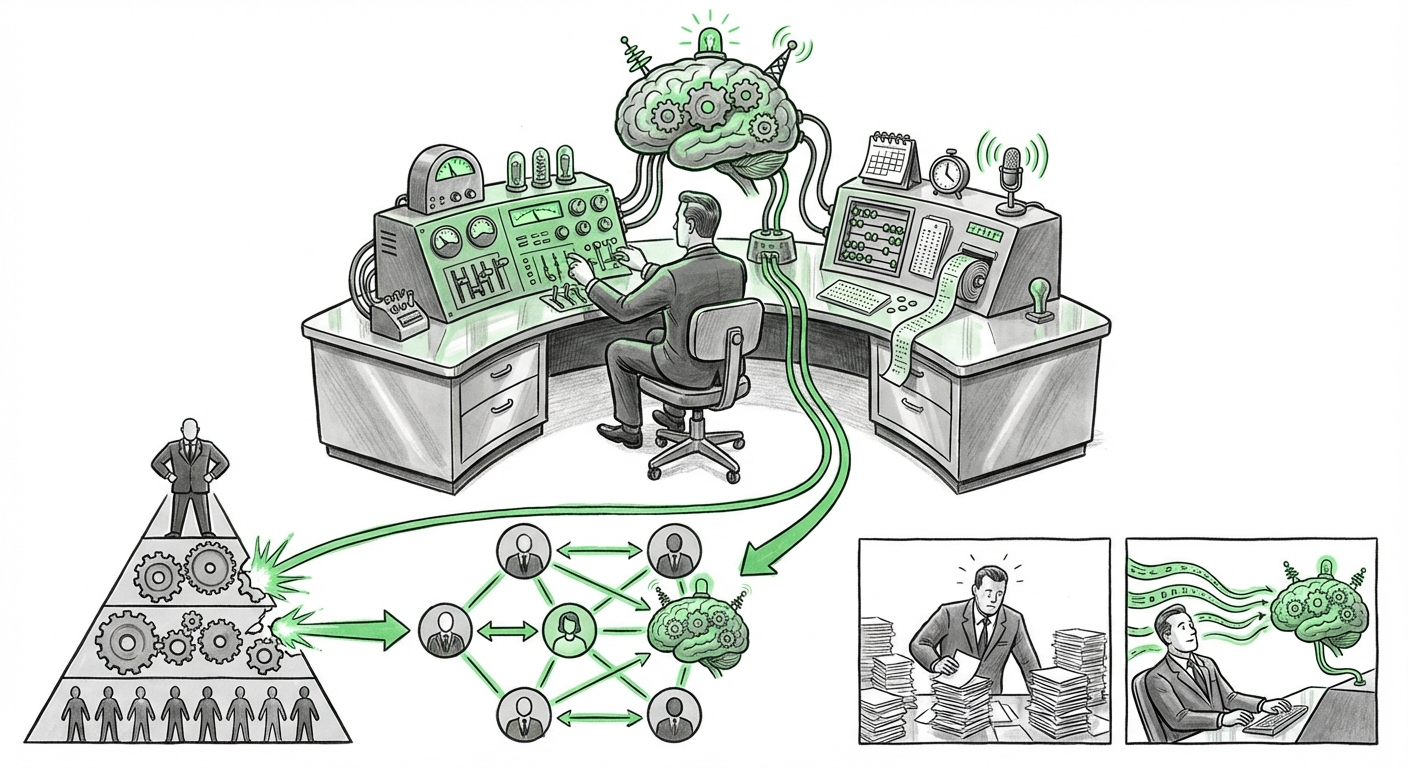
Robinhood Lets AI Agents Trade Stocks and Make Credit Card Purchases: The Dawn of Autonomous Finance
Imagine a world where your personal AI agent not only knows your financial goals but acts on them — buying shares, paying bills, and even making credit card purchases — all without you lifting a finger. This is no longer science fiction. On May 27, 2026, Robinhood, the popular trading platform, announced a groundbreaking move: it now lets AI agents trade shares and make credit card purchases for customers. This shift marks a pivotal moment in the evolution of artificial intelligence, moving from passive recommendation tools to active, autonomous financial agents. In this article, we break down what this means for the future of AI, how it will be used, and why everyone — from casual investors to big businesses — should pay attention.
The Key Trend: From Tools to Agents
For years, AI in finance has been about suggestions. Think of algorithms that say, "You might like this stock," or "Consider saving more." But Robinhood's new feature flips the script. Instead of just giving advice, AI agents can now execute trades and make credit card purchases on behalf of customers. This is a major leap. It transforms AI from a passive tool into an active participant in your financial life.
Why does this matter? Because it represents a shift from "assistive AI" to "autonomous AI." An assistive AI helps you decide; an autonomous AI acts for you. Robinhood is betting that customers will trust their AI enough to let it handle real tasks — buying and selling stocks, spending money. This trend is not limited to finance. We are seeing similar moves in customer service (AI chatbots that close sales), content creation (AI that writes entire articles), and logistics (AI that manages supply chains). Robinhood's move is a loud signal that the age of autonomous action has begun.
How Will AI Agents Trade and Spend? A Look Under the Hood
According to the announcement, Robinhood allows customers to set parameters for AI agents. For example, you might instruct your agent to "buy $100 of a diversified ETF every month" or "pay my electric bill using my credit card if it's under $200." The AI then carries out these instructions autonomously. Crucially, the system is built for trust and control. Customers can set limits, define rules, and monitor activity. But the key difference is that once those rules are set, the AI operates without asking for permission each time.
This is made possible by two technologies: large language models (LLMs) that understand natural language instructions, and secure APIs that connect the AI directly to Robinhood's trading and payment infrastructure. The result is an agent that can interpret complex requests ("Increase my monthly investment in green energy stocks by 10% if the market is up") and execute them in real-time. For businesses and individual users, this means less time managing routine finances and more time focusing on strategy.
What This Means for the Future of AI
1. The Rise of "Take Action" AI
The Robinhood announcement underscores a broader trend: AI is moving from "Think" to "Do." Future AI systems will not just analyze data — they will act on it. This has huge implications for how we design AI models. Companies will need to focus on safety, reliability, and error mitigation. An AI that makes a wrong stock trade is more harmful than one that makes a wrong suggestion. Expect to see more investment in "guardrails" — systems that prevent an AI from taking destructive actions.
2. Personal Finance Becomes Fully Automated
This is the most direct application. In the next few years, we could see a world where your entire financial life — savings, investments, bill payments, even charitable donations — is managed by a suite of AI agents. Robinhood's move is the opening salvo. Competitors like Fidelity, Schwab, and even banking apps will likely follow. For consumers, this could mean lower costs, fewer fees, and more optimized portfolios. But it also raises questions: What happens if an AI makes a mistake? Who is liable? These legal and ethical questions will shape the regulatory landscape.
3. Trust Becomes the New Currency
The biggest hurdle for autonomous AI is trust. People are naturally hesitant to hand over control of their money. Robinhood is betting that transparency and user control will build that trust. The platform lets customers see every trade their AI makes, revoke permissions at any time, and set strict limits. This model — delegation with oversight — is likely to become the standard for all autonomous AI systems. Future AI products will need to prioritize user agency over black-box automation.
Practical Implications for Businesses and Society
For Businesses: A New E-Commerce Channel
When AI agents can make credit card purchases, a new shopping channel opens up. Imagine AI agents that automatically reorder office supplies, pay for software subscriptions, or buy components for manufacturing. Businesses will need to optimize their websites and checkout flows for AI agents, just as they once did for mobile users. This could include offering special "AI agent" pricing or creating digital signatures that verify an agent's authorization. Companies that fail to adapt may find their products inaccessible to a growing segment of autonomous buyers.
For Society: Financial Inclusion and Risk
On one hand, autonomous AI can democratize investing. People with limited financial knowledge could benefit from AI that expertly manages their money. On the other hand, it could amplify systemic risks. If millions of AI agents all react to the same market signal simultaneously, they could trigger flash crashes or bubbles. Regulators will need new tools to monitor and manage algorithmic trading at a massive scale. Additionally, there are concerns about fraud and security. If an AI agent gets hacked, an attacker could drain a bank account in seconds. Strong encryption, multi-factor authentication, and continuous monitoring become not optional but essential.
Actionable Insights for You
- Start experimenting cautiously: If you are a Robinhood customer, try setting a simple rule for one stock or a small recurring purchase. See how it works before scaling up.
- Focus on safety features: When using any autonomous AI, always check the limits and permissions. Never give an AI "full access" initially. Use dollar caps and trade restrictions.
- For business leaders: Begin building your infrastructure for AI agents. This means creating APIs, clean product data, and a digital presence that is easy for an AI to parse. The era of "AI-first" e-commerce is coming.
- Stay informed on regulation: Watch for updates from the SEC and consumer protection agencies. Autonomous finance will inevitably attract new rules. Being early to understand them can be a competitive advantage.
The Big Picture: A Transition into the AI-Driven Economy
Robinhood's move is not just a feature update; it is a bellwether. It signals that AI has reached a level of reliability and trust where we are willing to let it handle real-world consequences. This trend will accelerate. Within a decade, most routine financial tasks will likely be handled autonomously. The same logic will spread to other domains — AI agents that manage your health appointments, negotiate your rent, or even vote on your behalf (subject to laws, of course).
But with great power comes great responsibility. The companies that win in this new era will be those that balance autonomy with control, ambition with safety. For individuals, the advice is simple: embrace the efficiency, but never stop paying attention. The AI works for you — not the other way around.