Code Is How AI Agents Think and Act—Not Just What They Produce
For years, we have thought of code as the output of artificial intelligence. Ask an AI to write a program, and it generates lines of Python or JavaScript. But a major new review paper flips that idea on its head. The paper, featured by the-decoder on May 29, 2026, argues that code is actually the internal language AI agents use to think and act. This isn't just a philosophical shift. It changes everything we know about how AI works, how it reasons, and how it will reshape our world in the coming years.
In this comprehensive analysis, we'll break down the key claims of this paper, explore what this means for the future of artificial intelligence, and provide practical insights for businesses and everyday users. If you want to understand where AI is heading and how it will be used, this is the most important story to watch.
The Core Idea: Code as the Mind of an AI Agent
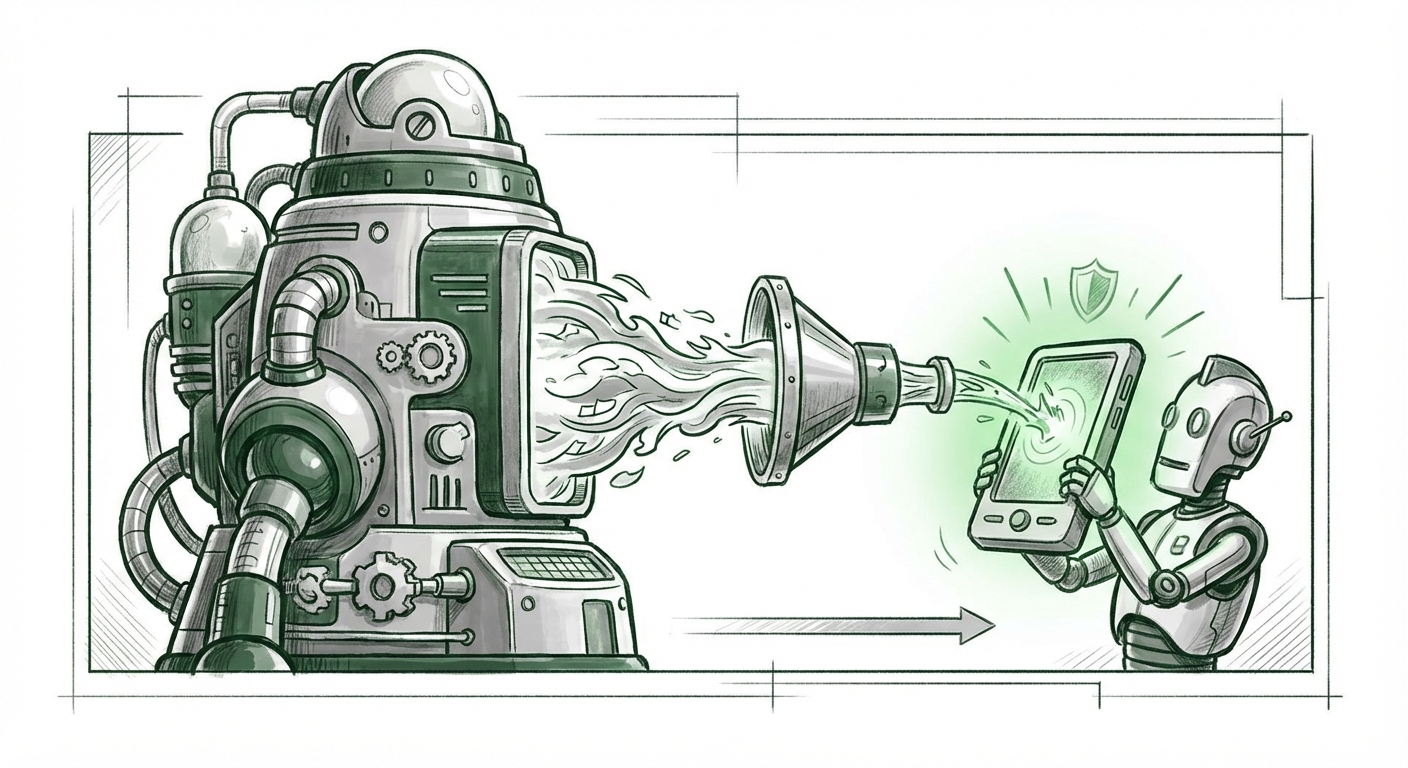
The review paper makes a bold claim: when an AI agent thinks, it does so by writing and executing code internally. This is radically different from the common view that code is merely a final product—something an AI spits out when asked to build an app or a website. According to this new framework, code is the medium of the agent's reasoning process. It's how the AI plans, breaks down problems, checks its own work, and decides on a next action. In short, code is the agent's cognitive architecture, not just its language for talking to computers.
Consider how a human might solve a complex math problem. You might write down steps, revise them, check for errors, and keep track of intermediate results. According to the paper, AI agents do something very similar using code. They write small "thought programs" that execute inside their own system. This gives them a precise, verifiable, and repeatable way to reason. Code becomes the skeleton of intelligence—structured, logical, and capable of being debugged.
This perspective explains why modern AI models have become so good at tasks that require multi-step reasoning, like solving complex equations, writing business reports, or even playing strategy games. The AI isn't just pattern-matching; it is actively "coding its own thoughts" and then acting on them. This is the paradigm shift the review paper calls "thinking by coding."
Why This Matters for the Future of AI Agents
If code is how agents think, then the frontier of AI development is not about making bigger models that store more facts. It is about building agentic systems that can write, execute, and iterate on their own internal code. This has profound implications for the future of agentic AI—AI that can act autonomously to achieve long-term goals.
- Transparency and Auditability: Because thought is code, we can inspect exactly what an AI was "thinking" when it made a decision. This is a game-changer for safety. Instead of a black box, we get a code trace. Businesses can verify that an agent's reasoning aligns with regulations and ethical guidelines.
- Better Error Correction: If an AI makes a mistake, you don't have to retrain the whole model. You can find the bug in its reasoning code and fix it, just like a software developer would. This makes AI maintenance far more efficient.
- Transferable Intelligence: Reasoning code that works for one task can be reused or adapted for another. This could lead to AI agents that learn new skills by borrowing and modifying old "thought programs," accelerating the pace of development.
The review paper suggests that as AI agents become more advanced, their internal code will become more abstract and powerful. We may eventually see agents that write their own libraries of reasoning functions, effectively teaching themselves how to think better. This is not science fiction—it is the natural next step once you accept that code is the fabric of agent cognition.
Practical Implications for Businesses and Society
1. Software Development Will Be Transformed
If AI agents already "think in code," then the boundary between human programmers and AI coders blurs. In the near future, AI agents won't just write code on demand. They will design entire systems by reasoning about the problem in code form first. Companies will hire AI agents as "thinking collaborators" that can architect solutions, test them, and even debug themselves. The role of the human developer will shift from writing code to overseeing the agent's reasoning process—reviewing its internal code as a manager reviews a plan.
2. Automation of White-Collar Reasoning
Many knowledge-work jobs involve reasoning: analyzing data, writing reports, planning projects, checking compliance. Under this new paradigm, AI agents can perform these tasks not by imitating human language, but by "coding" their analytical steps. For example, an AI auditor could write internal code to verify financial statements step-by-step, producing a verifiable audit trail. This goes far beyond simple text generation. It means AI can handle complex, multi-step reasoning with full traceability. Businesses that adopt agentic AI early will see massive gains in speed and accuracy in areas like finance, law, medicine, and logistics.
3. New Standards for AI Safety and Regulation
One of the biggest challenges in AI safety is the "black box" problem. You can't tell why a model made a certain decision. But if reasoning is captured in code, you can—and you can even run tests on that code. This will push regulators to demand "reasoning logs" from AI agents, similar to how financial institutions must keep audit trails. The review paper's framework could become the foundation for a new generation of explainable AI that society can trust.
4. Education and Skill Development
If AI agents "think in code," then coding literacy becomes more important than ever—but not just for programmers. Understanding how to structure logical steps will be a fundamental skill for anyone working with AI. We may see a rise in "thought programming" as a new discipline, blending computer science, logic, and cognitive science. Schools and universities will need to prepare students not just to use AI, but to inspect and guide its internal reasoning.
What This Means for the Future of AI Adoption
The idea that code is the medium of AI thought will accelerate the shift toward truly autonomous agents. Companies that currently use AI for simple chat or content generation will realize they can deploy agents that plan, reason, and execute entire workflows. The key enabling technology will be the ability to read, edit, and improve the AI's internal reasoning code. This will create a new industry of "reasoning engineers" who specialize in optimizing the thought processes of AI agents.
On a societal level, this paradigm could bridge the gap between human and machine understanding. Humans already use programming languages to convey precise instructions to computers. Now we are learning that AI uses similar languages to think. This shared foundation makes it easier for us to collaborate with AI, debug its errors, and teach it new ways of reasoning. It repositions AI from a mysterious oracle to a logical partner whose every thought can be examined.
However, there are also risks. If AI reasoning becomes code, then malicious actors could try to inject flawed reasoning or hidden biases directly into an agent's thought process. Cybersecurity will need to expand to cover not just data and code output, but the internal reasoning code itself. The review paper implicitly warns that as we make AI thinking transparent, we must also secure it.
How to Prepare for This Future
For business leaders and technology professionals, the message is clear: the future of AI is agentic, and the agentic mind works through code. Here are actionable steps to stay ahead:
- Invest in AI transparency tools. Look for platforms that let you inspect not just what an AI does, but how it arrived at that action. This will become a competitive advantage as trust becomes the currency of AI adoption.
- Rethink your AI strategy. Stop using AI only for content generation. Start exploring agentic applications where the AI plans and reasons autonomously. The review paper confirms that the most powerful use of AI is as a thinking agent, not a text generator.
- Upskill your workforce. Encourage your team to learn the basics of code logic and structured reasoning. Even non-technical staff will benefit from understanding how to read an agent's thought process. This is not about becoming a programmer—it's about becoming a "reasoning collaborator" with AI.
- Follow the research. The review paper on the-decoder is just the beginning. Watch for developments in "thought code" architectures and agentic frameworks. The companies that understand this paradigm shift early will lead the next wave of AI-driven innovation.
Conclusion: A New Lens for Understanding AI
The review paper's argument—that code is how AI agents think and act, not just what they produce—is more than an academic insight. It reframes our entire relationship with artificial intelligence. Instead of seeing AI as a black box that somehow generates answers, we can now view it as an entity that constructs its own logic in a language we can understand, inspect, and even improve. This brings us closer to a future where AI is a transparent, trustworthy partner in everything from business strategy to scientific discovery.
As AI agents become more common in our daily lives and workplaces, understanding this "code as cognition" principle will be essential. It empowers us to ask better questions, demand better explanations, and build better systems. The future of AI is not about bigger models—it is about smarter, more transparent, and more collaborative agents that think in the universal language of structured logic. And that future begins now.