Why Turing Award Winner Richard Sutton Says Pure Generative AI Can't Do Real Science
On June 1, 2026, the-decoder.com published a thought-provoking piece featuring Turing Award winner Richard Sutton. His claim? Pure generative AI can't do real science. For anyone following the rapid rise of large language models and image generators, this statement might feel like a bucket of cold water. But Sutton isn't just any critic—he's one of the most respected figures in artificial intelligence, known for pioneering reinforcement learning. When he speaks, the industry listens.
This article explores what Sutton's argument means for the future of AI, how businesses should think about AI's limits, and why real scientific discovery may remain a uniquely human—or at least not purely generative—endeavor. We'll look at the practical implications for research labs, startups, and society at large, and offer actionable insights for anyone building strategy around AI.
Let's dive into the core idea: generative AI—models that produce text, images, code, and other content based on patterns in their training data—can mimic science but cannot truly do it. Sutton's perspective challenges the hype and forces us to ask harder questions about what we expect from AI.
What Does "Pure Generative AI" Mean?
First, let's get clear on the term. Generative AI refers to models like GPT-4, DALL·E, Midjourney, and others that learn to generate new content by studying massive datasets. They predict the next word, pixel, or sound based on patterns they've seen before. These models are incredibly powerful—they can write essays, compose music, create art, and even suggest scientific hypotheses.
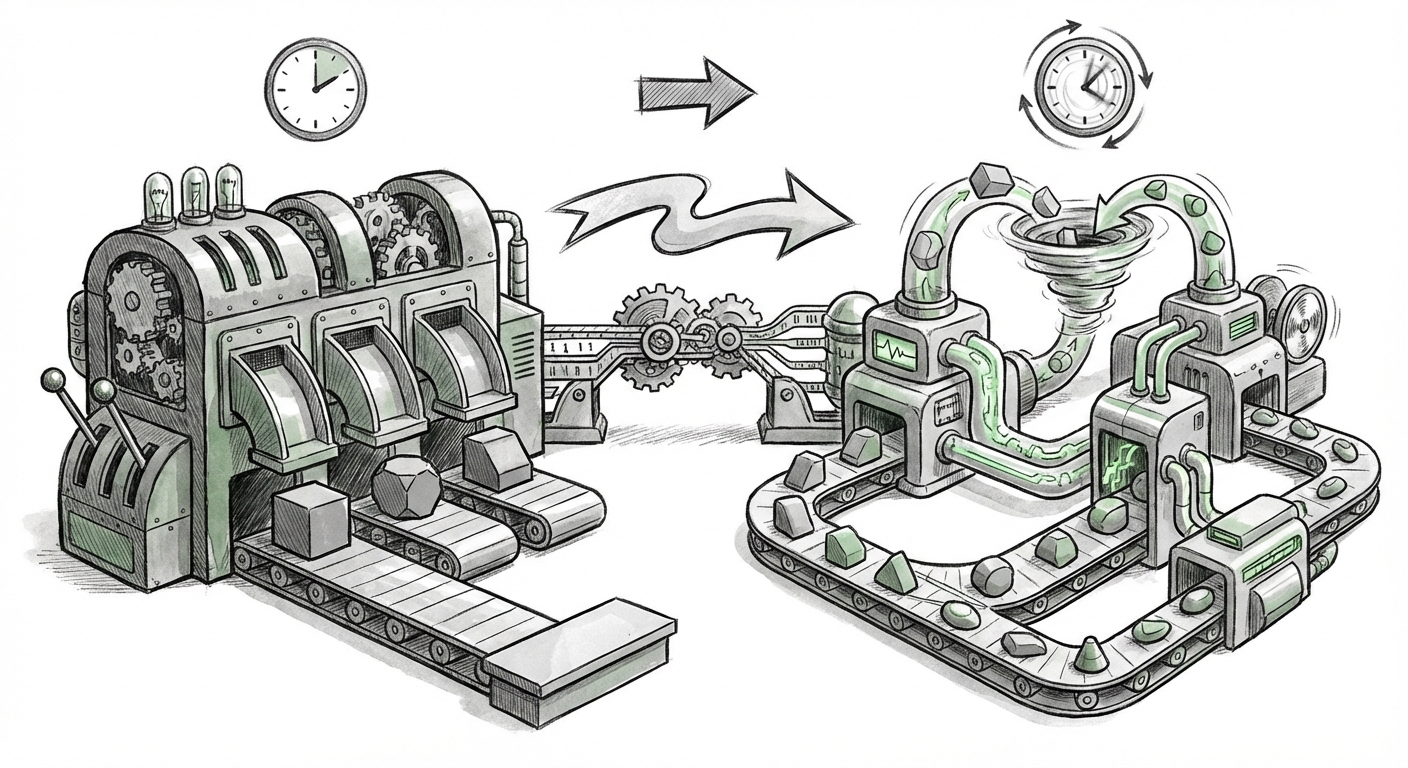
But "pure" generative AI means systems that only do this: pattern matching and generation. They don't have an internal model of the world. They don't perform experiments. They don't test their own ideas against reality. They don't learn from failure in the way a scientist does. They simply produce outputs that look like the data they were trained on.
Sutton's argument is that this kind of system, no matter how large or sophisticated, cannot drive genuine scientific discovery. Science requires more than generating plausible-sounding statements. It requires interaction with the physical world, causal reasoning, hypothesis testing, and the ability to be surprised by data that doesn't fit existing patterns.
Richard Sutton's Core Argument
According to the report from the-decoder.com, Sutton believes that pure generative AI lacks the key ingredients for real science. While these models can summarize existing knowledge and even combine ideas in novel ways, they cannot truly discover because they have no access to the ground truth of nature. They are trapped inside their training data.
Think of it this way: a generative AI can write a paper that looks like a scientific paper, but it cannot design and run an experiment that produces genuinely new data. It cannot be wrong in a productive way—it can only be statistically likely or unlikely based on its training. Science, by contrast, thrives on being wrong, because wrong hypotheses lead to new experiments and deeper understanding.
Sutton's view is a reminder that pattern matching is not understanding. A model that can predict the next word in a sentence about quantum physics doesn't actually know quantum physics. It knows the statistical patterns of how people write about quantum physics. That's a big difference.
This argument echoes a broader debate in AI research: Can large language models ever achieve true reasoning? Or are they just sophisticated parrots? Sutton's position is clear—they are tools, not scientists.
What This Means for the Future of AI
If Sutton is right, then the future of AI in science is not about building bigger generative models. It's about building systems that can interact with the world, run experiments, collect data, and learn from feedback loops. This points toward a future where AI is more like a robot scientist than a chatbot.
We're already seeing early versions of this idea in action. Self-driving labs use AI to design experiments and robotic arms to carry them out. Drug discovery platforms use reinforcement learning to propose molecules, synthesize them, and test them in simulation. These systems go beyond pure generation—they act and learn from results.
Sutton himself is a pioneer of reinforcement learning, which is precisely about learning from interaction. So it's no surprise he'd argue that pure generation isn't enough. The next wave of AI for science will likely combine generative models with active learning, simulation, and robotics.
For businesses, this means that investing in generative AI alone may not be enough to create lasting competitive advantage in R&D. The real value will come from integrating generative models into broader systems that can test, validate, and refine ideas.
Key Trends to Watch
- AI + Robotics for Science: Labs that combine generative hypothesis generation with robotic experimentation will accelerate discovery in materials science, biology, and chemistry.
- Causal AI: Models that reason about cause and effect, rather than just correlation, will become critical for scientific applications.
- Hybrid Systems: The most powerful AI systems will be hybrids—generative for creativity, reinforcement learning for interaction, and symbolic reasoning for logic.
- Human-in-the-loop Discovery: Scientists will use generative AI as a brainstorming partner, but they'll still need to design experiments and interpret results.
Practical Implications for Businesses
For companies building AI strategy, Sutton's argument offers a few important lessons.
Don't Confuse Fluency with Intelligence
A generative AI that sounds authoritative may still be wrong. Businesses that rely on generative models for decision-making, especially in science-heavy domains like drug development or materials design, need to build validation pipelines. Don't trust a model's output just because it looks convincing.
Invest in Data Infrastructure
If real science requires interaction with the physical world, then companies that have the best data from real experiments will have an edge. This means investing in sensors, lab automation, and data collection systems that feed AI models with fresh, realistic data—not just internet text.
Build Feedback Loops
Pure generative models are static—they don't update when new data arrives (unless retrained, which is slow and expensive). For science, you need systems that can learn continuously. Reinforcement learning and online learning methods will become more important for businesses that want AI to improve over time.
Think Beyond Chatbots
Many companies are rushing to deploy generative AI chatbots for customer service, content creation, and coding. These are valuable, but they're not the frontier of AI's impact on science. The biggest breakthroughs will come from AI that can do things, not just say things.
What This Means for Society
Sutton's argument has broader implications too. If society starts to believe that generative AI can do science, we risk over-trusting AI-generated findings. We've already seen problems with AI-written research papers that contain plausible-sounding but completely wrong conclusions. Peer review is struggling to keep up.
There's also a risk of misallocating resources. If governments and funding agencies pour money into pure generative AI for science, they might neglect the harder infrastructure work needed for robotic labs, data sharing, and experimental automation. Sutton's warning is a call for balance.
And for the public, it's a reminder that AI is a tool, not a replacement for human curiosity and rigor. Real science requires skepticism, reproducibility, and engagement with the physical world. These are things generative AI, on its own, cannot do.
How to Apply This Insight Today
If you're a business leader, researcher, or strategist, here are practical steps you can take right now:
- Audit your AI dependency. Ask: Are we relying on generative models for tasks that require real validation? Build checks into your workflow.
- Invest in simulation and testing environments. Whether it's digital twins or robotic labs, create ways for AI to test its ideas.
- Hire for AI integration skills. You need people who can connect generative models with real-world data and experiments.
- Stay open to non-generative approaches. Reinforcement learning, causal inference, and symbolic AI are all making comebacks for good reason.
- Follow the science. Keep an eye on labs and startups that are building AI for real discovery, not just content generation.
The Road Ahead: Generative AI as a Tool, Not a Scientist
Richard Sutton's perspective, as reported by the-decoder.com on June 1, 2026, is a valuable corrective to the hype cycle. Generative AI is a powerful tool for science—it can summarize literature, suggest hypotheses, write code, and even design experiments. But it is not a scientist. It lacks the ability to interact with reality, to be surprised, and to learn from failure in the way that drives real discovery.
The future of AI in science is not about replacing scientists with generative models. It's about building partnerships between humans and AI systems that combine the best of both: generative creativity plus human skepticism and experimental discipline. The companies and countries that understand this distinction will be the ones leading the next wave of innovation.
So, the next time you see a headline about AI "discovering" a new drug or "solving" a scientific problem, ask yourself: Did the AI just generate a plausible answer based on old data, or did it actually interact with the world and learn something new? That distinction matters—and it's exactly what Richard Sutton is asking us to think about.