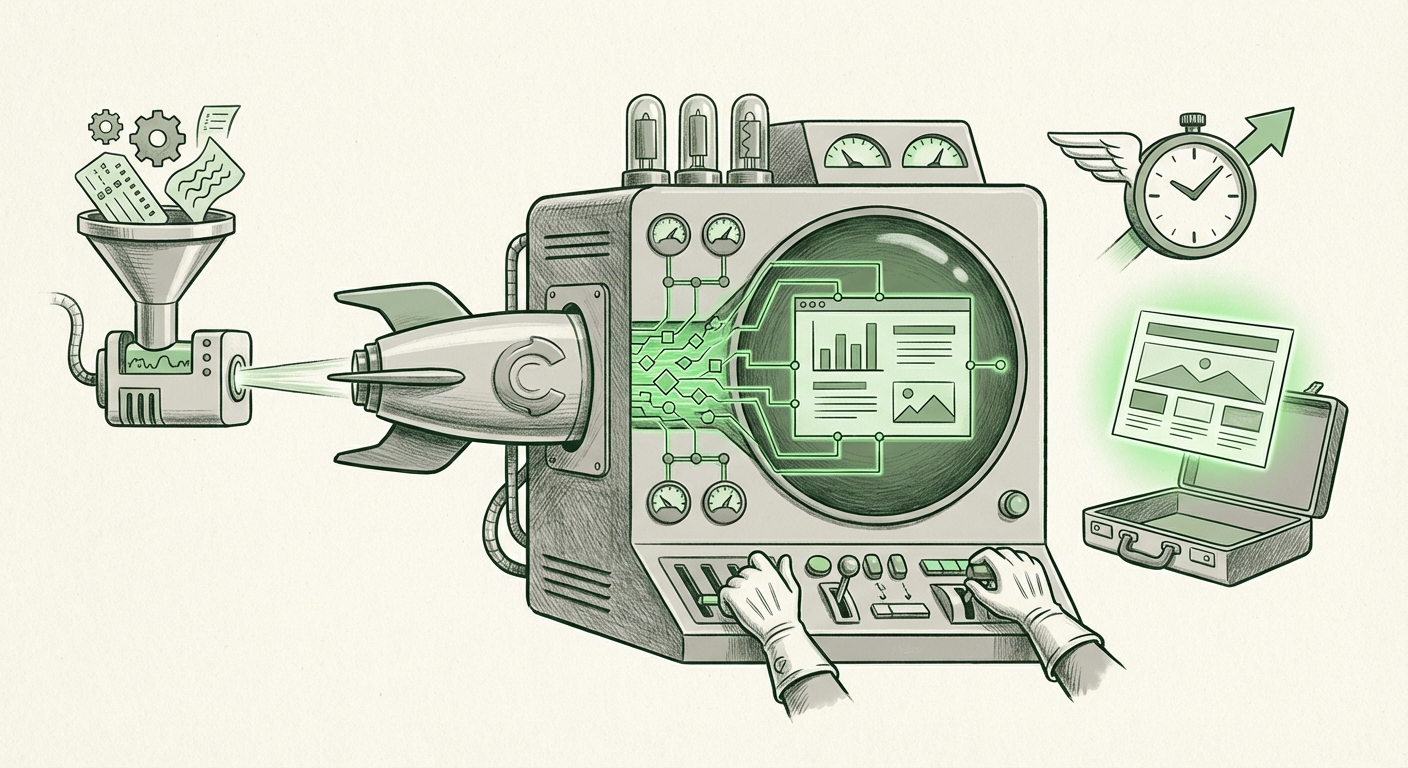
ChatGPT Just Became a Career Platform: AI Job Search & CV Editor Is Here
Imagine sitting down to look for a new job and instead of juggling multiple tabs on LinkedIn, Indeed, and Google Docs, you simply open ChatGPT and tell it you want to update your CV and find openings that match your skills. That scenario just became reality. OpenAI has turned ChatGPT into a full career platform by adding job search and CV editing features. This is a big deal — not just for job seekers, but for the entire direction of artificial intelligence. Let's break down what's happening, why it matters, and what it tells us about where AI is headed.
What OpenAI Just Did
According to a report from the-decoder.com published on June 2, 2026, OpenAI has transformed ChatGPT into a career platform. The chatbot can now help users search for jobs and edit their CVs. This isn't just a minor update. It turns ChatGPT from a general-purpose assistant into a specialized tool for one of the most important and stressful tasks many people face: finding a job.
The new features mean you can ask ChatGPT to help you rewrite your résumé to highlight certain skills, or to find job listings that match your experience. It's a natural expansion for a tool that already handles writing, analysis, and research. But it also signals something bigger: AI is moving from answering questions to helping you take action in the real world.
Why This Move Makes Perfect Sense
For anyone who has used ChatGPT for work, the career pivot feels obvious. People were already using the tool to draft cover letters, brainstorm interview answers, and even practice for job interviews. OpenAI simply formalised what was already happening — and added the missing pieces.
From a business perspective, job search and CV editing are high-value activities. People will pay for better résumés and smarter job searches. By embedding these capabilities directly into ChatGPT, OpenAI creates a reason for users to stay inside its ecosystem rather than bouncing to other specialised tools. It also gathers valuable data about what skills are in demand, which companies are hiring, and what language works best in job applications.
This is a smart competitive move. Other AI assistants like Google Gemini or Microsoft Copilot don't yet offer this kind of integrated career service. By moving first, OpenAI grabs mindshare — and usage share — in a category that affects nearly every working adult.
What This Means for the Future of AI
The bigger story here isn't just about job hunting. It's about what happens when AI platforms start doing real-world tasks for us instead of just providing information. Let's explore three key trends this move reveals.
1. AI Is Becoming a Platform for Life Tasks, Not Just a Chatbot
ChatGPT started as a chatbot that could hold a conversation. Then it added image generation, voice conversations, code execution, and file uploads. Now it's adding career services. The pattern is clear: ChatGPT is evolving into a platform where you can manage significant parts of your life. Job hunting is just the beginning. We might see similar expansions into health tracking, financial planning, education, and even legal document preparation.
This shifts the role of AI from "assistant who answers questions" to "agent who helps you get things done." The distinction matters. An assistant tells you what a good CV looks like. An agent helps you write it, find where to send it, and maybe even apply on your behalf. That's a much more powerful — and personal — relationship between humans and machines.
2. Specialised AI Tools Will Merge Into Super-Apps
For years, the trend in software was fragmentation. You needed a separate app for notes, separate app for tasks, separate app for job hunting. AI is reversing that. Tools like ChatGPT, which started broad, are adding specialised capabilities. This is the super-app model, popularised by WeChat in China and now being adopted by Western tech companies. Instead of using ten different tools to manage a job search, you'll use one AI platform that does everything.
The implications for businesses and society are large. For businesses, this means your product needs to either be part of an AI super-app or offer something so unique that people will go to a separate tool. For society, it raises questions about data concentration. If one company holds your conversations, your CV, your job searches, your medical questions, and your financial planning, that's a lot of trust in one place. Privacy and security become even more critical.
3. AI Is Learning to Represent You in the World
Perhaps the most profound shift is that AI is beginning to act on your behalf in external systems. When you ask ChatGPT to find jobs that match your profile, it isn't just searching the web. It's interacting with databases, parsing job descriptions, and matching them to your unique skills and experience. Over time, this could evolve into AI that applies for jobs, negotiates salaries, and manages your career progression.
This raises a fascinating question: how much of your professional life are you willing to delegate to an AI? For many, the answer will be "a lot" — especially for the boring, tedious parts like formatting résumés or scanning hundreds of job listings. But it also means your AI needs to know you well enough to represent your interests accurately. That requires deep personal data, which brings us back to the trust issue.
Practical Implications for Businesses and Job Seekers
Let's move from the big-picture trends to ground-level reality. What does this mean for you, whether you're looking for a job, hiring for one, or running a company?
For Job Seekers: Your AI Is Now Your Career Coach
The immediate benefit is obvious. You can now use ChatGPT to:
- Edit your CV to highlight the skills that matter for specific job listings
- Search for jobs that match your experience without leaving the chat interface
- Tailor your applications quickly by having the AI rewrite sections of your résumé for different roles
- Practice interviews by simulating conversations with hiring managers
This levels the playing field. In the past, people who could afford career coaches or résumé writers had an advantage. Now, anyone with a ChatGPT account has access to professional-level career tools. The key is learning how to use them effectively. Don't just ask for generic help. Give the AI specific context: the job description, your genuine experience, the vibe of the company. The more context, the better the output.
But there's a caution: because AI is now a career helper, employers will also have AI tools that screen résumés. Your AI-written CV will be read by an AI recruiter. This could create an arms race where both sides use AI to optimise for each other. The winners will be people who use AI wisely, not just as a shortcut but as a strategic tool.
For Employers: Prepare for a New Hiring Landscape
If ChatGPT becomes the go-to platform for job searches, companies need to think about how their job listings appear in that ecosystem. The AI will be matching job descriptions to candidate profiles. If your job posting is vague or poorly structured, the AI may not surface it to relevant candidates. Clear, detailed, and skill-focused job descriptions will perform better.
Also, expect candidates to be more polished. With AI helping to write CVs and prepare for interviews, the signal-to-noise ratio in applications may shift. It could become harder to tell which candidates genuinely have the skills and which have simply been well-coached by an AI. Companies may need to rely more on skills tests, portfolios, and in-depth interviews rather than traditional résumé screening.
On the positive side, AI-assisted job search could help surface candidates from non-traditional backgrounds who don't have conventional career paths but do have the right skills. If the AI matches based on capability rather than pedigree, it could open up hiring to a wider pool of talent.
For Society: The Future of Work Gets a New Gatekeeper
Widespread use of AI for career management changes the relationship between workers and the labour market. When a single AI platform becomes the primary way people find jobs, that platform holds enormous power. It decides which jobs get visibility and which candidates get recommended. This is similar to the power that search engines and social media already have, but more intimate because it involves your career trajectory.
There's also a risk of homogenisation. If everyone uses similar AI prompts to write their CVs, résumés may start to look alike. Authenticity could become a premium. Candidates who can show real personality and unique thinking — beyond what an AI template produces — may stand out more, not less.
And of course, there are equity concerns. While AI career tools are currently available to anyone with internet access, the best versions may require paid subscriptions. If premium AI access gives people a significant advantage in the job market, it could widen the gap between the haves and have-nots. OpenAI will need to think carefully about how to offer career tools equitably.
Actionable Insights You Can Use Right Now
Here are practical steps for different audiences to prepare for this shift.
If you're a job seeker:
- Start experimenting with ChatGPT's new career features immediately. Practice rewriting your CV for different roles.
- Treat the AI as a coach, not a crutch. Use it to improve your materials, but also practice answering questions on your own.
- Keep your personal data organised. The more you feed the AI accurate information about your skills and experience, the better it will represent you.
- Diversify your job search methods. Don't rely solely on the ChatGPT platform. Use it as one tool in a broader strategy.
If you're an employer or recruiter:
- Optimise your job listings for AI parsing. Use clear, standardised skill descriptions and avoid jargon that AI may misinterpret.
- Consider adding skills assessments as a standard part of your hiring process to validate what the AI-written CV claims.
- Train your recruiters to work alongside AI. Expect candidates to be more prepared and more polished. Focus on deep-fit indicators like culture, motivation, and potential.
If you're a business leader:
- Watch the super-app trend carefully. Your product strategy should account for the fact that AI platforms are absorbing adjacent functions.
- Think about data strategy. If your employees use ChatGPT for career development, what does that mean for retention and talent planning? Tools that help people find other jobs are also tools that help companies understand their talent market.
- Invest in internal AI tools. If you want to retain talent, consider giving employees AI-powered career development tools inside your company rather than driving them to external platforms.
The Bigger Picture: AI Agents Are Coming of Age
The career platform expansion is a microcosm of a larger trend: AI is becoming an agent that acts in the world. Asking a question is passive. Searching for jobs and editing a CV is active. The next step will be AI that applies for jobs, schedules interviews, and even negotiates offers on your behalf. We're not there yet, but the path is becoming clear.
This transition brings incredible opportunity and serious responsibility. On the opportunity side, AI can free humans from the most tedious parts of career management, allowing us to focus on meaningful work and creative thinking. On the responsibility side, we need to ensure that these tools are transparent, fair, and respectful of privacy. The AI knows your career history, your aspirations, your weaknesses. That data must be handled with care.
Conclusion: Welcome to the AI-Powered Career Era
OpenAI's decision to turn ChatGPT into a career platform is more than a product update. It's a sign that AI is maturing from a passive information source into an active participant in our daily lives. For job seekers, it offers powerful new tools to manage their careers. For employers, it reshapes how talent is found and evaluated. For society, it raises deep questions about fairness, privacy, and the future role of human judgment in hiring.
The genie is out of the bottle. AI will now help you get a job — or hire someone. The smartest move you can make is to understand how these tools work, use them to your advantage, and stay aware of their limitations. The future of work isn't coming. It's already here, and it's asking you to upload your CV.