The AI Efficiency Paradox: Why Humans Are Blocking Your Cost Savings (And What To Do About It)
Imagine this: You have invested millions of dollars in the latest artificial intelligence tools. Your models are fast. They are accurate. They are ready to take over tedious tasks and deliver massive cost savings. But when the quarterly results come in, the numbers are disappointing. The savings just are not there.
A major study from Bain & Company, published in June 2026, finally explains why. The answer is surprising. It is not a problem with the AI itself. The problem is us. Companies are missing their AI savings targets because humans keep getting in the way.
This is the core paradox of the AI revolution. The technology is ready for prime time, but our organizations, workflows, and human brains are not. Let us dive into what this means for the future of AI and how smart businesses can finally unlock the value they have been promised.
The Bain Bombshell: It’s Not the Machine, It’s the Culture
According to the Bain study, the biggest roadblock to AI-driven cost savings is not a lack of computing power or bad algorithms. It is human friction. Employees do not trust the AI. Managers do not know how to use the new tools. Old workflow processes are kept in place, with AI awkwardly slapped on top.
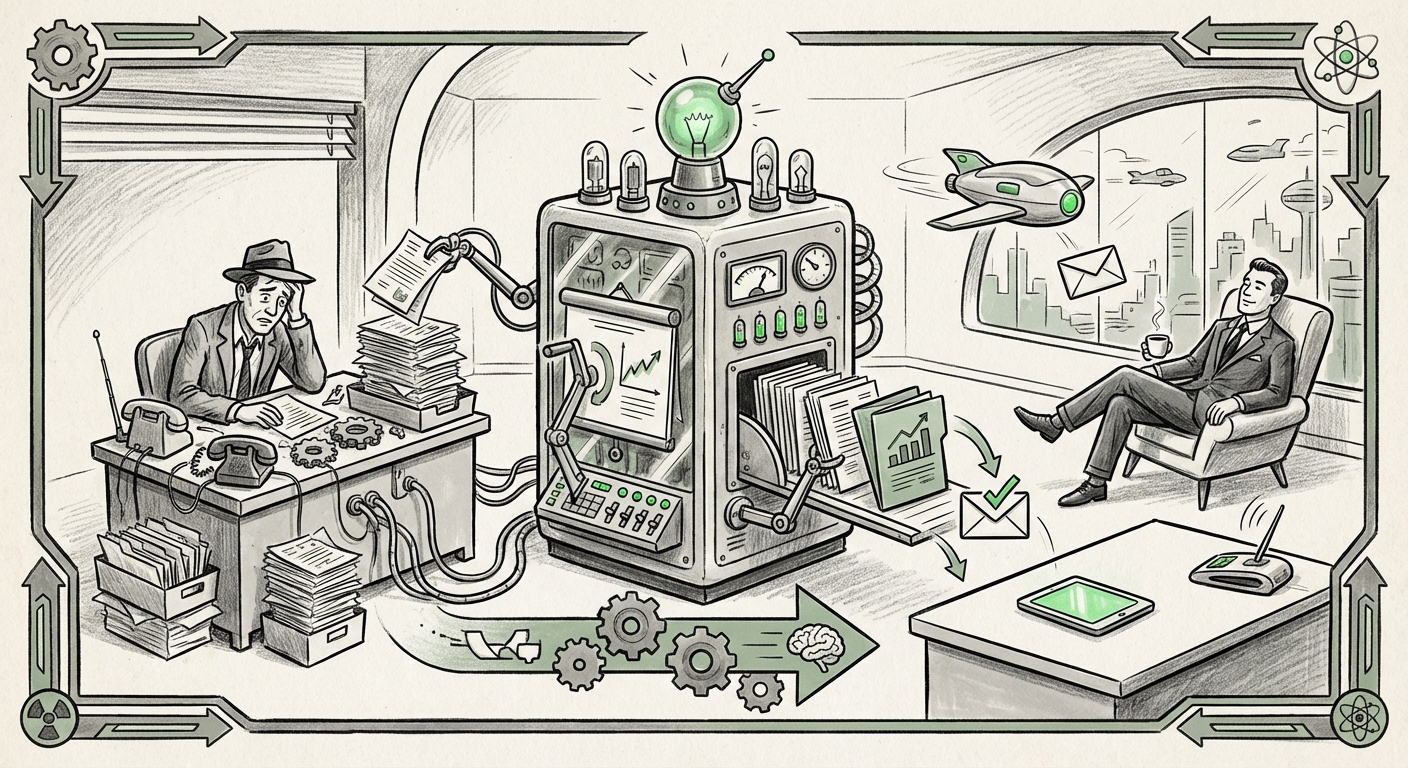
Think of it like buying a self-driving forklift for a warehouse but refusing to change the layout of the shelves. The machine works perfectly, but it keeps bumping into old walls. Companies are trying to automate broken systems without redesigning the human role within those systems.
The result is a frustrating "AI efficiency paradox." The tools exist to save time and money, but the human element introduces delays, errors, and resistance. The technology is often blamed, but the root cause is organizational inertia.
Why Human Friction is the #1 AI Killer
There are several specific reasons why humans are "getting in the way" of AI savings. Understanding these is the first step to solving the problem.
- Fear of Job Loss: This is the biggest and most obvious factor. When employees feel that AI is meant to replace them, they will actively or passively resist it. They might ignore AI recommendations, refuse to input clean data, or simply slow down the adoption process.
- Lack of Trust in "Black Box" AI: Many AI systems make decisions without explaining *why*. A human worker might get a recommendation from an AI and ignore it because they do not understand the reasoning. If the AI is wrong a few times, trust is broken entirely.
- Poor Change Management: Many companies roll out AI tools like they are just a new software update. They send a PDF manual and expect everyone to adapt. But AI changes workflows fundamentally. It requires new skills, new hierarchies, and new ways of thinking. Without proper training and support, people fall back on their old habits.
- Broken Incentive Structures: If a manager is measured on how many people are in their department, they have no incentive to use AI that makes those people more efficient. Company goals often directly conflict with the efficient use of AI.
What This Means for the Future of AI
This Bain study gives us a very clear roadmap for where AI is heading. The future of AI will not be about building smarter machines that replace humans. It will be about building collaborative systems that work with humans.
We are moving from an era of "Full Automation" to an era of "Augmentation." The most successful AI systems of the future will be judged not just on their IQ (how smart they are), but on their EQ (how well they interact with people).
The Rise of Explainable AI (XAI)
To fix the trust problem, AI must become more transparent. The future will demand AI that can say: "Here is what I recommend, and here is exactly why." This allows a human to verify, question, and learn from the AI. Trust is rebuilt through transparency.
Human-in-the-Loop Systems
The most effective AI systems will be designed with a "human in the loop." The AI handles the heavy lifting of data processing, pattern recognition, and repetitive tasks. But the human makes the final decision. This hybrid model creates better outcomes than either the human or AI working alone.
Workflow Redesign
The future of AI demands that we stop trying to automate old processes. Instead, we must redesign the workflow from scratch. This means asking: "If we had a super-smart assistant that never sleeps, how would we structure our day?" It changes the role of the human from a doer to a supervisor, editor, and strategist.
Practical Implications for Business and Society
This shift has massive implications for how businesses operate and how society prepares for the future of work.
For Business Leaders
Stop throwing money at AI technology and start investing in change management. Your ROI on AI is directly tied to how well your people adopt it. Budget for trainers, for workflow consultants, and for tools that make AI explainable.
For Employees
Your value is shifting from being a "doer of tasks" to being a "manager of AI." Skills like critical thinking, creativity, and emotional intelligence will skyrocket in value. The goal is to become an expert at working with AI.
For Society
Education systems must adapt. We need to train people for a world where they will work alongside intelligent machines. This means less focus on rote memorization and more focus on problem-solving, ethics, and collaboration.
For AI Developers
If your AI tool is hard to use, hard to understand, or hard to trust, it will fail. User experience (UX) and explainability are no longer "nice to have." They are the core features that determine whether your AI delivers real savings.
Actionable Insights: How to Fix the Problem
How do we stop humans from "getting in the way" and start helping them collaborate with AI? Here is a practical roadmap based on the Bain study findings.
- Start with the "Why," Not the "How": Before rolling out an AI tool, explain to everyone why it benefits *them*. Does it remove their boring paperwork? Does it help them make better decisions? Frame AI as a helper, not a replacement.
- Invest in "AI Literacy" for Everyone: Do not just train your IT team. Train your sales reps, your HR staff, and your executives. Everyone needs a basic understanding of what AI can and cannot do. This reduces fear and builds confidence.
- Redesign Workflows First: Bring a team together to map out a task. Ask: "Where does a human add value? Where does a machine add speed?" Build the workflow around these strengths. Do not just stick AI onto an existing broken process.
- Create Feedback Loops: Allow employees to easily challenge the AI or correct its mistakes. This improves the AI over time and makes human workers feel empowered. It fosters a sense of partnership rather than submission.
- Measure Adoption, Not Just Savings: Early on, measure how often people use the AI tool and how they feel about it. High adoption rates will eventually lead to cost savings. Low adoption rates mean you have a human problem you must solve first.
Conclusion: The Human Side of AI is the Future
The Bain study is a critical inflection point for the entire AI industry. It forces us to stop looking at the machine and start looking in the mirror. The future of AI is not a story of machines taking over. It is a story of humans learning to work in a new way.
Companies that will win in the AI era are not the ones with the biggest clusters or the fanciest models. They are the ones that master the "last mile" of AI—the messy, complicated, and wonderfully human process of change. They are the ones that design AI for empathy, for transparency, and for collaboration.
The technology is the easy part. The people are the product. The future of AI is human.