Why Knowledge Engineering is the Next Big Frontier in AI – And How Businesses Should Prepare
Artificial intelligence has taken huge leaps forward in recent years. Large language models can write essays, generate code, and answer questions. Yet for all their power, these systems still stumble on tasks that require deep, reliable expertise. That's where knowledge engineering comes back into the spotlight. Rainbird's Webinar 5, "Knowledge Engineering in Practice," made it clear: the future of AI depends not just on more data and bigger models, but on carefully crafted knowledge that humans can trust.
This article explores the key trends and insights from that webinar, breaks down what they mean for the future of AI, and gives you practical steps to start using knowledge engineering in your own organization. Whether you're a technical lead or a business strategist, you'll see why knowledge engineering is becoming the most important discipline in applied AI.
What Is Knowledge Engineering (and Why Should You Care)?
Knowledge engineering is the process of capturing, structuring, and formalizing human expertise so that a computer can use it to make decisions. Think of it as turning the deep know‑how of a medical diagnostician, a financial analyst, or a manufacturing technician into a set of rules, logic, and relationships that an AI system can follow.
In the early days of AI, knowledge engineering was central – expert systems like MYCIN and XCON were built this way. Then came machine learning, which promised to learn patterns from data without human effort. But pure data‑driven models have limits. They can't explain their reasoning. They make weird mistakes. And they often lack the nuanced understanding that comes from years of human experience.
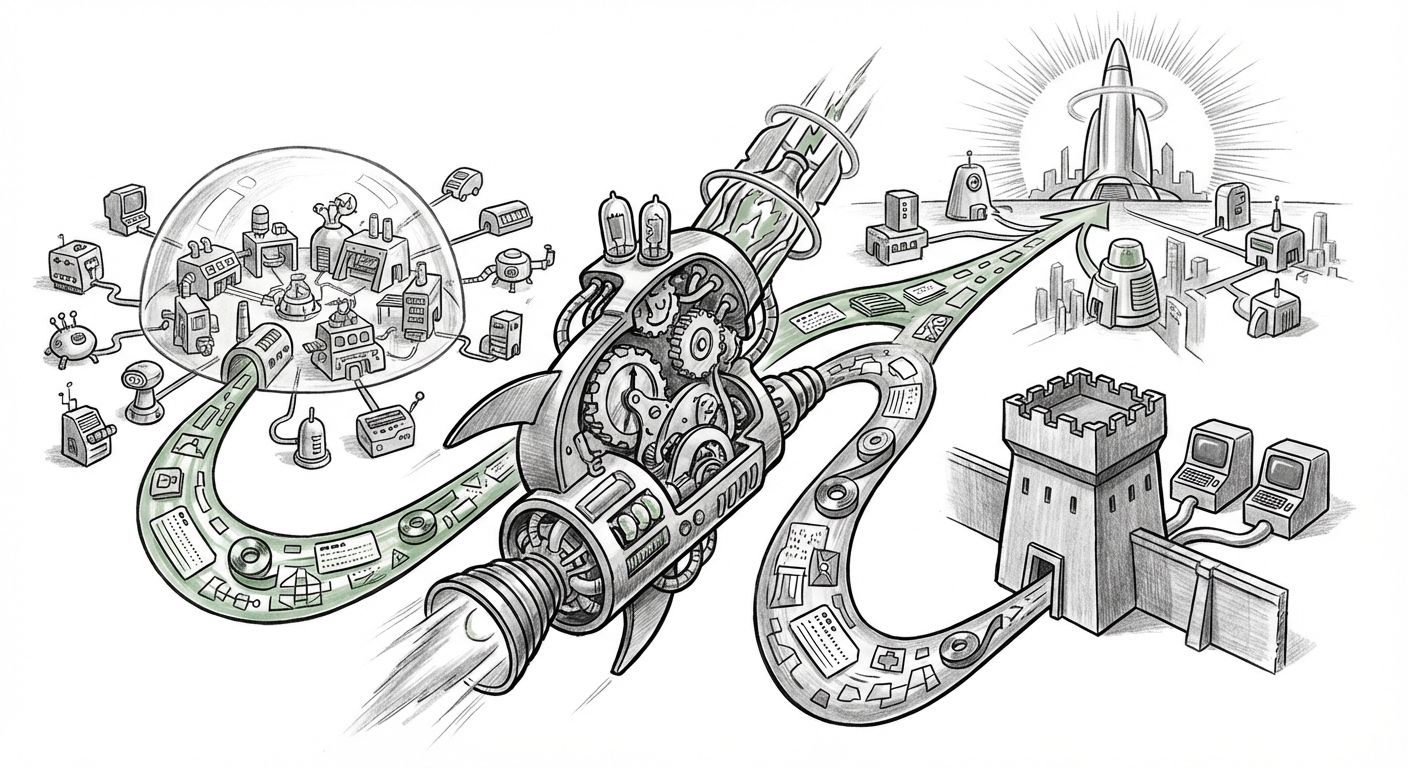
The webinar highlighted that we are now entering a hybrid age. The best AI systems combine the scale of machine learning with the precision and transparency of knowledge engineering. This is not a step backward; it's a smarter way forward.
Key Trends from the Webinar: Knowledge Engineering in Practice
Rainbird's fifth webinar brought together practitioners and thought leaders to discuss real‑world applications. Here are the major themes that emerged.
1. The Rise of Explainable, Auditable AI
Regulatory pressure is growing. The European Union's AI Act, for instance, demands that high‑risk AI systems provide clear explanations of their decisions. Knowledge engineering offers a natural solution. When decisions are based on explicit rules and logic, you can trace exactly why a conclusion was reached. The webinar emphasized that transparency is no longer optional – it's a business requirement.
2. Knowledge Engineering as a Bridge Between Experts and Algorithms
One of the biggest challenges in AI is getting domain experts to trust the system. The webinar showed that when experts are involved in building the knowledge base – when they can see their own logic reflected in the AI's reasoning – adoption rates soar. Knowledge engineering becomes the bridge that turns skeptical professionals into enthusiastic collaborators.
3. Hybrid Architectures Win in Practice
Pure machine learning can handle pattern recognition, but it struggles with rules that change, with edge cases, and with tasks that require common sense. Knowledge engineering excels at those very challenges. The webinar presented case studies where a hybrid approach – a neural network for perception and a knowledge‑engineered reasoner for decision‑making – outperformed either method alone.
4. Tools Are Getting Easier (But the Thinking Is Still Hard)
Modern knowledge engineering tools, like Rainbird's own platform, use visual interfaces and natural language to let experts define rules without writing code. Yet the webinar cautioned that the real work is not technical; it's conceptual. Deciding what knowledge matters, how to validate it, and how to keep it updated – that's where the true challenge lies.
What This Means for the Future of AI
The trends from the webinar point to several profound changes in how AI will be built and used over the next few years.
From Black Boxes to Glass Boxes
We are moving away from AI systems that are mysterious and untrustworthy. The future belongs to glass‑box AI – systems where you can look inside and see exactly how decisions are made. Knowledge engineering is the key to making this happen. This shift will affect everything from healthcare diagnostics to credit scoring to autonomous vehicles. Regulators, customers, and business partners will demand explanations, and only knowledge‑engineered systems can provide them at scale.
Knowledge as a Strategic Asset
Companies have spent years collecting data, but data alone is not a competitive advantage – everyone has data. The real advantage lies in knowledge: the unique, hard‑earned expertise of your people. Knowledge engineering lets you capture that expertise, make it persistent, and scale it across your organization. In the future, the companies that invest in building knowledge bases will pull ahead of those that rely only on generic machine learning.
The Re‑Humanization of AI
AI has often been presented as a replacement for humans. But the webinar's message was different: knowledge engineering makes AI a partner that amplifies human judgment. Instead of automating away jobs, it augments experts by handling routine decisions and freeing them for complex, creative work. This is a more sustainable, ethical path forward.
Practical Implications for Businesses and Society
For Businesses
- Start small and specific. Identify a high‑value, knowledge‑intensive process – like loan approval, insurance claims, or compliance checks – and build a knowledge base for just that domain. Measure the improvements in accuracy, speed, and explainability.
- Involve your experts from day one. Don't let data scientists build systems in isolation. Bring in the people who actually do the job. Their input is the raw material of knowledge engineering.
- Plan for maintenance. Knowledge is not static. Regulations change, markets evolve, and new discoveries happen. Build processes to review and update your knowledge bases regularly. Treat them as living systems, not once‑and‑done projects.
- Invest in tools. Use platforms that make it easy for non‑programmers to contribute. The lower the barrier to entry, the more knowledge you can capture.
For Society
- Fairness and bias. Knowledge engineering makes bias easier to spot. When rules are explicit, you can audit them for unfair assumptions. This is far harder with a black‑box neural network. Society should encourage AI systems that are auditable by design.
- Accountability. When an AI makes a mistake, who is responsible? With knowledge engineering, you can trace the faulty rule back to its human author. This clarity is essential for legal and ethical accountability.
- Education and skills. Knowledge engineering requires a new kind of hybrid worker – someone who understands both domain expertise and how to formalize it. Educational institutions should start teaching these skills now.
Actionable Insights You Can Use Today
Based on the webinar and broader trends, here are concrete steps to get started with knowledge engineering.
- Audit your existing AI. Look at the decisions your current models make. For any that require high trust or have regulatory implications, ask: Could I explain this decision to a customer or a regulator? If not, that process is a candidate for knowledge engineering.
- Run a pilot project. Choose a narrow but important domain. Map out the expert decision process. Formalize the rules using a knowledge engineering tool. Compare the results with your current approach. Expect better explainability and often fewer errors.
- Train your people. Send domain experts to a knowledge engineering workshop. Teach them how to think about their own expertise in structured ways. This skill will become increasingly valuable.
- Combine with machine learning. Use ML to handle pattern recognition (e.g., reading documents, identifying objects) and knowledge engineering to handle reasoning (e.g., what to do with that information). This hybrid model is the most powerful approach today.
Conclusion: The Silent Revolution in AI
While headlines focus on ever‑larger language models, a quieter but more impactful revolution is underway. Knowledge engineering is bringing human intelligence back into AI, making systems that are trustworthy, transparent, and truly intelligent. Rainbird's Webinar 5 reminded us that the future of AI isn't just about more data – it's about better knowledge. Organizations that embrace this shift will build AI that people actually want to use. Those that ignore it will struggle with adoption, regulation, and trust.
The next big leap in AI won't come from a new algorithm or a bigger dataset. It will come from capturing and formalizing the wisdom that humans have spent centuries accumulating. That is the promise of knowledge engineering. And as the webinar showed, it's already happening.