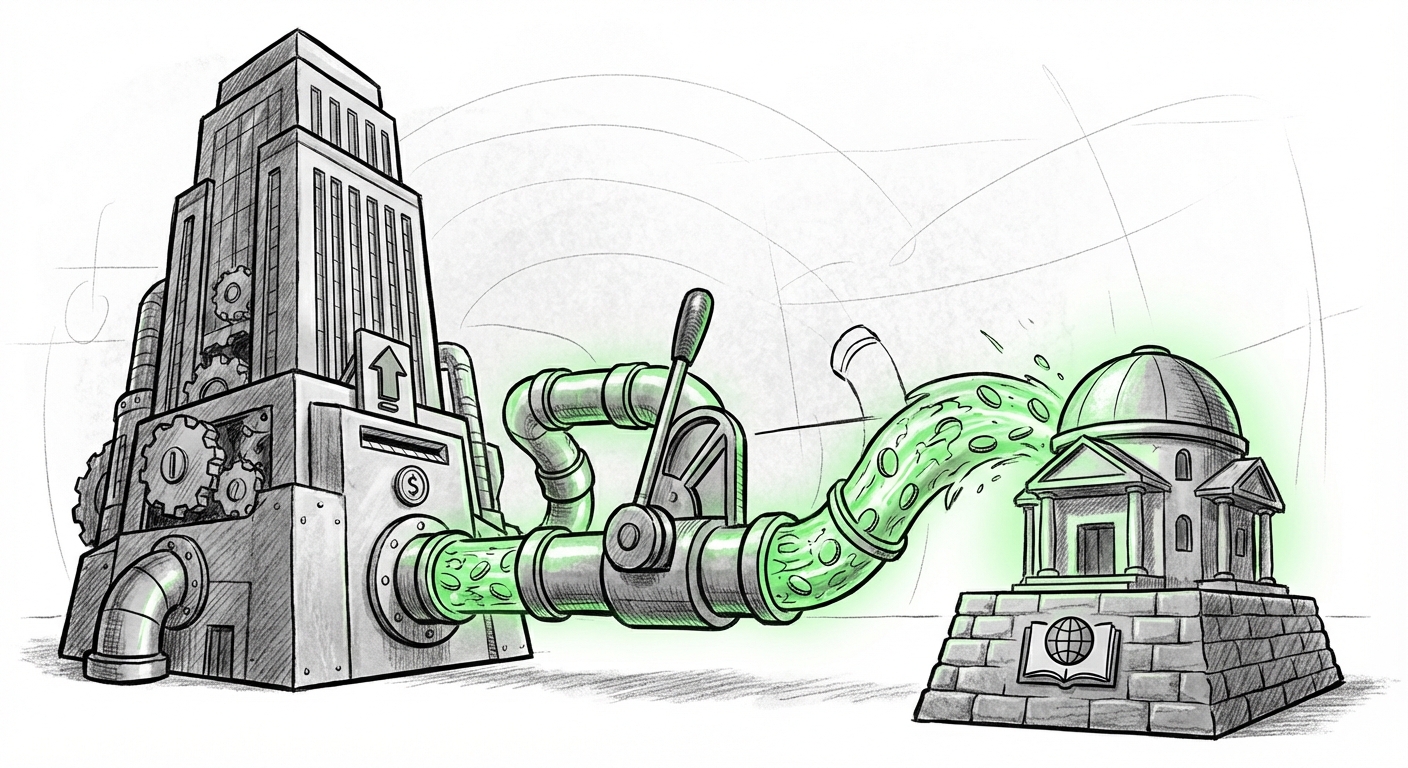
Microsoft Trained Its AI on Unlicensed Web Data – Here's Why That Matters for the Future of AI
In the race to build better AI, data has become the most valuable resource. Companies like Microsoft have promised that their enterprise AI models would be trained on "enterprise-grade, clean and commercially licensed data." But a report from The Decoder (June 5, 2026) reveals that Microsoft trained its MAI models on unlicensed web data – directly contradicting that promise. This isn't just a slip-up. It's a sign of a deeper problem in the AI industry: the temptation to cut corners when data is the fuel for innovation.
In this article, we'll break down what happened, what it means for businesses and society, and how AI will be used in a world where data ethics are no longer optional.
The Story: A Broken Promise
Microsoft had publicly committed to using only "enterprise-grade, clean and commercially licensed data" for its MAI models. The goal was to reassure corporate customers that their AI tools wouldn't be built on stolen or questionable content. But according to The Decoder, internal evidence shows that Microsoft's engineers trained the models using unlicensed web data – data scraped from the internet without permission or proper licensing.
This is a huge blow to trust. If one of the world's most valuable companies can't stick to its own data standards, what does that mean for every other AI developer? The promise of "clean data" was supposed to differentiate Microsoft from competitors who used any data they could find. Now that difference is gone.
Why This Matters for the Future of AI
1. Trust in AI Companies Will Erode
Businesses are adopting AI faster than ever, but they rely on vendors to be honest about training data. If a company says its AI is "enterprise-grade," customers assume it was built ethically. When that trust breaks, it slows down adoption. In the future, every AI deal will require strict audits of data sources – not just marketing promises.
2. Legal and Regulatory Backlash
Unlicensed web data often includes copyrighted material, personal information, and biased content. When AI models are trained on such data, they can produce outputs that violate copyright laws, privacy regulations, or spread harmful stereotypes. We're already seeing lawsuits against AI companies for this exact reason. Microsoft's case will accelerate calls for regulation of training data. Expect laws that force companies to prove where their data came from and how it was licensed.
3. The "Data Sourcing" Problem Gets Worse
AI models need enormous amounts of data. Commercially licensed data sets are expensive or limited in size. Unlicensed web data is cheap and huge – but it's a legal minefield. The tension between quantity and quality will only intensify. Some startups may try to hide their data sources, but whistleblowers and audits will catch them. The future of AI will involve specialized data marketplaces, synthetic data generation, and partnerships with content owners.
Implications for Businesses and Society
For Businesses Using Microsoft's AI
If your company relies on Microsoft's MAI models, you now face risks you didn't expect. Your AI tools might have ingested copyrighted or legally questionable content. This could expose your business to lawsuits or compliance failures. You need to ask your AI vendors: "Can you prove your training data is clean?" If they can't, you may need to reconsider your AI strategy or demand indemnification clauses in contracts.
For Society at Large
When major players break their own data promises, it normalizes the idea that "everyone does it." That's dangerous. If society accepts that AI can be built on stolen data, we lose control over our own content. Writers, artists, and publishers see their work used without payment or permission. The public conversation about AI shifts from "what can it do?" to "who owns what it learned?" This scandal reinforces calls for transparency in AI development.
How AI Will Be Used After This Wake-Up Call
This incident will push AI usage in three directions:
1. Demand for "Provenance-Aware" AI
Customers will look for AI systems that come with a digital "bill of materials" for their training data. Companies that can prove their data is licensed, audited, and ethical will win the market. Expect Microsoft to scramble to offer such proof, just like the rest of the industry. In the future, every AI model will have a "nutrition label" that shows data sources.
2. Rise of Synthetic Data
To avoid legal risks, many AI developers will turn to synthetic data – data generated by algorithms rather than scraped from the web. Synthetic data can be created with known properties, no copyright issues, and no privacy concerns. This will be especially popular in regulated industries like healthcare and finance. However, synthetic data may not capture the richness of real-world examples, so it's not a perfect fix.
3. New Business Models for Data Owners
Content creators – from news publishers to social media platforms – will strike licensing deals with AI companies. We'll see more "data-as-a-service" offerings where high-quality, commercially licensed data is sold directly to model trainers. Microsoft's mistake could lead to a boom in ethical data marketplaces where data is bought and sold with clear chains of custody.
Actionable Insights for Business Leaders
- Audit your AI supply chain. If you're using AI from any major vendor, ask for documentation on training data. Don't accept vague promises. Demand third-party verification.
- Plan for regulation. Governments are watching. Prepare your business for rules that require transparency in AI training data. Start now by cataloging which AI tools you use and what data they might have been trained on.
- Diversify your AI sources. Don't put all your eggs in one basket. If one vendor's data practices come under fire, you need alternatives. Consider open-source models with clear data sources or smaller startups that prioritize ethics.
- Invest in internal data governance. Your own data that you use to fine-tune AI models should be just as clean as vendor data. Establish a process to approve external data for training.
What This Means for AI Developers
If you're building AI models, take this as a warning. Cutting corners on data might speed up development now, but it will come back to haunt you. Lawsuits, customer churn, and regulatory fines can destroy your company. Instead, invest in building relationships with data providers, use synthetic data where appropriate, and document every step of the data pipeline. Transparency is becoming a competitive advantage.
Conclusion
Microsoft trained its MAI models on unlicensed web data despite promising "enterprise grade, clean and commercially licensed data." That promise was supposed to build trust with enterprise customers. Instead, it has broken trust and exposed a gap between what AI companies say and what they do. The future of AI will be shaped by how the industry responds to this failure. Those who embrace true data ethics will lead; those who hide their data sources will fall behind.
For businesses, this is a moment to ask hard questions. For society, it's a chance to demand better rules. For everyone, it's a reminder that AI is only as good – and as safe – as the data it learns from.