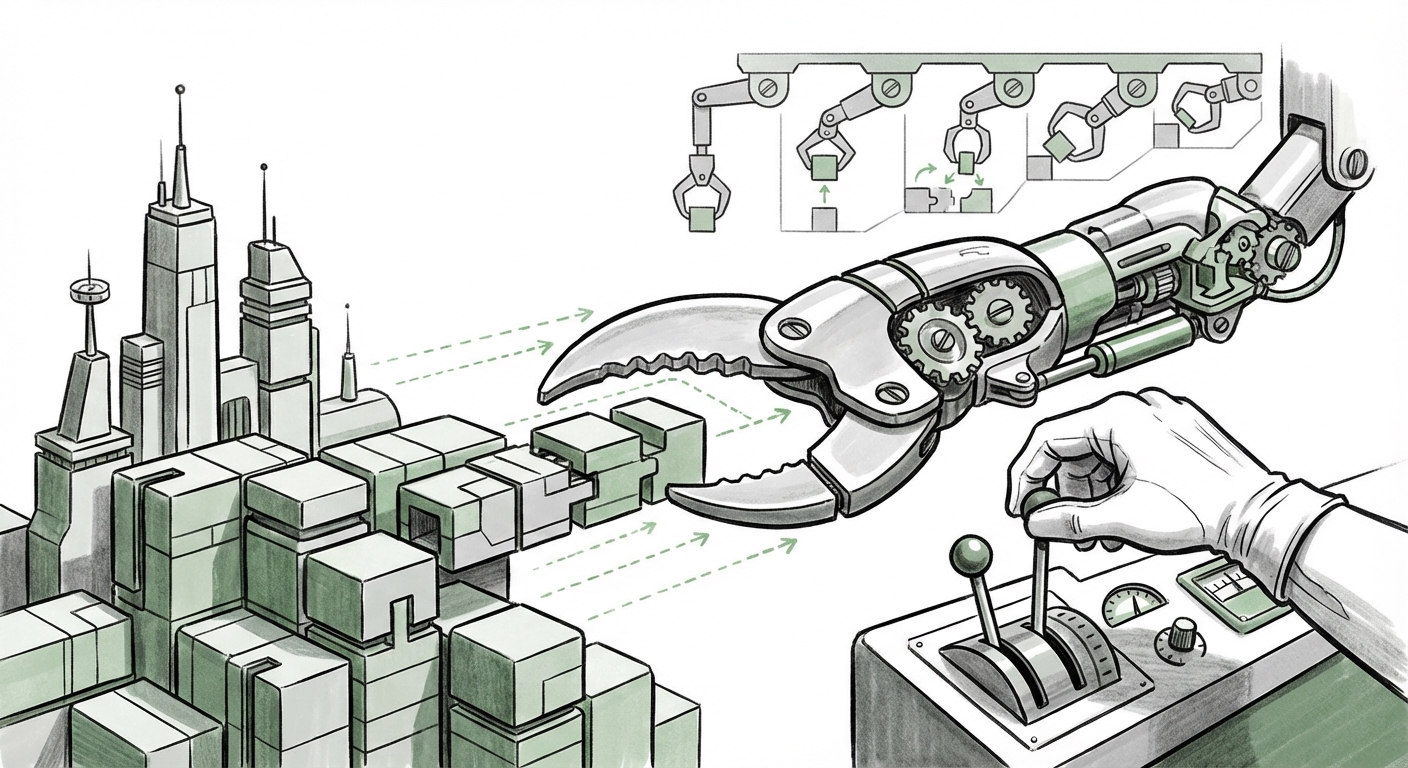
Alibaba's Qwen3.7-Plus: How Multimodal AI Is Becoming a Full-Blown Autonomous Agent
The world of artificial intelligence is changing fast. For the last few years, the biggest advances were about making AI smarter at understanding us. It learned to read better, write better, and create stunning images from text prompts. But a new goal is taking center stage. The real prize now is not just about understanding the world, but about acting within it.
This is where Alibaba's Qwen3.7-Plus comes in. According to a recent report from The Decoder, this new model is Alibaba's big bet to take multimodal AI and turn it into a "full-blown autonomous agent." That single sentence captures one of the most important trends in technology today. It's a move that could change how businesses operate, how software works, and even how we define "doing work."
In this article, we'll break down exactly what this means. We'll explore the technology behind the hype, what it means for your business, and what everyone should be watching for as this technology develops.
What Does "Multimodal Autonomous Agent" Actually Mean?
To understand why Qwen3.7-Plus is such a big deal, we need to break the headline into its two main parts: Multimodal AI and Autonomous Agent.
Part 1: Multimodal AI
"Multimodal" just means "many modes." In the world of AI, it means the model can understand different types of information at the same time. It can read text. It can look at images, diagrams, and screenshots. It can even listen to audio. Instead of being a specialist that only handles words or only handles pictures, a multimodal model is a generalist. It can see and read simultaneously, just like a human being.
This is a huge leap forward. An AI that can only read text is blind to graphs, photos, and user interfaces. A multimodal AI can look at a screenshot of a broken website, read the error code in the text, and understand the problem completely.
Part 2: Autonomous Agent
An "autonomous agent" is an AI that can do things on its own. It doesn't just wait for you to ask it a question. It can take a high-level goal, make a plan, and then execute that plan step by step. It can use tools, browse the web, fill out forms, and interact with other software.
Think of it like the difference between a library and a personal assistant. A library (a standard chatbot) has all the information in the world, but you have to go find it and do the work yourself. A personal assistant (an autonomous agent) will take your goal—"plan a team offsite"—and handle the research, the scheduling, and the bookings on your behalf.
The Combination
Qwen3.7-Plus combines these two powers. It is an AI that can see and understand the world (multimodal) AND take independent action to get things done (autonomous agent). This combination is what makes it so powerful. It can watch a video tutorial, understand the steps, and then perform those steps in a real software application. It can scan a pile of invoices, extract the key data, and then initiate payments. It is the difference between an AI that can describe a recipe and an AI that can cook the meal.
What This Means for the Future of AI
The arrival of models like Qwen3.7-Plus signals a major shift in the entire AI industry. The focus is moving from generation to action.
For the past few years, the question has been: "Can AI create good content?" Now, the question is: "Can AI get good results?" This shift has three major implications for the future.
- From Copilot to Autopilot: Right now, most AI tools act as "copilots." They suggest, they help, but a human is still in charge of clicking the button. Autonomous agents are "autopilots." They can be trusted to handle entire processes from start to finish.
- AI Becomes a "Digital Worker": Businesses will stop thinking of AI as a fancy search engine or a writing tool. They will start thinking of it as a digital employee. It will have a set of skills, a list of permissions, and a schedule of tasks to complete.
- The End of "Click and Type": If an AI agent can do everything a human can do on a computer, the way we build software might change. Why design complex menus and buttons if a user can just tell their AI agent what they want to accomplish?
Alibaba's investment in Qwen3.7-Plus shows that they believe this future is coming fast. They are placing a huge bet that the companies that win in the next decade will be those that master autonomous, multimodal agents.
Practical Implications for Businesses
For business leaders and managers, this technology is not just a cool toy. It is a practical tool that can solve real problems. However, it requires a new way of thinking about work. Here is how different sectors might be affected.
Customer Service and Support
This is the most obvious use case. An agent like Qwen3.7-Plus can handle a customer support ticket from beginning to end. It can read the customer's complaint text. It can look at the attached screenshot of the error. It can check the customer's account history. Then, it can take action: reset a password, process a refund, or schedule a technician visit. This takes the burden off human agents and drastically reduces response times.
Operations and Logistics
Think about supply chain management. A Qwen3.7-Plus agent could monitor dashboards showing inventory levels. It could look at images of warehouse shelves to confirm stock. It could read emails from suppliers about delays. Then, it could autonomously reorder supplies, reroute shipments, or alert management to a major disruption. This moves operations from being "reactive" to "proactive."
Data Analysis and Research
Most businesses sit on mountains of data they never use. Much of this data is "unstructured"—it comes in the form of PDFs, images, videos, and long email threads. A multimodal agent is perfectly designed for this. You can ask it: "Analyze the last six months of sales calls and look for common complaints." It will listen to the audio, read the text transcripts, look at the shared slides, and write a summary report for you.
Software Development
Developers spend a huge amount of time reading documentation and debugging code. A multimodal agent can look at a screenshot of a buggy user interface, read the underlying code, and suggest a fix. It can even test the fix automatically. This speeds up development cycles and allows programmers to focus on more creative problems.
The Big Challenge: Trust and Safety
With great power comes great responsibility. Turning an AI into an autonomous agent is exciting, but it also raises serious questions about safety and trust.
How do you control an AI that can act on its own? How do you make sure it doesn't make a costly mistake? What happens if it misinterprets a goal?
These are not small problems. For businesses, this means that adopting autonomous agents requires a strict framework of permissions and oversight. You wouldn't give a new employee access to the company bank account on their first day. You shouldn't give an AI agent full access to everything right away either.
The companies that succeed with Qwen3.7-Plus and similar models will be the ones that build strong "guardrails." They will create sandboxed environments for the AI to work in. They will log every action the agent takes. They will require human approval for high-risk actions. Trust is earned through transparency and control.
Actionable Insights: How to Prepare for Autonomous Agents
You don't have to wait for the future to arrive. You can start preparing your organization for the age of autonomous agents today. Here are three practical steps you can take.
- Audit Your Workflows: Walk through your daily operations and identify processes that are repetitive, rule-based, and involve multiple steps. The best candidates for autonomous agents are tasks that require looking at information (text or images) and then performing a specific action.
- Clean Up Your Data: Autonomous agents need access to data to be effective. If your company's data is messy, scattered across different spreadsheets and emails, an AI agent will struggle to help. Start organizing your digital files and making them accessible through APIs or a central knowledge base.
- Develop an "AI Agent" Policy: Sit down with your leadership team and decide where you draw the line. Under what conditions is an AI allowed to act without human approval? Which systems are off-limits? Having a policy in place now will make it much easier to adopt the technology safely when it becomes widely available.
The key is to start thinking about your business not just as a collection of employees, but as a mix of human workers and AI agents. The managers of tomorrow will be just as skilled at "AI orchestration" as they are at "people management."
The Bottom Line: The Age of Agency is Here
Alibaba's Qwen3.7-Plus is more than just a product announcement. It is a clear and powerful signal that the AI industry is pivoting towards a new goal. The goal is no longer to build a brain that can think. The goal is to build an agent that can act.
Turning multimodal AI into a "full-blown autonomous agent" changes the equation for everyone. It means AI will move from being a tool you use to a teammate you manage. It means software will move from being something you operate to something that operates for you.
For businesses, the time to pay attention is now. The technology is rapidly maturing. The companies that take the time to understand it, prepare their data, and build their safety frameworks will be in the perfect position to harness the power of autonomous agents. The future of AI is not just about understanding the world—it's about changing it, one autonomous action at a time.